Departure
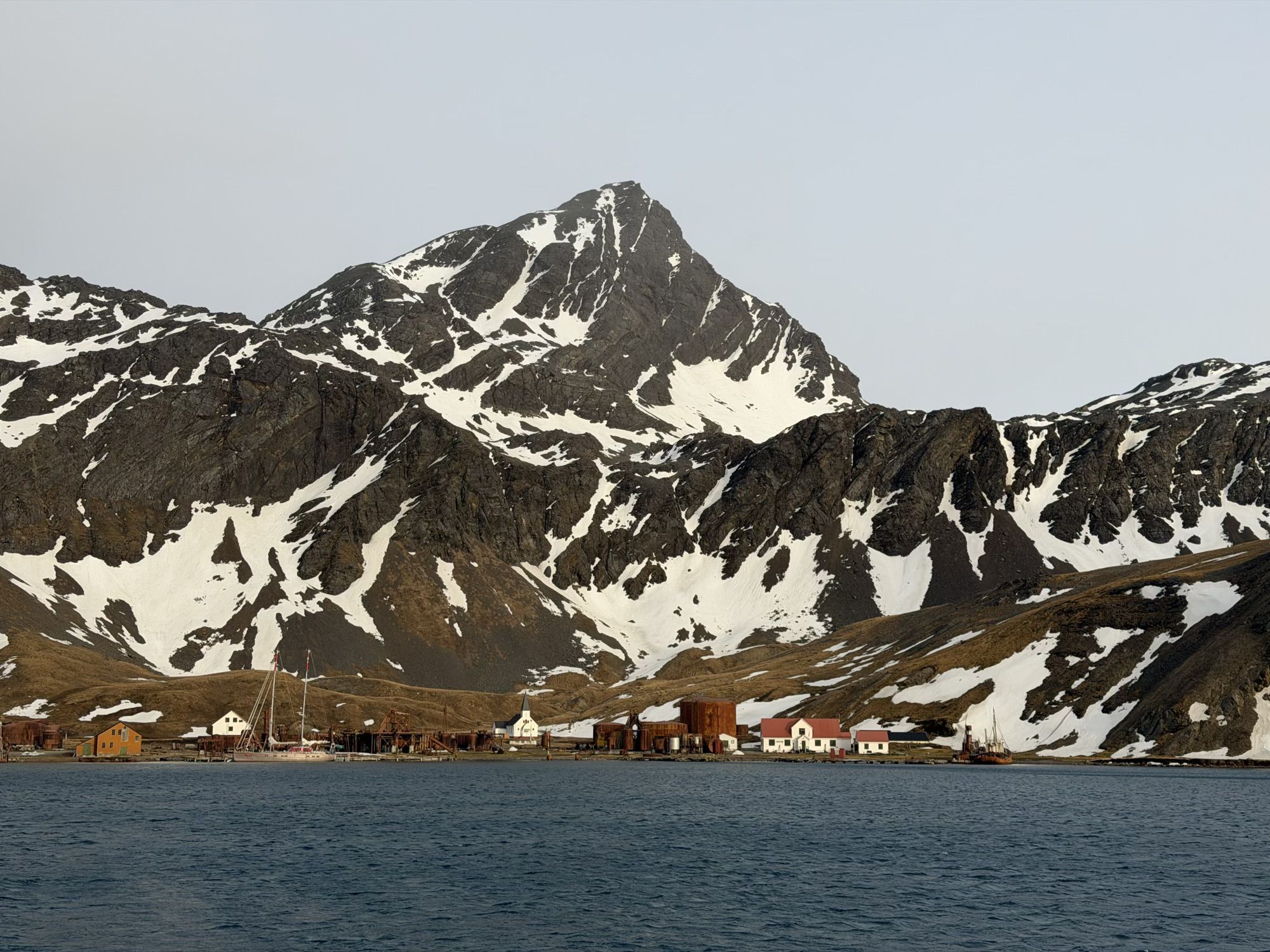
Early in the morning, shortly after five, we set out and cast off from Grytviken after two days. Once again, the expected rain fails to materialize; it’s windy, but pleasant.
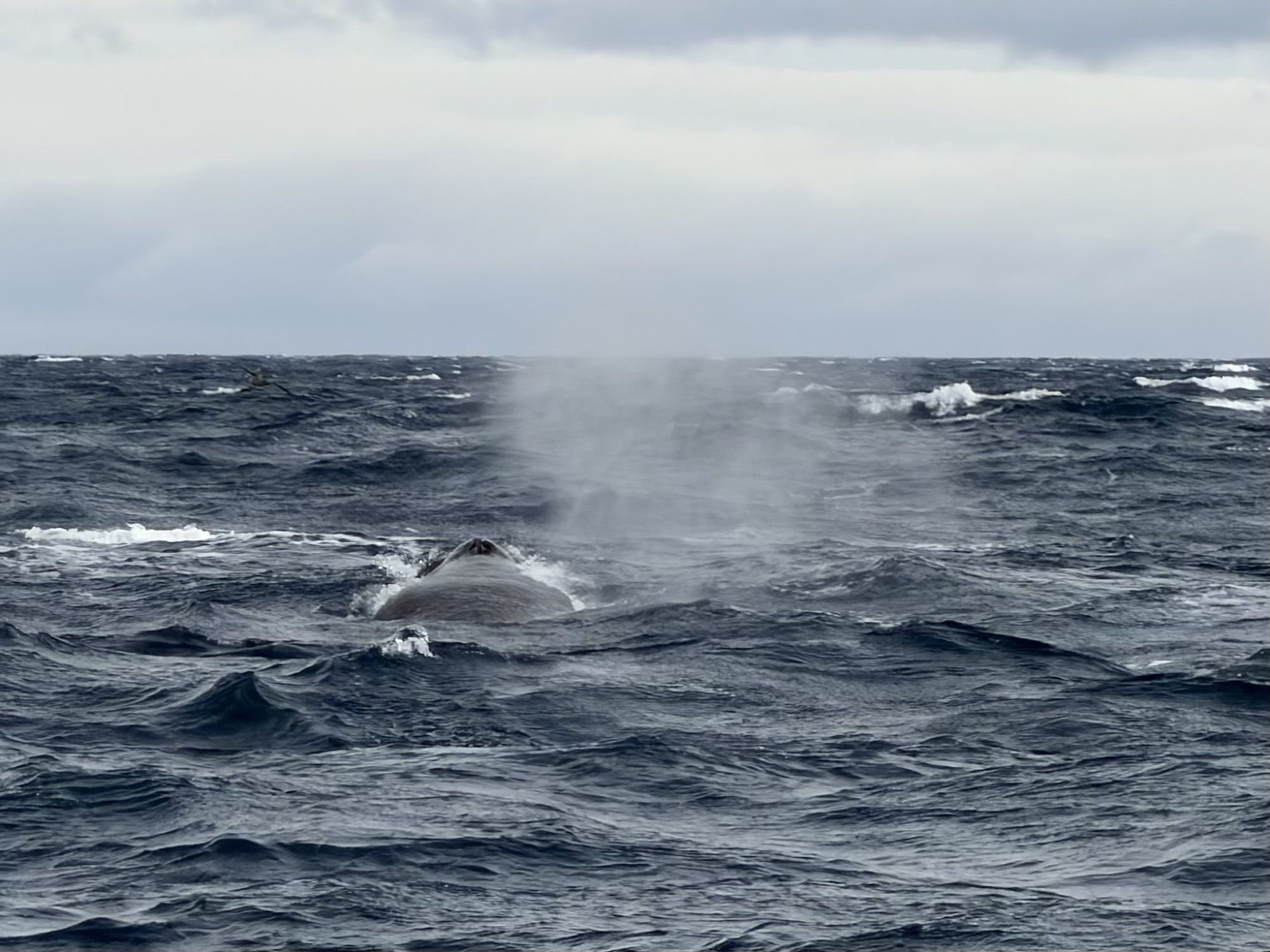
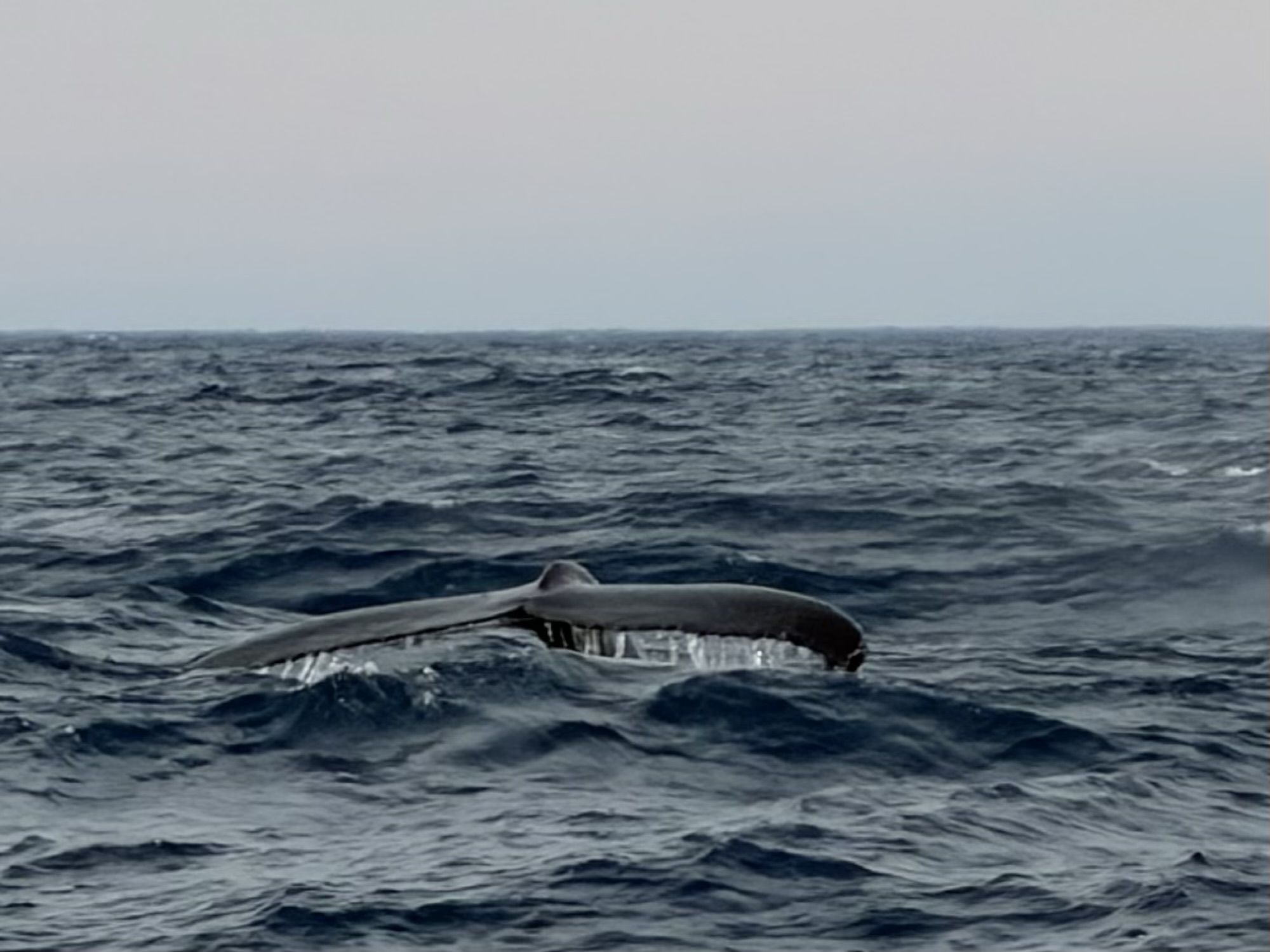
Humpback whales bid us farewell as we leave King Edward Cove; we pass Hope Point and send a final greeting to Shackleton. We leave Cumberland Bay for the open sea and continue our journey northwest. Destination: Hercules Bay.
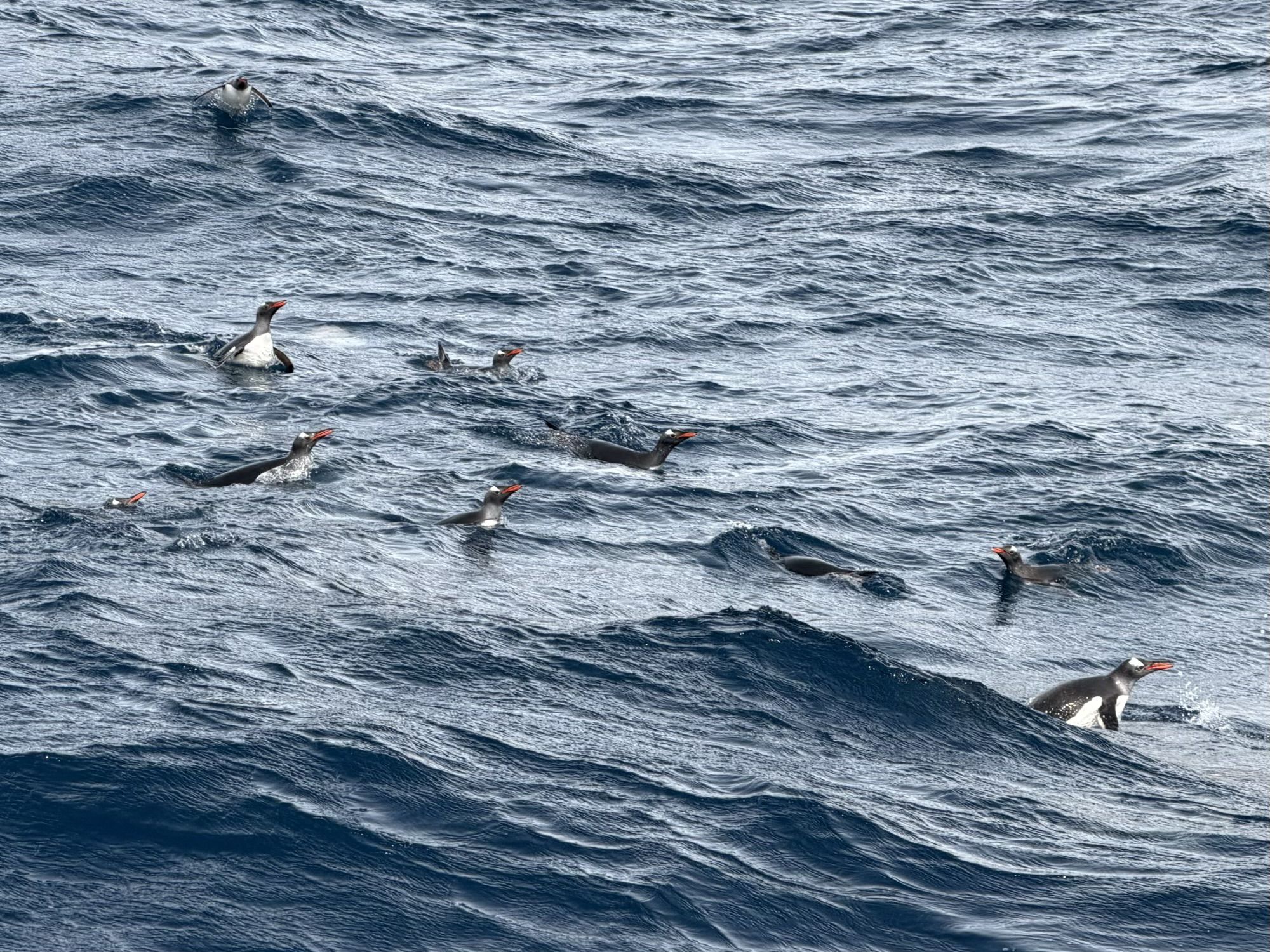
We want to see if the macaroni penguins have finally arrived on South Georgia. There are two colonies in Hercules Bay.
They usually return to their breeding grounds here on the island between mid- and late October, after spending the winter at sea.
A few days ago, when we were anchored in Cobblers Cove and hiked to Rookery Bay, where another colony is located, we hadn’t seen them yet.
Along the way, we pass now-familiar bays like Stromness and Leith Harbor on our port side. Time and again, individual whales, seals, or flocks of penguins appear in front of or beside us.
Hercules Bay
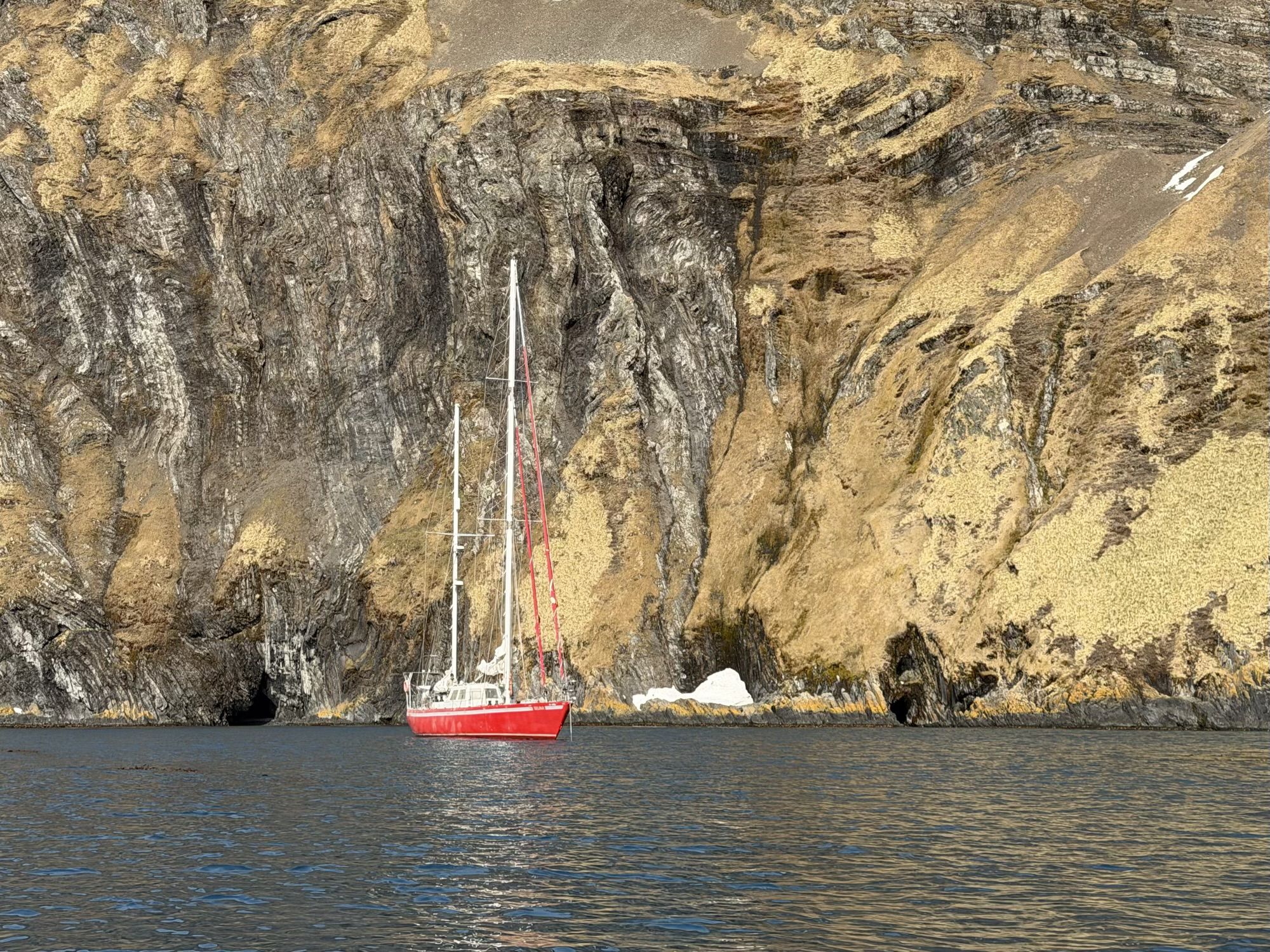
Shortly after ten, the anchor drops in Hercules Bay.
The bay was named in the early 1900s by Norwegian whalers after a whaling ship that once sought shelter there during bad weather. One of the earliest descriptions of Hercules Bay comes from Frank Hurley—the photographer of the Endurance Expedition—who apparently spent a pleasant day here in March 1917 after coming from Leith Harbor to photograph penguins.
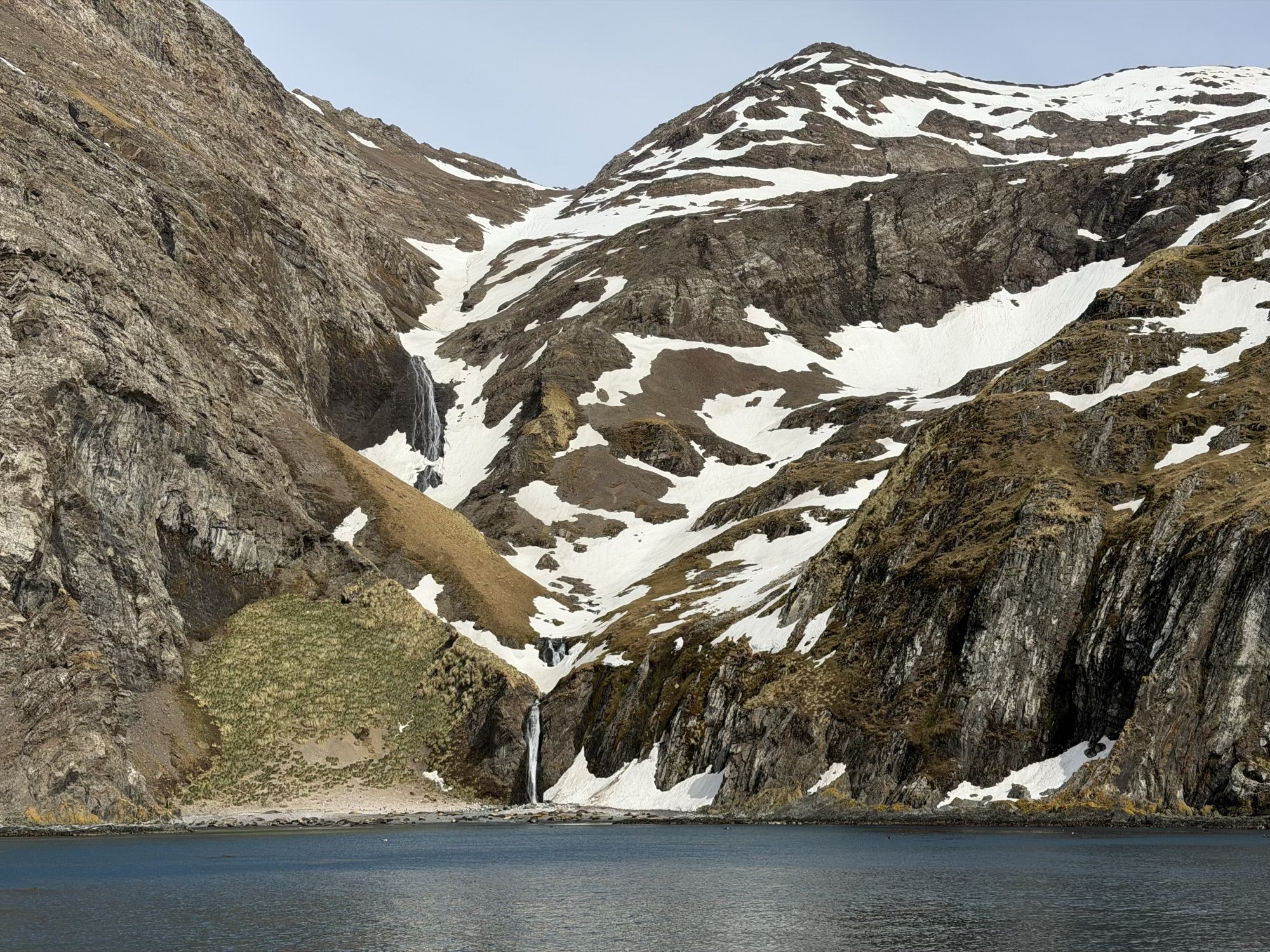
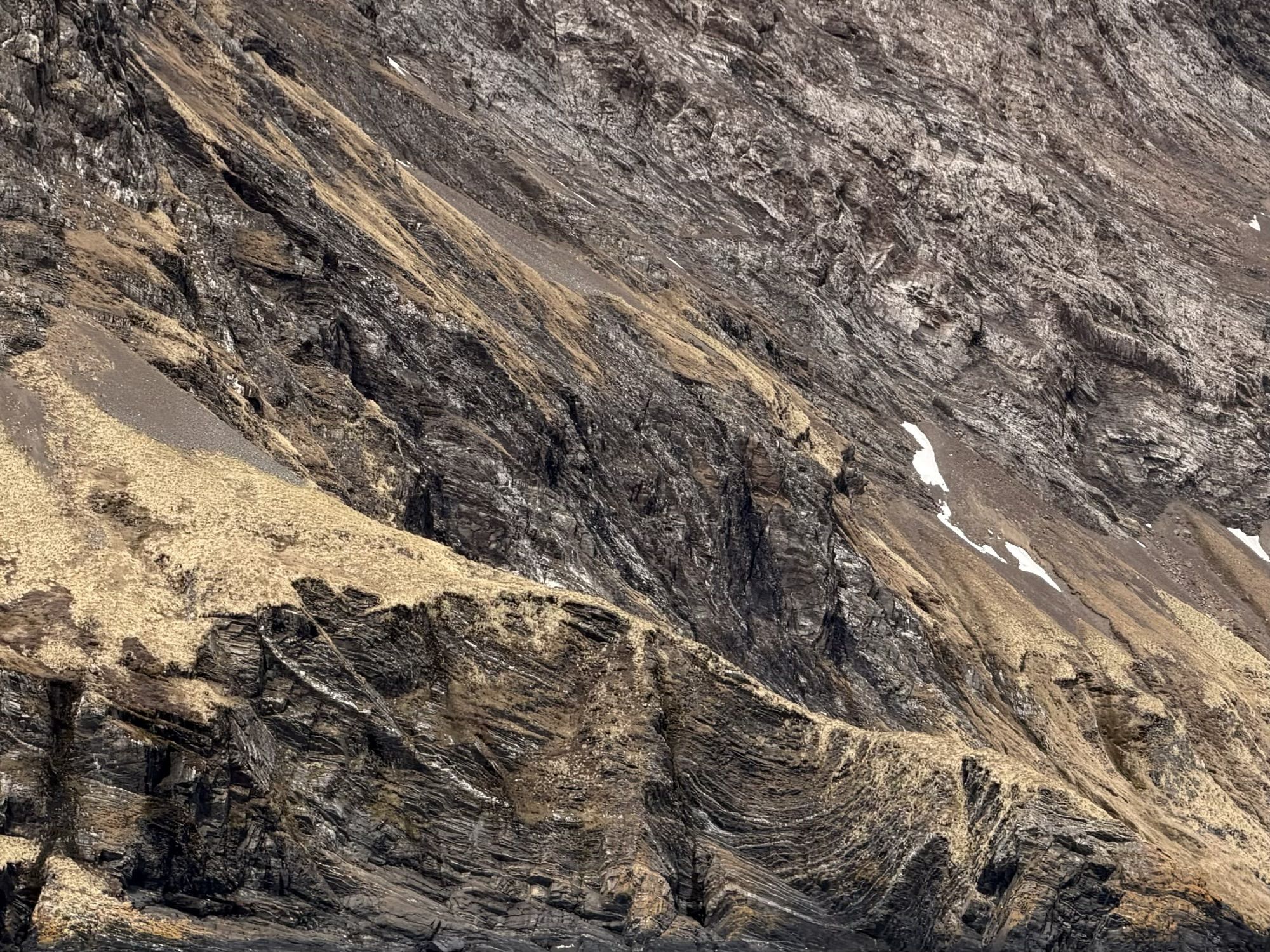
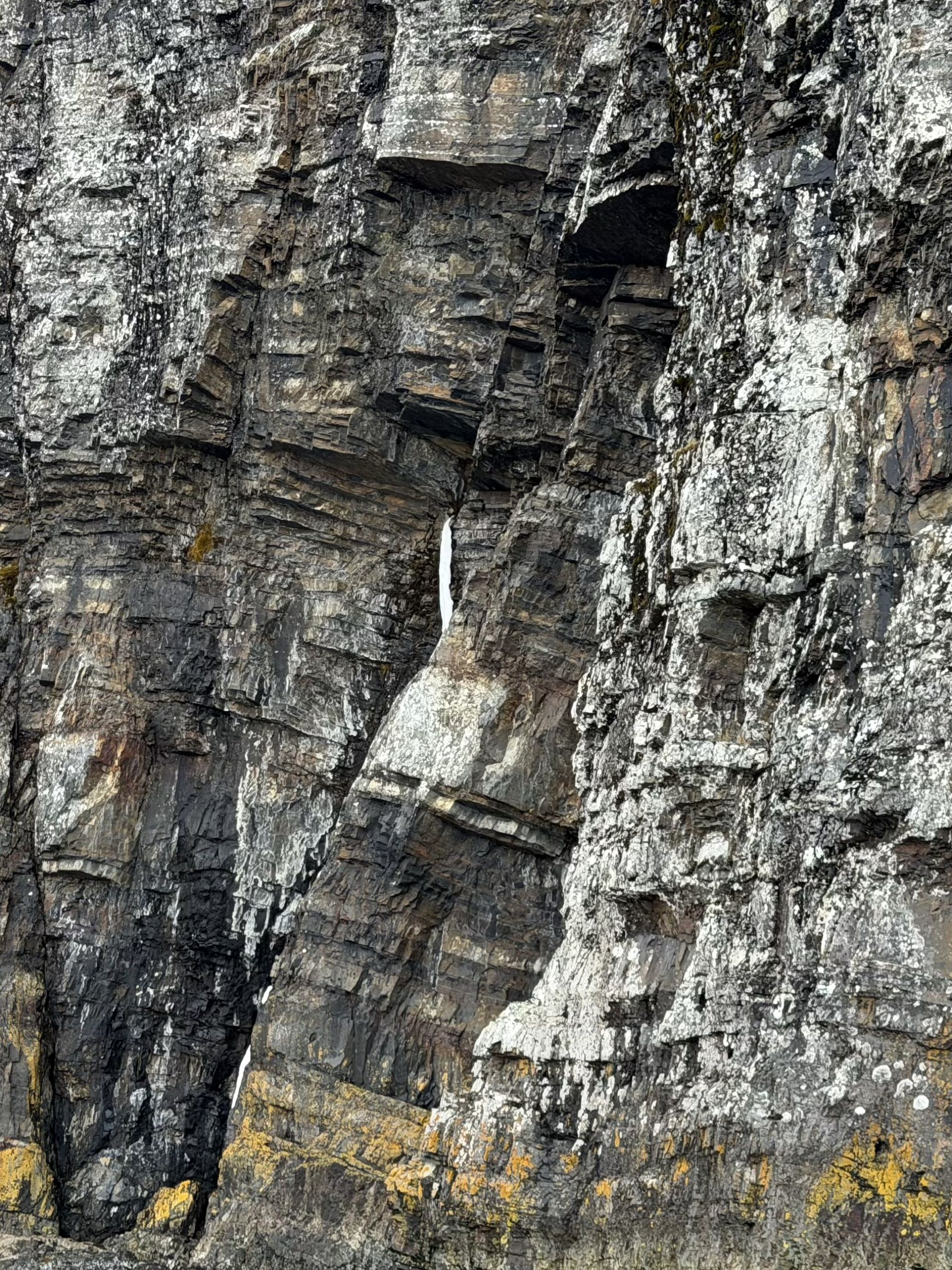
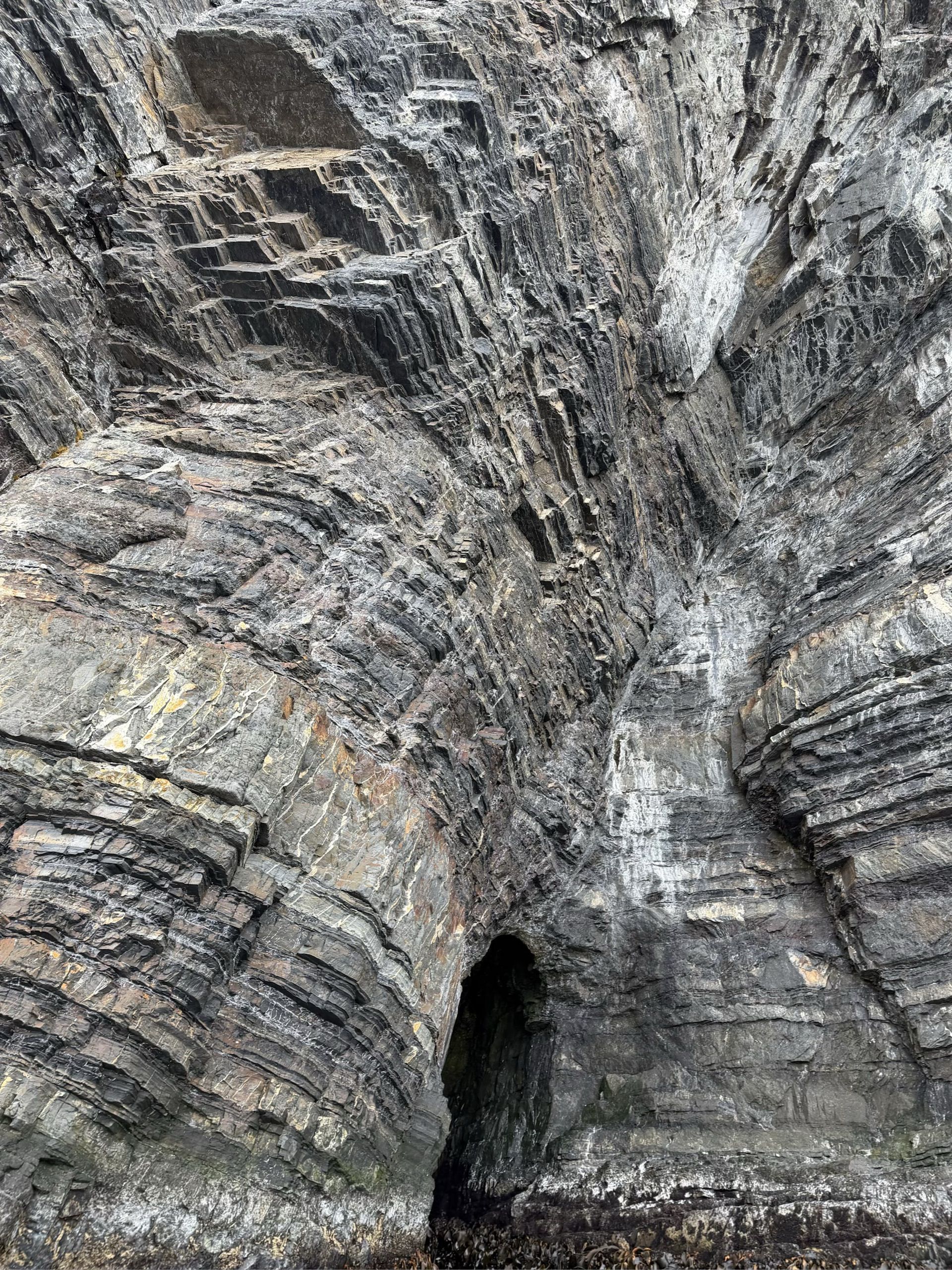
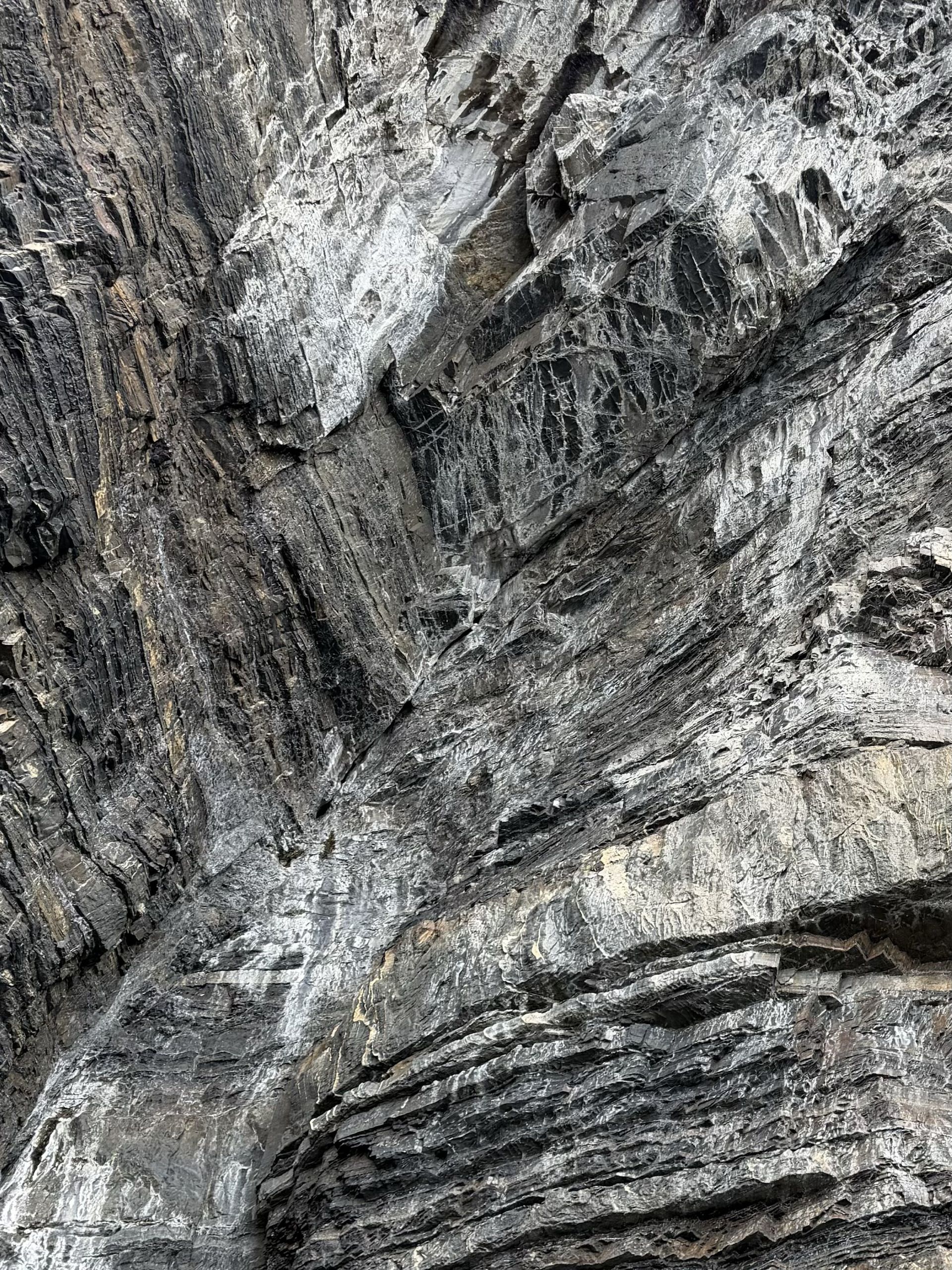
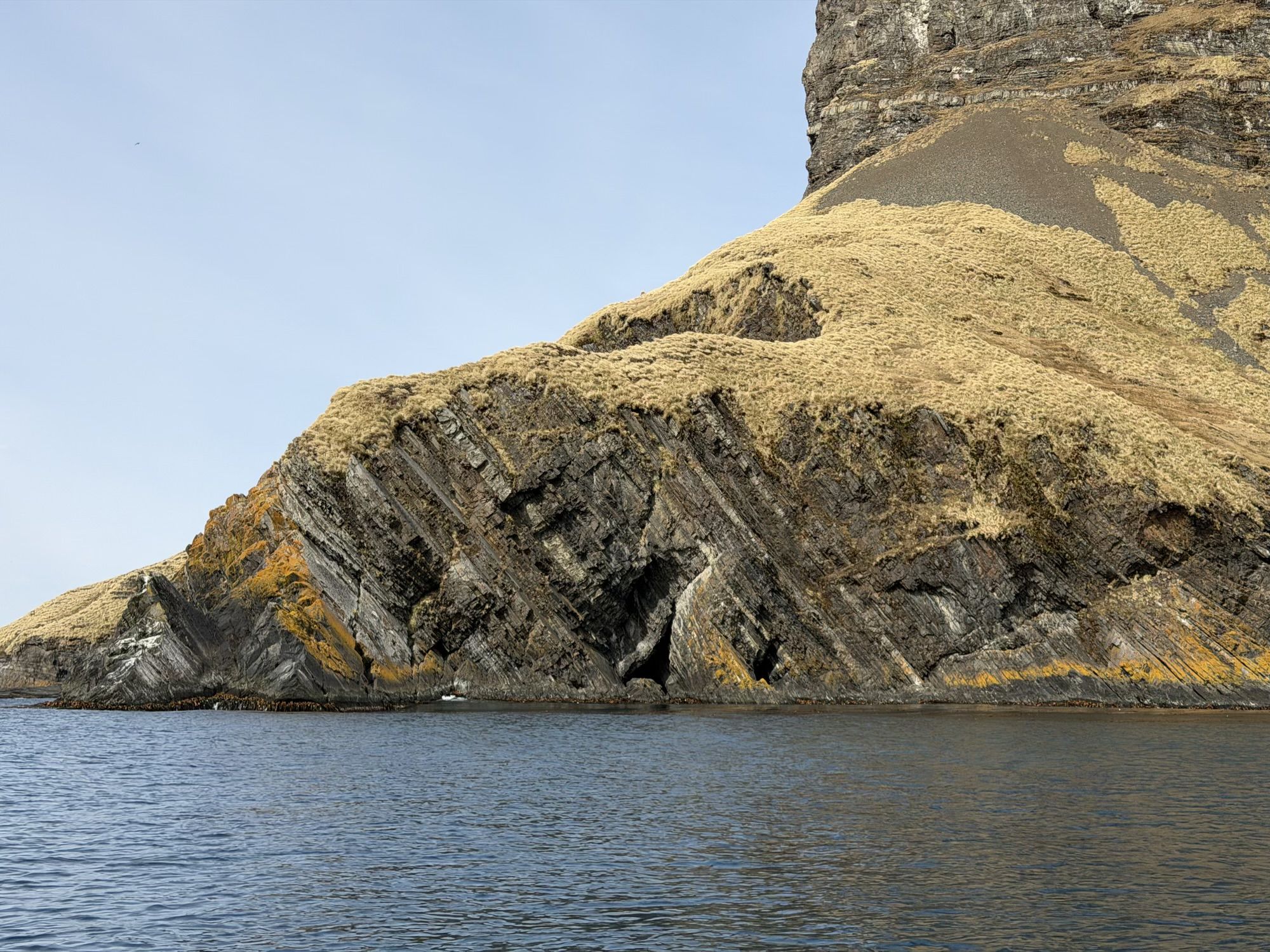
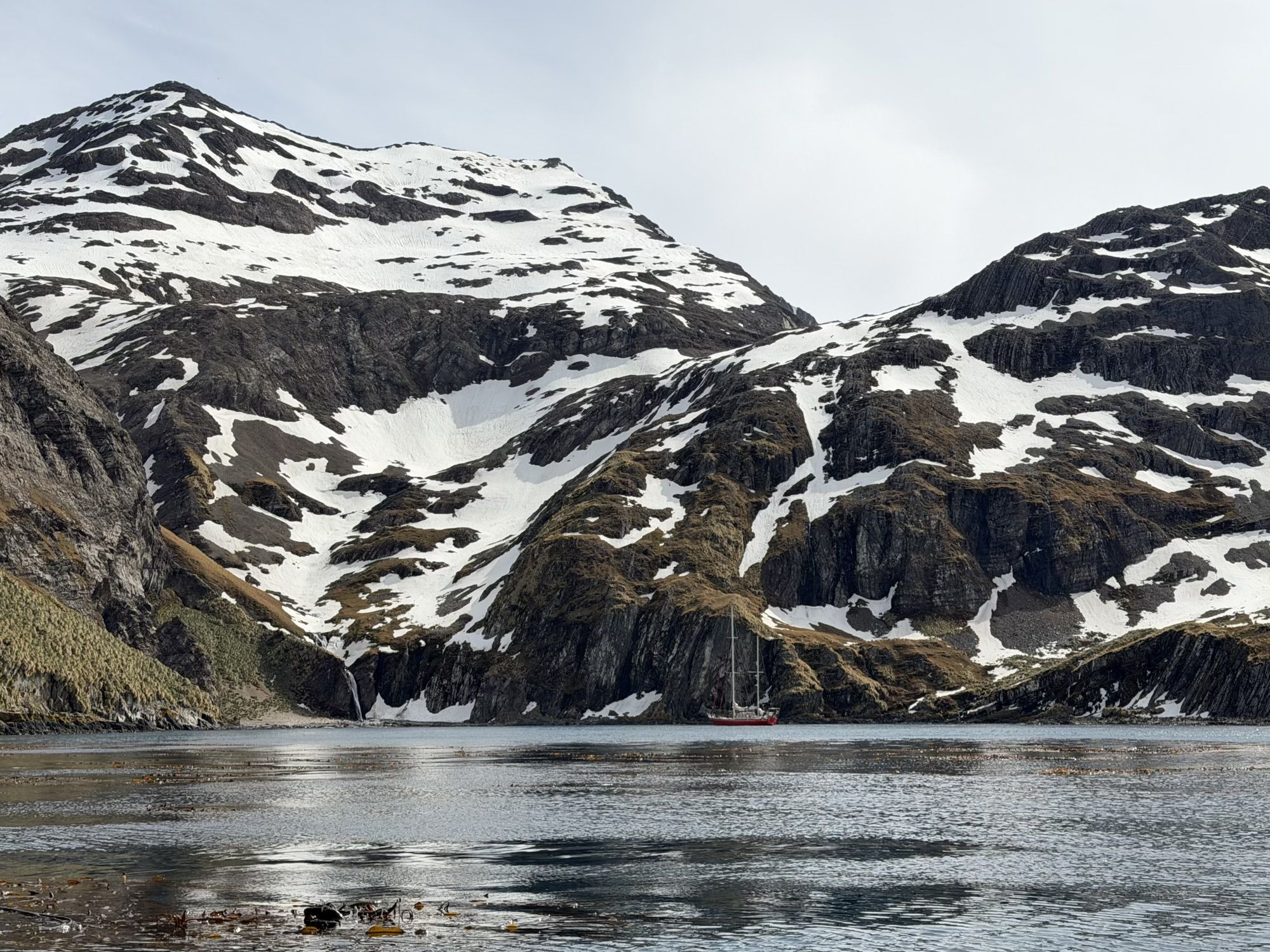
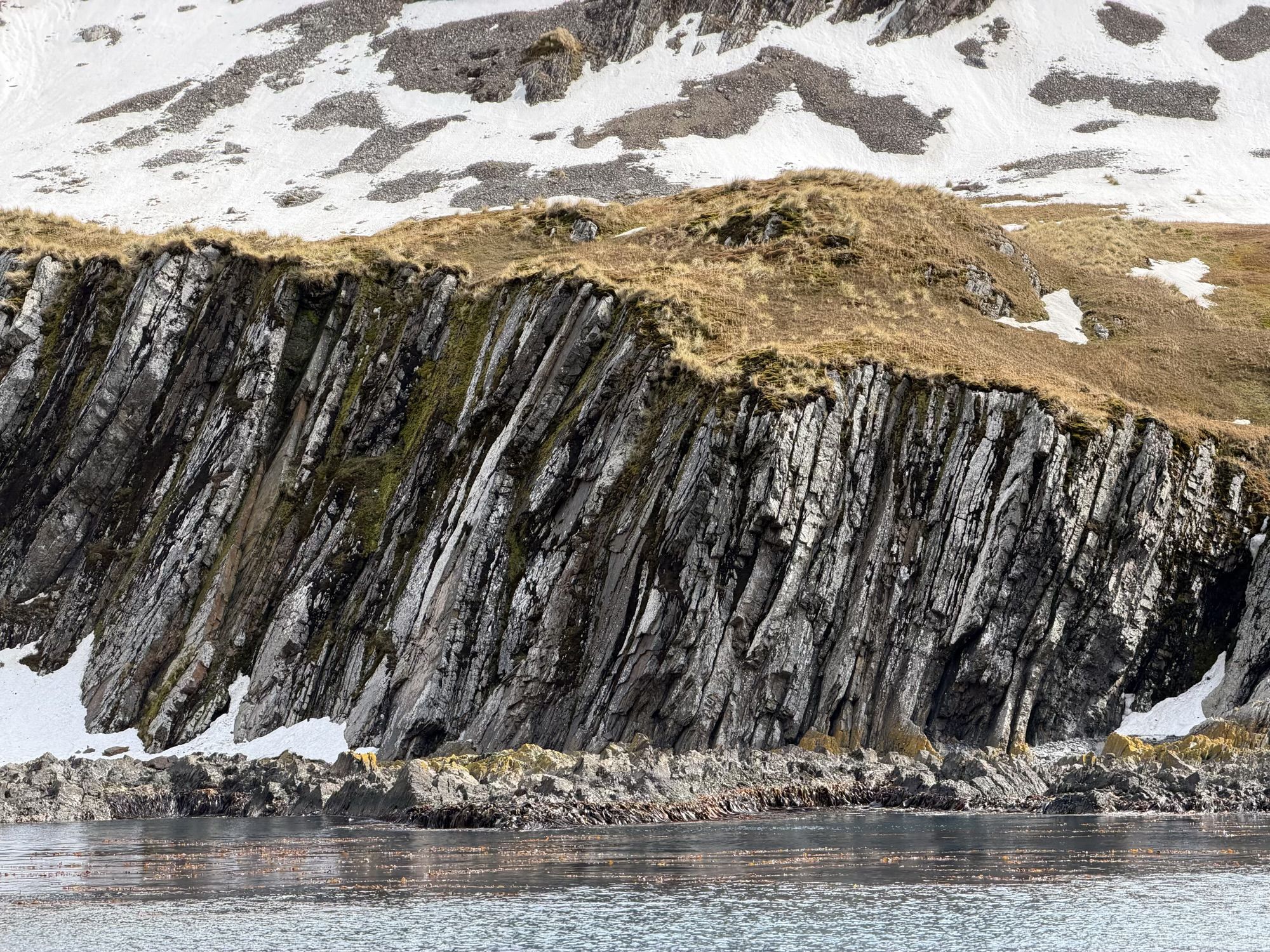
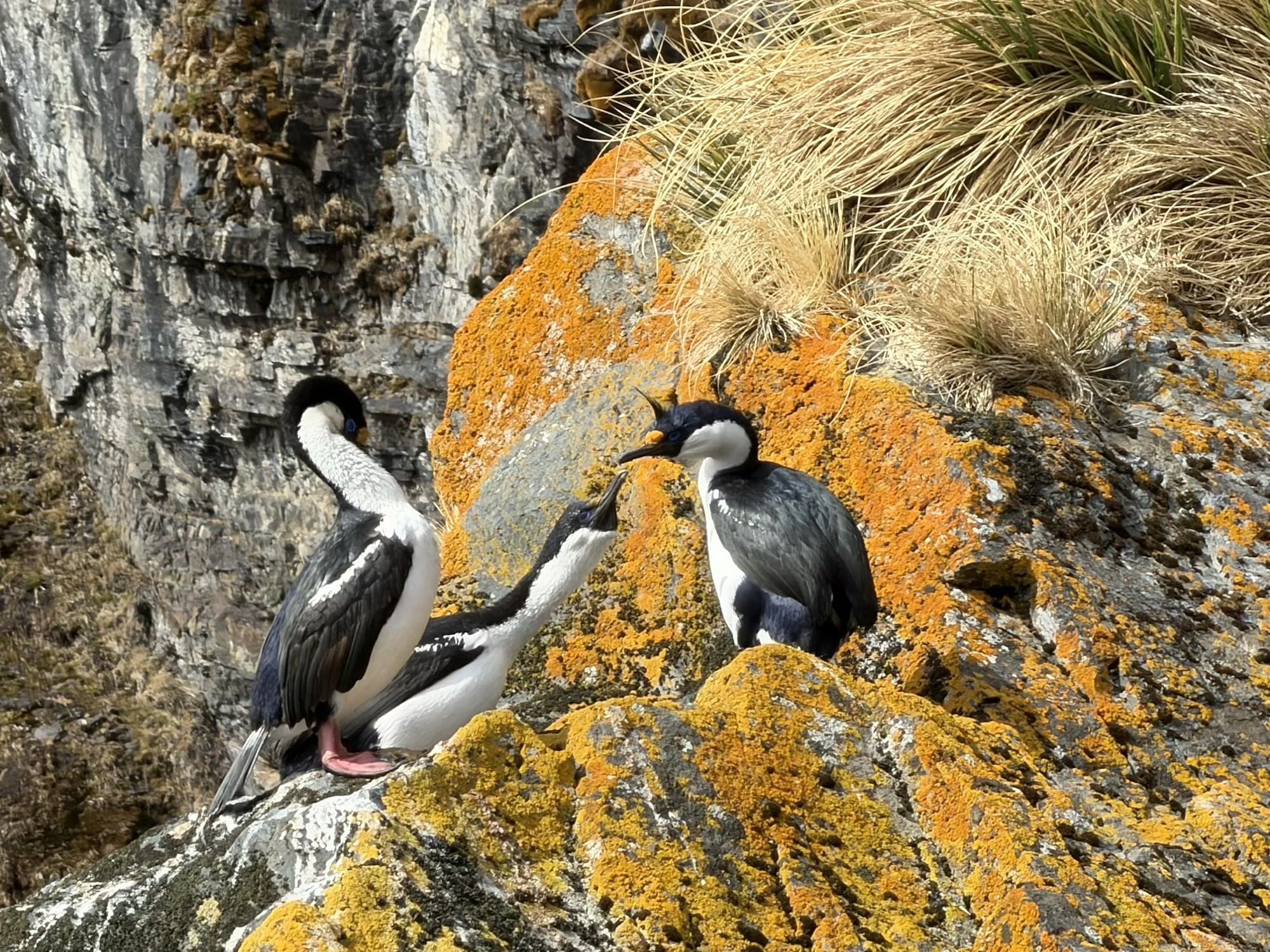
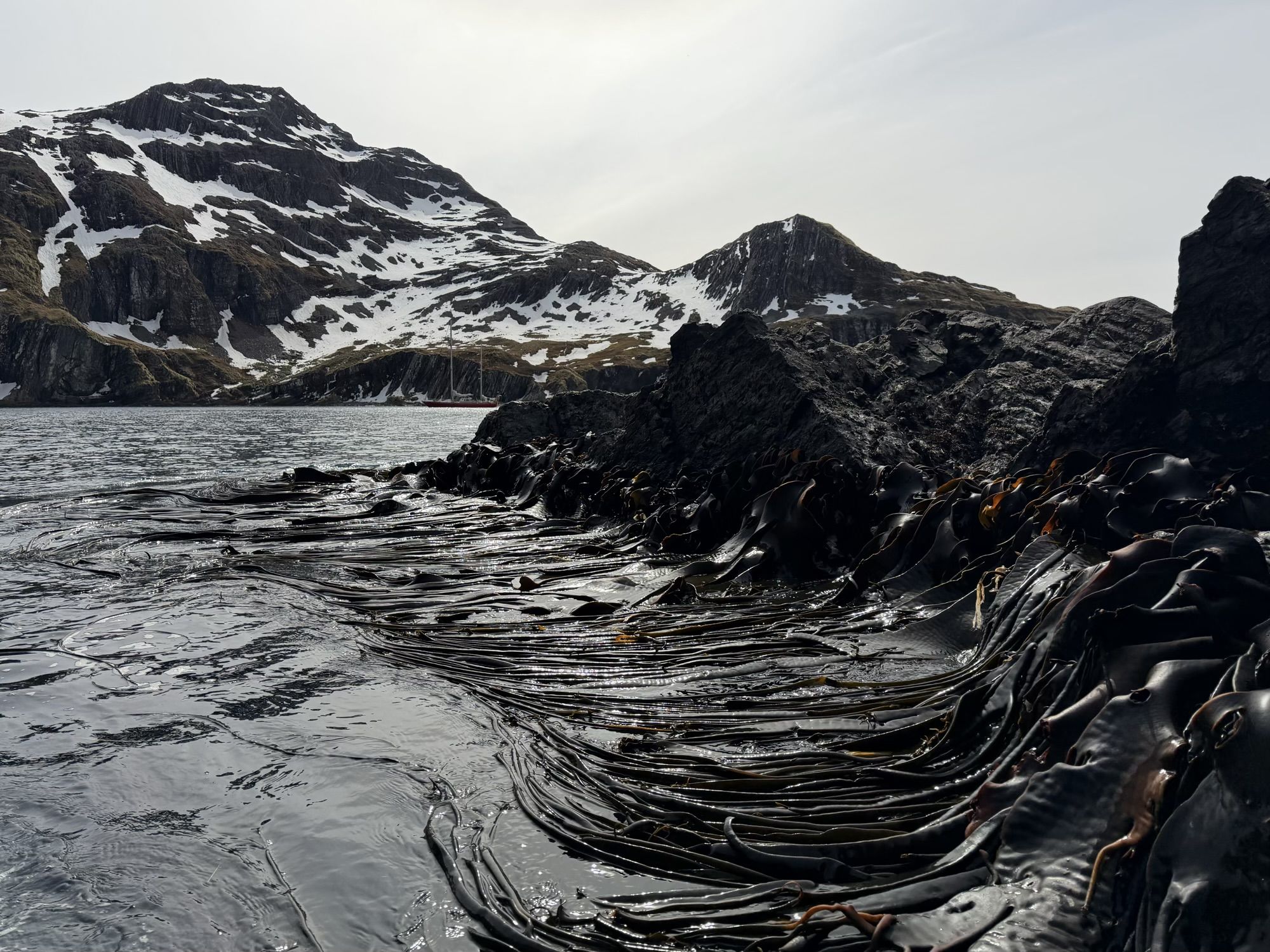
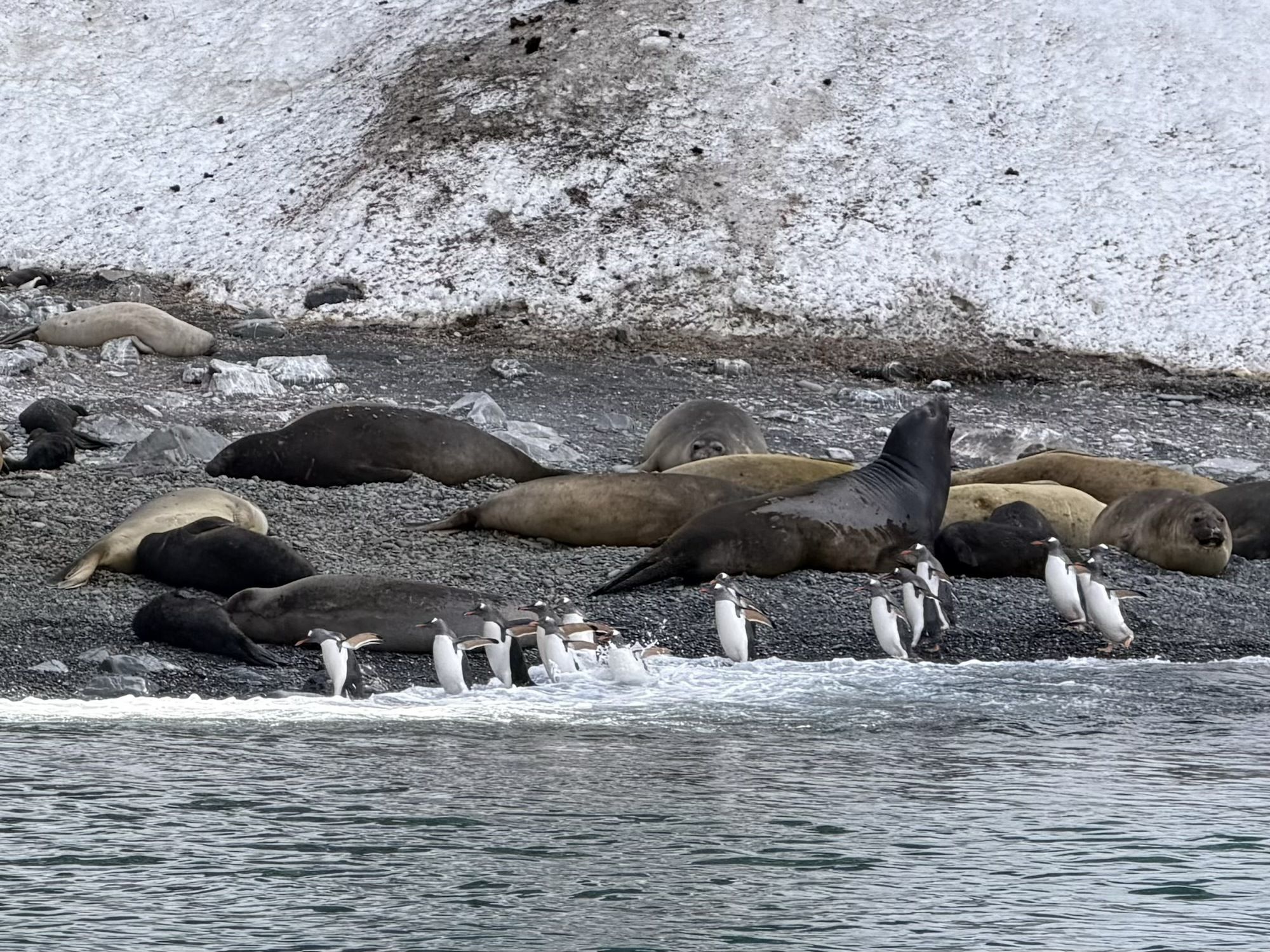
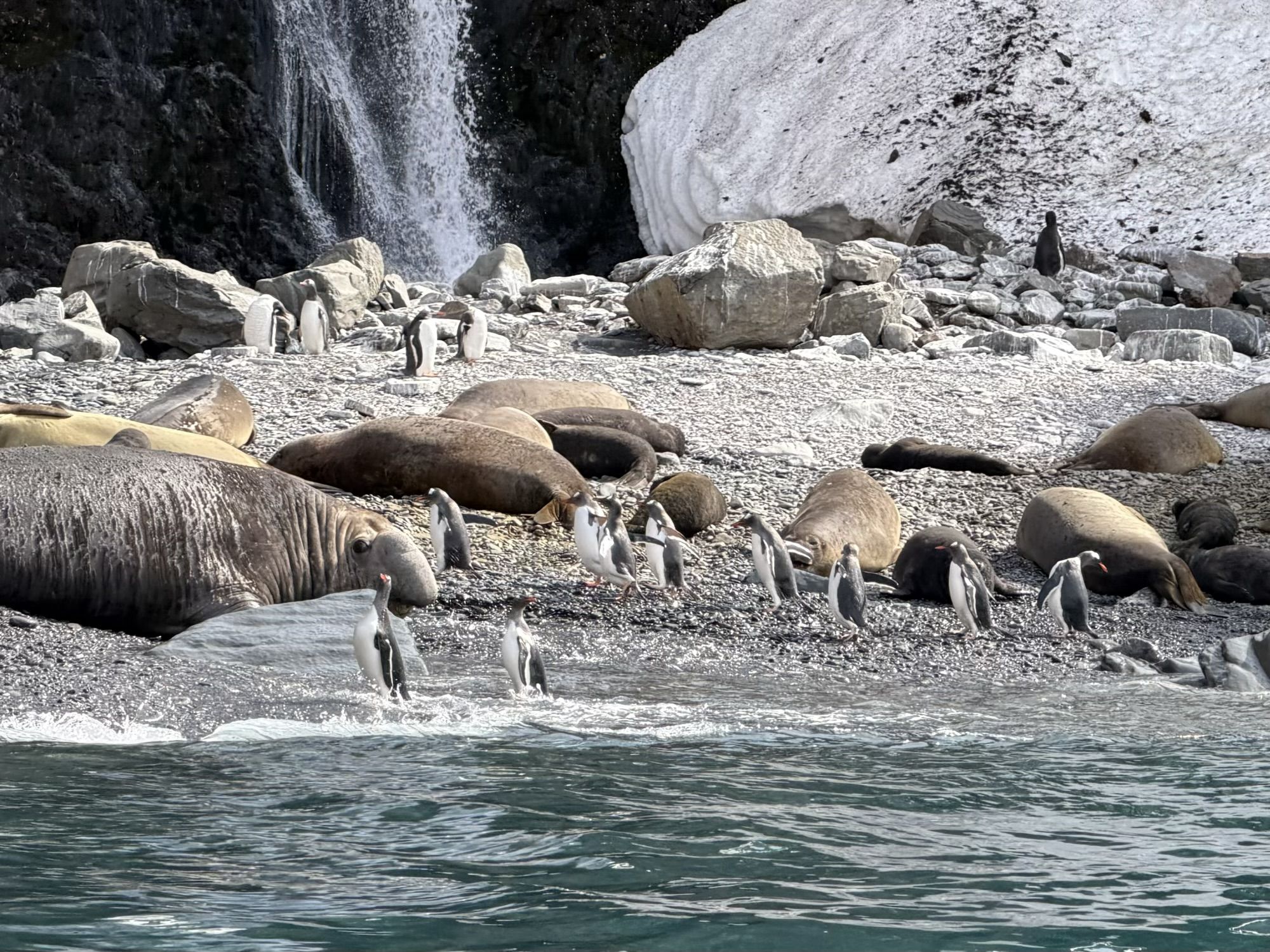
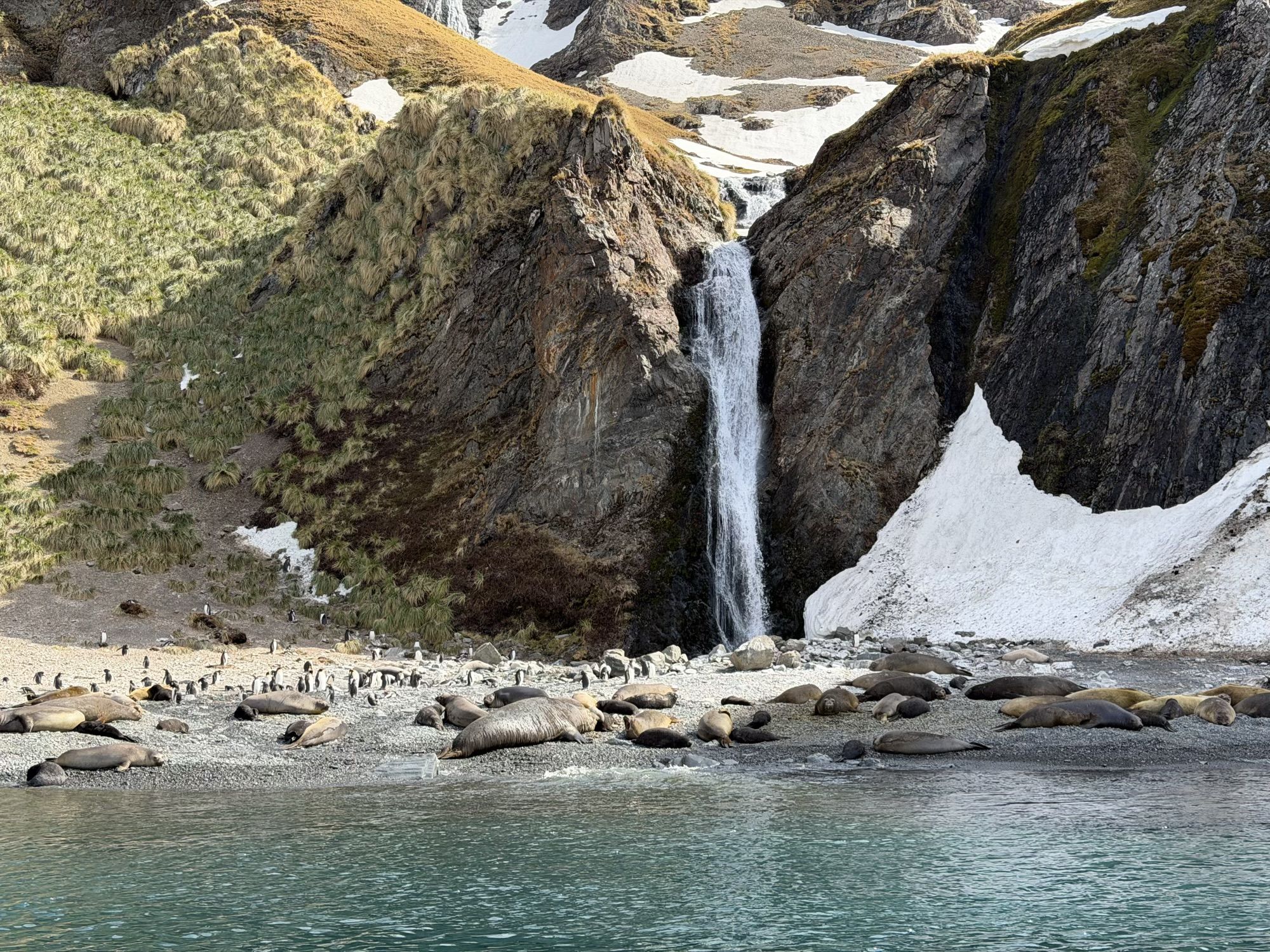
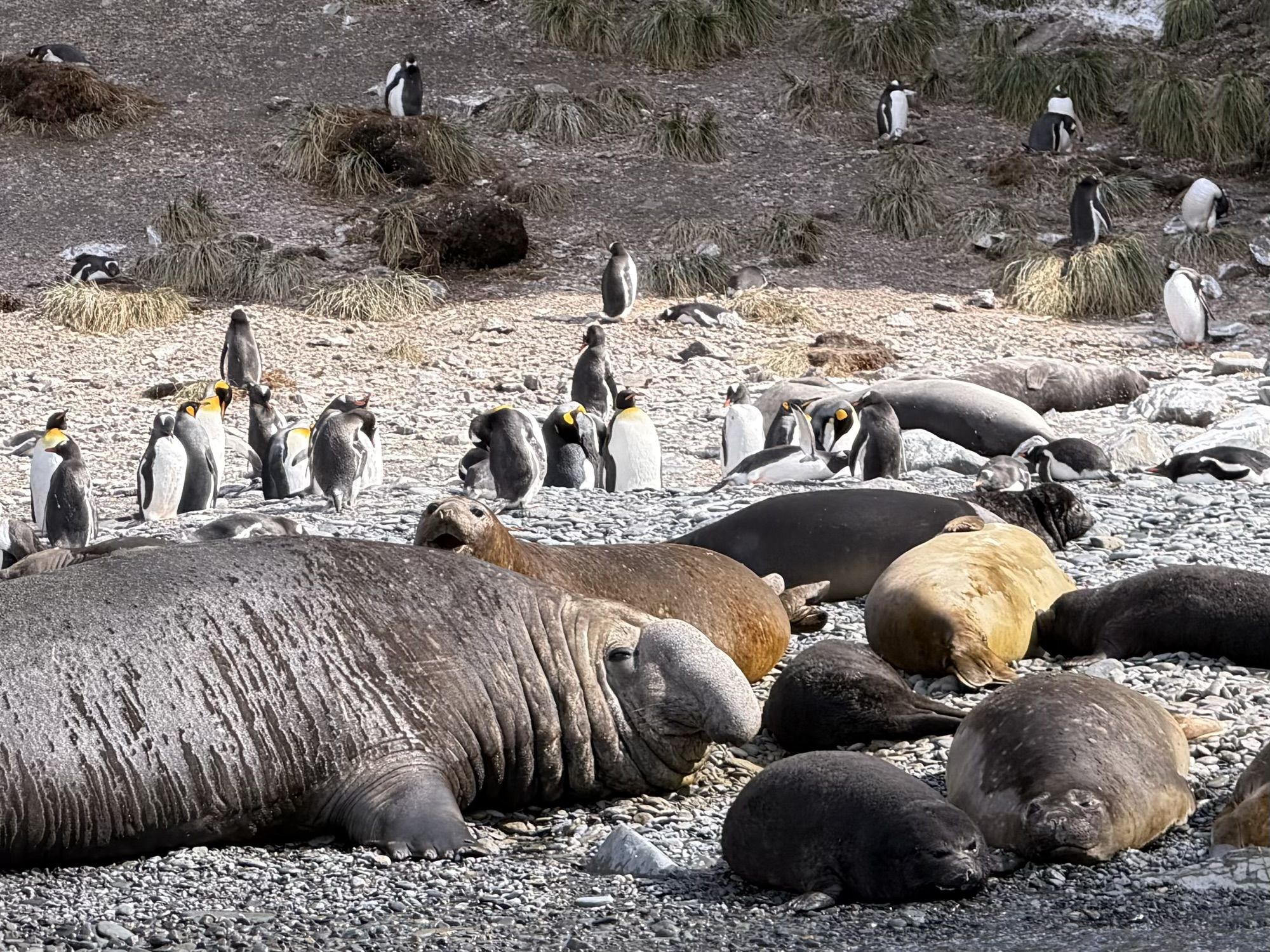
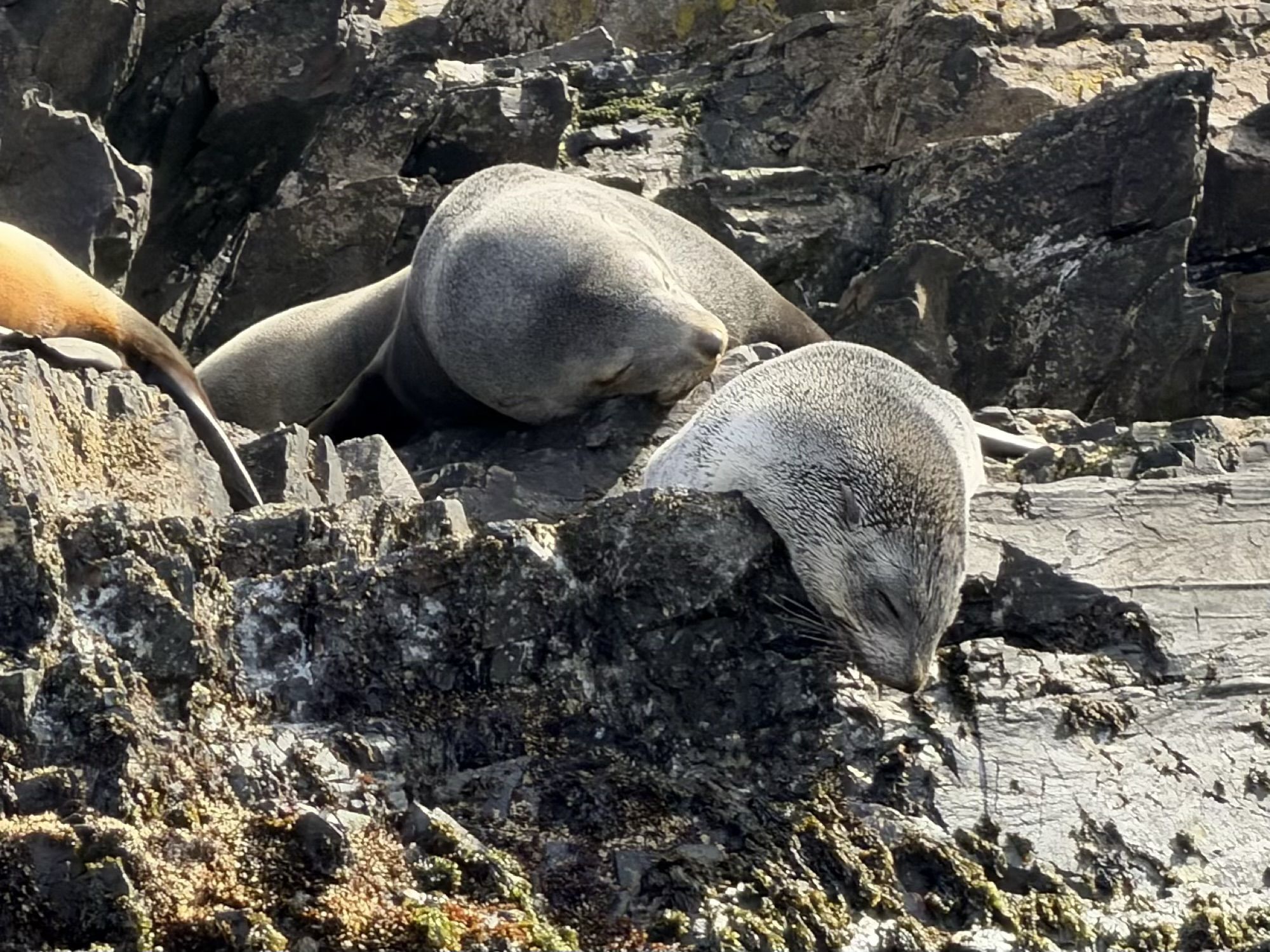
We, too, are enjoying a pleasant day surrounded by impressive scenery: the small cove opens up like an amphitheater, surrounded by cliffs up to 300 meters high and spectacularly folded rock formations. A rugged coastline, numerous small caves, and swaying kelp in the crystal-clear water line the bay. In the center is a small beach onto which a waterfall cascades picturesquely. The shore is lined with the bustling life of South Georgia: elephant seals bask in the sun on the beach, Gentoo and king penguins are out and about, and fur seals doze on the rocky shoreline. Imperial shags perch on rocks covered in brightly colored moss and lichen. The calls of the light-mantled sooty albatrosses echo from the cliffs, and the murmurs and rumblings of the elephant seals drift across from the shore—amplified many times over by the shape of the bay.
Only the Macaroni penguins—which normally inhabit these rocky, tussock-grass-covered slopes during the breeding season and while raising their chicks, and which should actually already be here at this time—are nowhere to be seen.
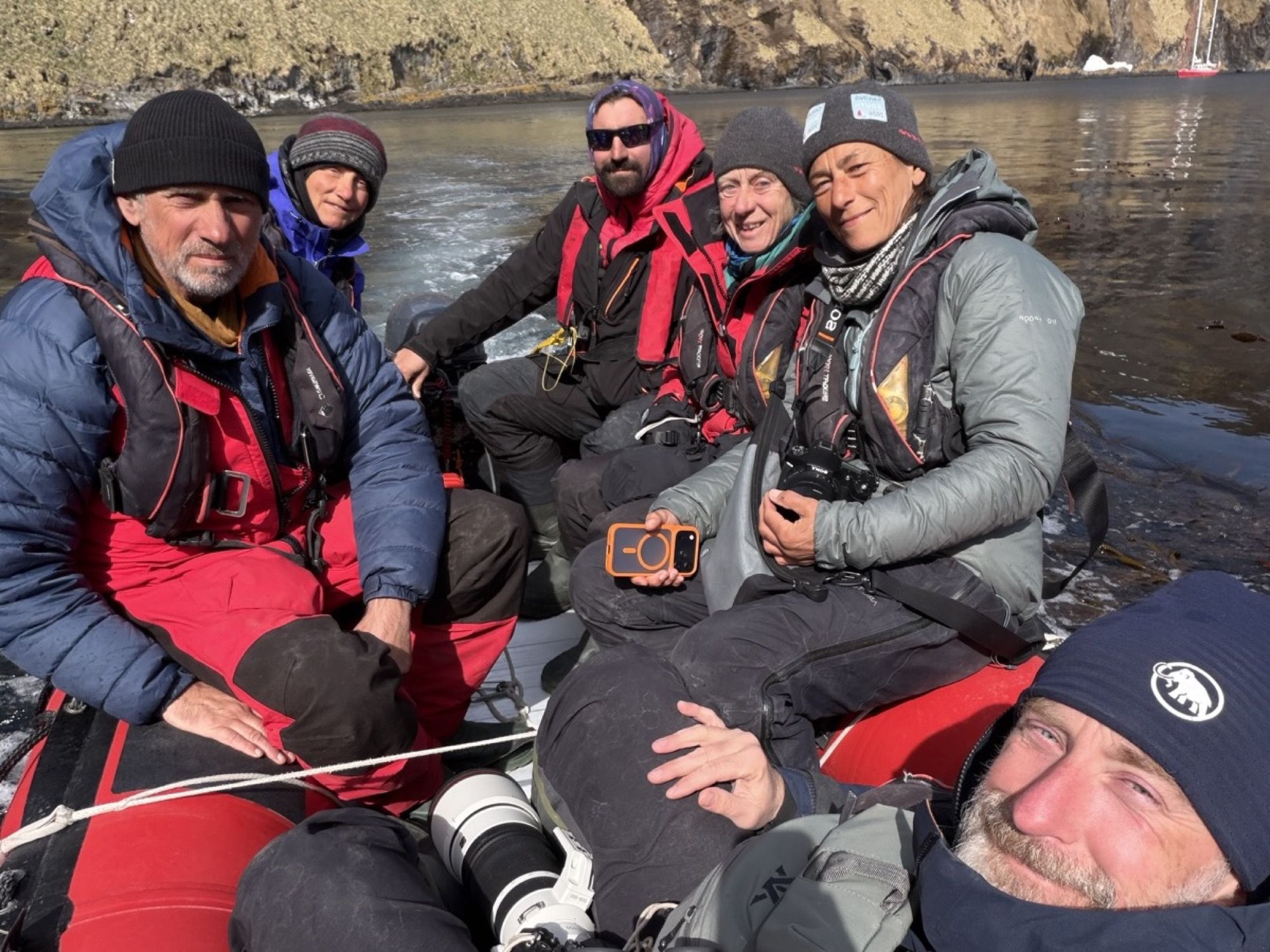
Since the beach and shoreline are completely packed with locals, we decide not to go ashore. Instead, we take an extensive Zodiac tour through the bay, passing by all the teeming life, peering into caves and crevices, gazing at the undulating kelp, and scanning the surrounding slopes for the first macaroni penguins. Unfortunately, to no avail.
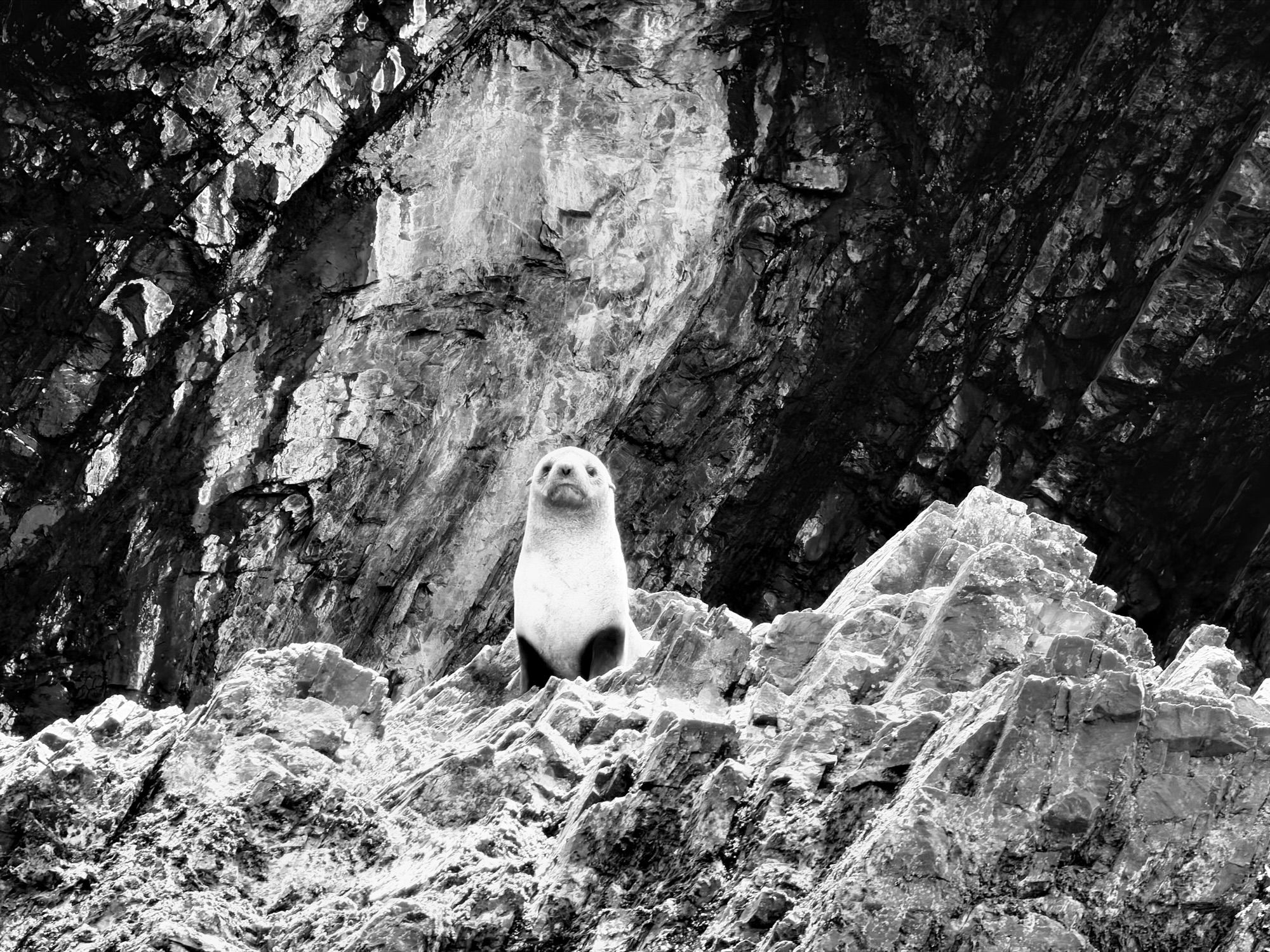
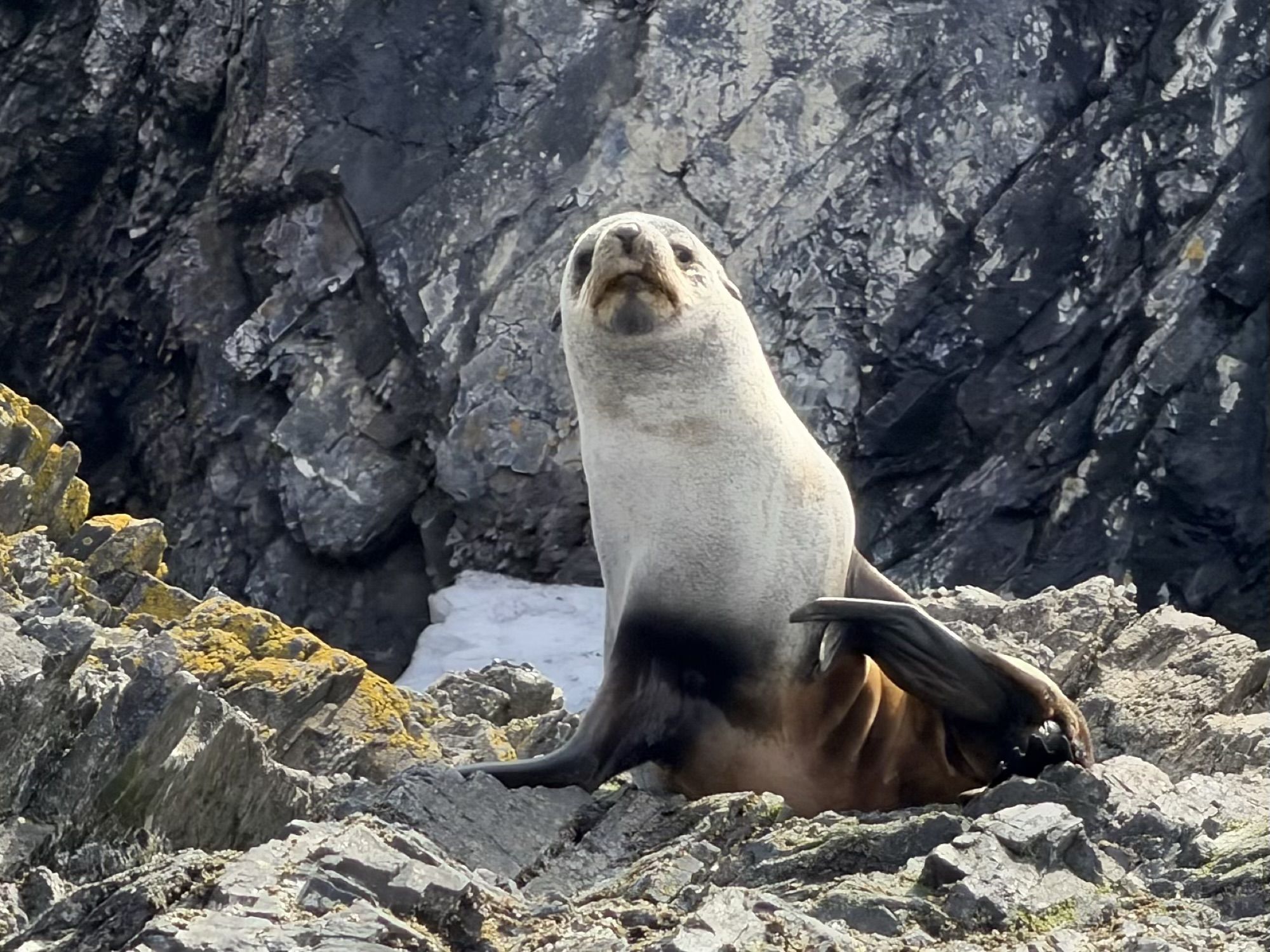
We had actually planned to set out in the evening. However, since it’s extremely windy outside the bay and there are high waves—both coming straight at us—we’re leaving the anchor down and spending the night here.
As darkness falls, scattered snowflakes begin to dance in the pale moonlight, and a wonderful atmosphere settles over the bay.