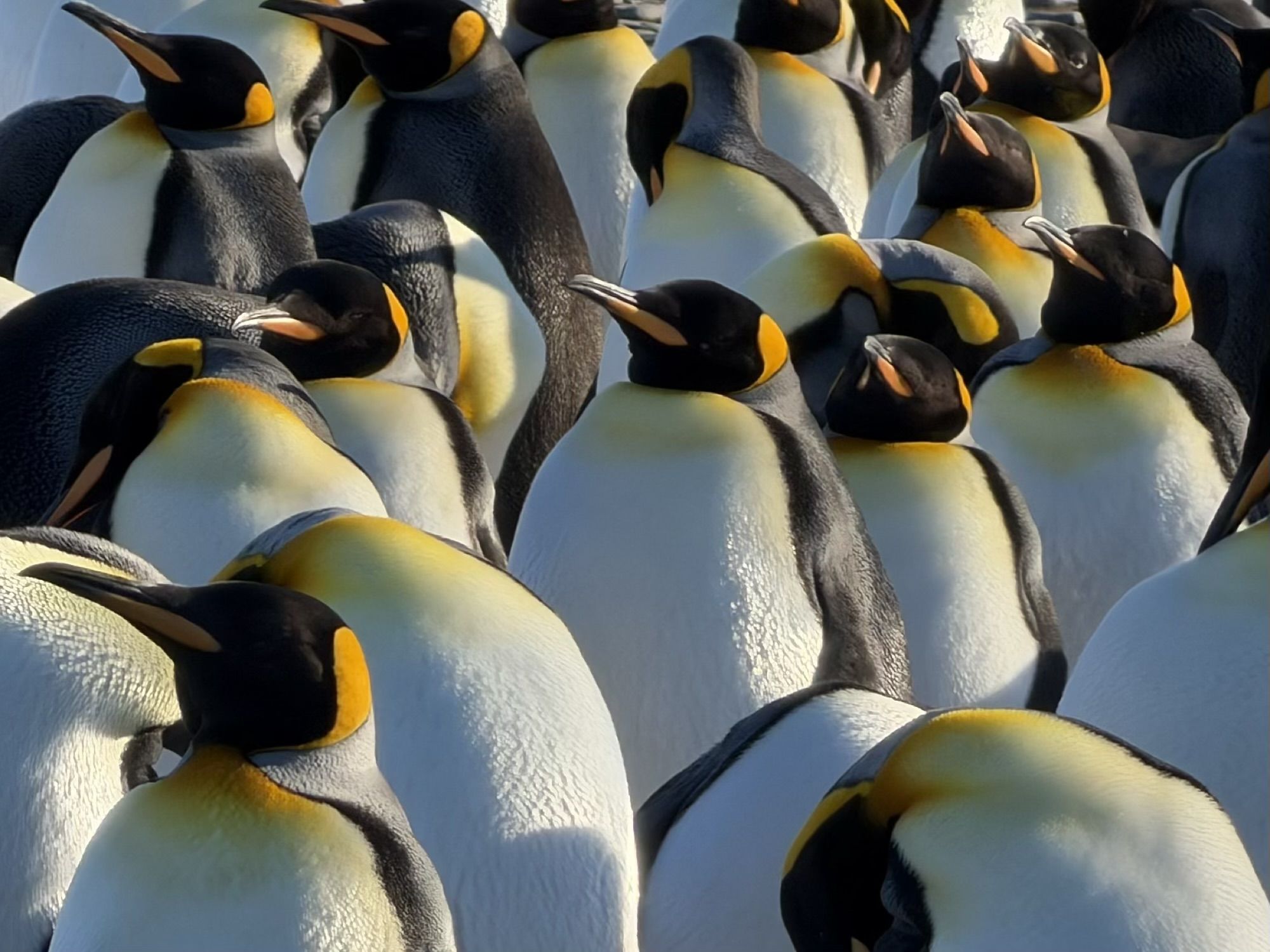
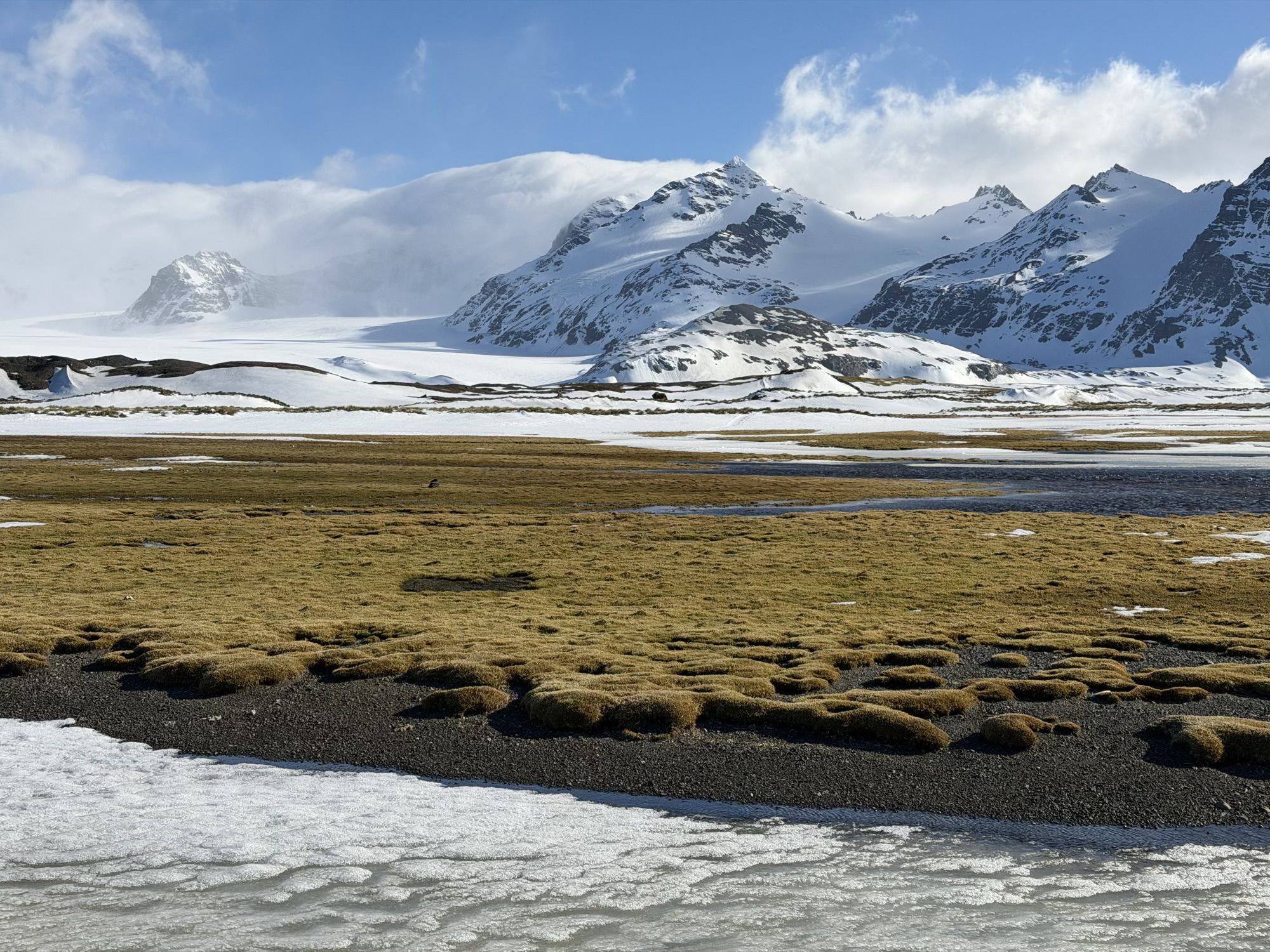
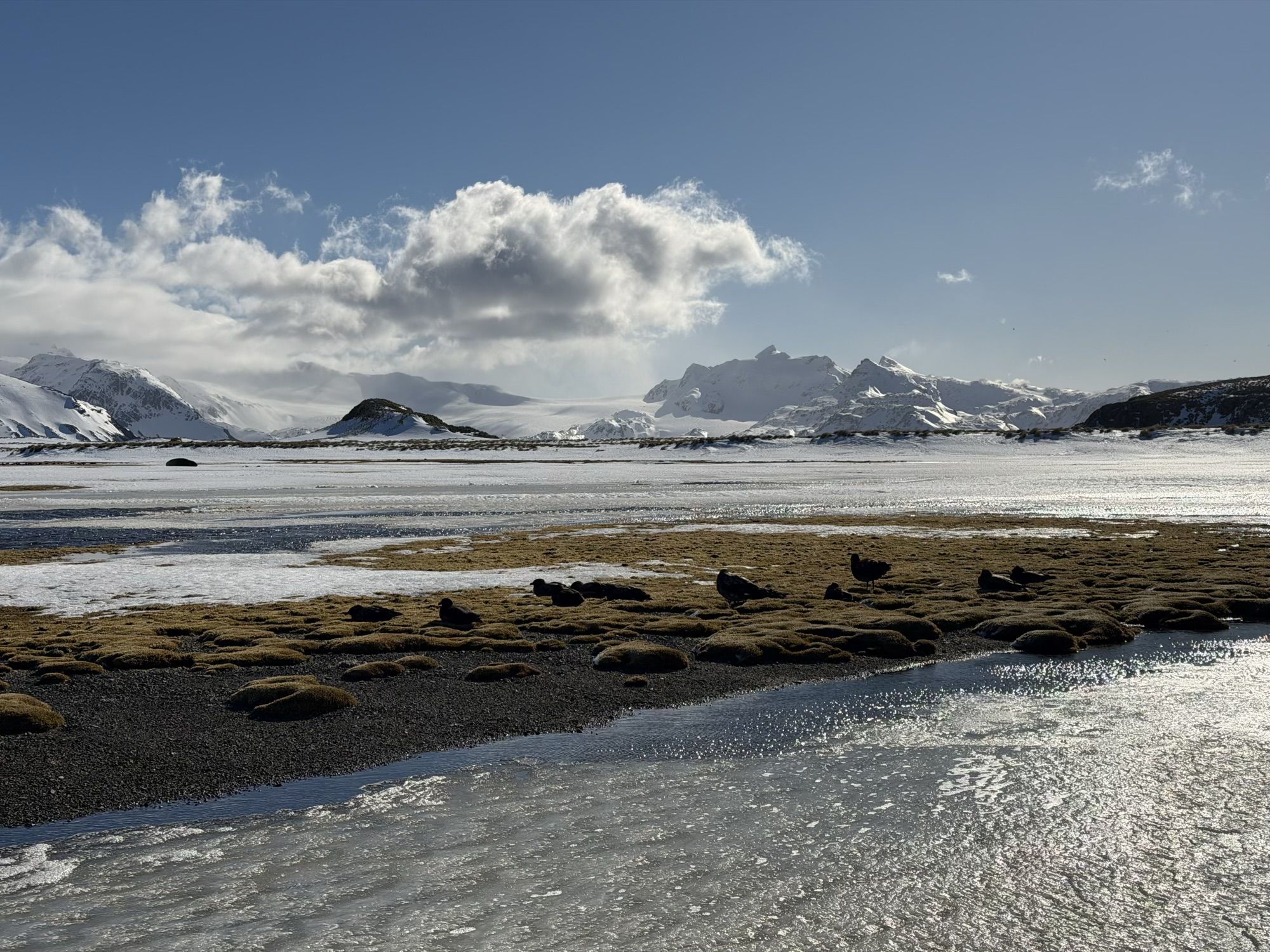
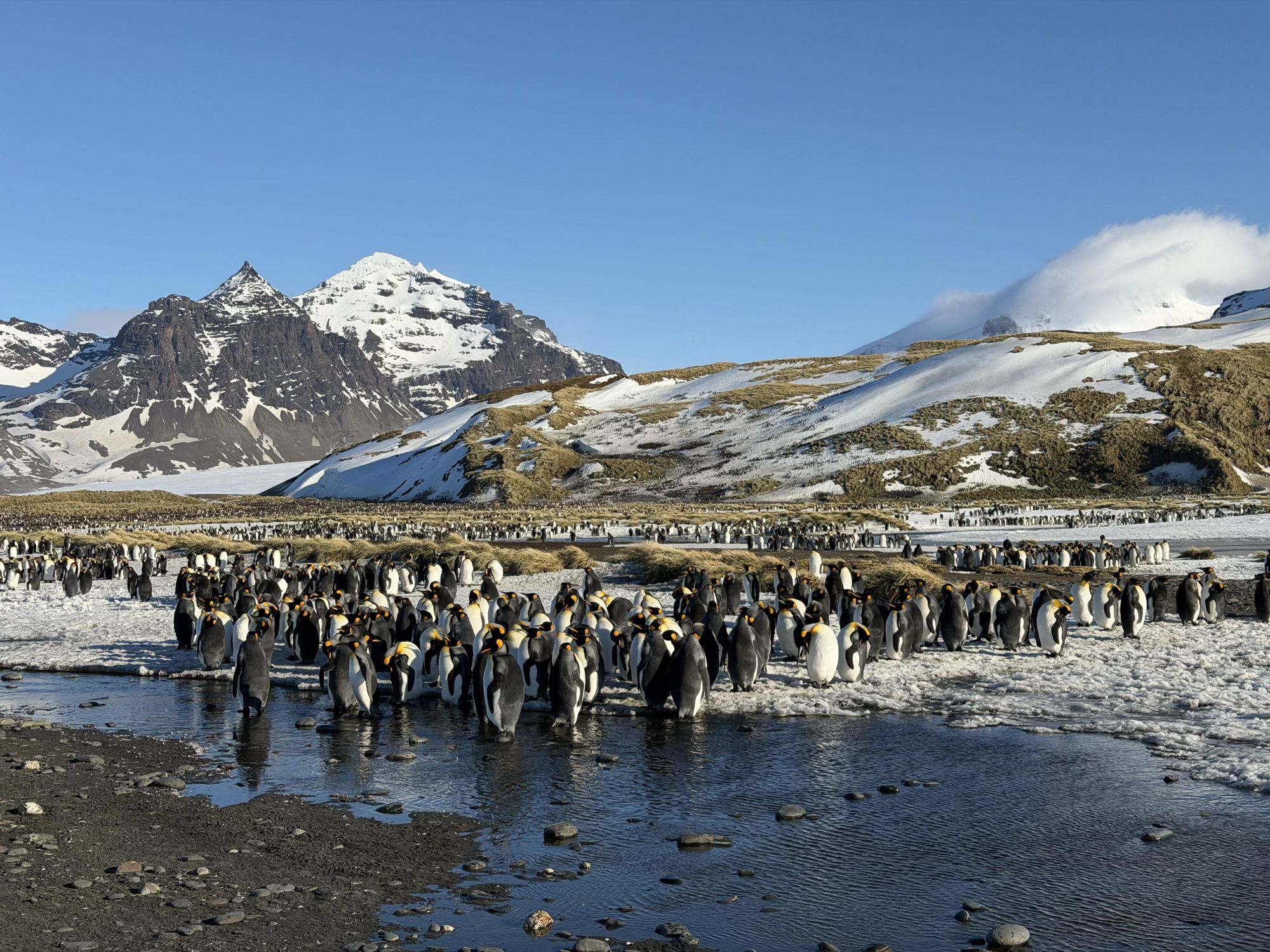
A dream in white, blue, and pale yellow. A vast, gently curving bay, surrounded by a magnificent mountain backdrop. Dotted with thousands upon thousands of tiny dark specks—that is Salisbury Plain. The tiny specks scattered across the landscape are hundreds of thousands of king penguins. A massive colony, whose calls echo across the landscape. The wind has died down a bit.
We get the dinghy ready—it’s almost second nature by now—and row ashore.
Numerous seabirds are soaring through the deep-blue sky: from the large giant petrels to the small, fluttering terns trying to catch tiny krill from the water. Both Arctic and Antarctic terns can be seen. These small, delicate birds breed at opposite ends of the world: Arctic terns in the Arctic, and Antarctic terns here in the south. Between breeding seasons, they fly halfway around the world. It’s hard to imagine. It’s easy to tell them apart: the birds that are currently breeding are easily recognizable by their red beaks—in this case, here in South Georgia, the Antarctic Terns that are breeding here. The Arctic Terns currently seen here have black beaks, since this is not their breeding ground.
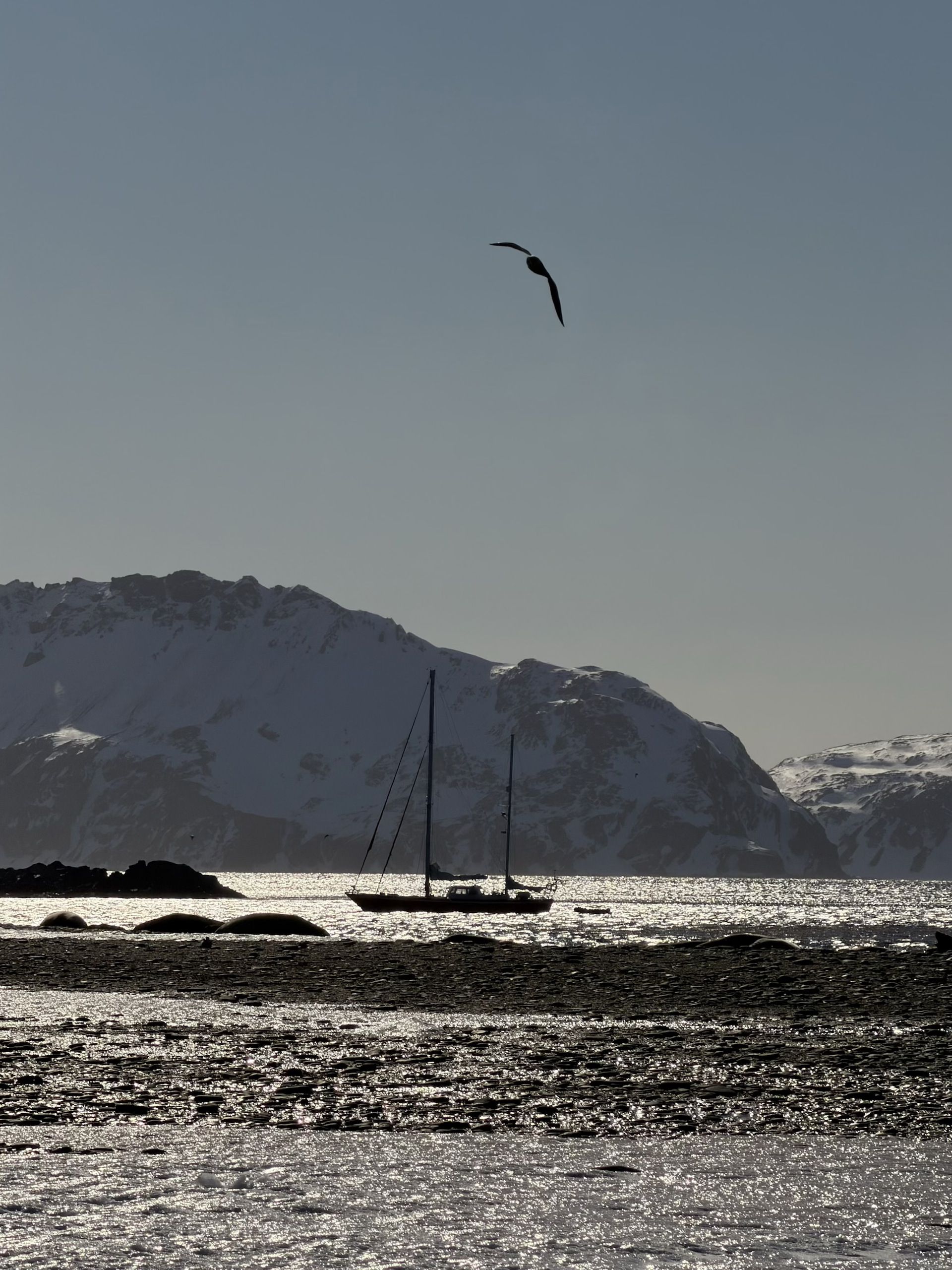
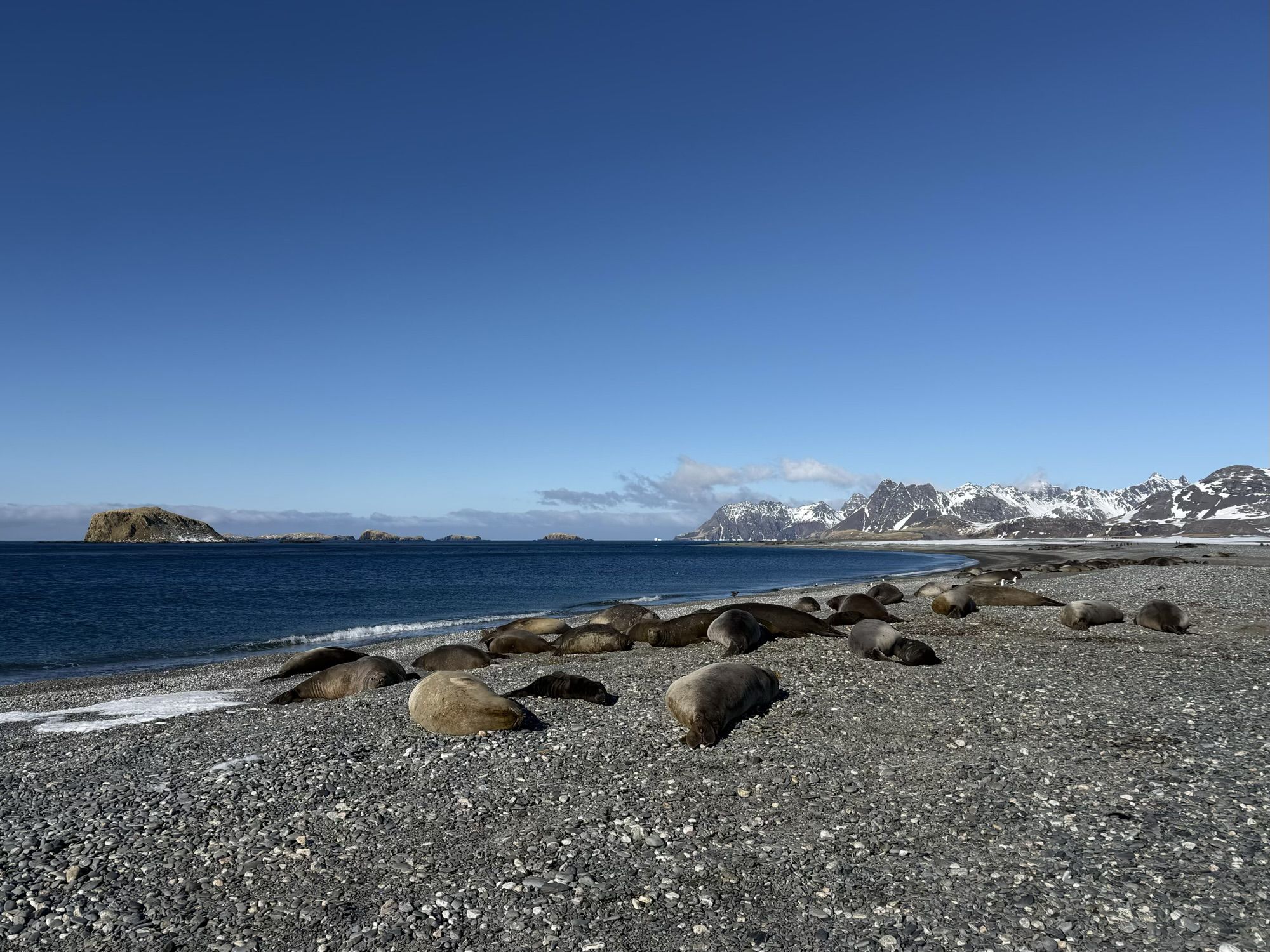
Along the long, stretchy beach, one colony of elephant seals follows another, with only a few—perhaps a hundred—meters between them. There must be hundreds or thousands of them.
Most of the females have their young lying right next to them—just a few days old, with black fur, and tiny compared to the adult animals.
They communicate by barking, calling, and bleating.
In the center of the harem, often near the water’s edge, lies the pasha, the largest and most dominant bull. Often, two other, younger bulls lie at the edges, just waiting to push their way into the harem should the opportunity arise—or simply to give it a try. Then these three or four metric tons of sheer mass spring into action with astonishing speed to put the intruder in its place. In the process, the Pascha ruthlessly plows through anything in its path—unfortunately, sometimes even a small calf.
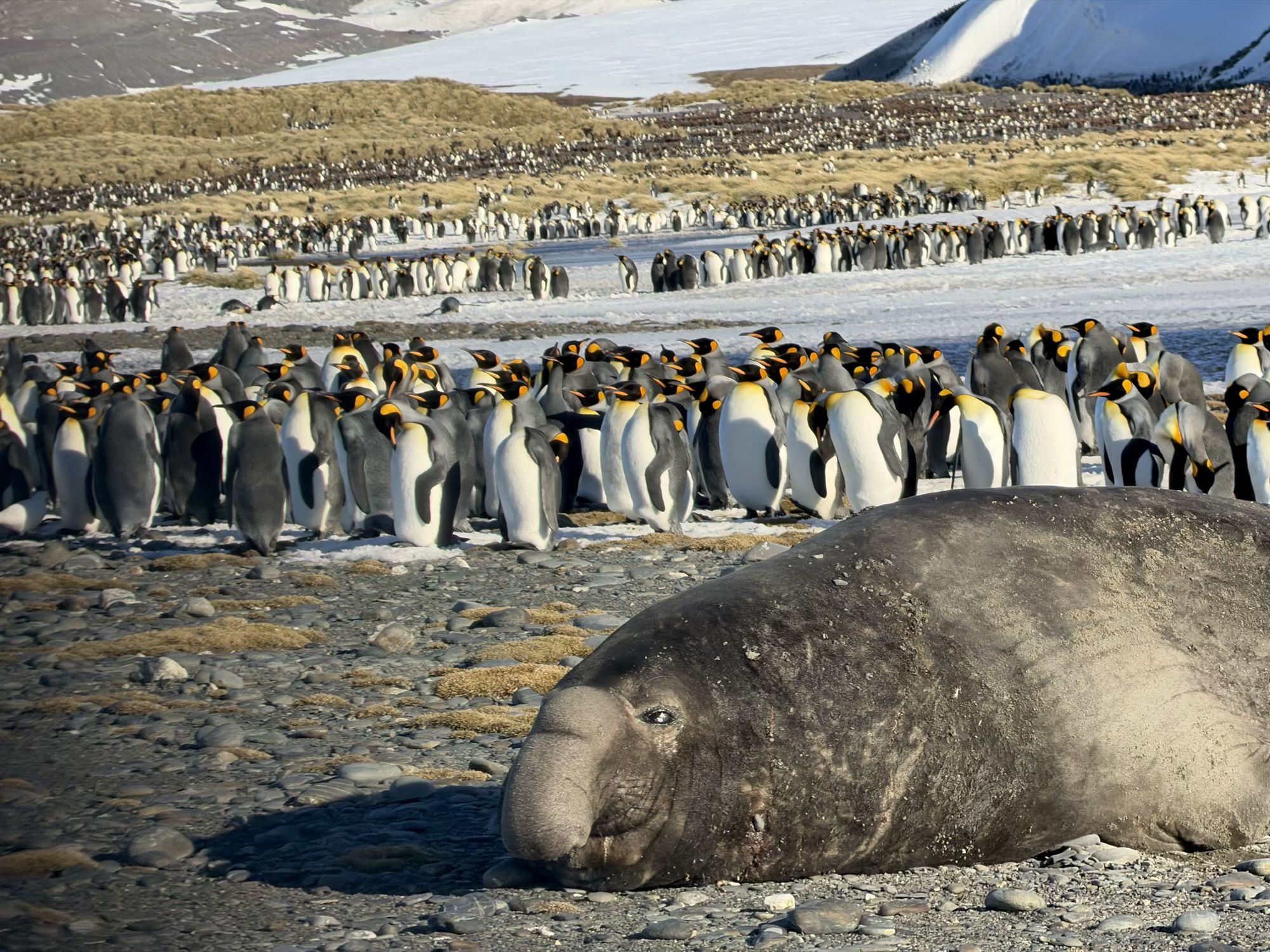
The penguins, which stroll unabashedly among the colossal creatures lying there, are quick enough to scatter at the first sign of an approaching bull and thus escape unharmed.
Often, this threatening gesture—combined with a wide-open mouth, a flared nose, and an angry snort—is enough to put an end to the audacious attempt.
Sometimes, however, their courage is great enough, and a fight breaks out between the two bulls. It’s not exactly a gentle affair: the animals, weighing several metric tons, rear up, hurl themselves and their massive skulls at one another, and try to bite each other. This continues until the weaker one gives in and flees, and the victor, exhausted, sinks down among his harem and rests with a deep snort. The marks left by these often bloody clashes are visible on every one of the cops.
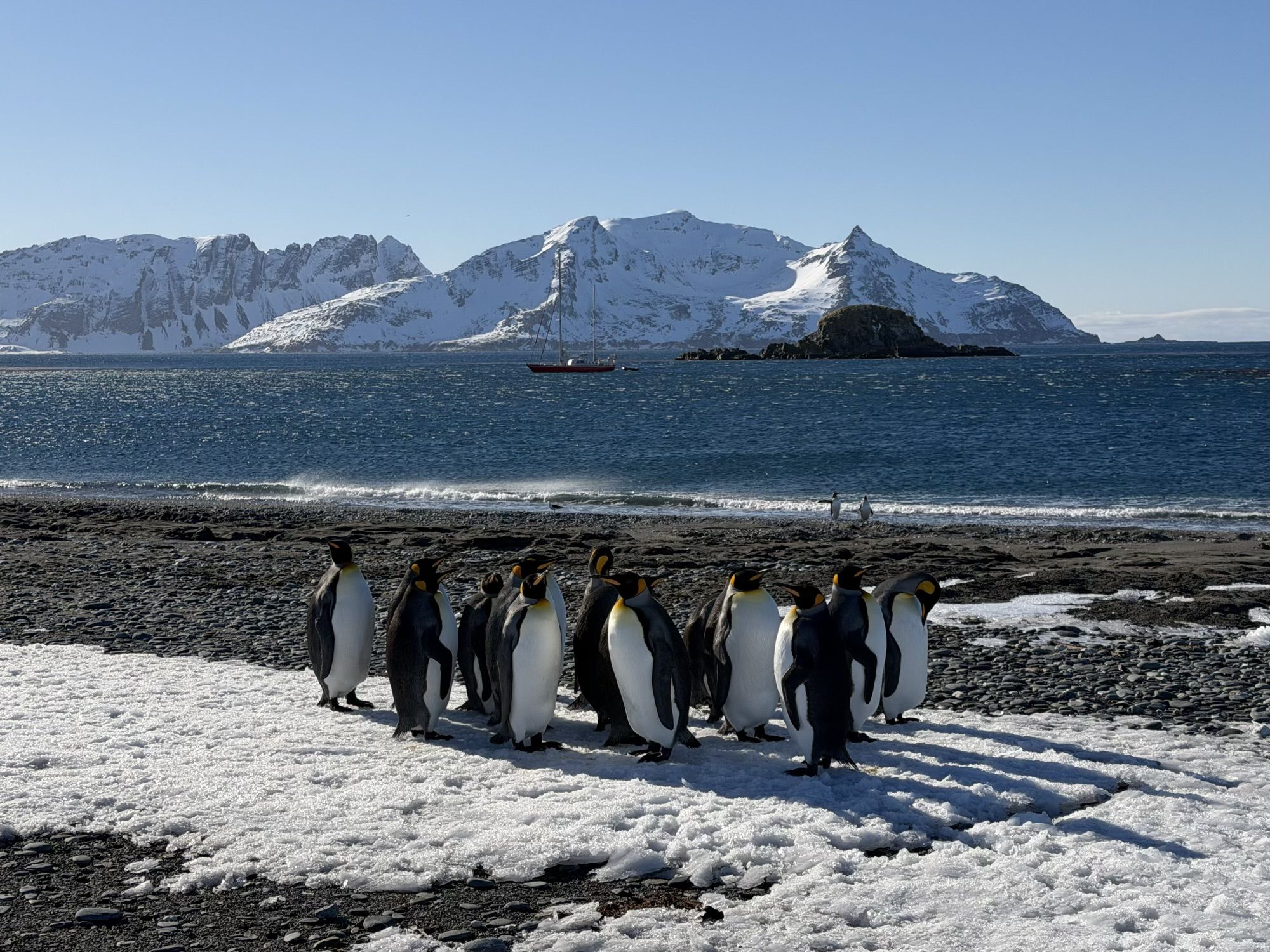
At the eastern end of the bay, the noise level rises noticeably from the chorus of calls emanating from the throats of hundreds of thousands of penguins. And there’s a lot of traffic. They’re moving from all directions and in all directions—within the colony, along the water’s edge, in the water, coming and going, far into the valley or emerging from it. It’s an unintentionally comical sight to see them—whether alone or in groups—walking somewhat awkwardly, staggering, stumbling, slipping, picking themselves up again… and there’s something deeply human about the way they are. Or at least that’s what one thinks one sees from time to time.
Huddled closely together within the colony, resplendent in color, animal after animal, they crane their necks and eye us. Here and there, a lone elephant seal can be seen among them.
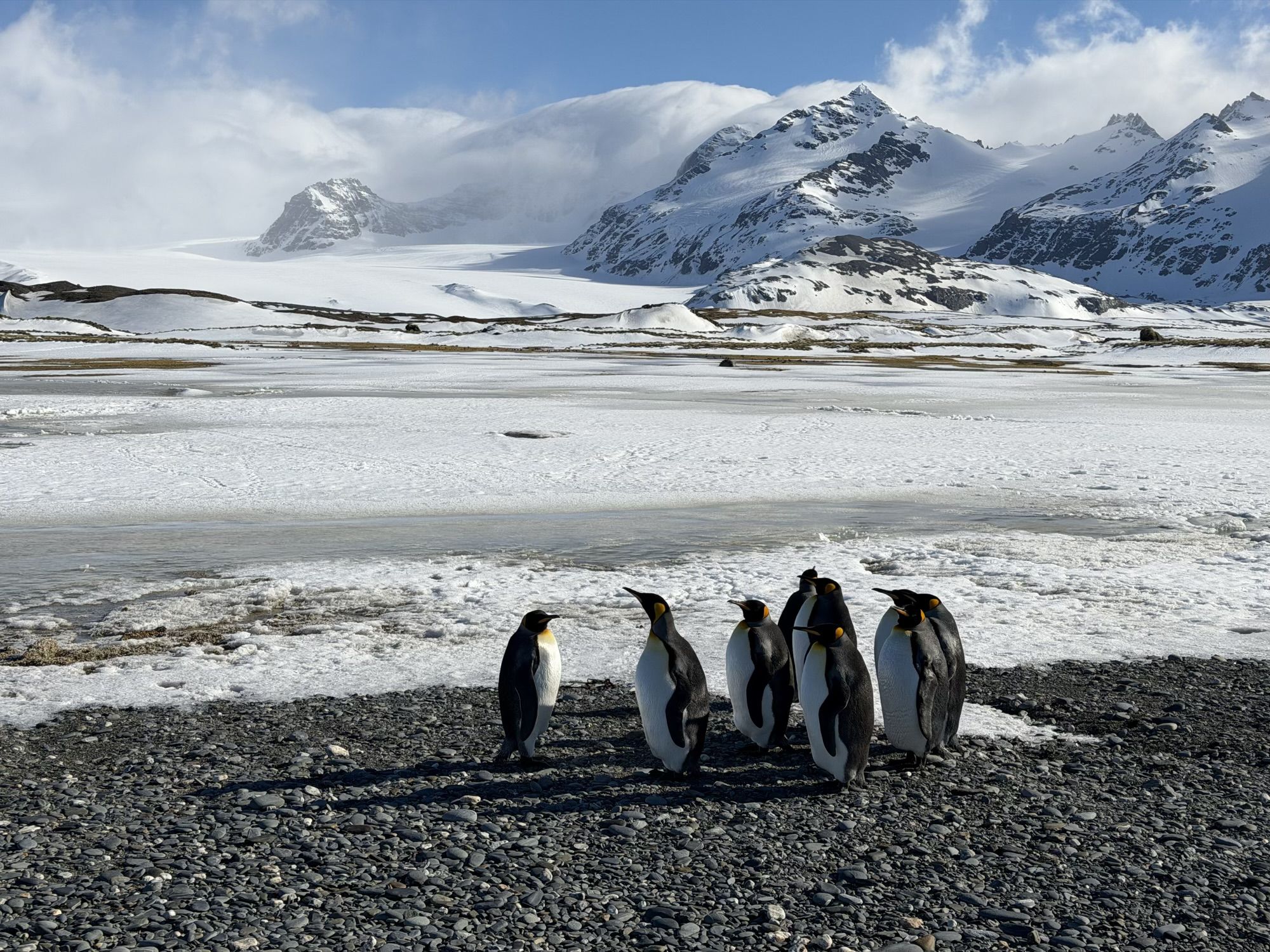
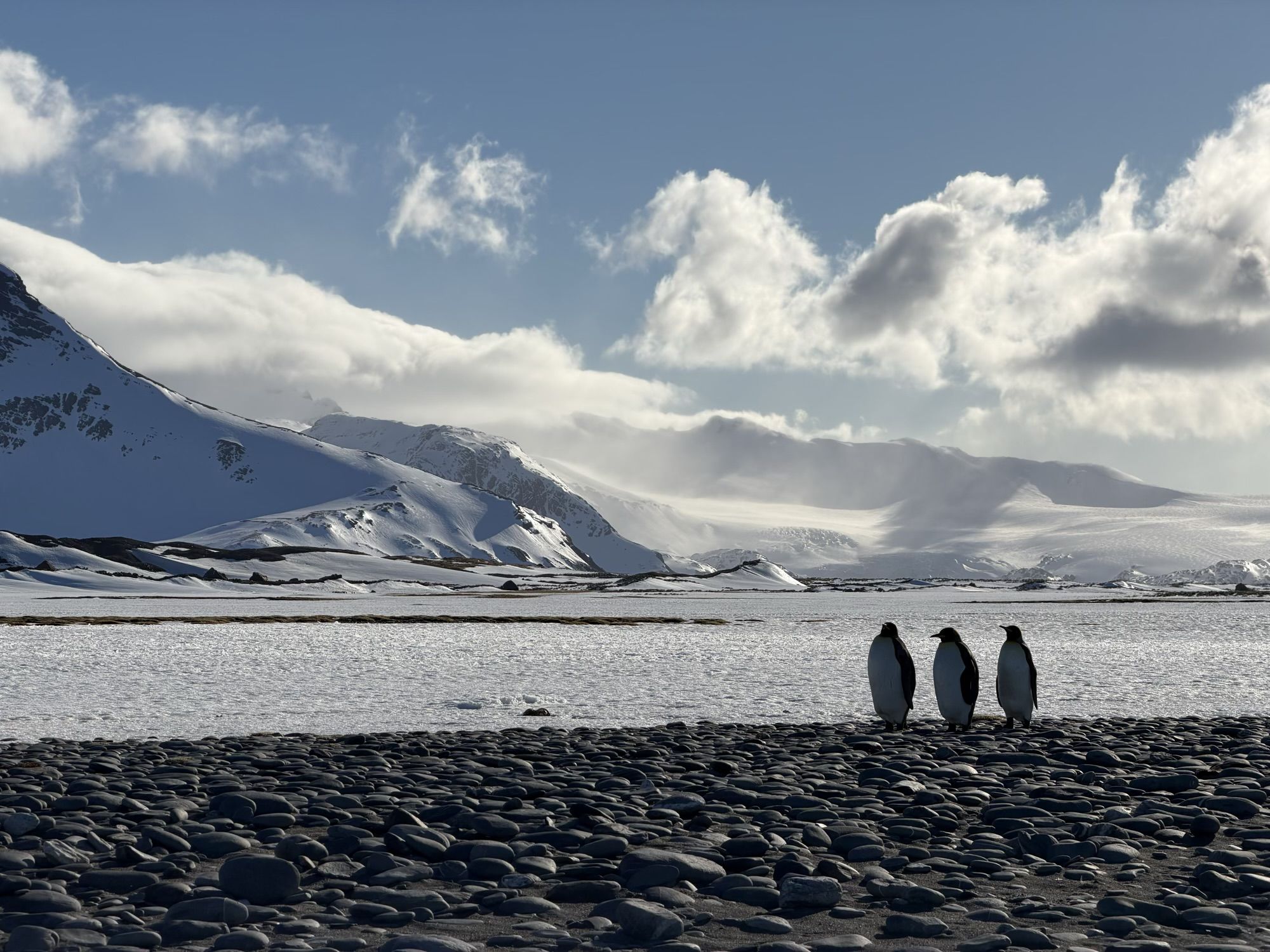
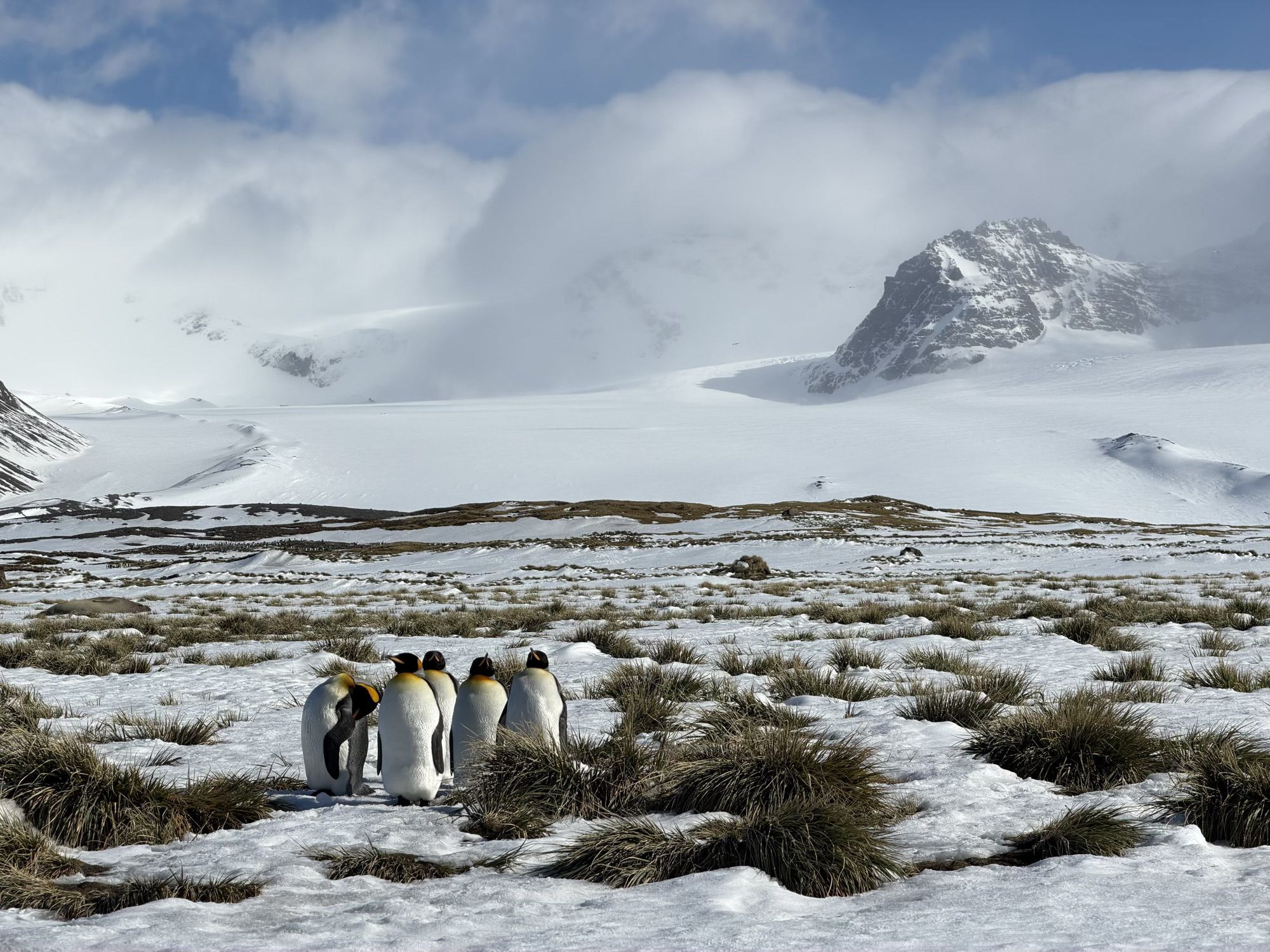
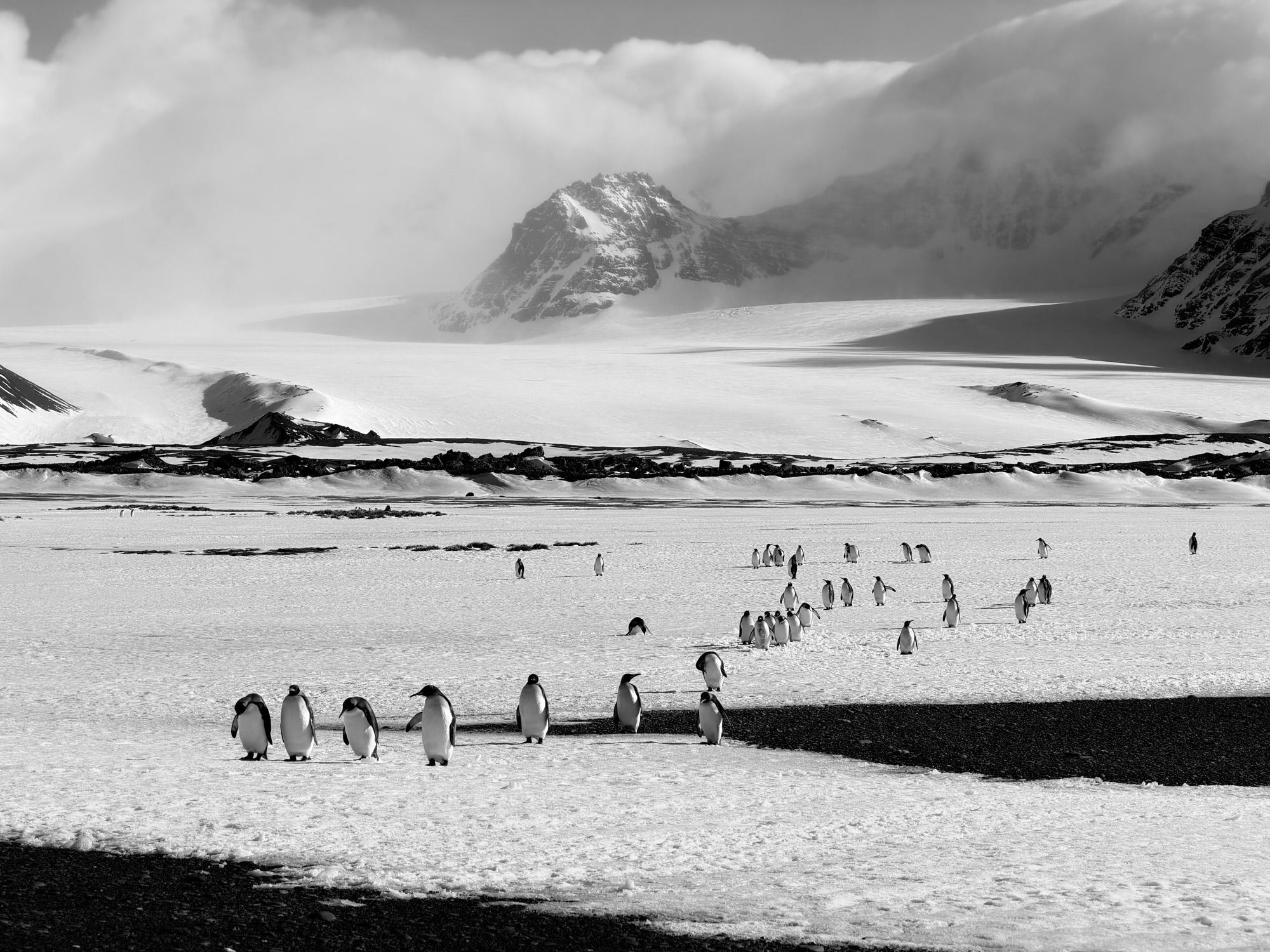
Further back, up in the valley, is the part of the colony with the nursery, where the chicks are. Brown, fluffy, and looking so very different from the elegant adult elephants, they cover a vast area.
So much life in such a small space! In such a remote corner of the world. Perhaps this is only possible for this very reason—because humans have virtually no say here, don’t belong here?
And so we, too, retreat back on board.
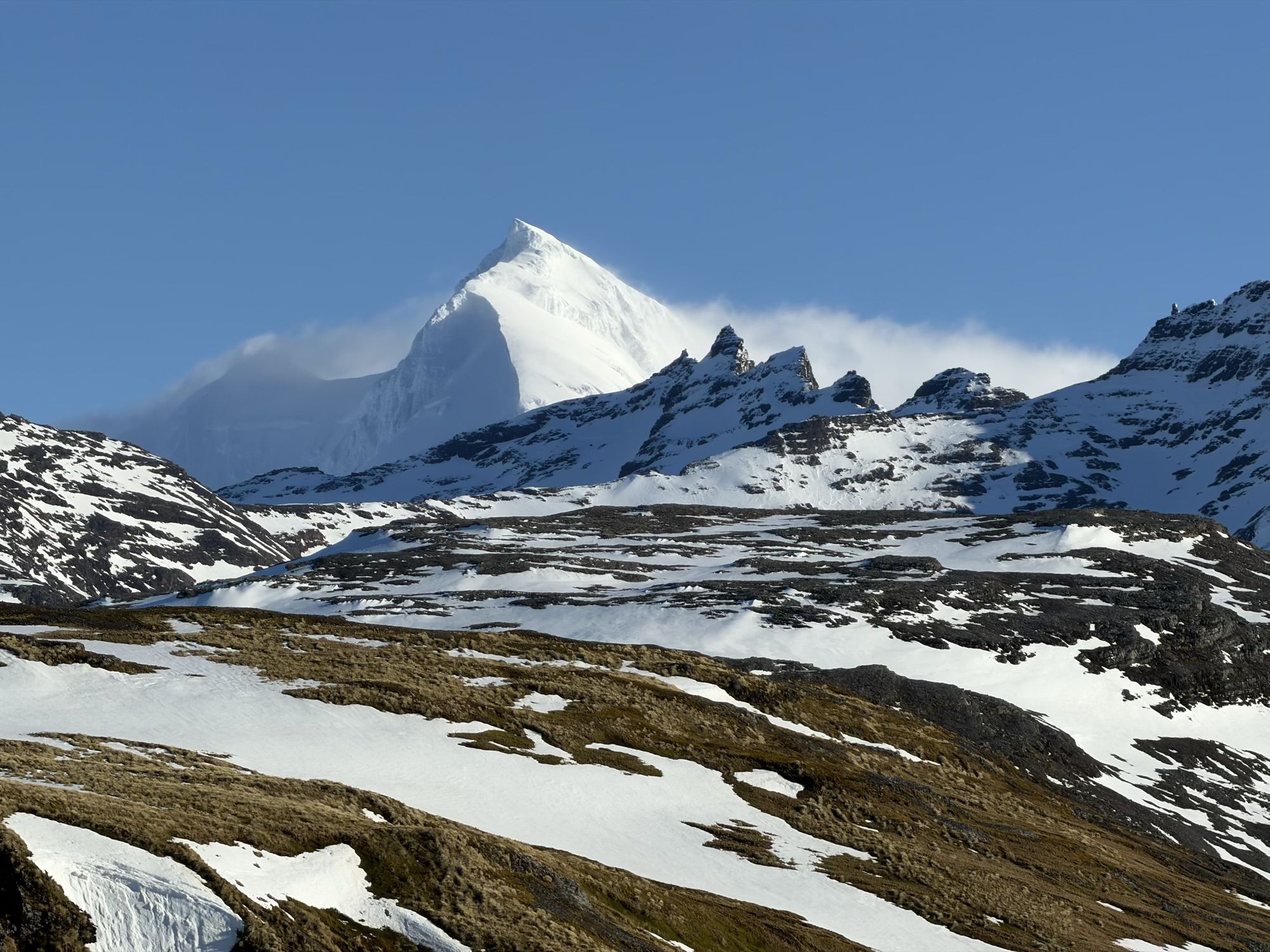
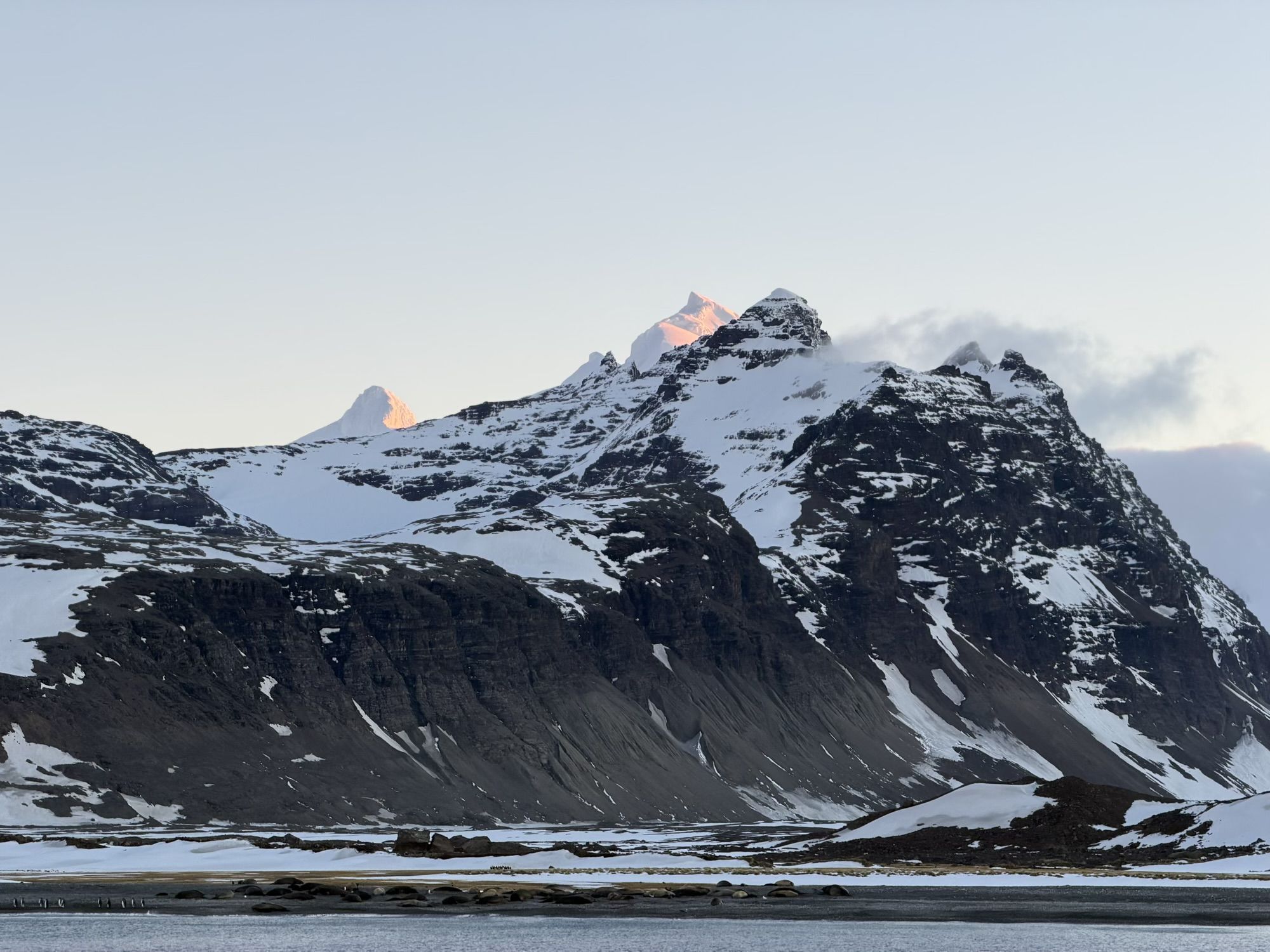
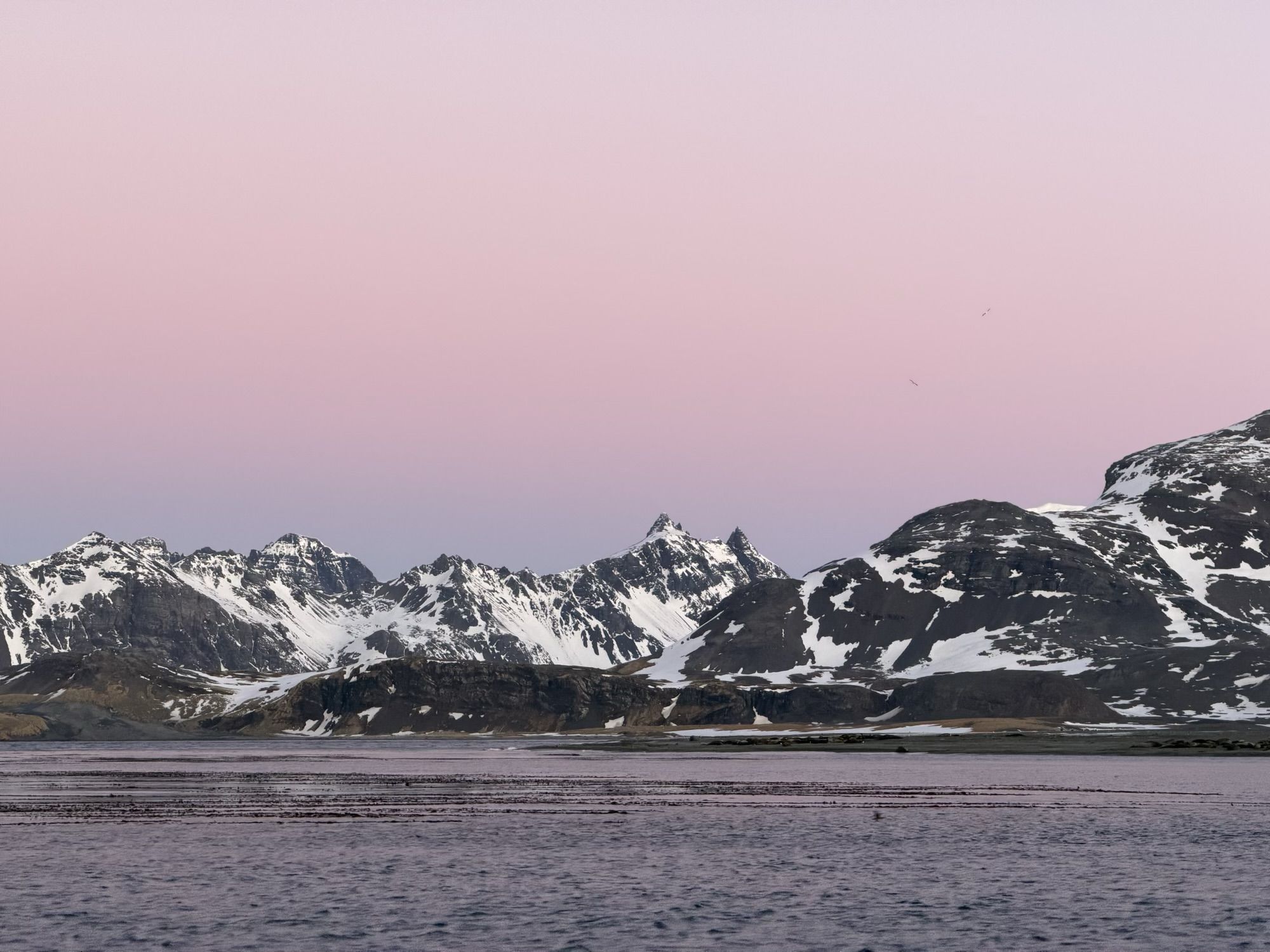
The evening heralds its arrival with soft pastel hues in the sky and pours its wonderful light over this uniquely beautiful landscape. It’s going to be a clear night. A narrow crescent moon hangs over the silhouette of the mountain range. And at least as many stars as there are penguins here on Salisbury Plain begin to twinkle in the night sky. The stars, the penguins’ calls, and the sounds of the elephant seals accompany us through an otherwise quiet night.