What a morning!
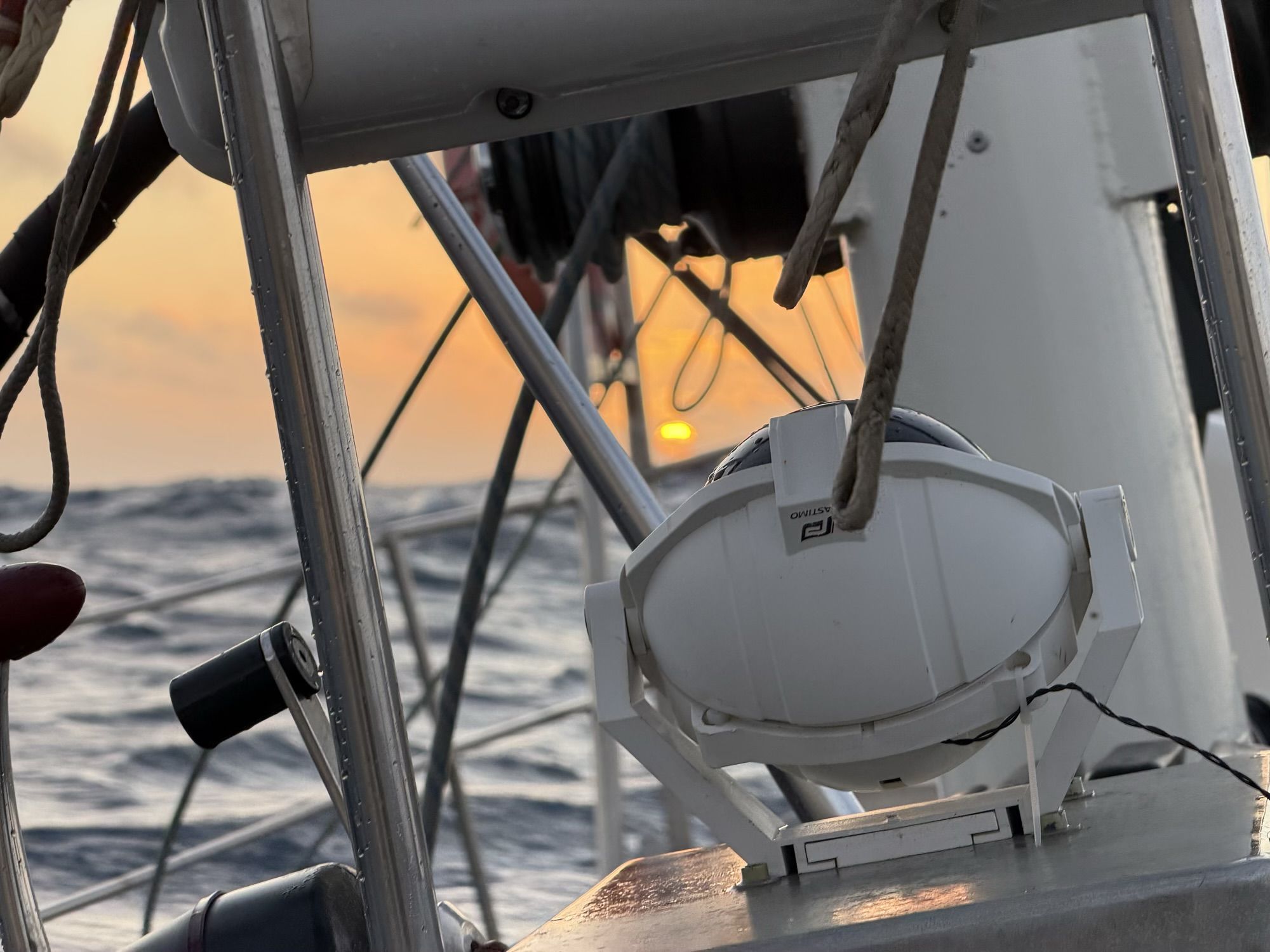
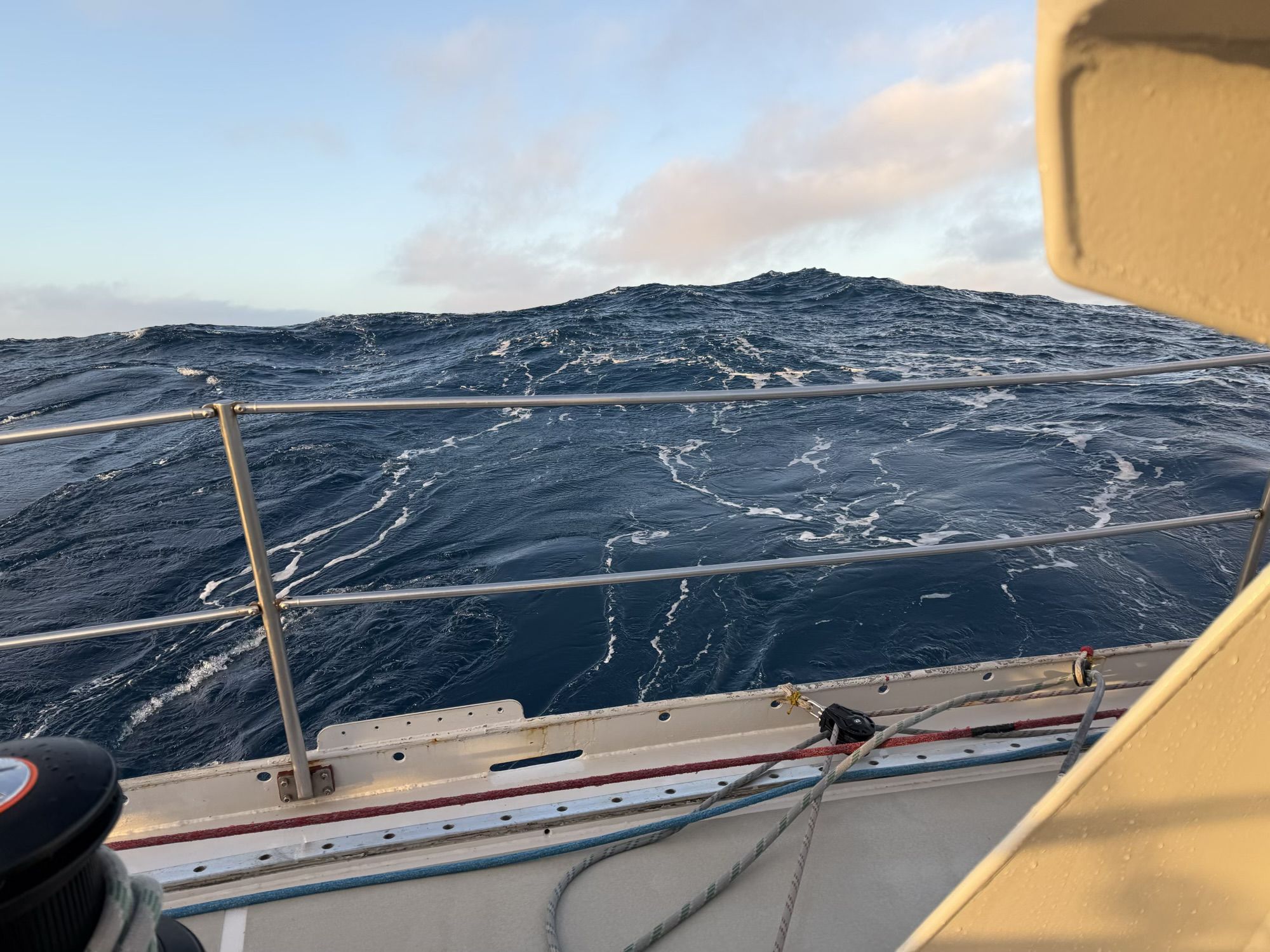
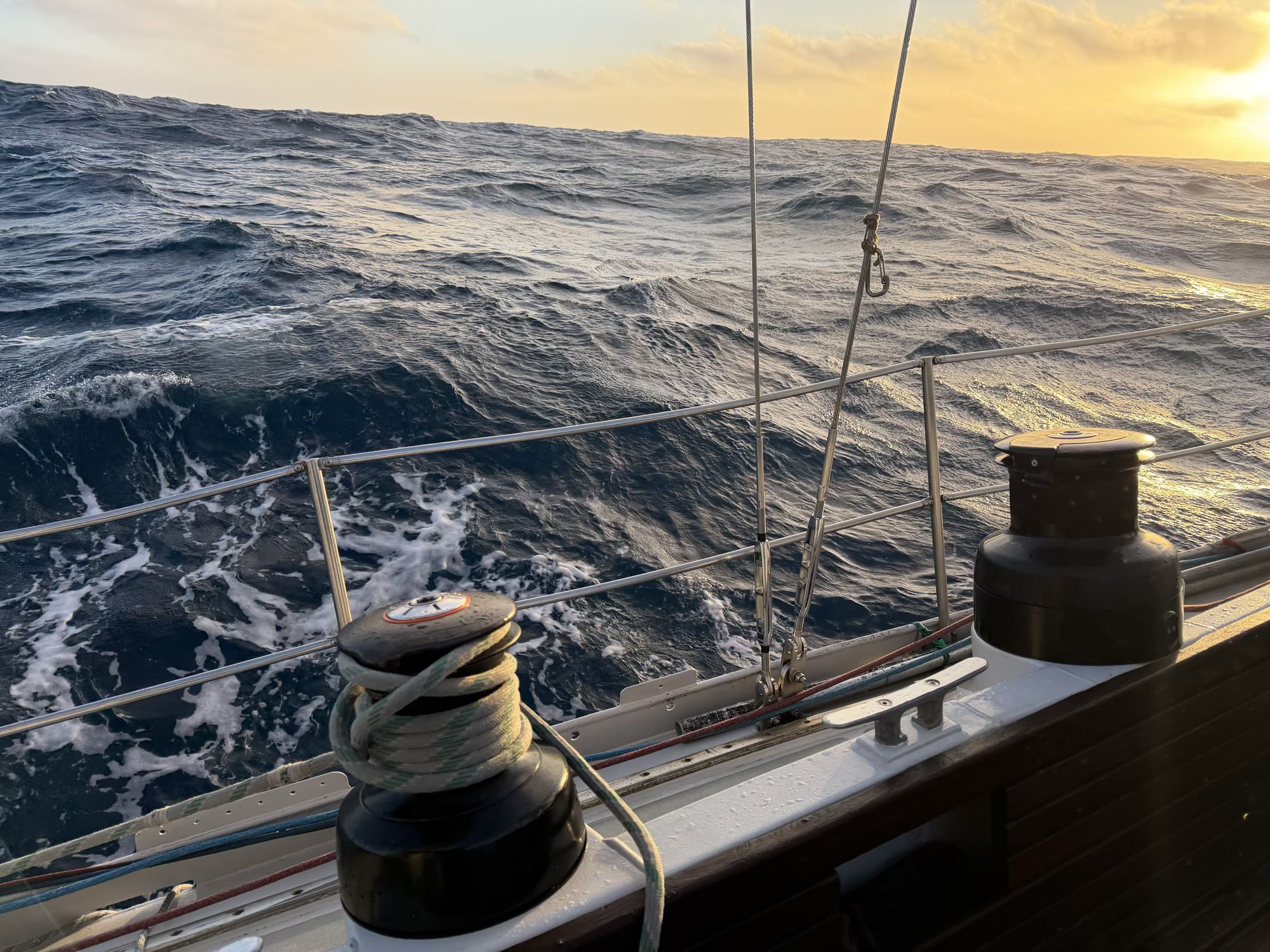
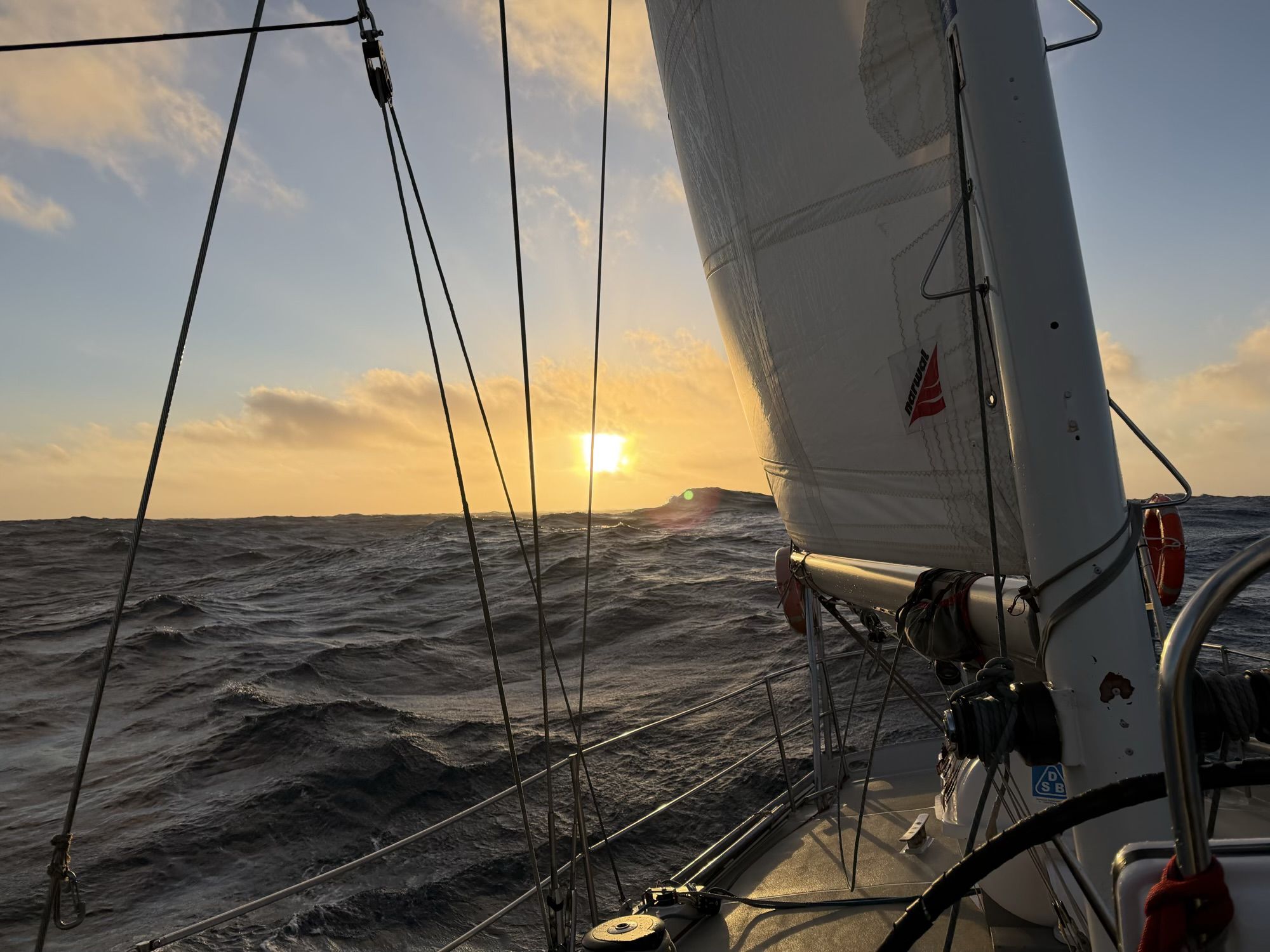
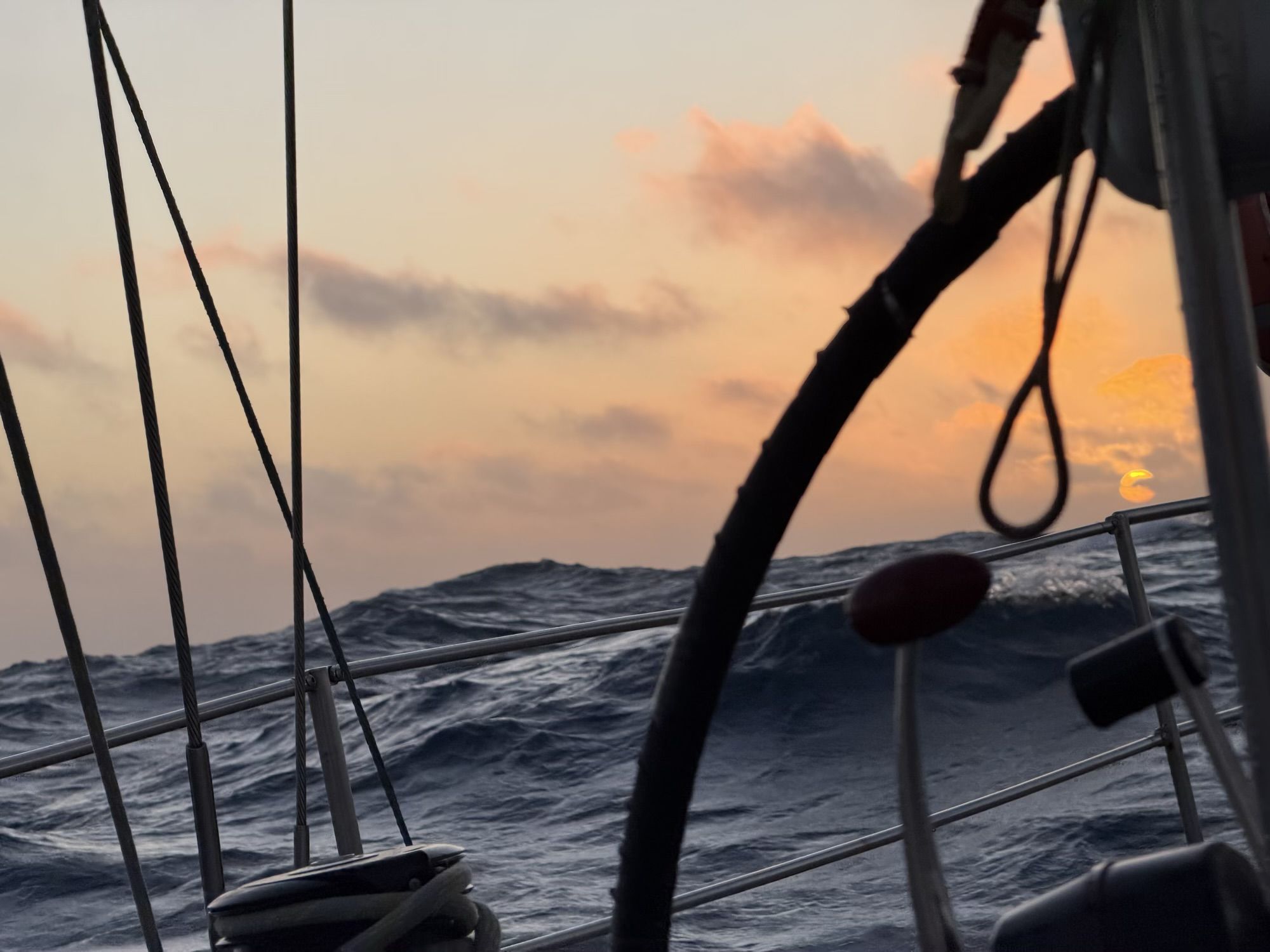
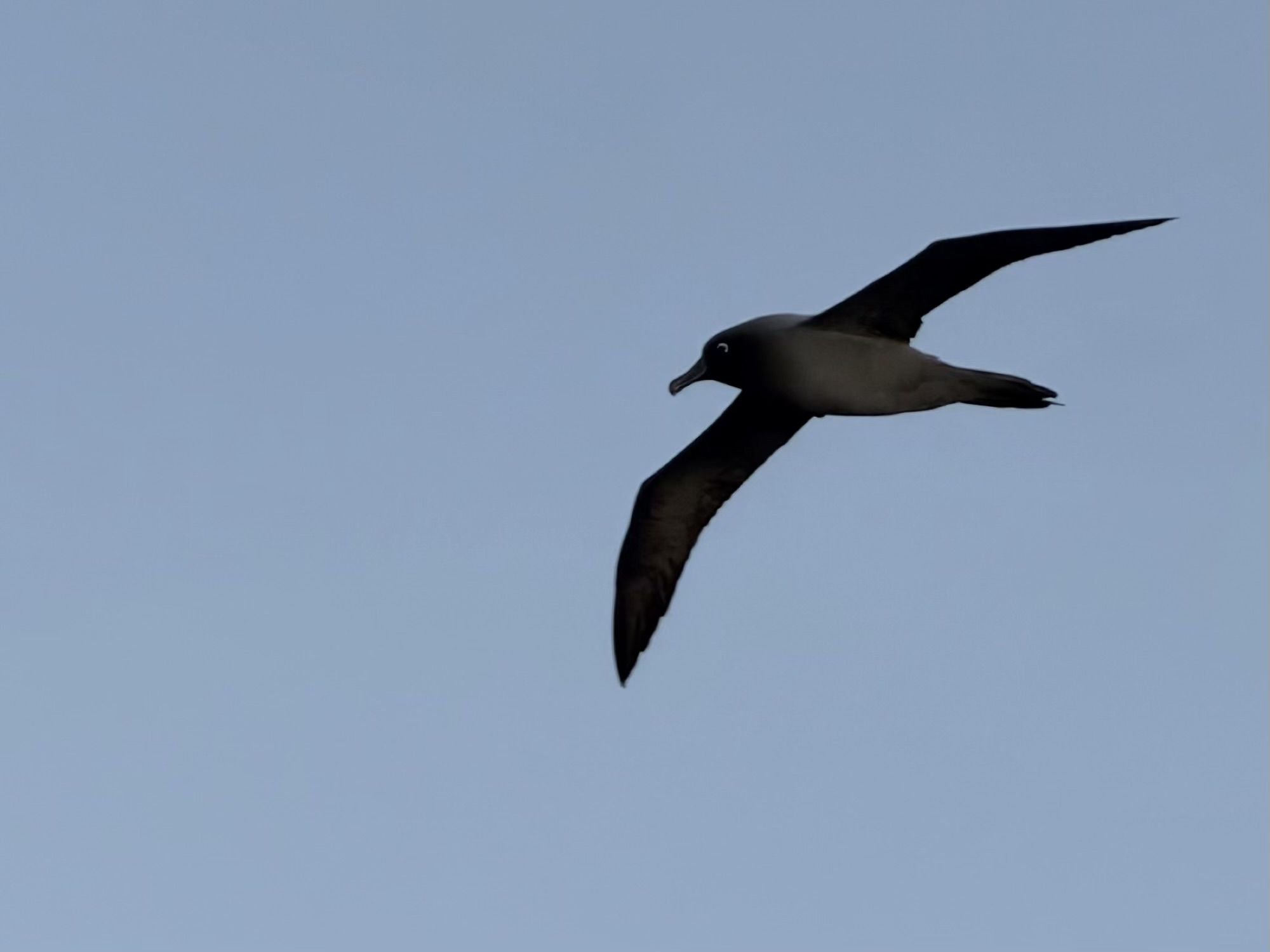
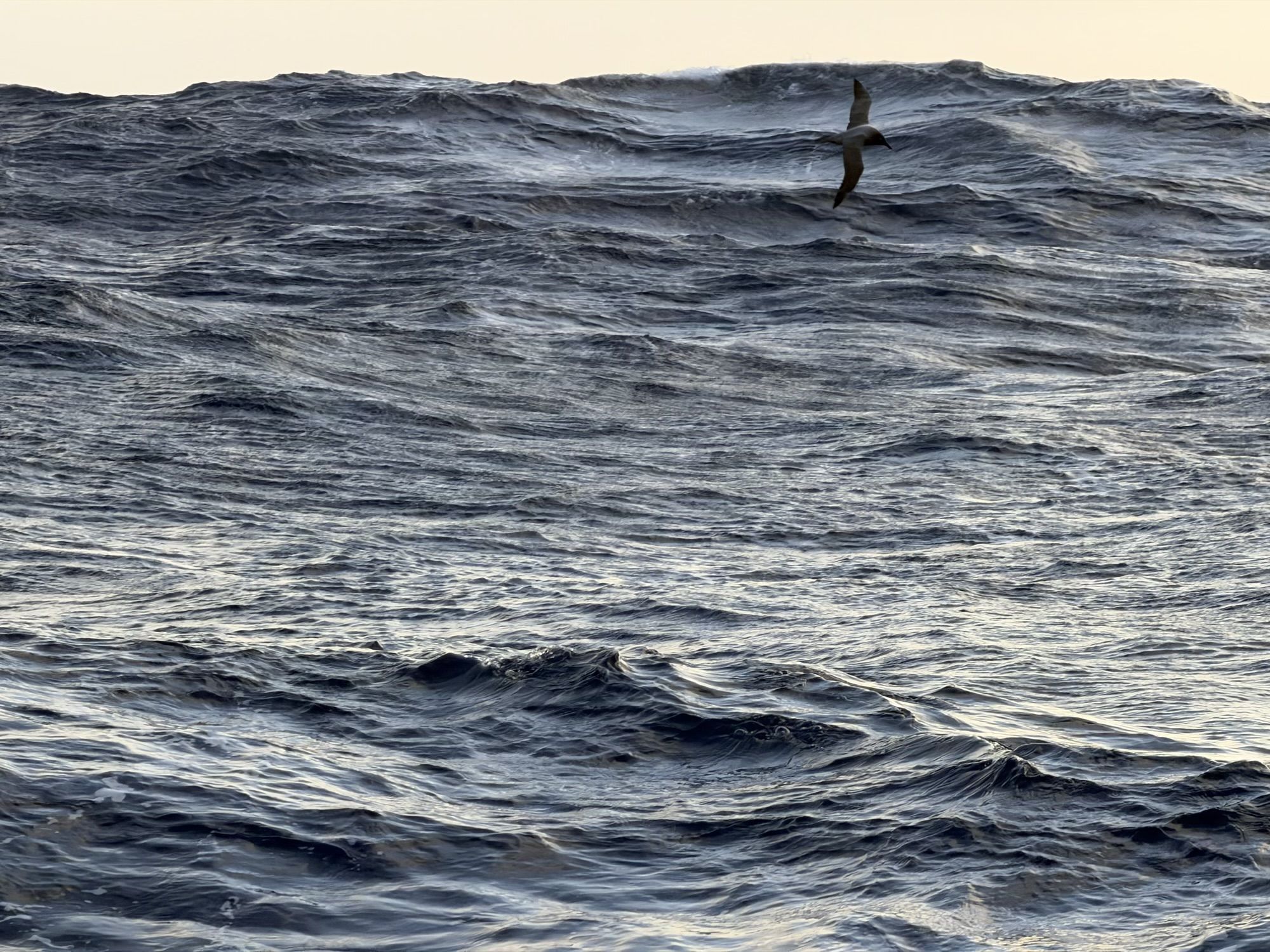
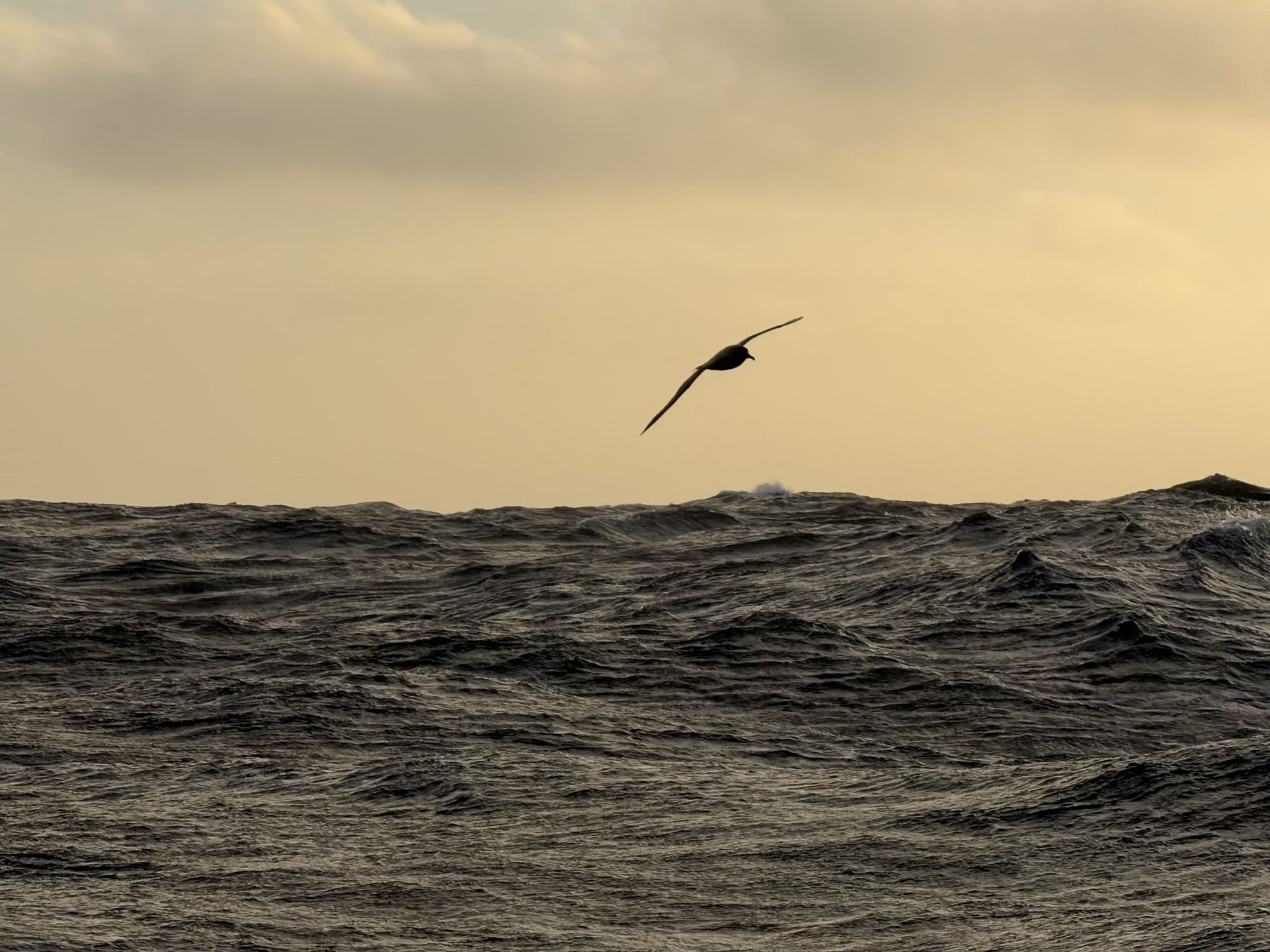
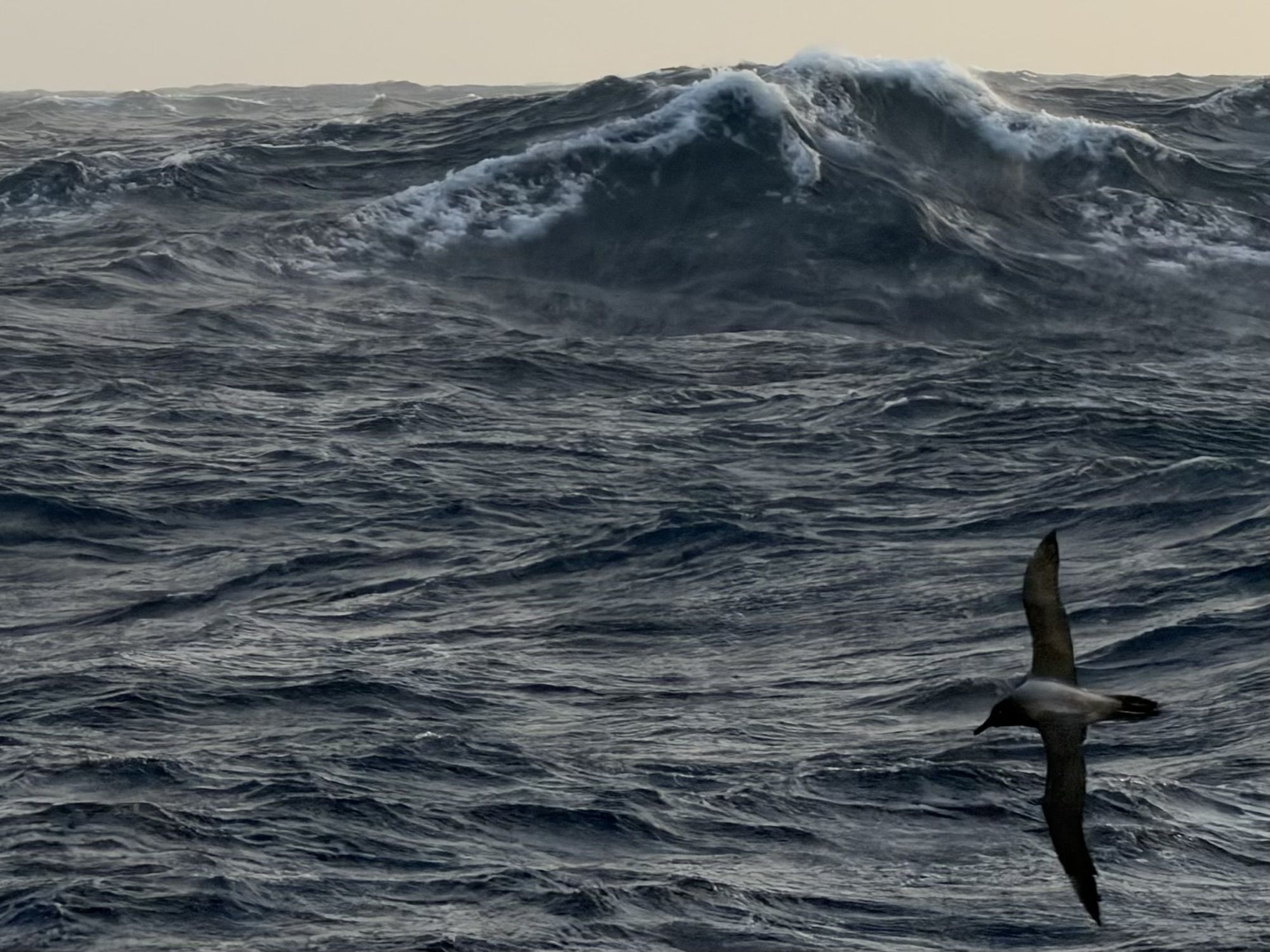
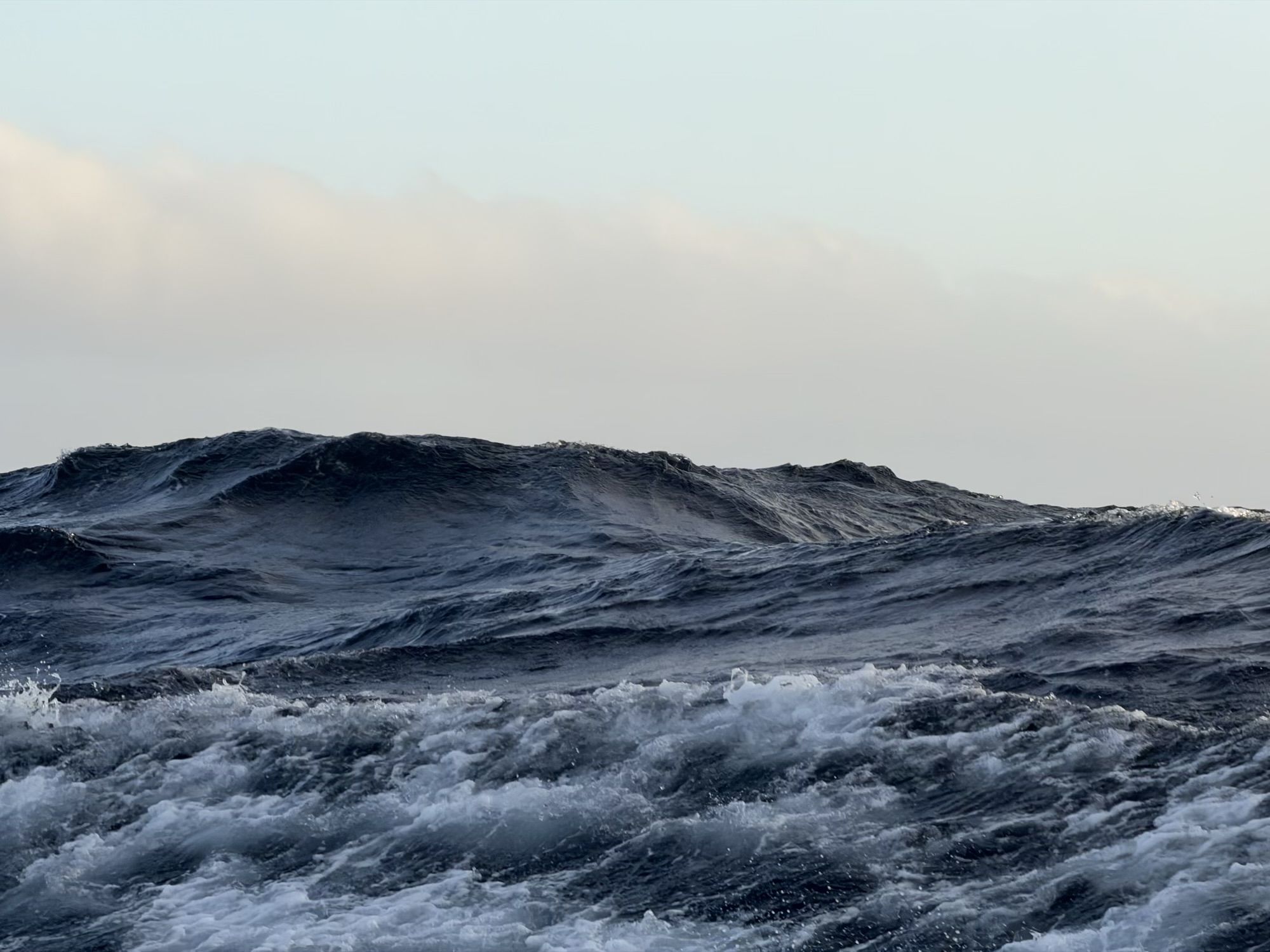
I’m on my first watch from four to eight. Shortly after five, the sun rises astern from the leaden-gray-blue, rolling sea. The sea is rough and beautiful, the wave crests and troughs high, and the swell—coming from a slightly different direction—creates a choppy sea. A pair of Sooty Albatrosses circles the Selma in a synchronized, harmonious flight. The day couldn’t start any better.
Our second night of drifting is behind us. South Georgia is still too close, so there’s still a chance we’ll encounter icebergs and growlers. We passed the last large iceberg and its smaller companions yesterday afternoon.
Actually, it’s a full moon. On a cloudless night with calmer conditions, sailing at full speed would be entirely possible. But the sky was thick with clouds—no moon or stars to shed any light on the darkness. The chance of spotting growlers in time with 4- to 5-meter waves is virtually zero, and racing through the night at 30 to 35 knots is far too risky. And so we adjusted our course once again and let ourselves drift, covering 26 miles northward during the night.
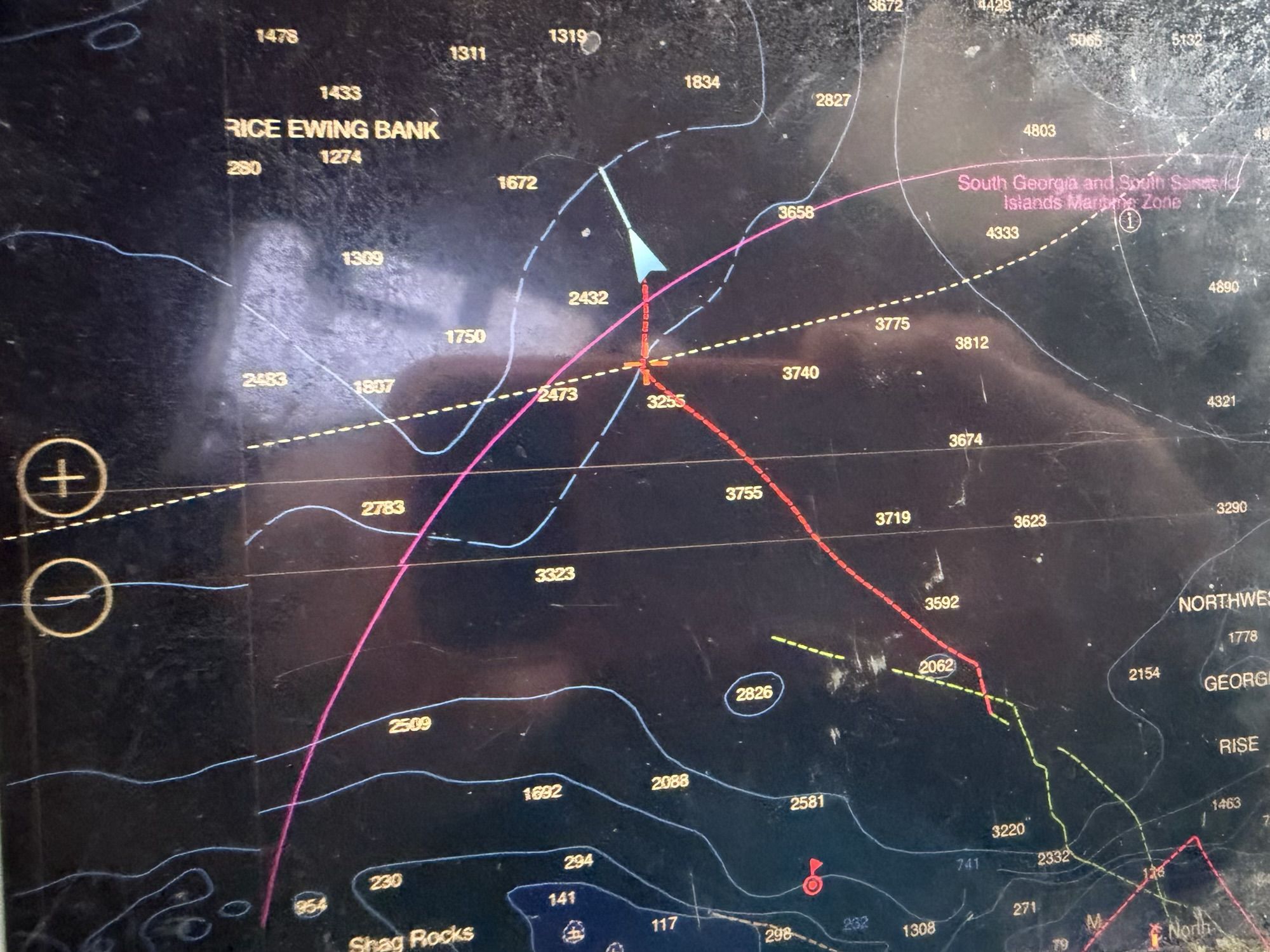
Overnight, we left the waters off South Georgia and crossed the Antarctic Convergence. From now on, it will get warmer. Over the past 24 hours, the water temperature has risen from 2.4 to 4.4 degrees.
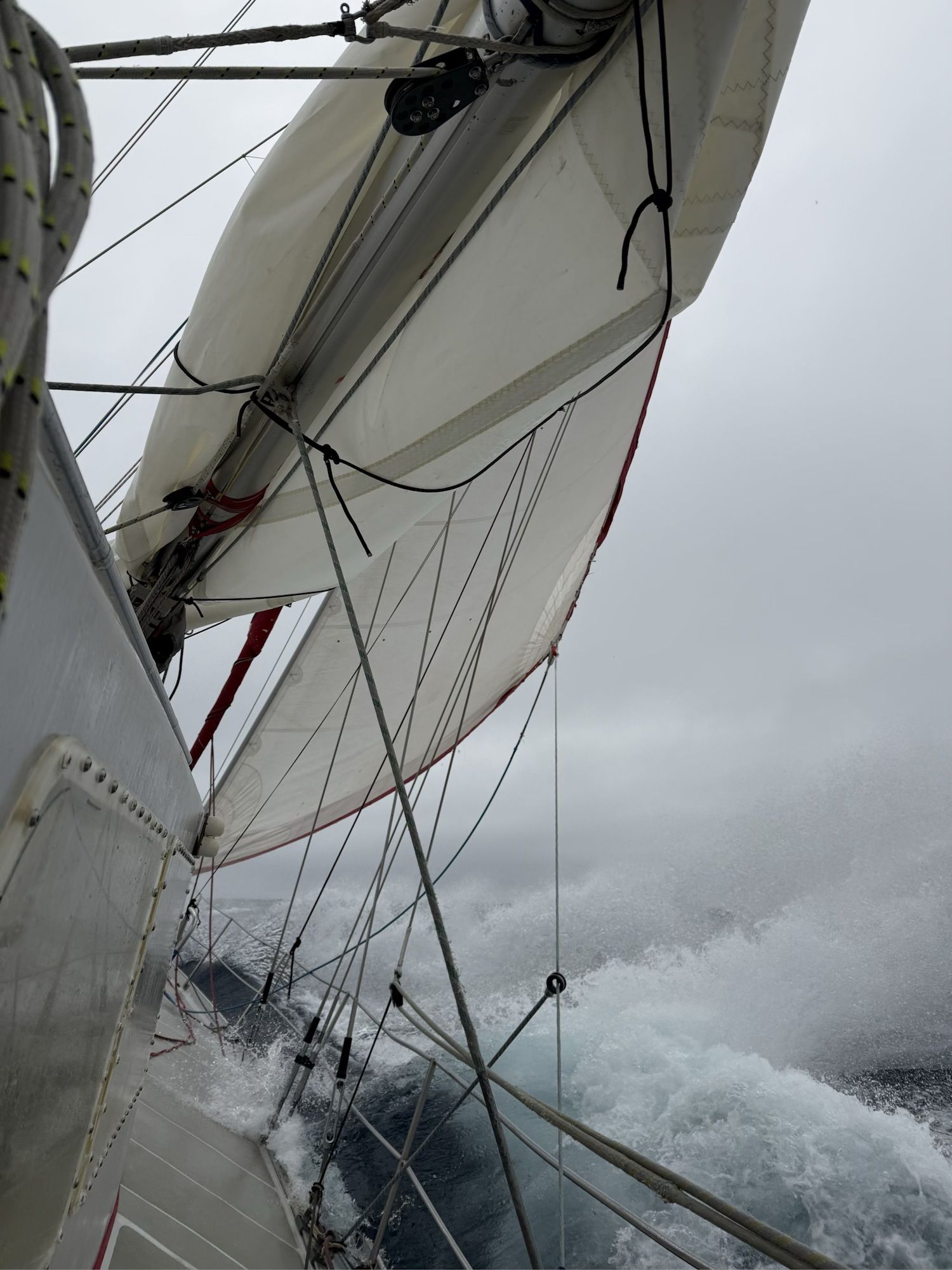
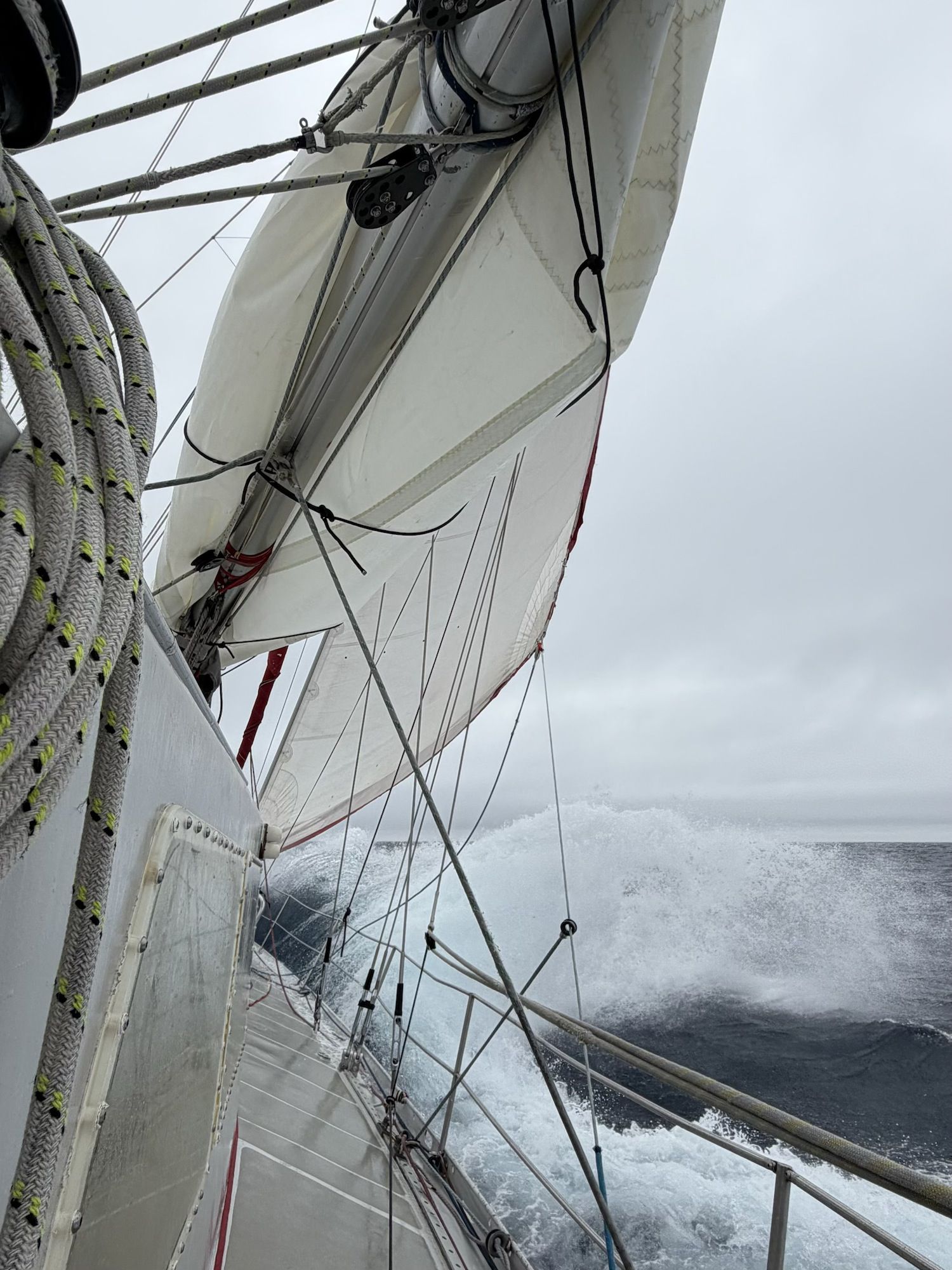
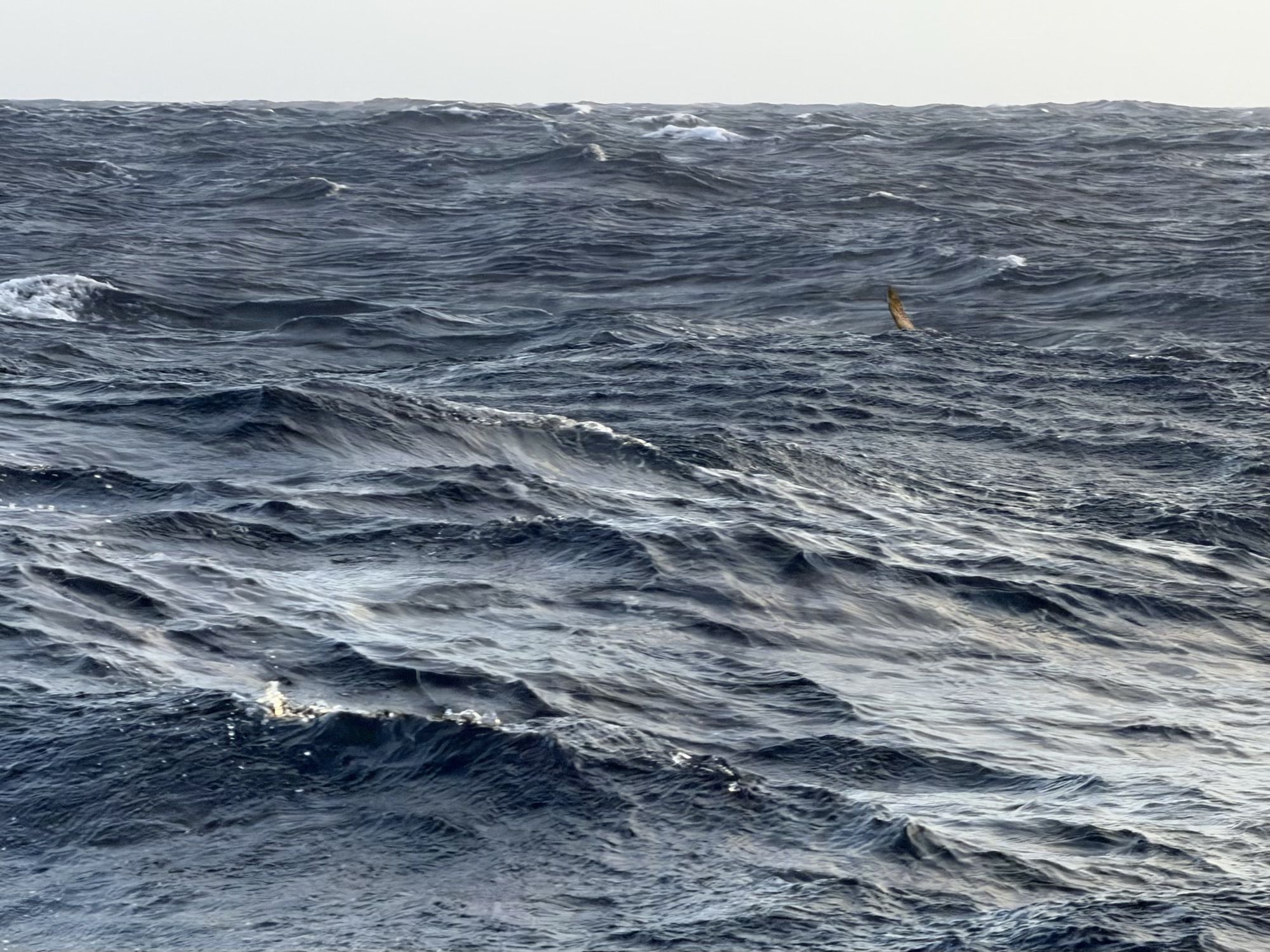
At half past five, we continue our journey. We move the fore sail, which had been set on the wrong side, back to the correct side, set the mainsail again, and continue heading northwest under the cutter, mainsail, and mizzen. We still have good wind between 25 and 30 knots and are making good speed between 6 and 9 knots. However, the sea is somewhat choppy with waves of about four and a half meters. Unfortunately, this means that some people are still seasick in their bunks.
Throughout the day, we are constantly accompanied by various seabirds:
Cape Petrels, Giant Petrels, White-chinned Petrels, the smaller prions and shearwaters, and the tiny storm petrels.
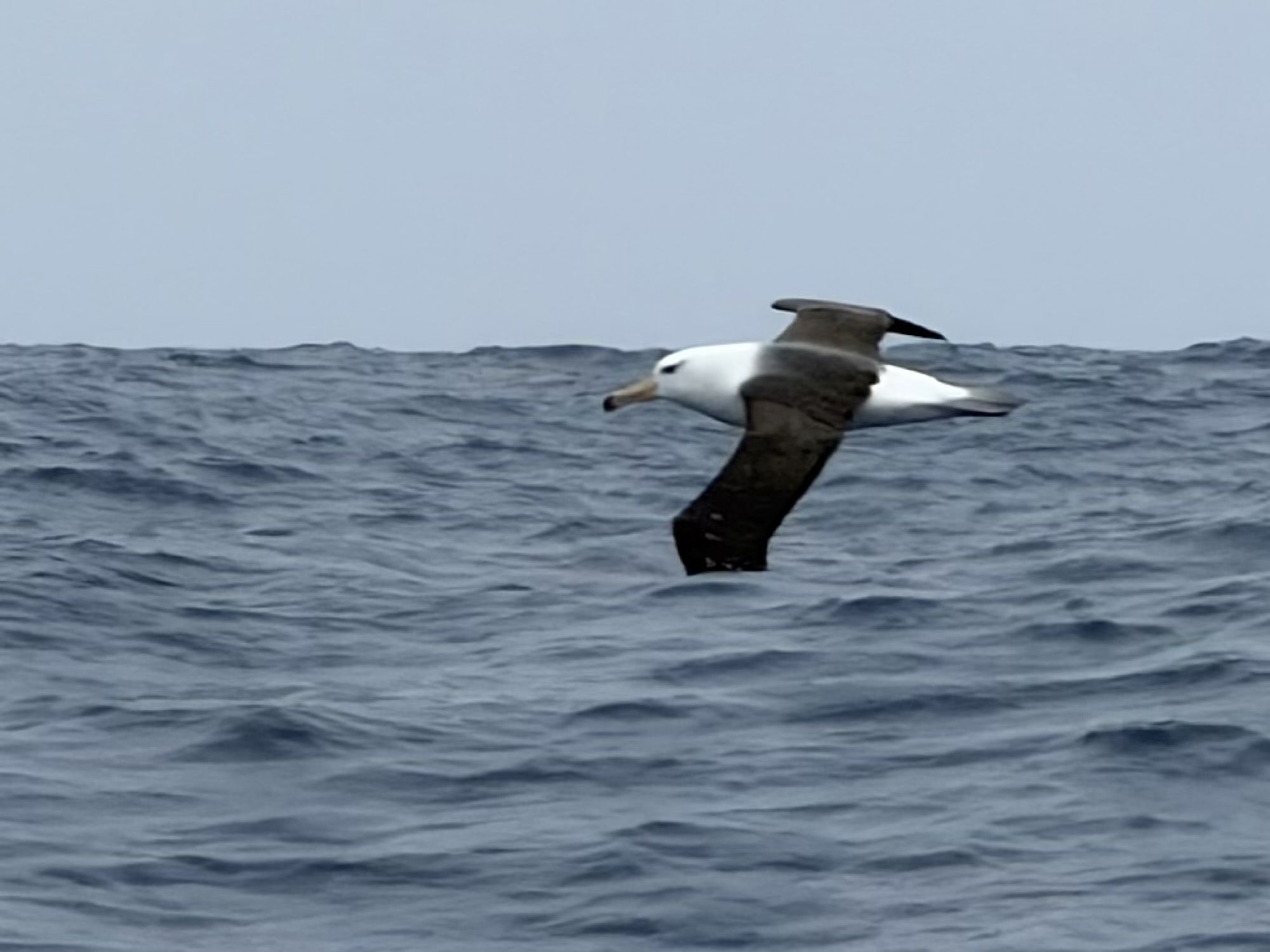
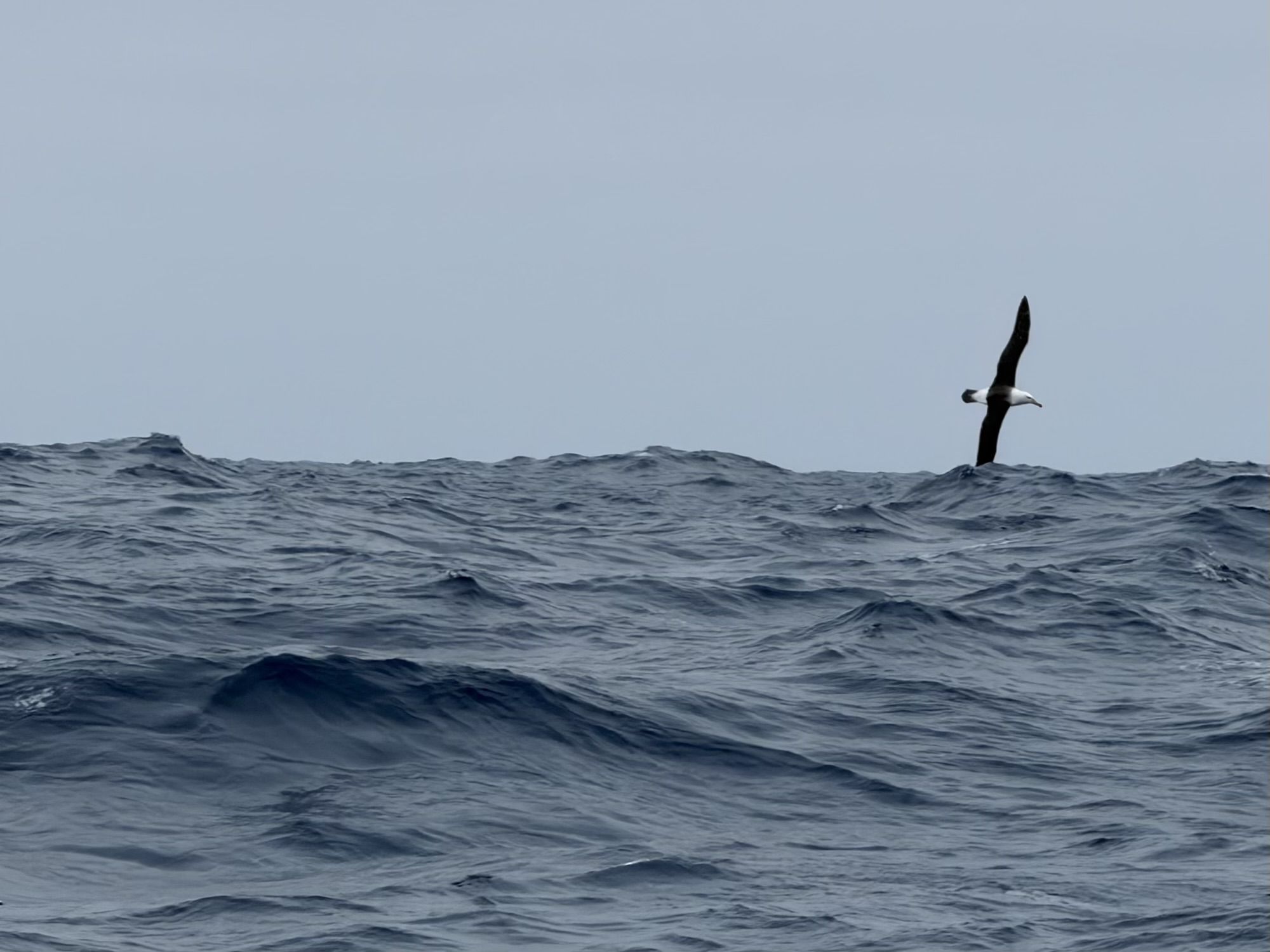
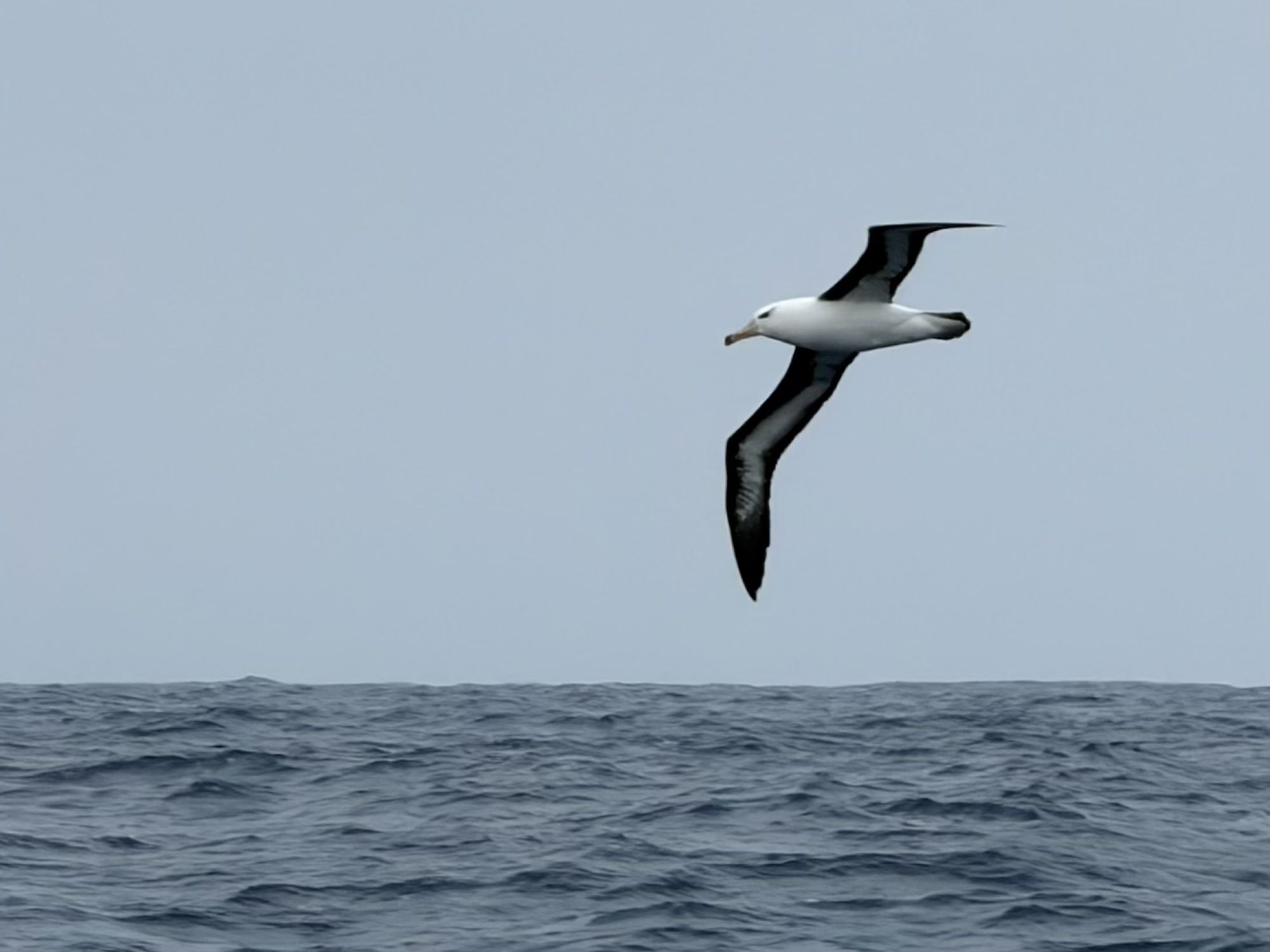
And, of course, the large, elegant ocean flyers—the albatrosses. The beautiful Black-browed Albatrosses, Light-mantled Sooties, Sooties, and—more rarely—Grey-headed Albatrosses repeatedly circle the Selma, gliding nimbly at breakneck speed over the crests and through the troughs of the waves; sometimes they hover so close to us in flight that it feels as if we could almost touch them. They accompany us for a while and then disappear again into the vastness of the ocean. It’s fascinating to watch them, and for me, these encounters at sea are always very special, moving moments.
This evening I’m on rowing watch for four hours again. The wind has become more steady by now, settling in at around 22–25 knots, and the Selma glides through the sea almost effortlessly. It’s cold, but I’m enjoying these hours alone at the helm to the fullest. I let my thoughts wander—back to South Georgia, forward toward the Falklands, and into the distance to my loved one. Happiness mingles with longing. Both have a place here and claim their space; both are sometimes boundless—like the vastness of the ocean.
And so I glide into the darkness and the night—the moon remains hidden once again beneath a blanket of clouds—bid farewell once more by a pair of Sooty Albatrosses, close enough to touch, in whose eyes all of this is reflected.