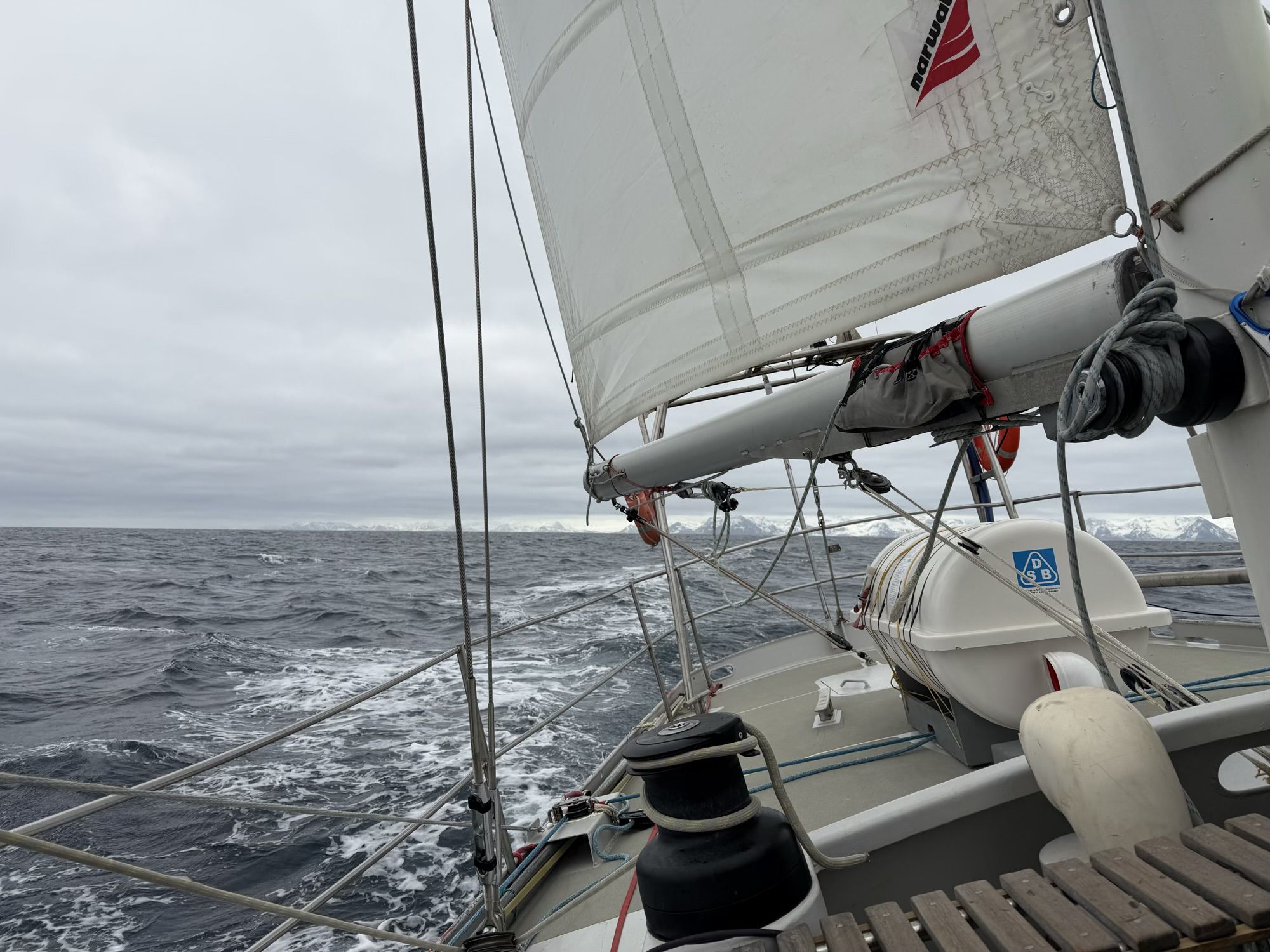
Yesterday, we continued our course northwest along the coast.
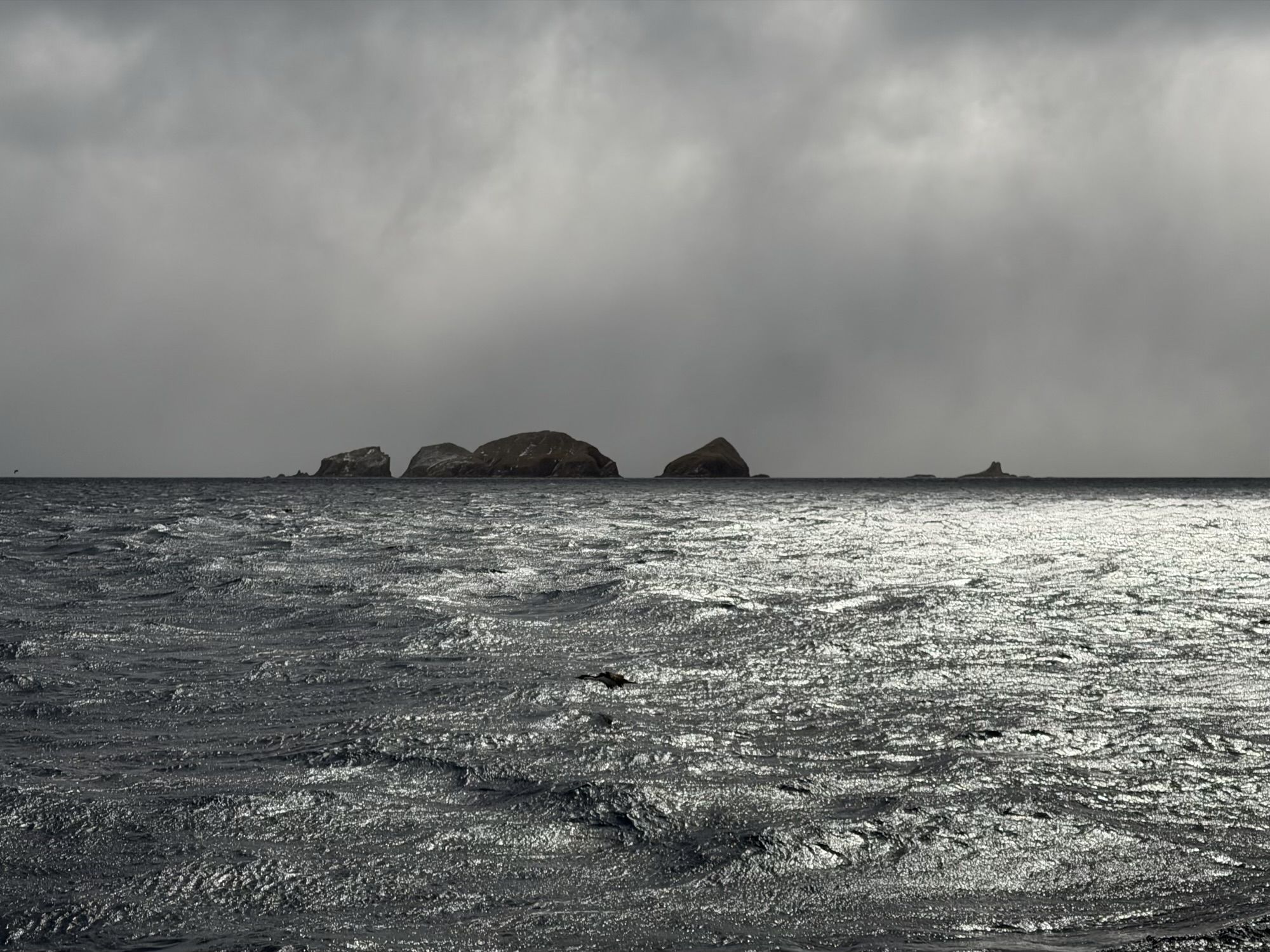
On the way, we made a stop near Prion Island, across from Salisbury Plain in the Bay of Isles. The island is an important breeding ground for wandering albatrosses. These albatrosses are the largest albatrosses and the largest flying birds in the world, with a wingspan of over 3 meters.
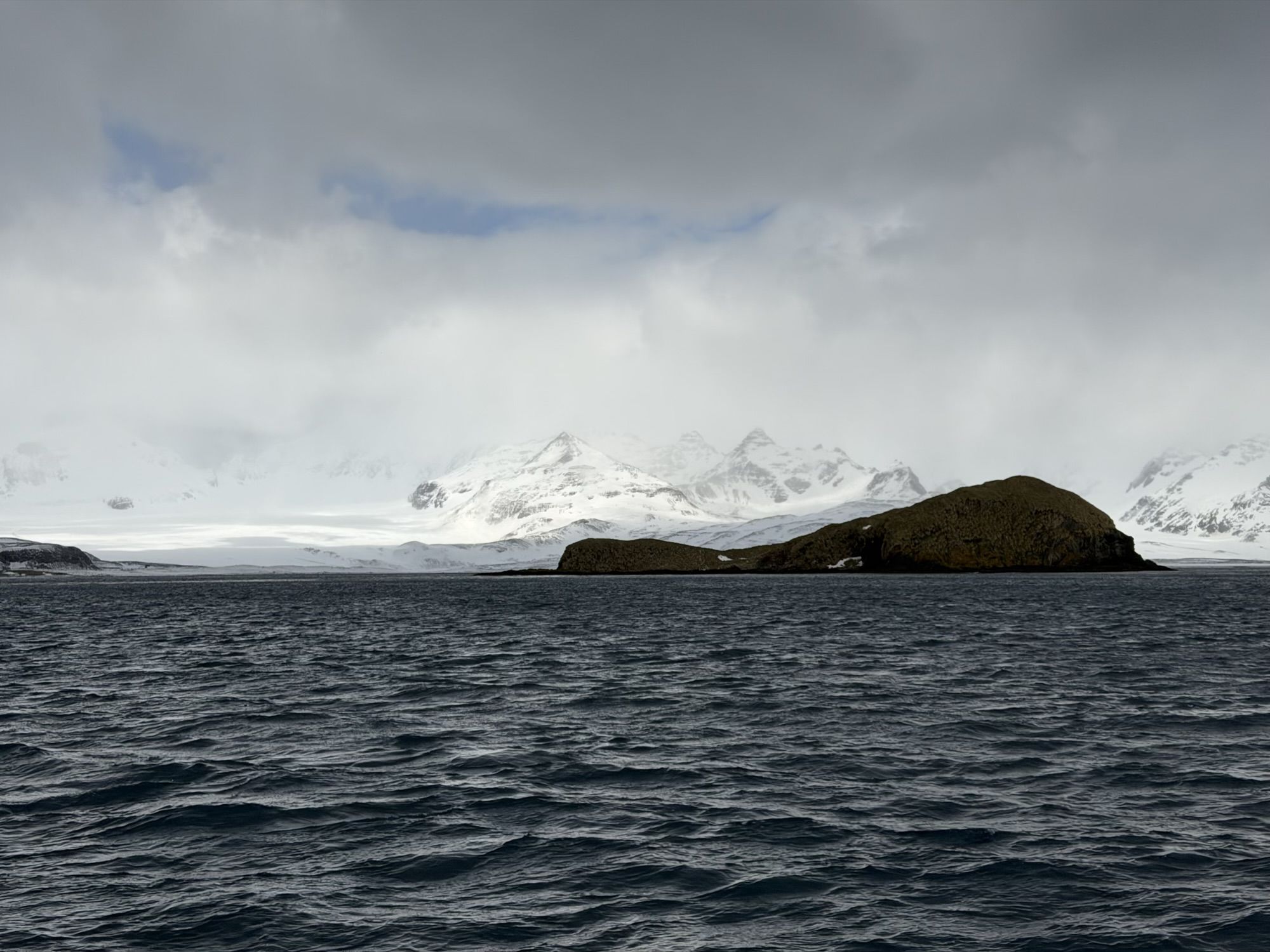
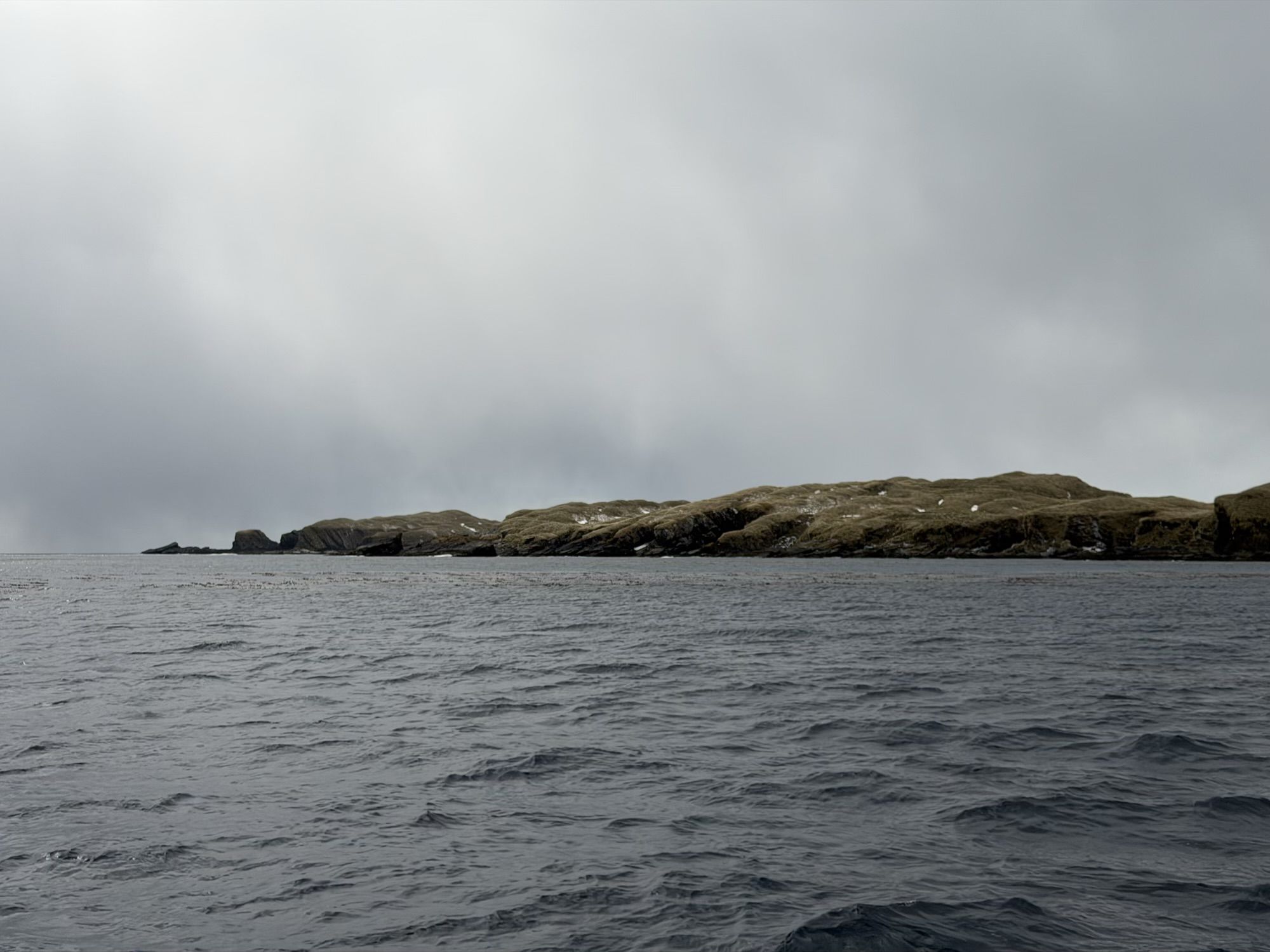
Since the isolated islands remained rat-free even during periods of human presence and despite the rodents introduced by humans, the wandering albatrosses have been able to breed safely here and raise their young. No nesting albatrosses can be found on the main island anymore, even though it is now rat-free again thanks to tremendous efforts.
Of course, we were eager to observe these very special birds, so we dropped anchor near the island’s west coast. Landing on the island is no longer permitted in order to protect the severely dwindling population. Over the past 25 years, the population has declined by about one-third, mainly due to longline fishing.
Wandering albatrosses have a two-year breeding cycle.
At this time of year, the chicks have already been hatched for several months (in March) and are sitting in their nests while their parents are out at sea foraging for food. They return only every 4–5 days to feed their young.
From the deck, we scan the island—covered in tussock grass—with binoculars, trying to spot a nest or one of the birds—but to no avail. Kelp gulls, giant petrels, and light-mantled sooty albatrosses circle above the island or soar on the updrafts from the cliffs. But we can’t spot a wandering albatross.
And so, after an hour, we continue on our way.
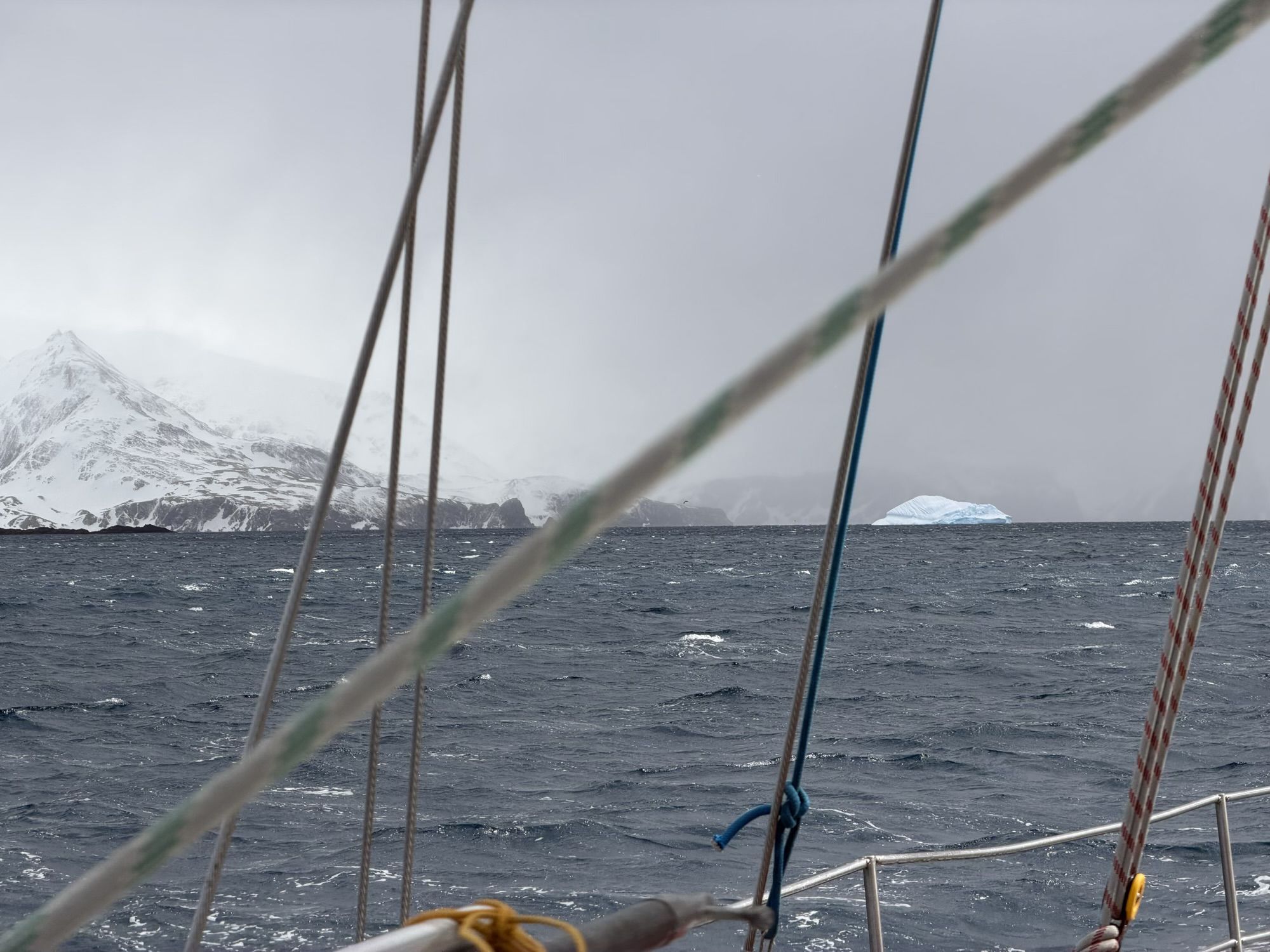
The wind is steadily picking up, and we head for Right Whale Bay to spend the night.
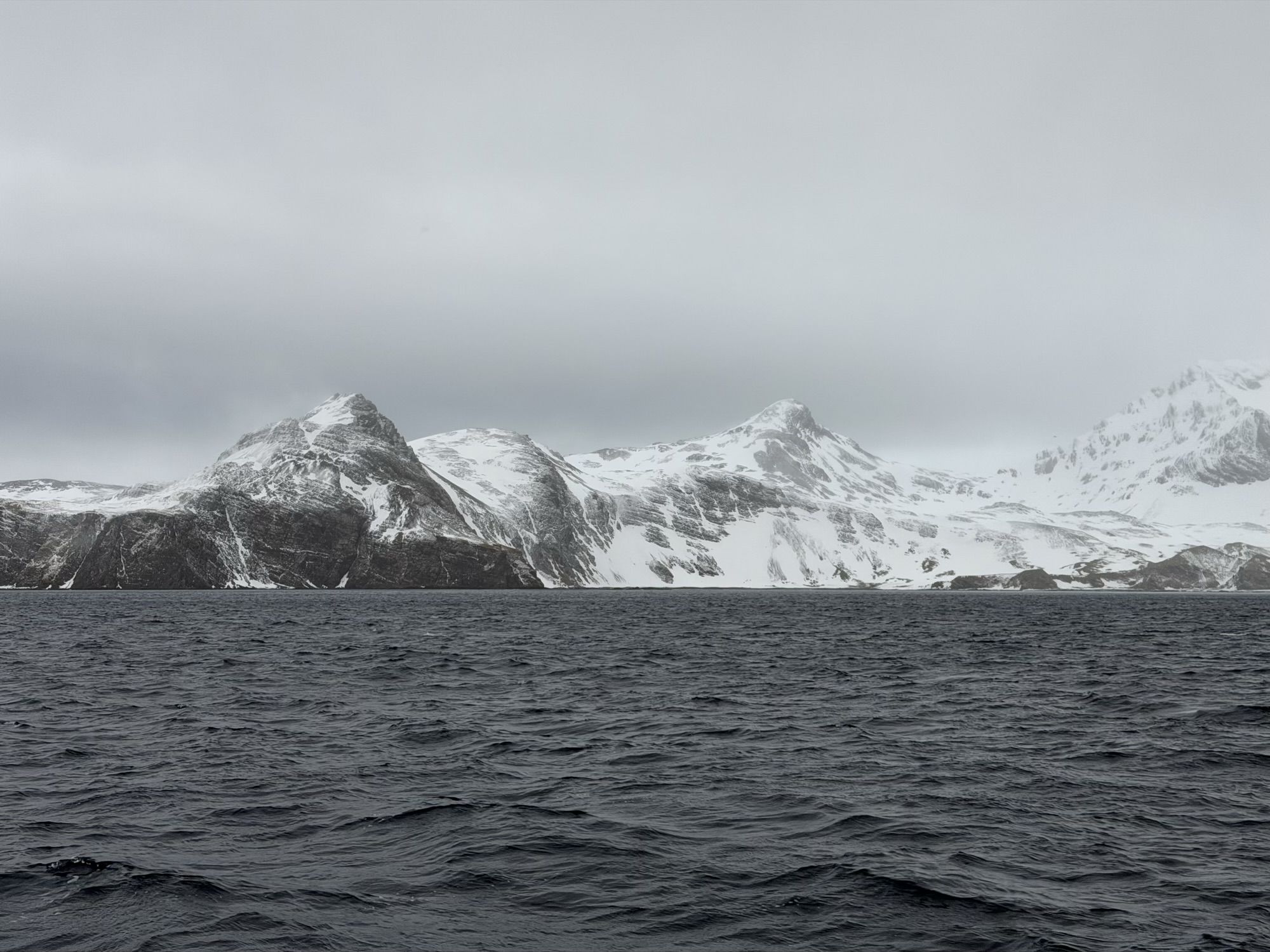
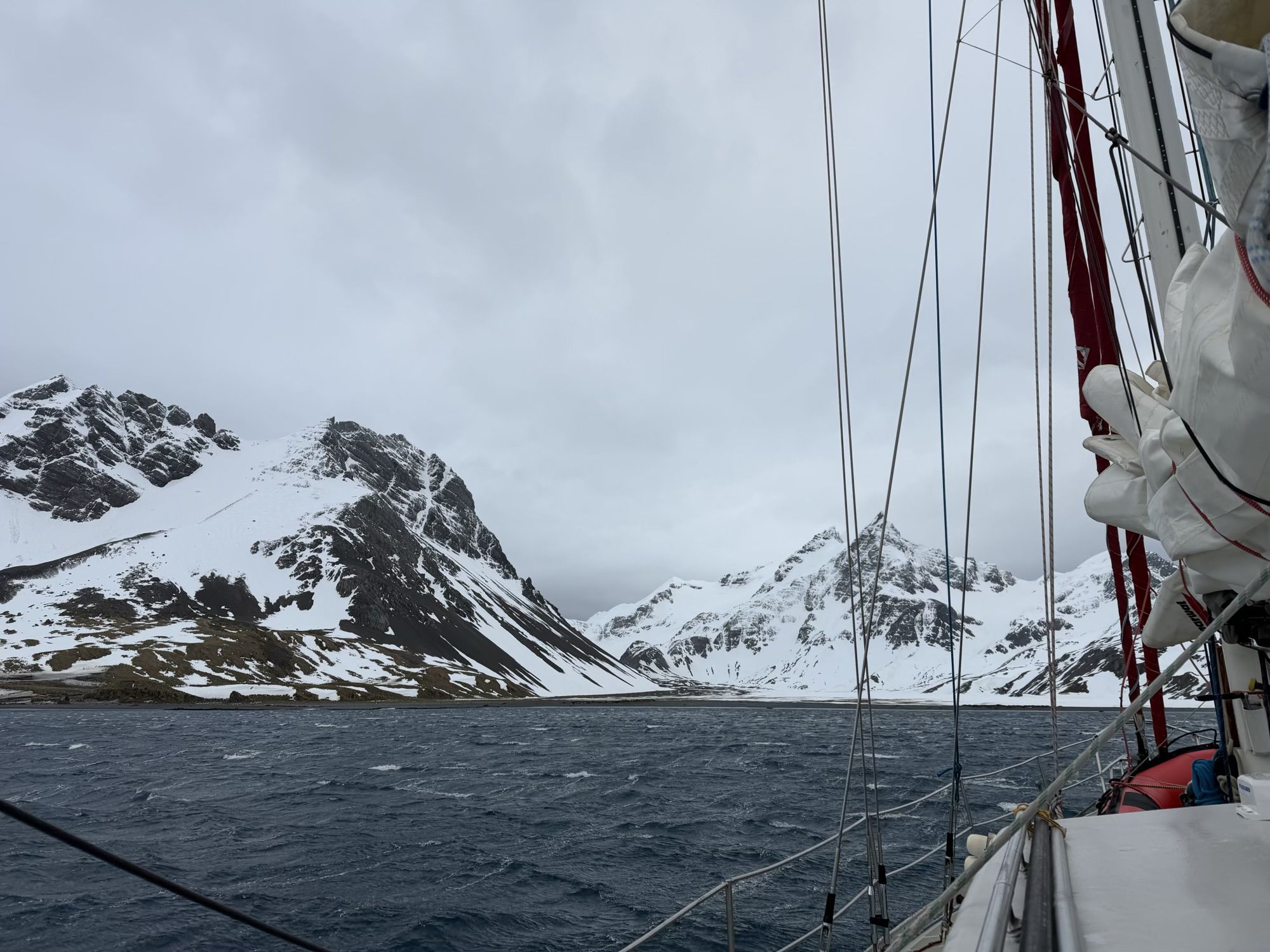
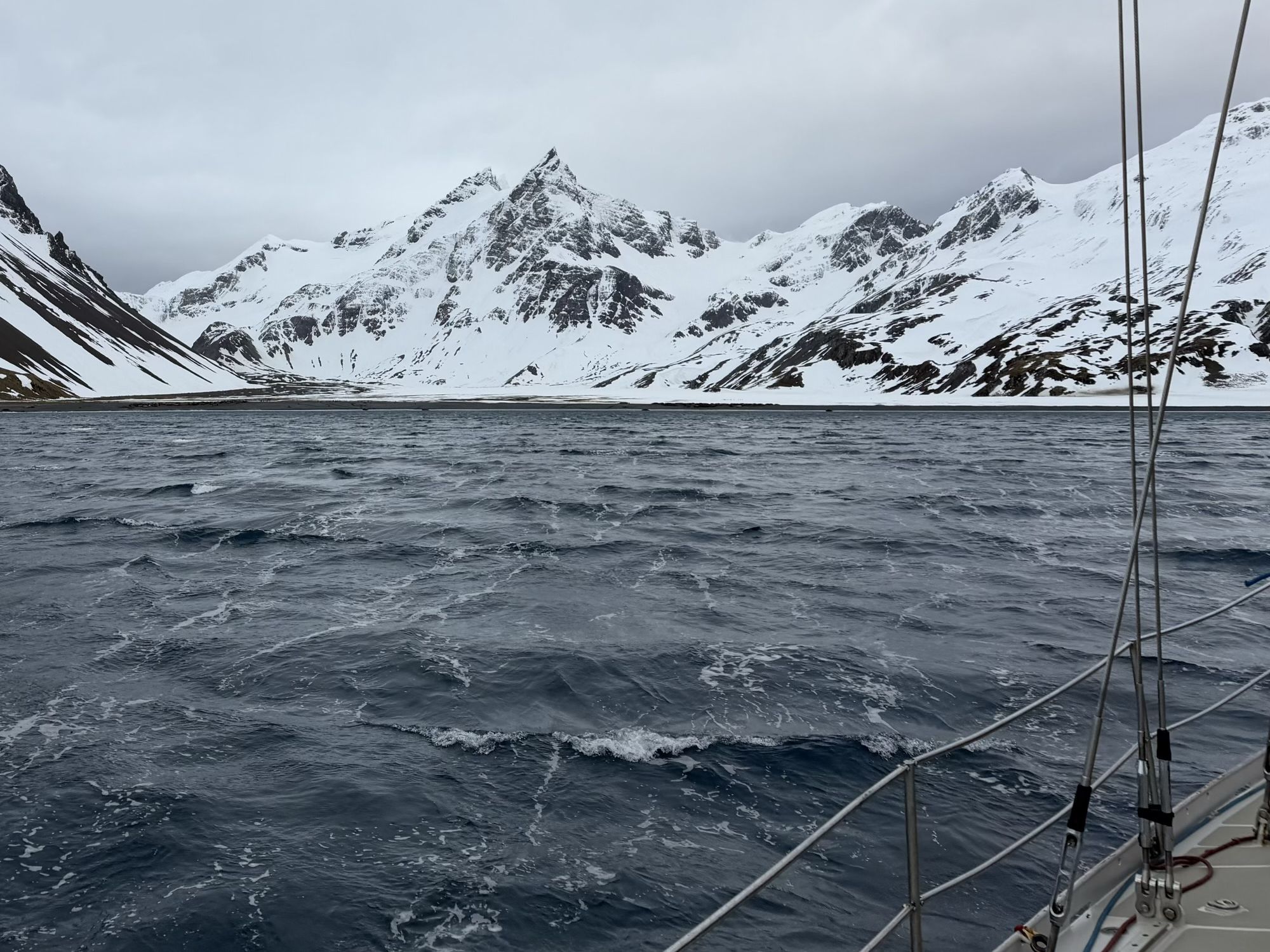
It’s the very same bay where we dropped anchor for the first time upon our arrival here two weeks ago. And the conditions are similar as well: it’s gray, bitingly cold, and downbursts of over 40 knots rush down the glaciated valley into the bay every minute, straight at us. Clouds of spray sweep in as we drop anchor. The howling of the wind drowns out the calls of the king penguins and elephant seals echoing from the shore.
And so we’ve come full circle. Our stay in South Georgia began and ends here in this bay.
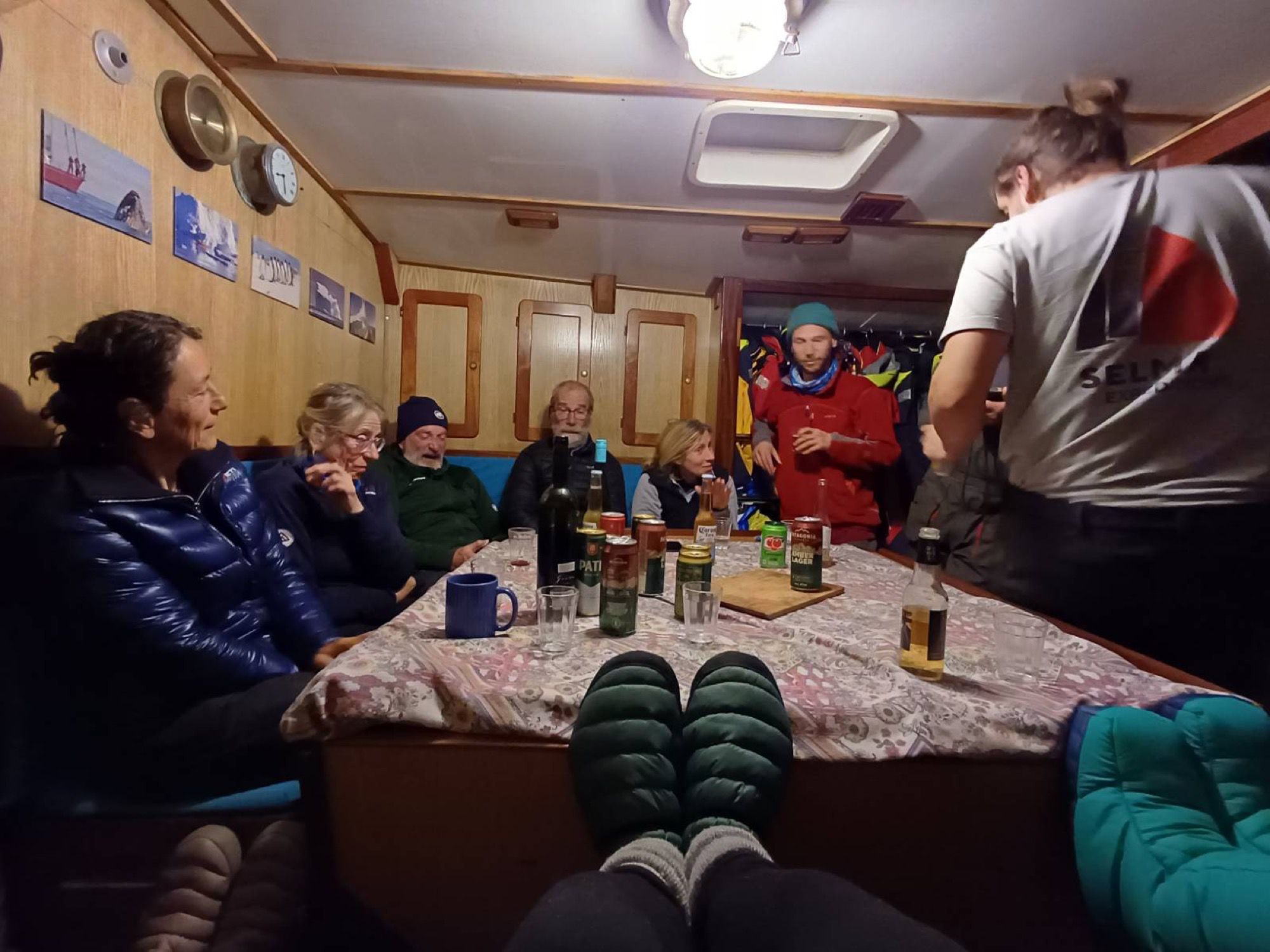
In the evening, we all sit together in the Selma’s saloon, enjoy a festive meal, and raise a toast to the wonderful, eventful days filled with special moments and fascinating encounters—to our good fortune with the weather, to the fact that everyone is healthy, and to how we’ve grown closer as a team.
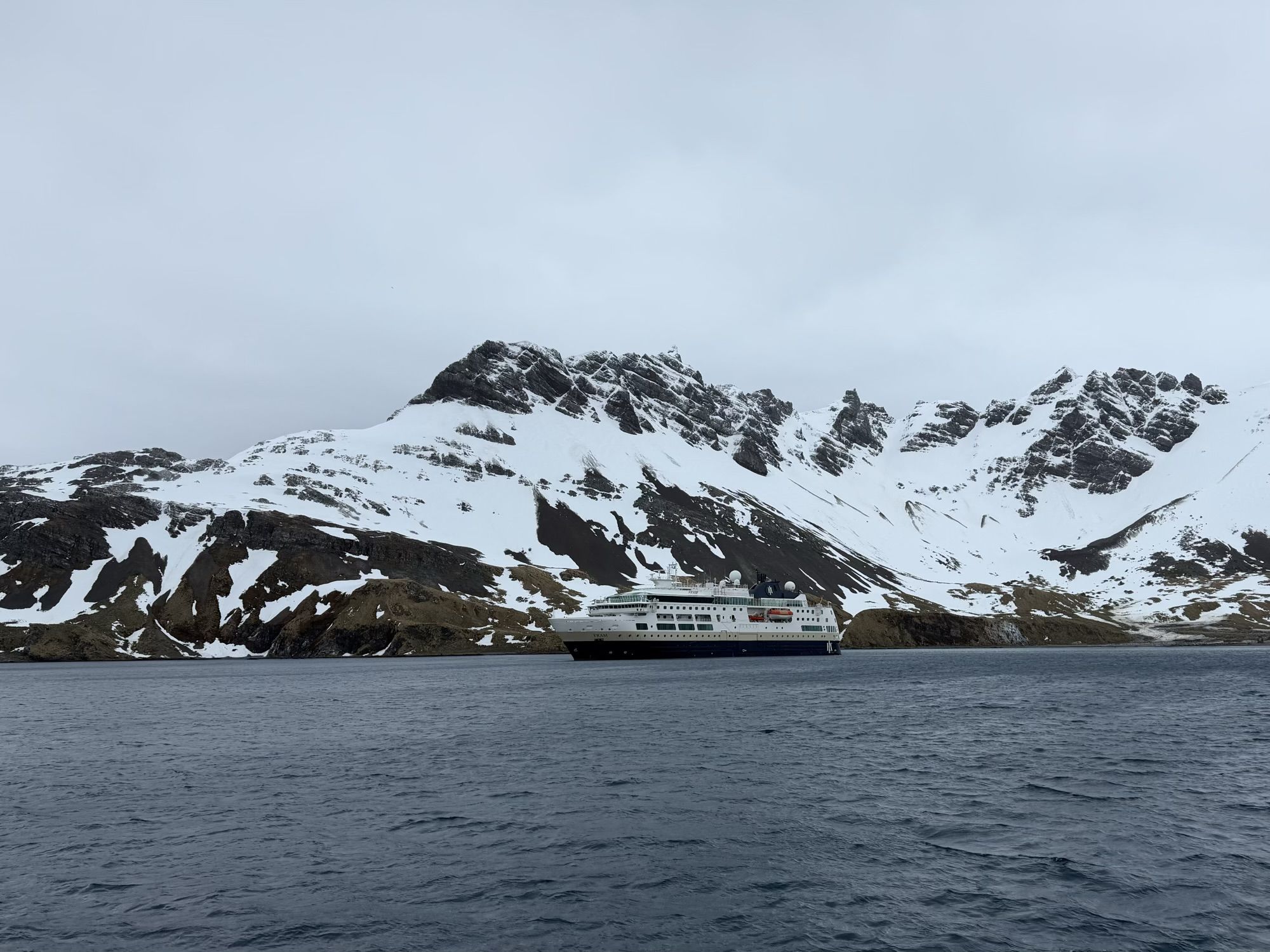
This morning we made the Selma seaworthy for the upcoming crossing to the Falklands. At six o’clock we weighed anchor, just as a cruise ship, the Fram, was heading into the bay. A sign that it was time to set sail.
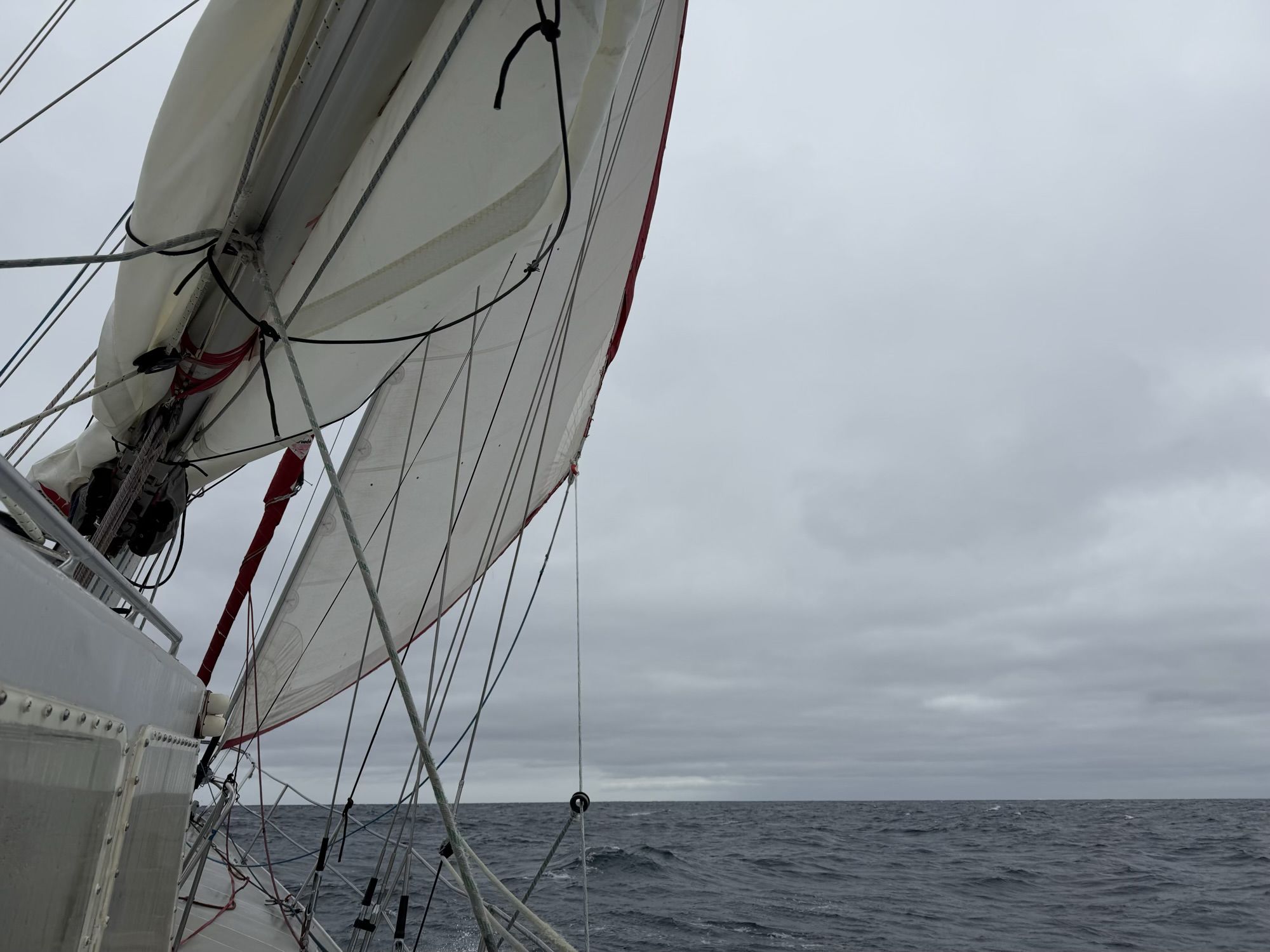
By nine, the engine noise dies down. The mizzen, mainsail, and genoa are set. We’re making 7 knots over ground in 20 to 25 knots of wind, on a course of 330 degrees, while South Georgia slowly disappears in our wake.
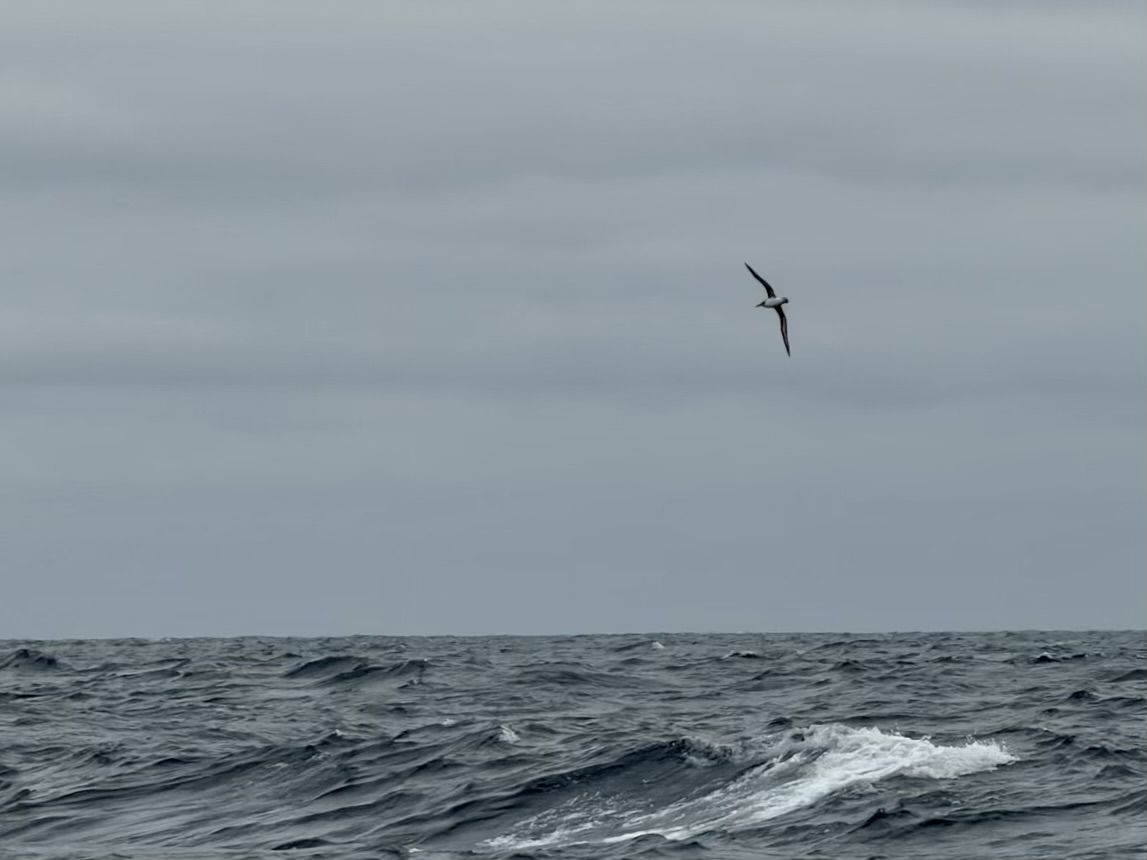
Upon our arrival, out on the open sea, I spotted a wandering albatross several times and was able to admire its elegant and effortless-looking gliding flight over the crests and troughs of the waves. Who knows—we didn’t see any on Prion Island, but maybe we’ll spot one again out at sea.