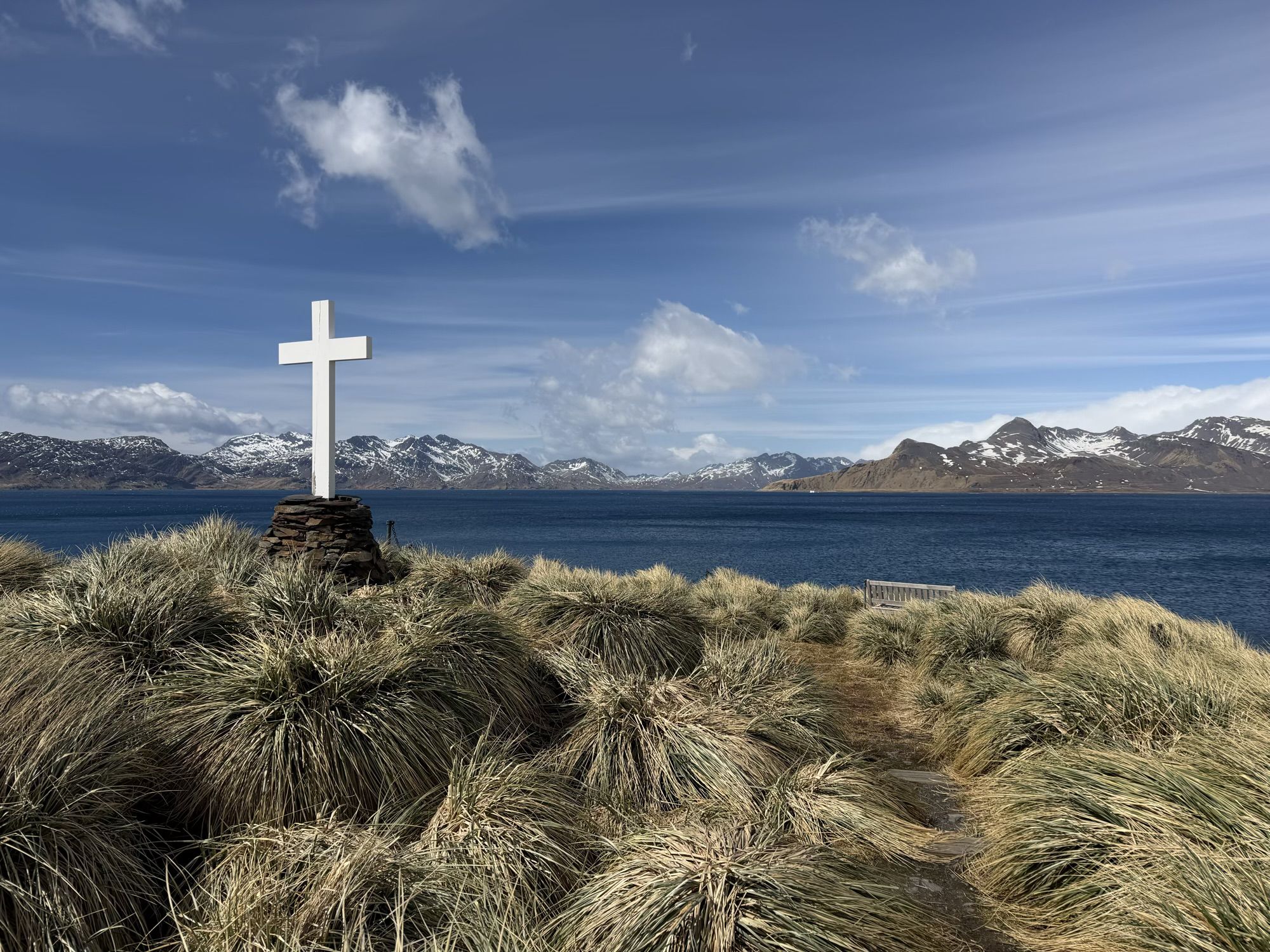
A beautiful and special moment.
I’m sitting on a bench—probably the only one in all of South Georgia—and looking out over the water. King Edward Cove, where Grytviken is located, is part of Cumberland East Bay. Sun and shadow alternate every second; a strong, gusty northwest wind chases the clouds across the sky and sends waves across the steel-blue water’s surface. Dark brown with a reddish sheen, the kelp undulates just below the surface near the shore, while the dense tufts of tussock grass glow a bright white-yellow, almost blinding in the sunlight. It creates a wonderful color contrast against the deep blue of the water and the jagged mountain range rising behind it, parts of which are still covered in snow.
The bank is located at Hope Point, a hill at the mouth of the bay where the former whaling station Grytviken is situated.
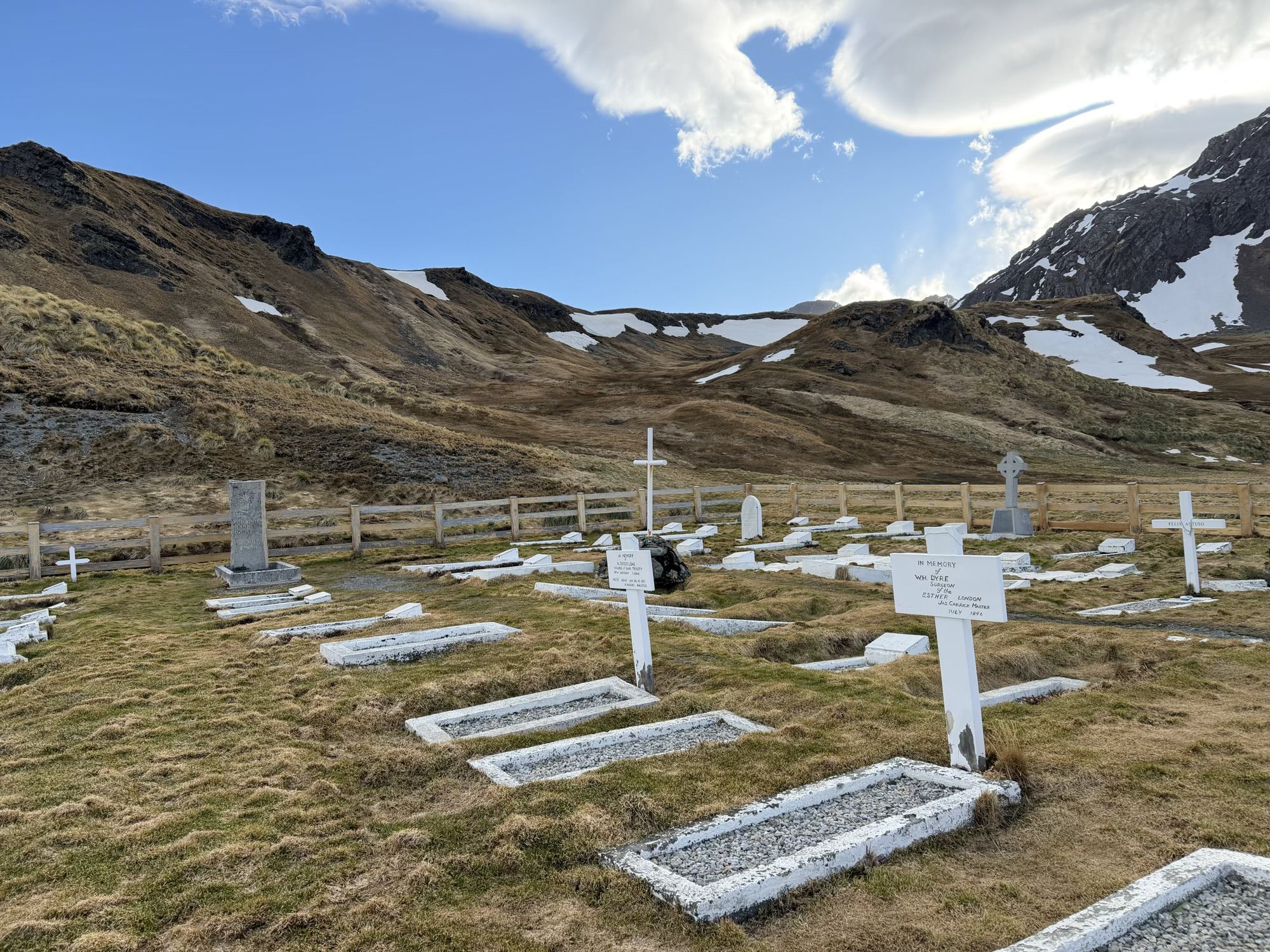
Behind me stands a cross (a replica; the original is in the museum in Dundee), erected by his comrades after the death of Ernest Shackleton, who died here on January 5, 1922, aboard the Quest while en route to South Georgia. Diagonally across from it, on the other side of the bay, lies the station’s small cemetery.
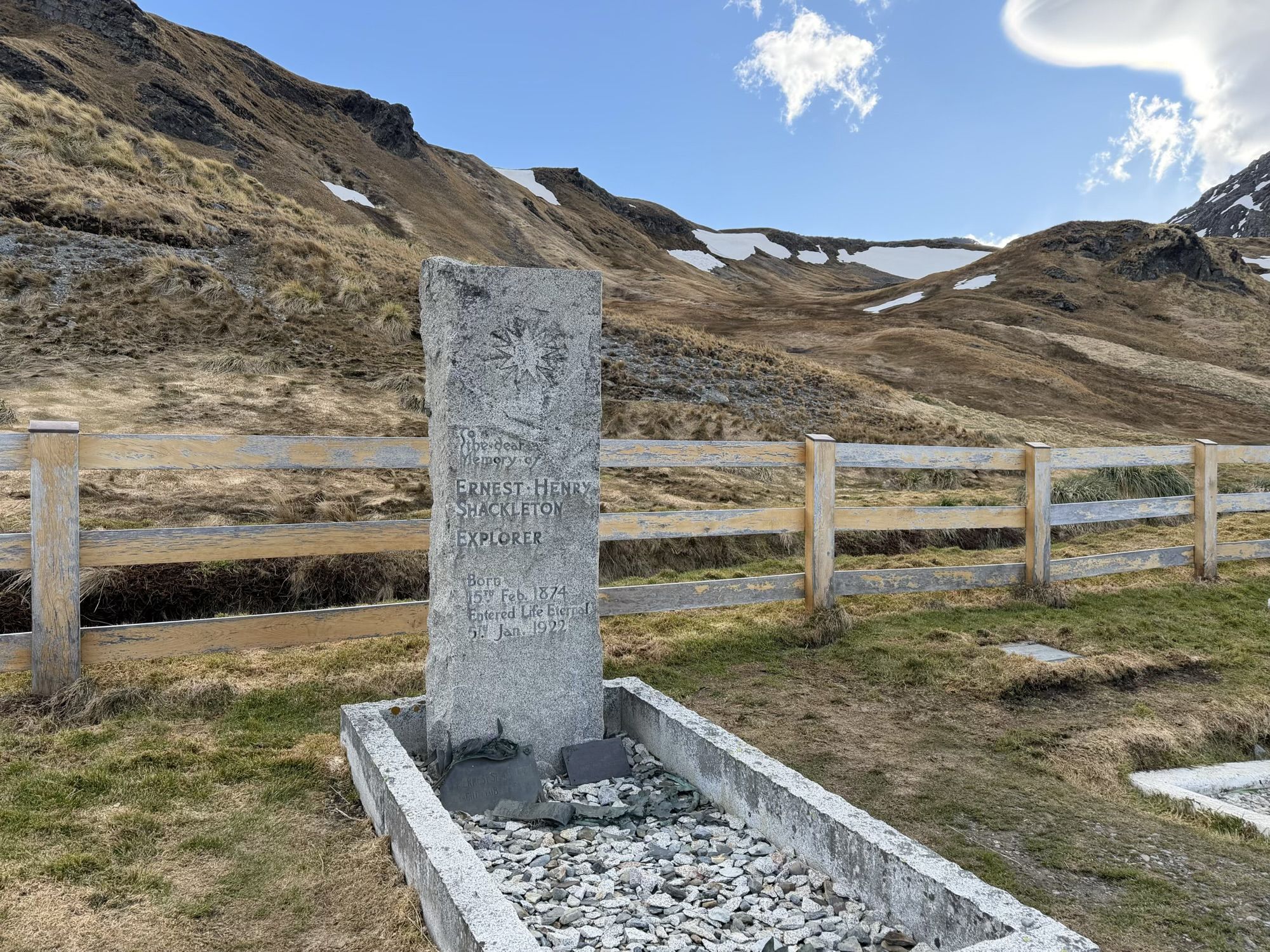
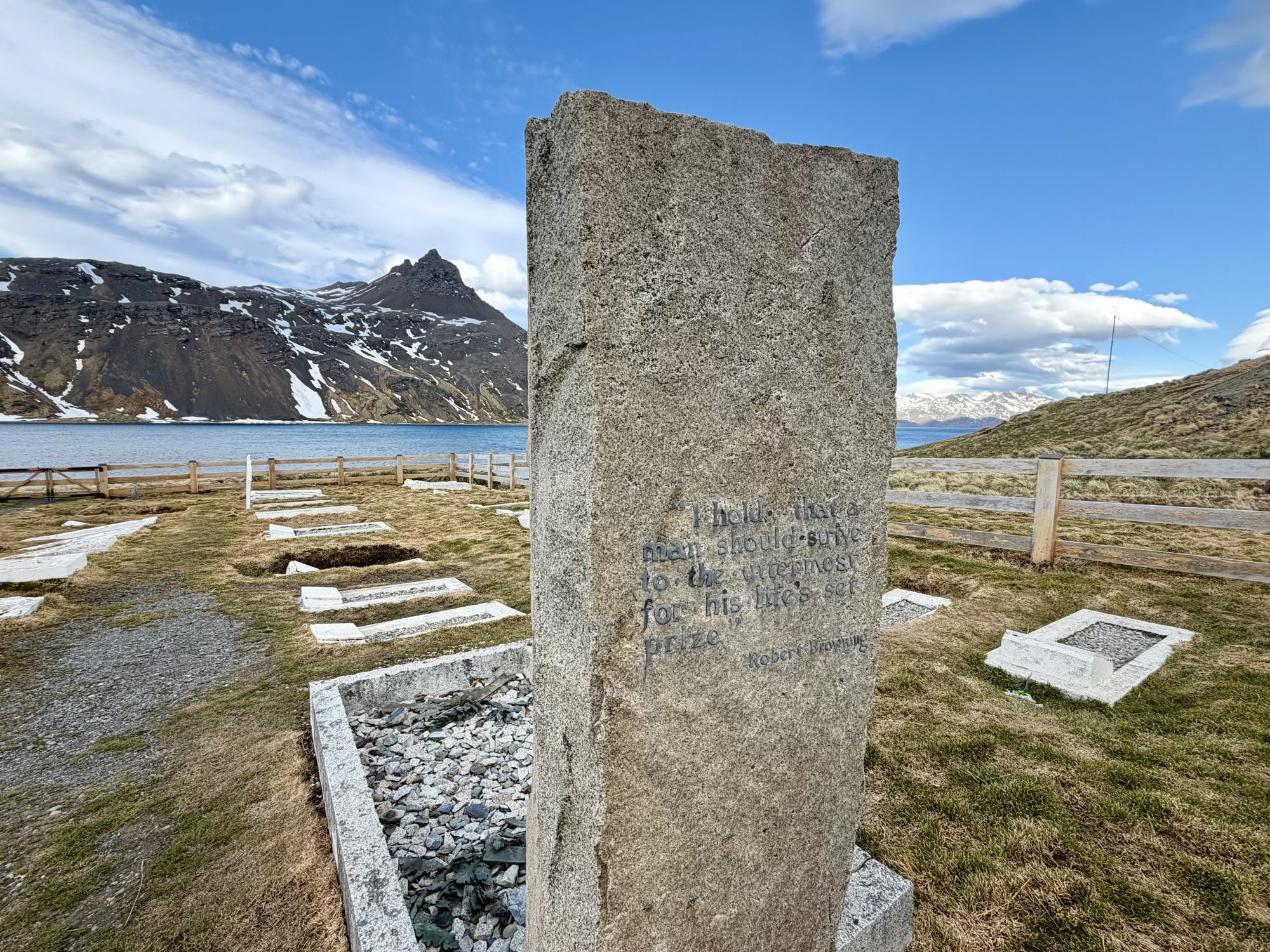
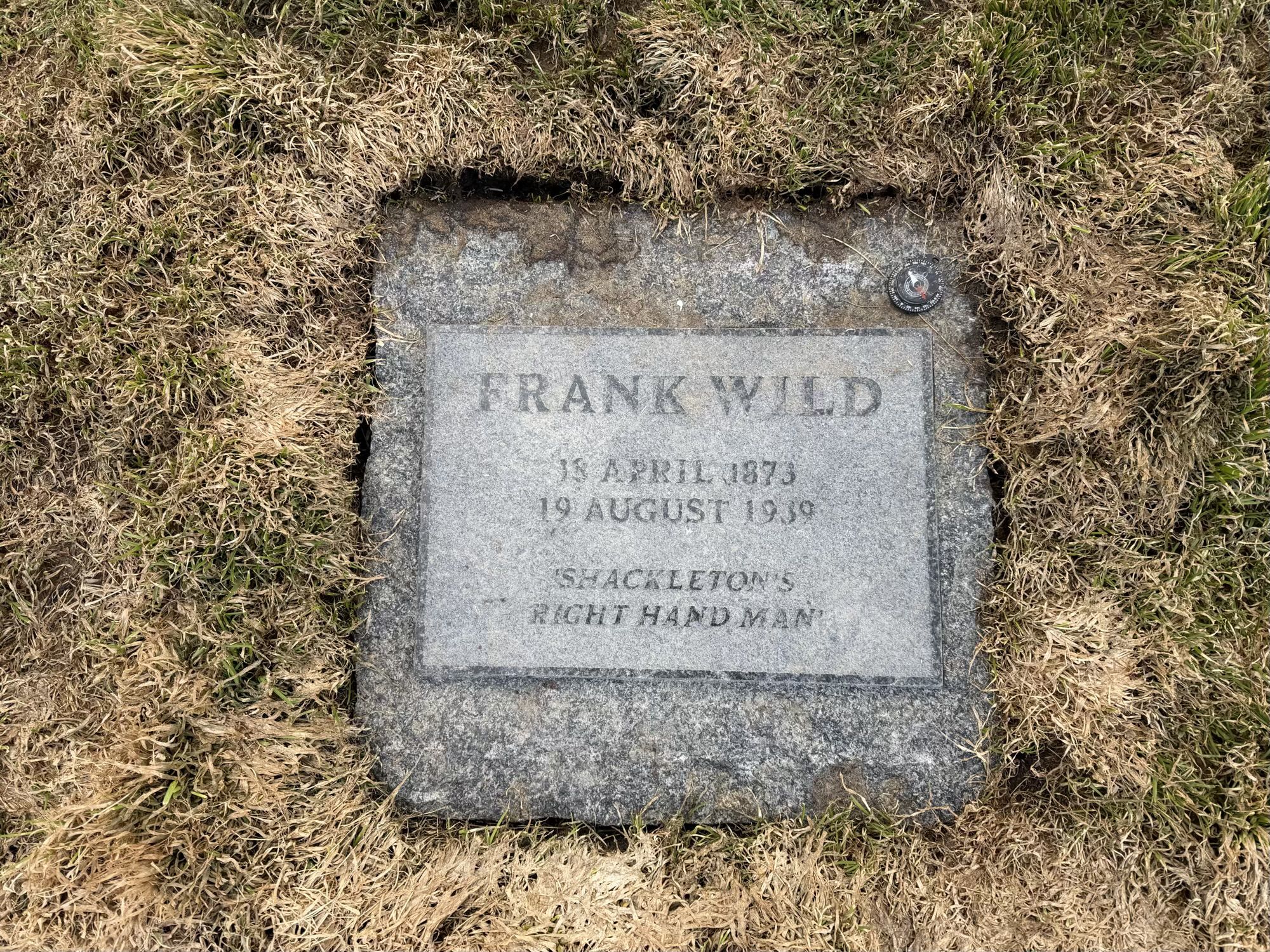
This is where “The Boss,” as his men called him, was buried. To his right lies Frank Wild, his faithful companion on three joint expeditions and Shackleton’s “right-hand man.” Shackleton set out from Elephant Island with five other men aboard the James Caird to come here and organize a rescue for his 22 remaining men. It was Frank Wild who, on Elephant Island, managed to give all those left behind hope of rescue and thus keep them alive. Both were remarkable feats, the result of unbridled willpower and deprivation that are actually beyond our comprehension today.
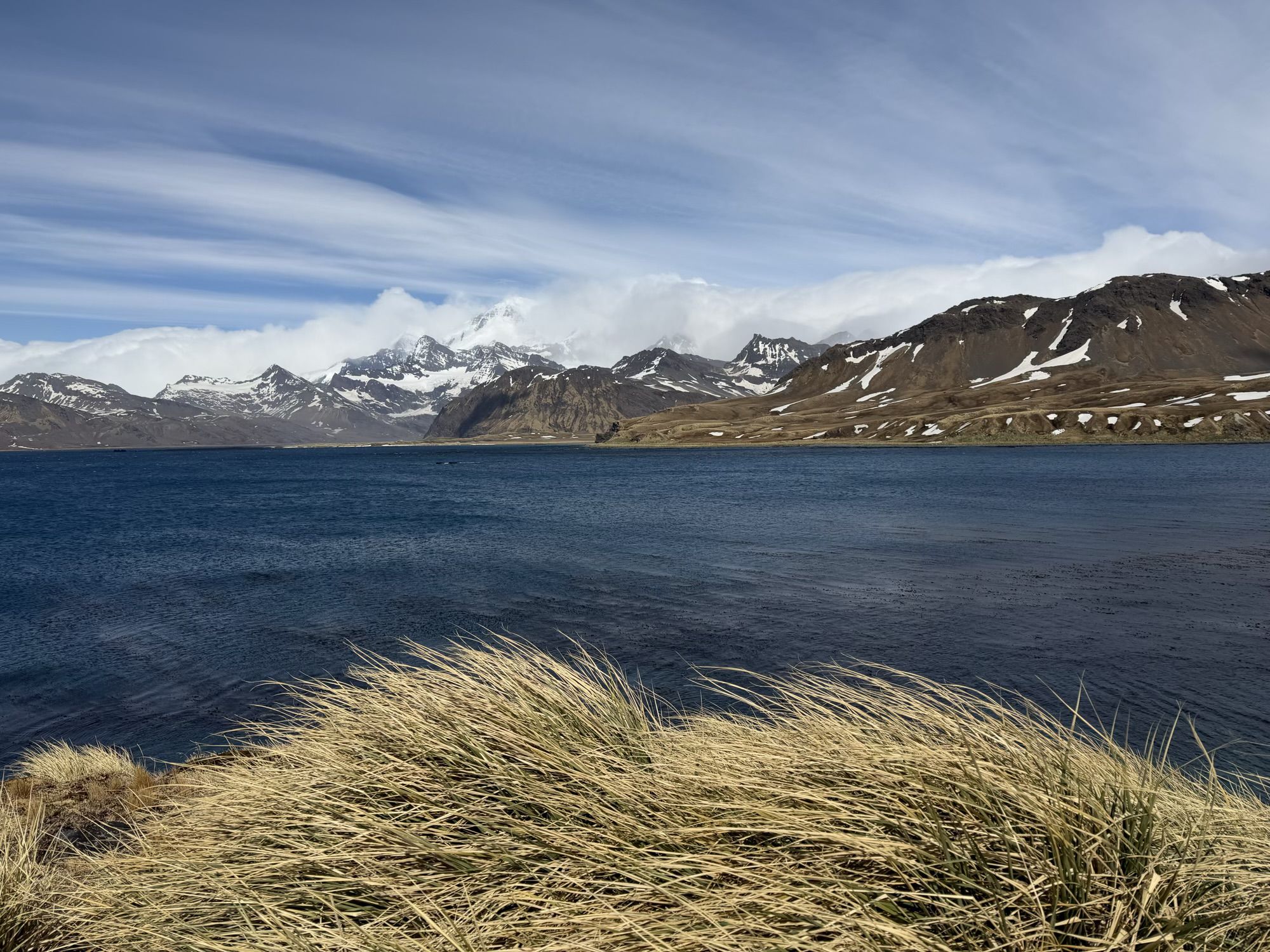
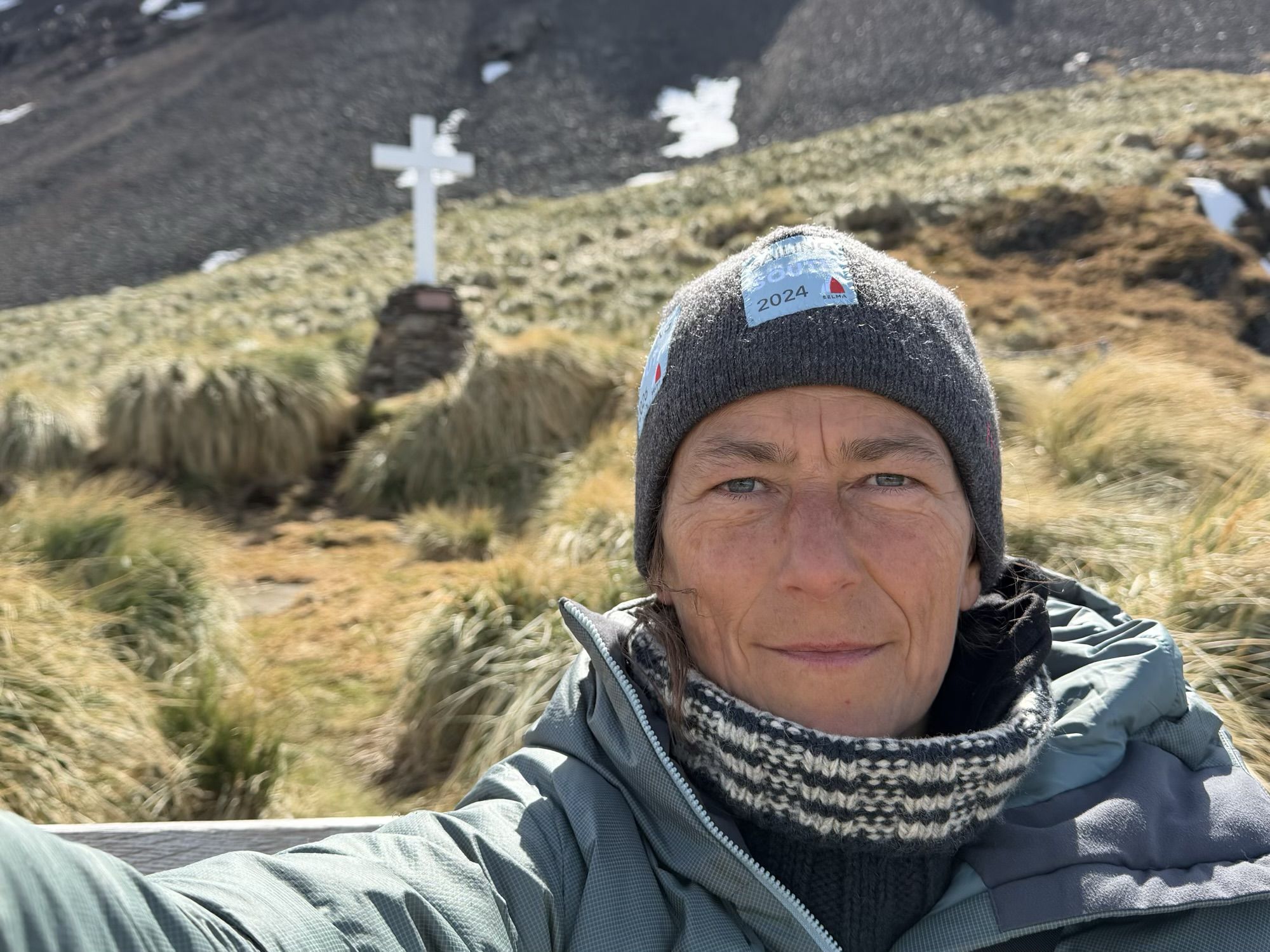
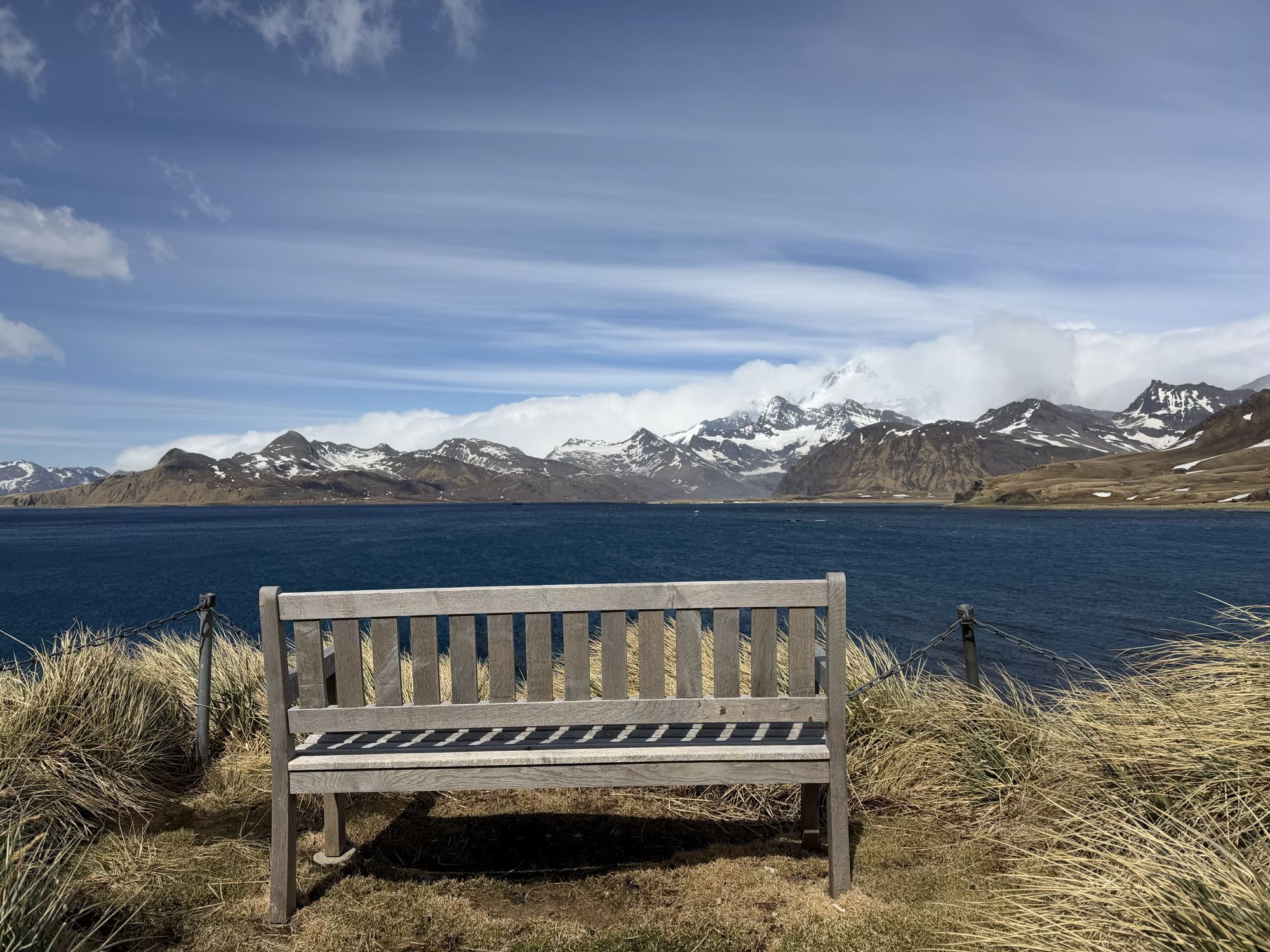
Sitting on this bench here and letting your gaze wander into the distance is something special. Nowhere else in South Georgia are you allowed to just sit down on the ground like this, in order to protect it. And there aren’t any other benches.
I enjoy sitting here. Watching, letting my thoughts wander. Writing these lines—despite my cold fingers. Accompanied by the whistling sounds of the wind and the chorus of calls and barks from the elephant seal colony living right below me.
Shackleton’s Grave
Standing alone at Shackleton’s grave in the small cemetery last night was also a special and emotional moment. Without him—Ernest Shackleton—I, and we, would not be here. He and his story—that of the Endurance Expedition and the spectacular rescue of his entire crew, which began and ended here in South Georgia—are among the main reasons for my long-cherished dream of sailing to Elephant Island and to this very spot. The reason for organizing this trip: to see and experience this place with my own eyes.
I stood there yesterday, deeply moved. I bowed my head in respect to this man, his right-hand man, and all the others aboard the Endurance, honoring their achievements.
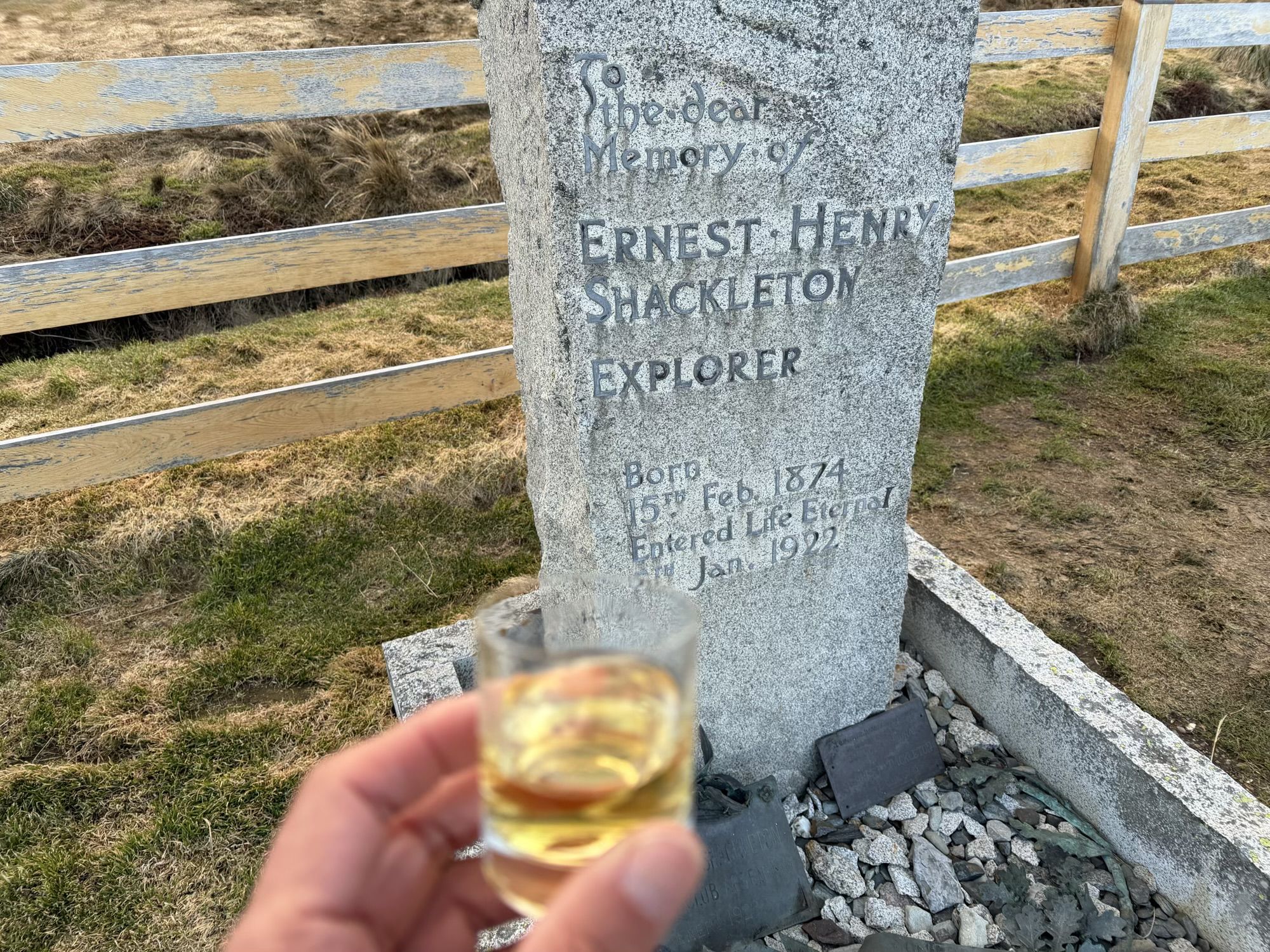
I am grateful to have made it here and for the privilege of being able to be here.
I am grateful to those who believed in this idea, who are now here with me on this journey, and who have helped make this project a reality—my team, my crew: Piotr, Voy, Alejo, Unda, Karen, Moira, Claire, Alan, Jan, Brian, Darek. I am grateful to Selma, our sturdy ship, and to the gods of the winds and the sea. Last but not least, and above all, I am grateful to everyone back home who has supported and encouraged me and who is now helping me through my long absence.