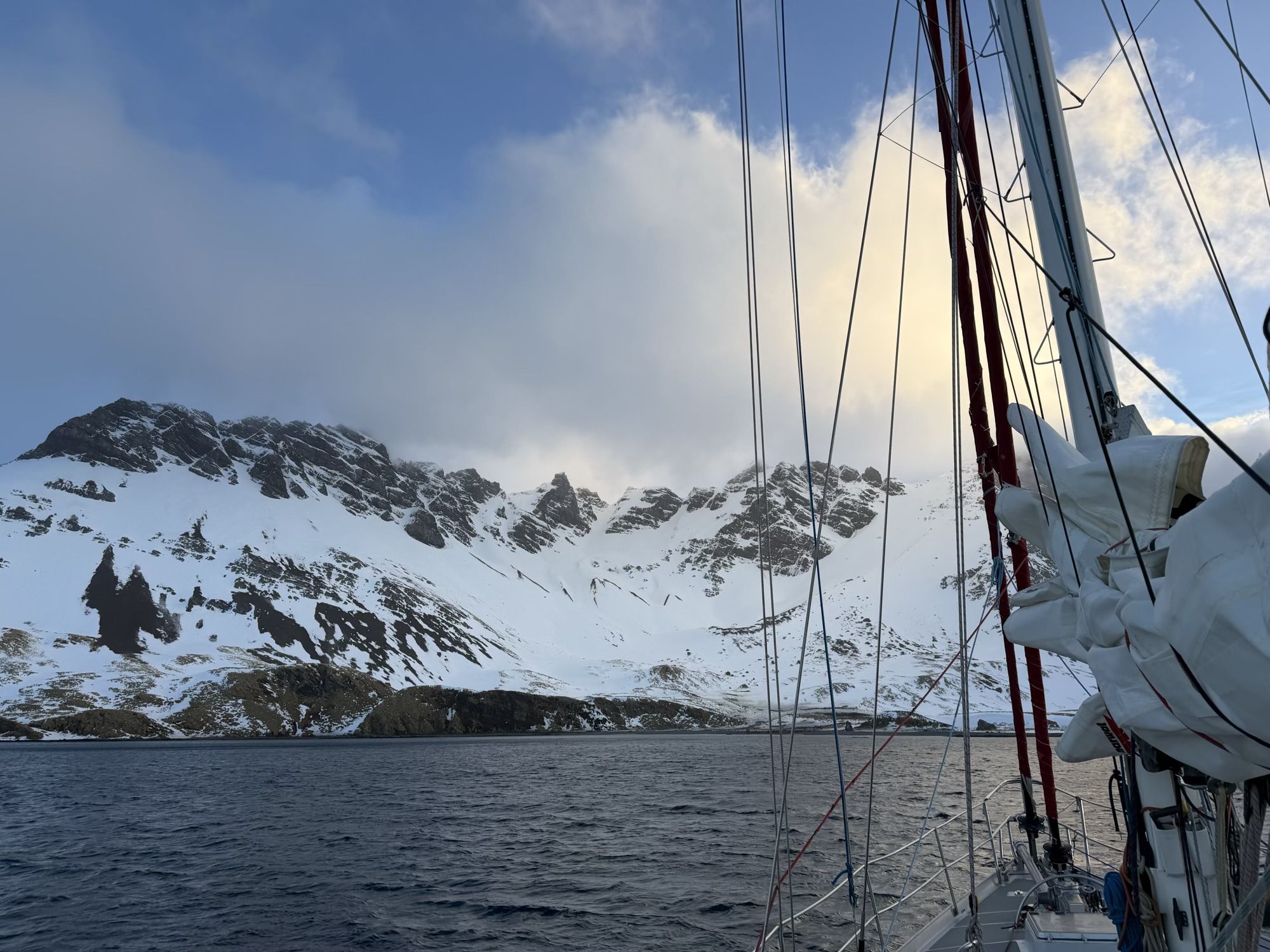
We’re here; we’ve been anchored in Right Whale Bay since yesterday. We’re the only ship on the island.
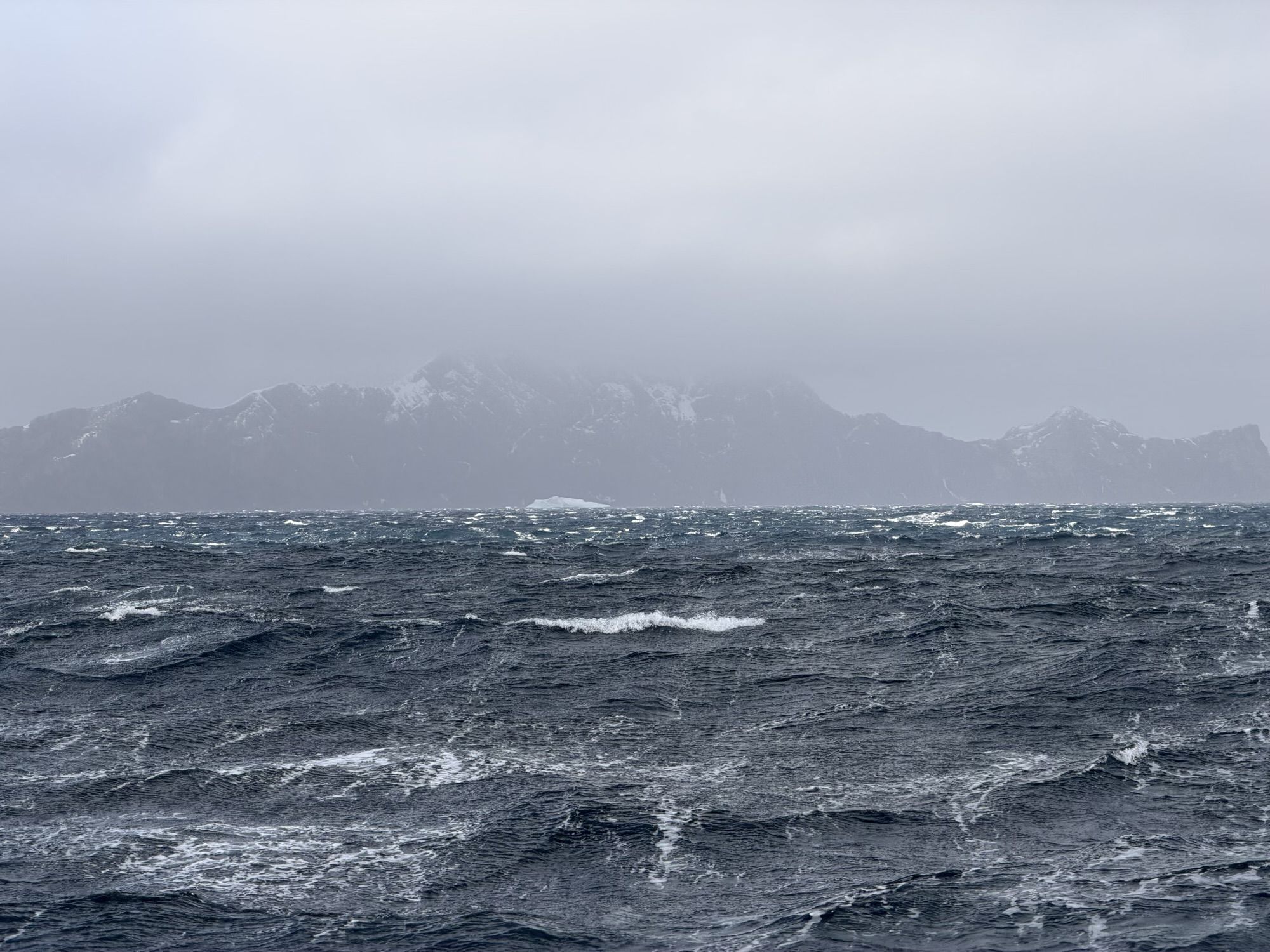
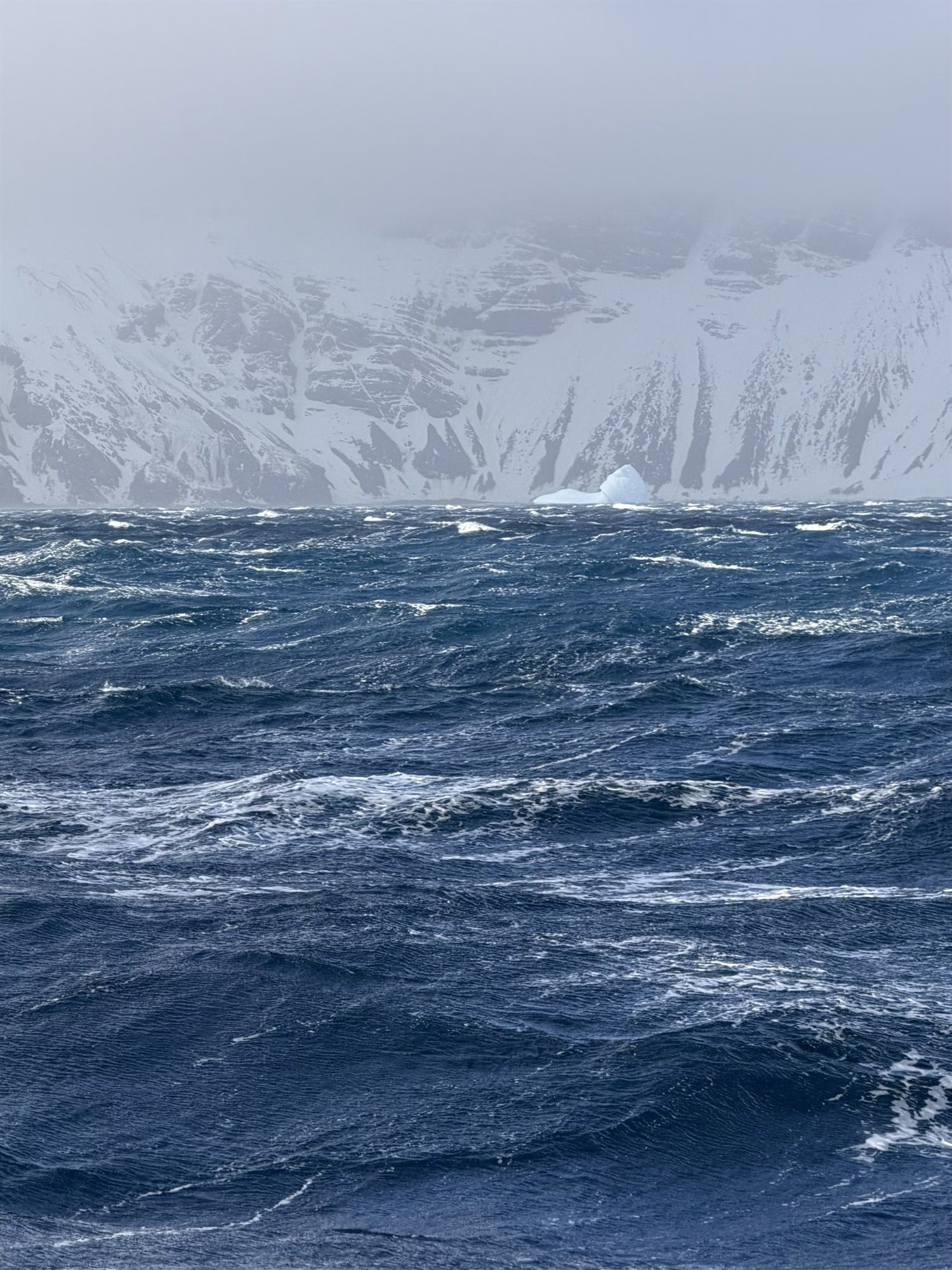
We spent yet another night on watch, passing the hours drifting northward in the darkness, but yesterday morning, when I stuck my head out into the drafty cockpit at half past four—the sails had already been set again at first light—and breathed in the Antarctic-cold air, the island and the first snow-capped peaks emerged from the fog. A little later, the first timid rays of sunlight appeared and illuminated an iceberg.
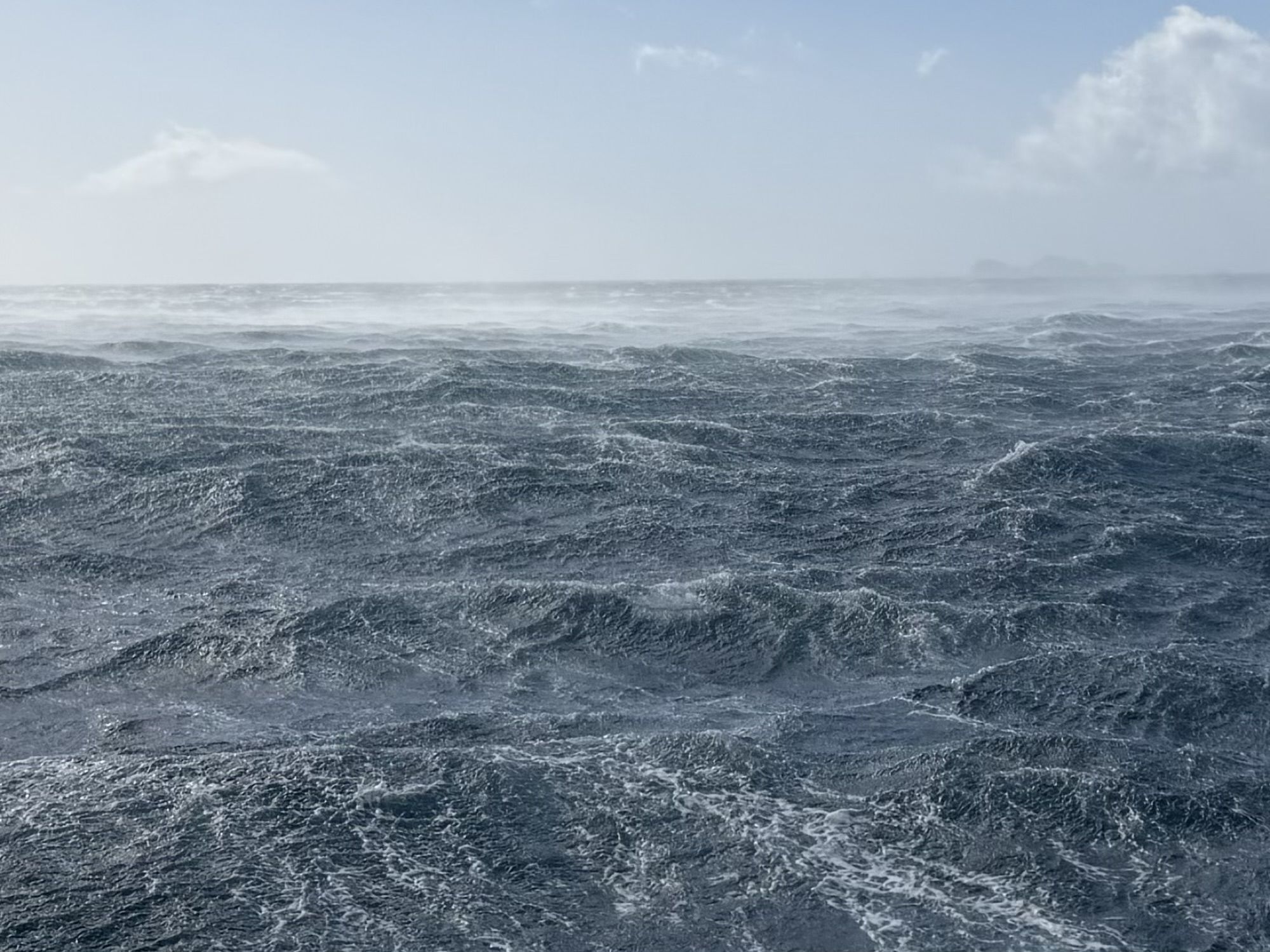
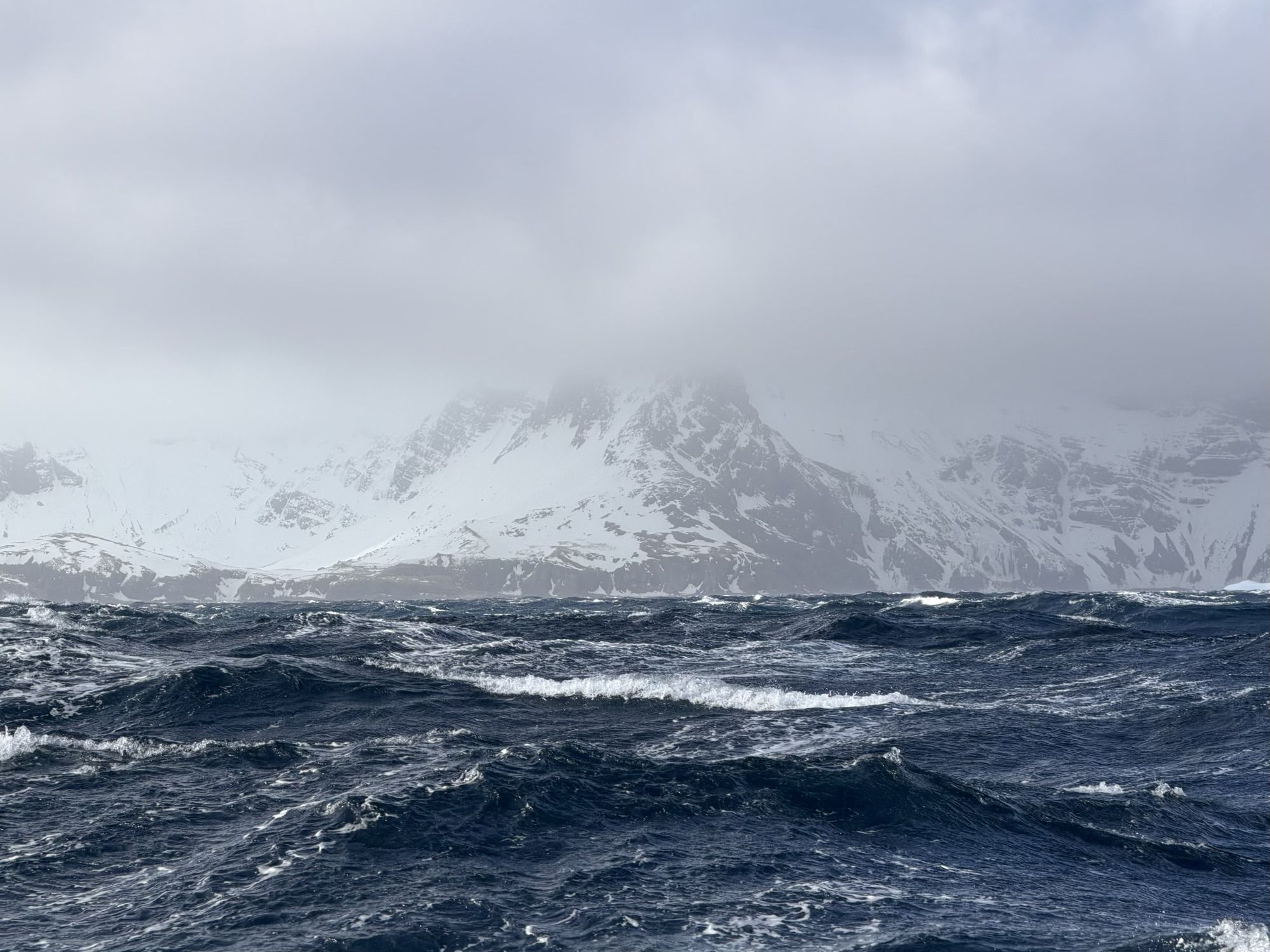
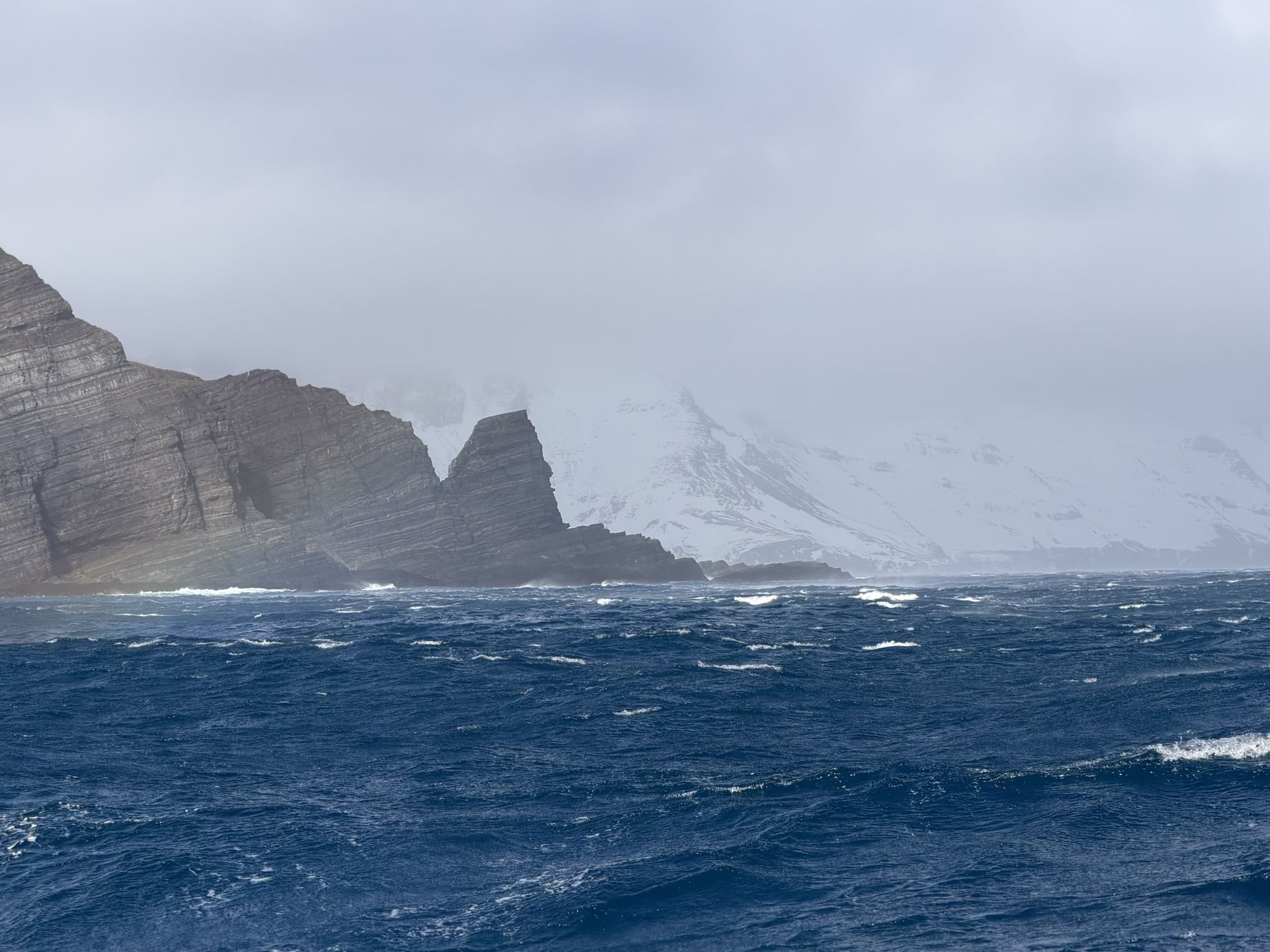
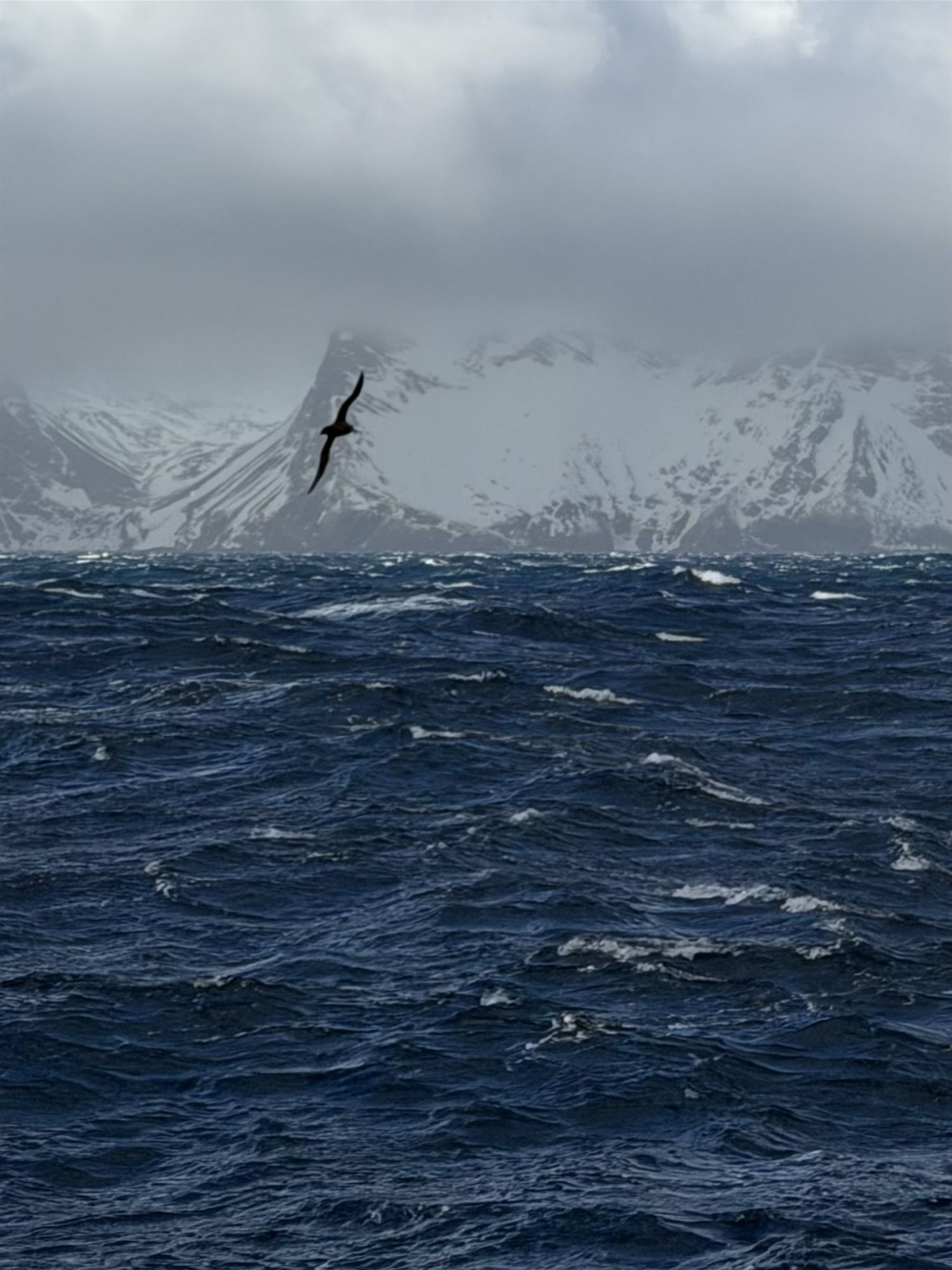
The wind had shifted to the south, but the island offered little shelter. We were sailing on a half-wind course at 40 knots; gusts of up to 56 knots raced across the water at short intervals, heralded by clouds of spray rushing toward us like a white wall, sweeping across the water and over us.
It was wild, but it looked beautiful. The water was churning—mountainous formations in shades of gray-green and gray-blue—depending on how the light hit them. The surface was intricately patterned, constantly shifting as the wind shaped it. An incredible sight.
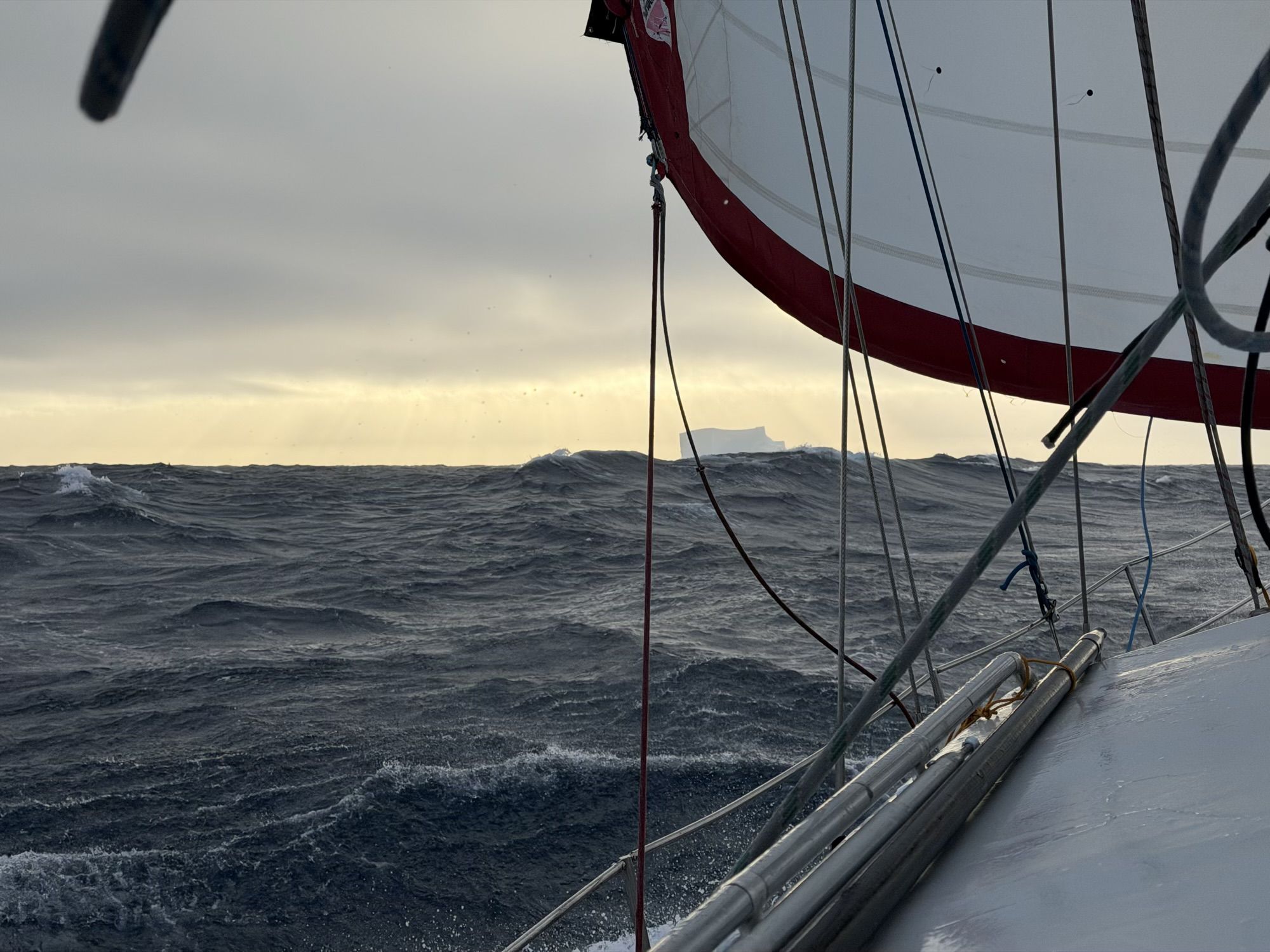
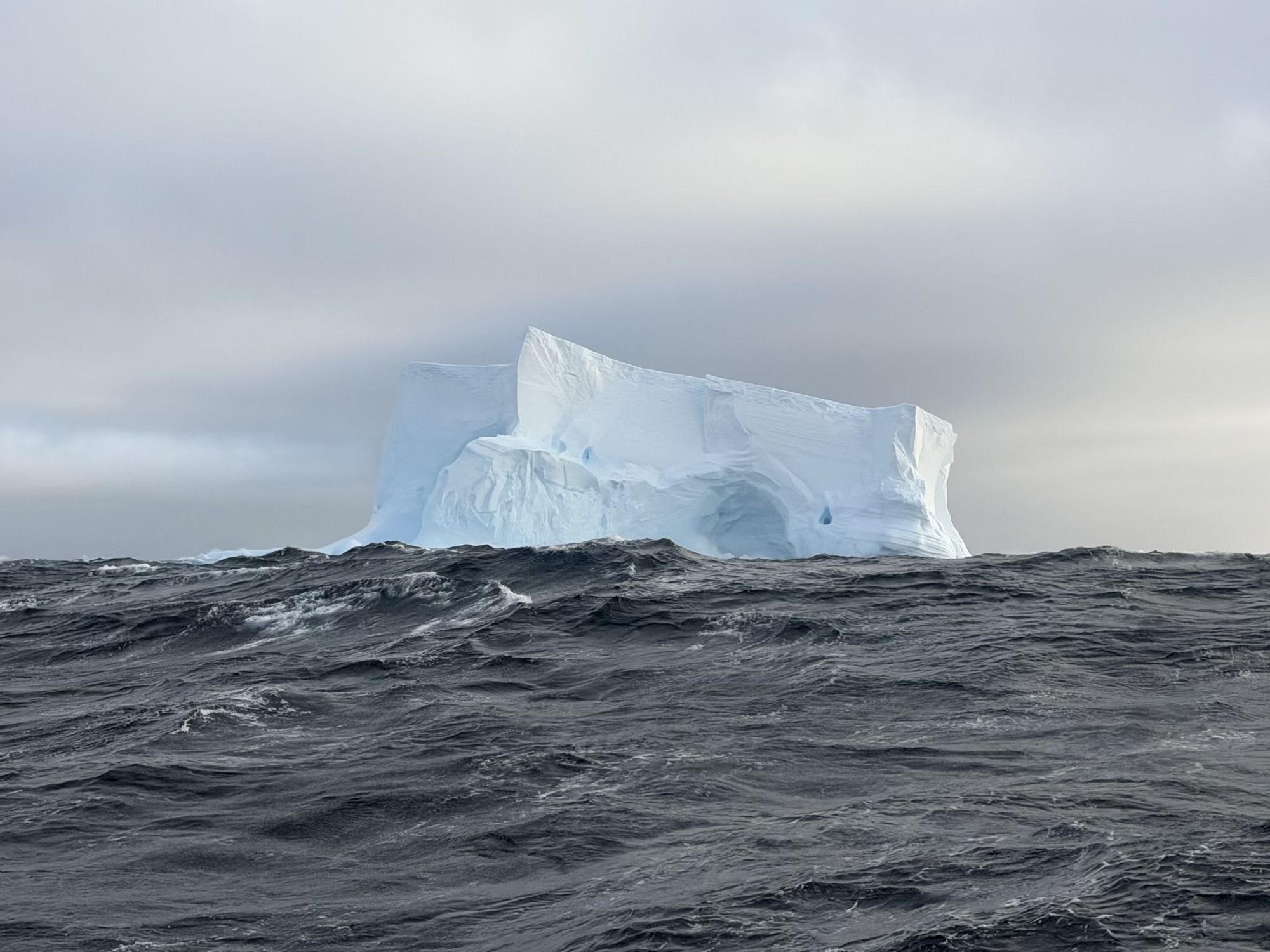
Not as many as we expected, but there were still quite a few seabirds curiously accompanying us, including the large albatrosses—those wanderers who aren’t bothered by this wind at all; on the contrary. They skillfully navigate every gust, using every shift in the air for their elegant flight. It’s a feast for the eyes to watch them.
The strong wind is making it difficult for us to anchor. Although the bay is on the north side of the island and actually offers good shelter from several directions, the strong southerly wind swept across the pass and down the valley, intensifying like a jet stream and driving one hurricane-force gust after another straight at us. But eventually, about half a mile from shore, the anchor dropped. After a week at sea.
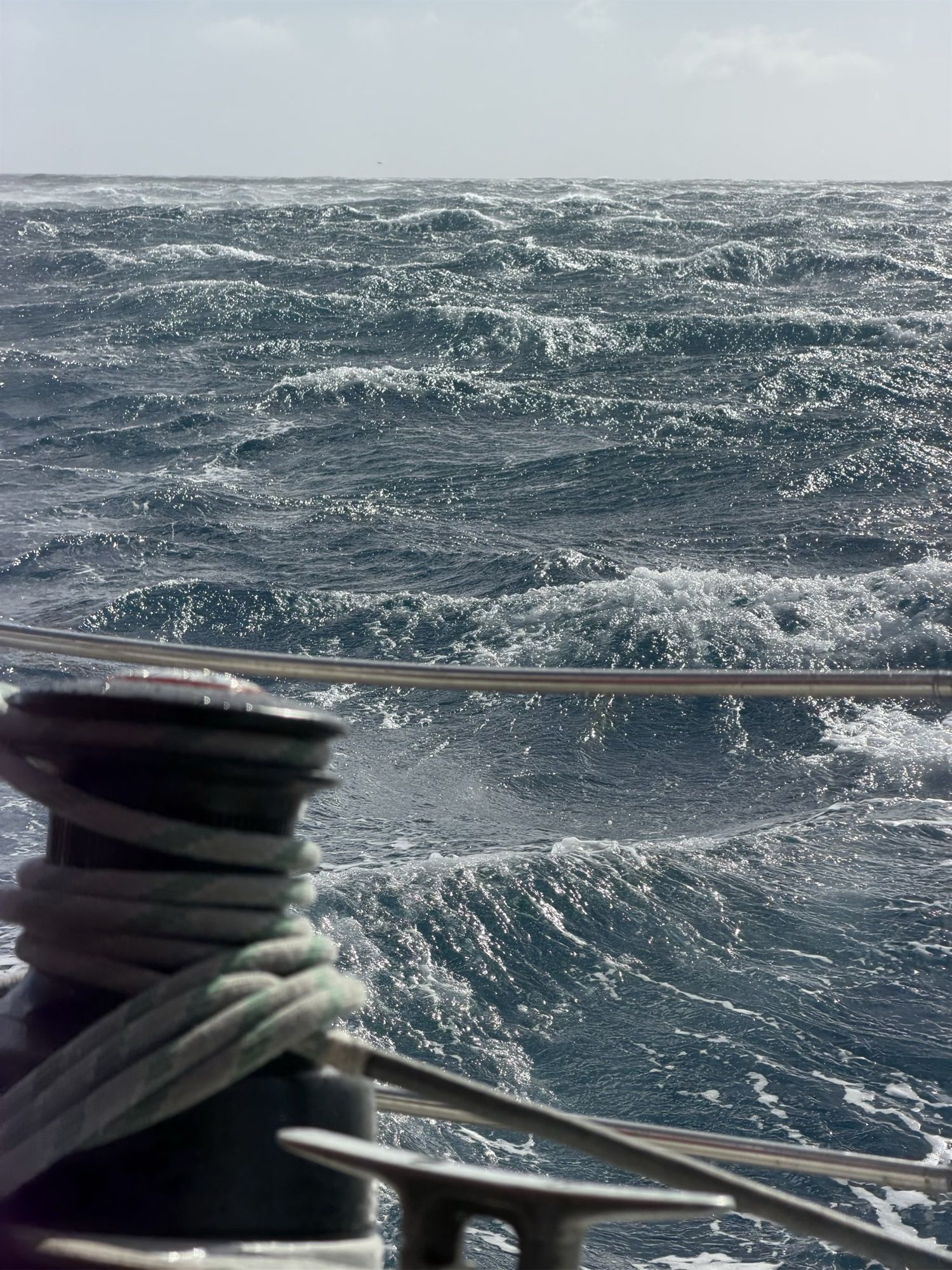
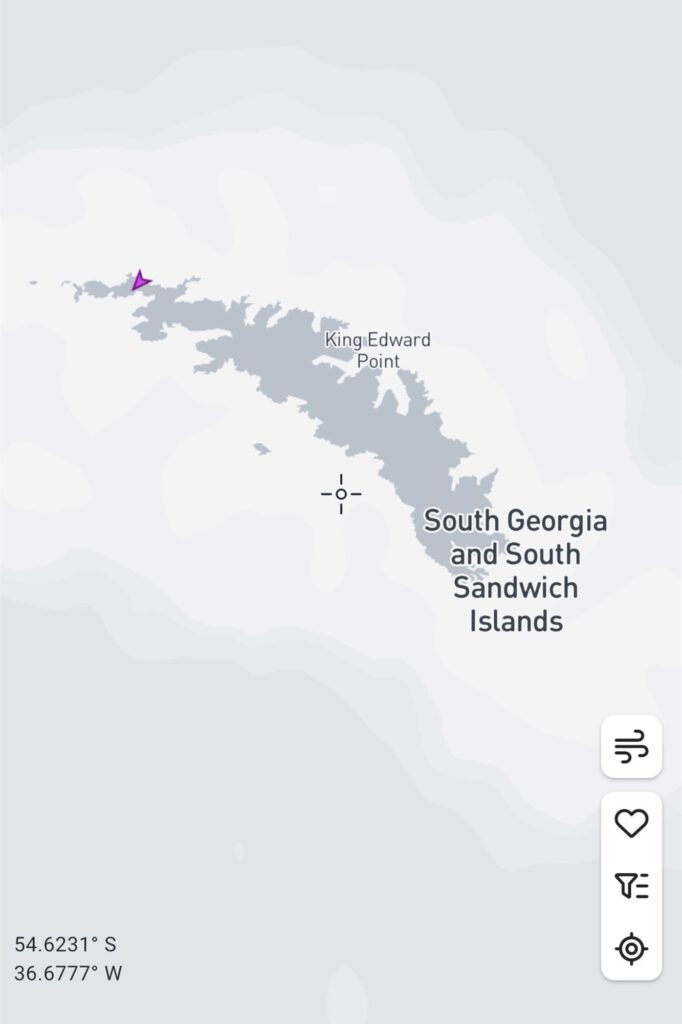
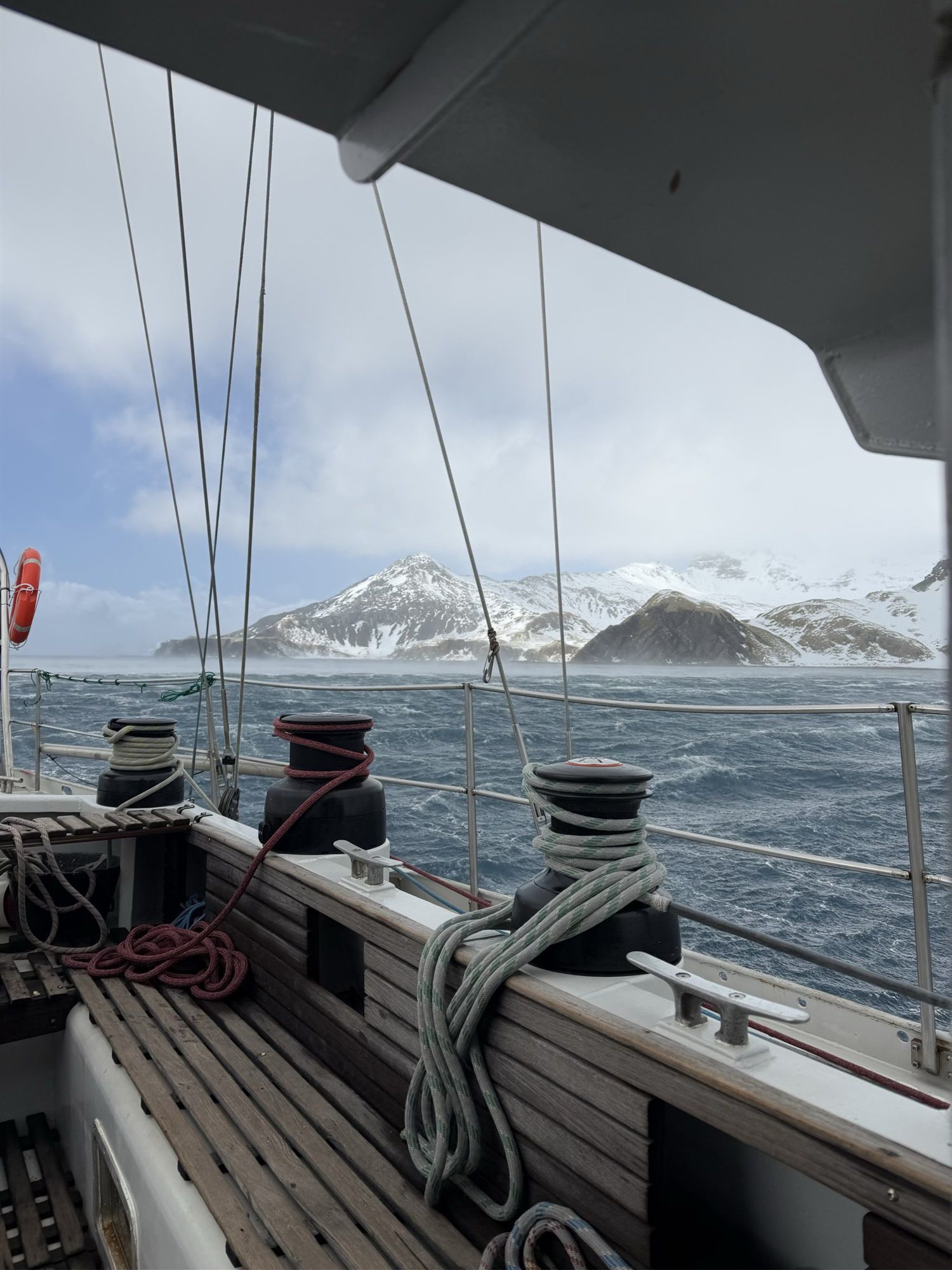
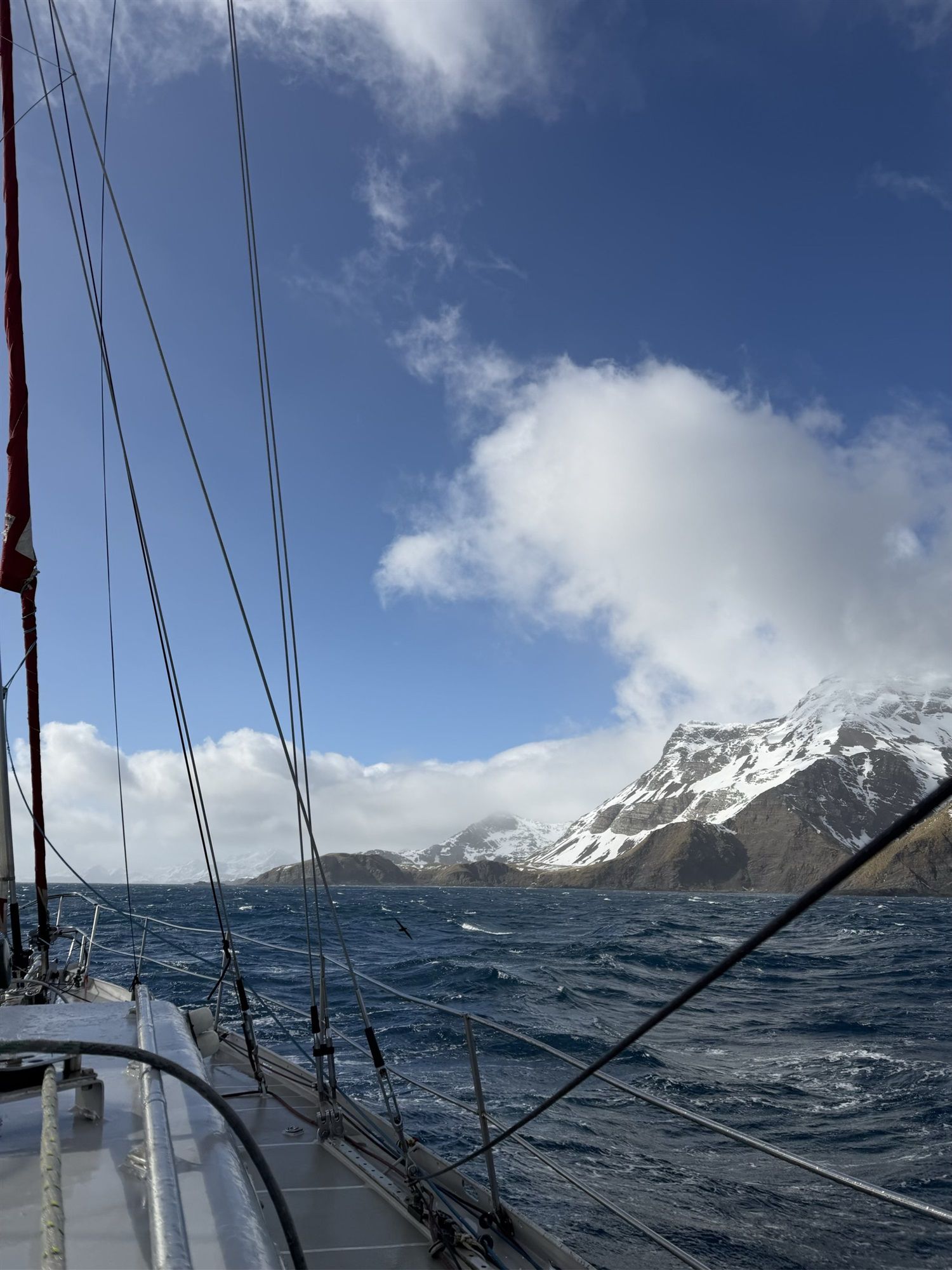
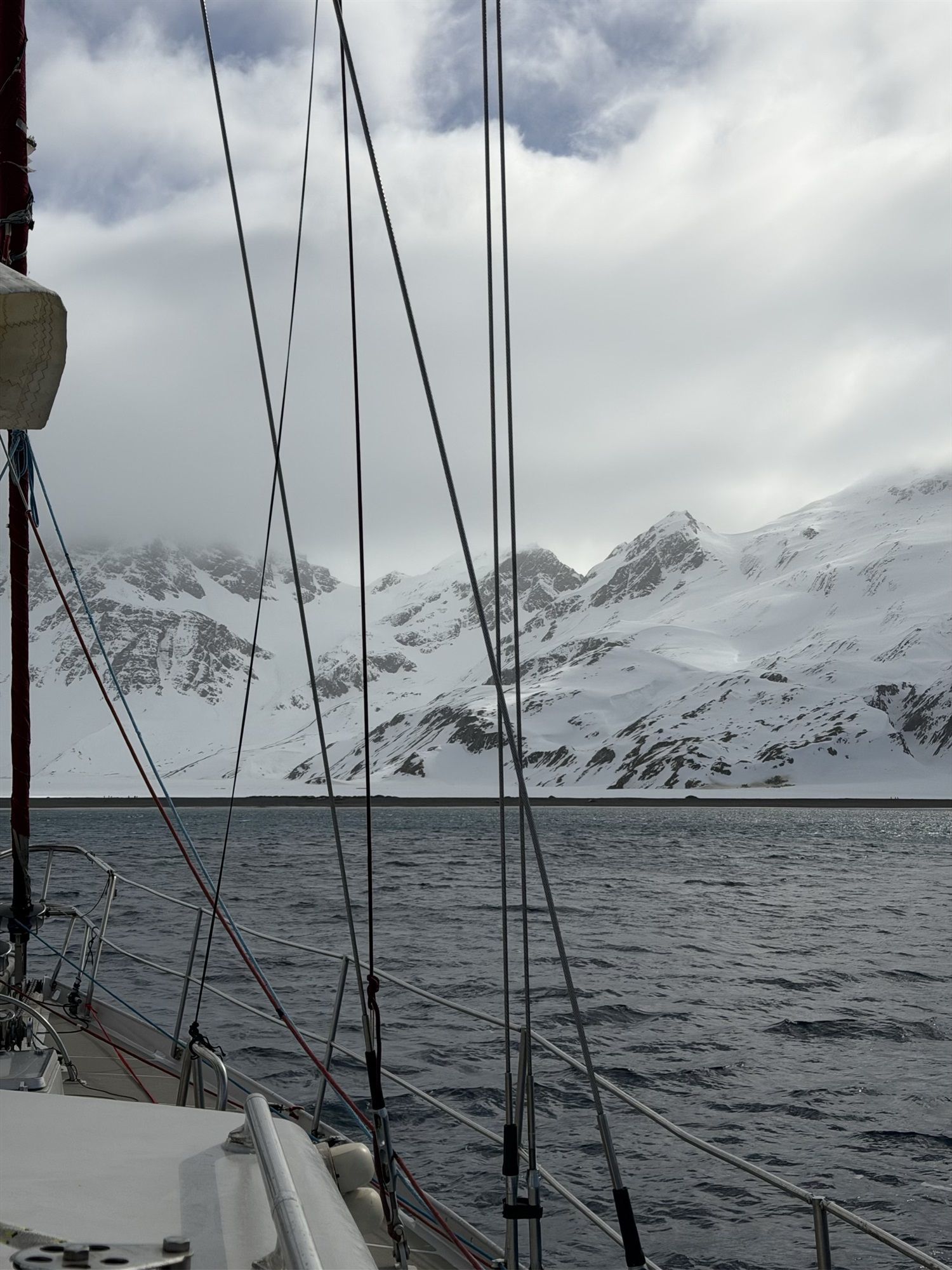
So we’re not exactly at rest, and the wind is howling fiercely around our ears. But we’re here! In South Georgia. After many years of dreaming about it. After five years of planning. On our second attempt, after we were unable to call at South Georgia in 2024 on our way back from Antarctica. This time, we made it.
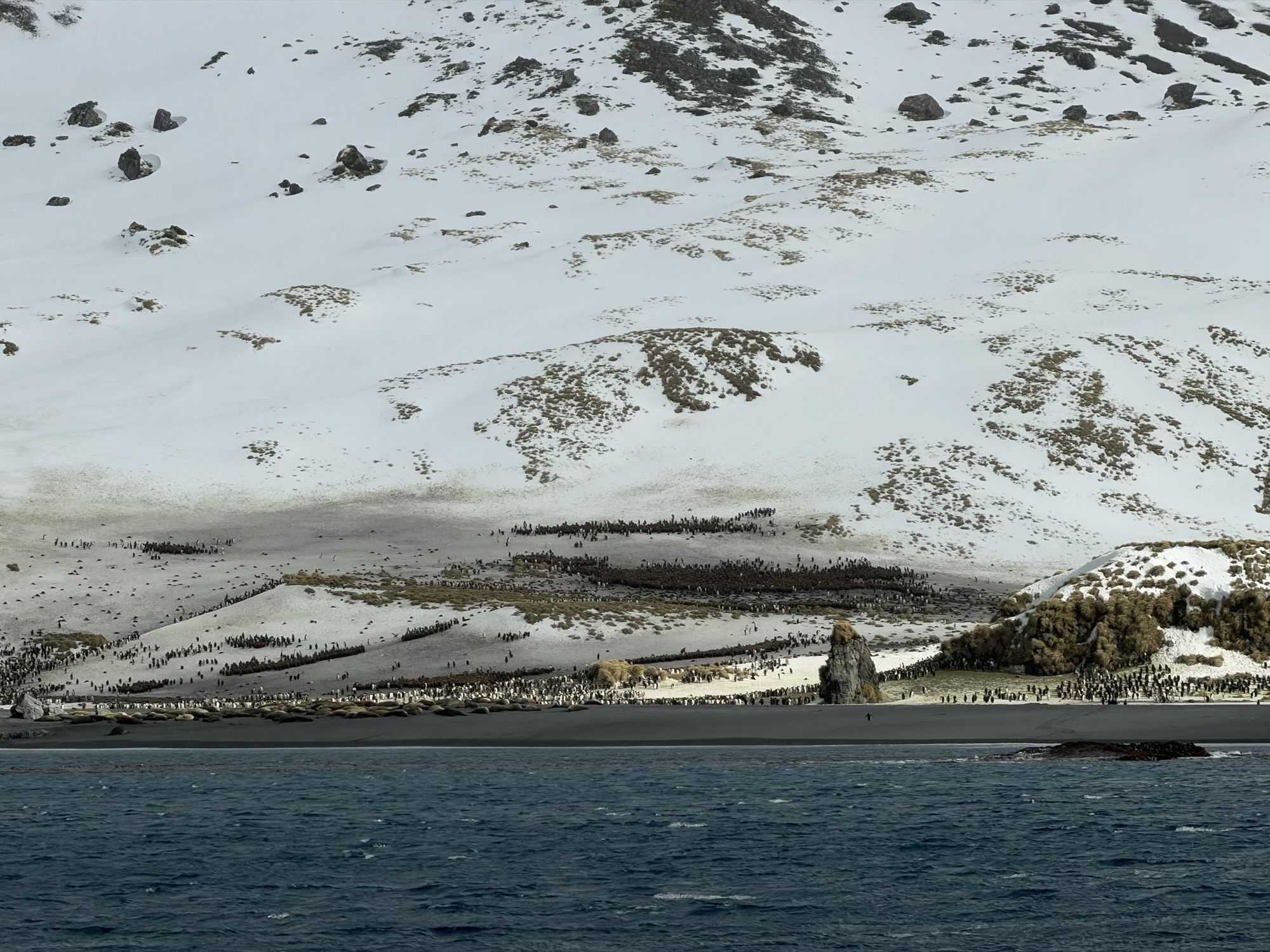
We’re anchored; the anchor is holding. All around us stretches the island’s impressive landscape, which is just awakening from its winter slumber: snow-capped alpine peaks, and even the broad valley still deeply covered in snow. Isolated rocks and tussocks of grass peek out from the snow. White, gray, and hints of green and blue are the dominant colors. The beach is dark, almost black. Scattered across the area are elephant seals in several groups—often consisting of a massive bull, easily recognizable even from a distance due to his immense size, and his harem of several significantly smaller females.
Countless king penguins are scattered across the snowy slopes, spread out among several colonies. Slender, vibrantly colored adults and their brown, fluffy chicks. As far as the eye can see. The penguins’ calls and the muffled rumbling of the elephant seals reach us—at least when the wind takes a brief pause before the next howling gust.
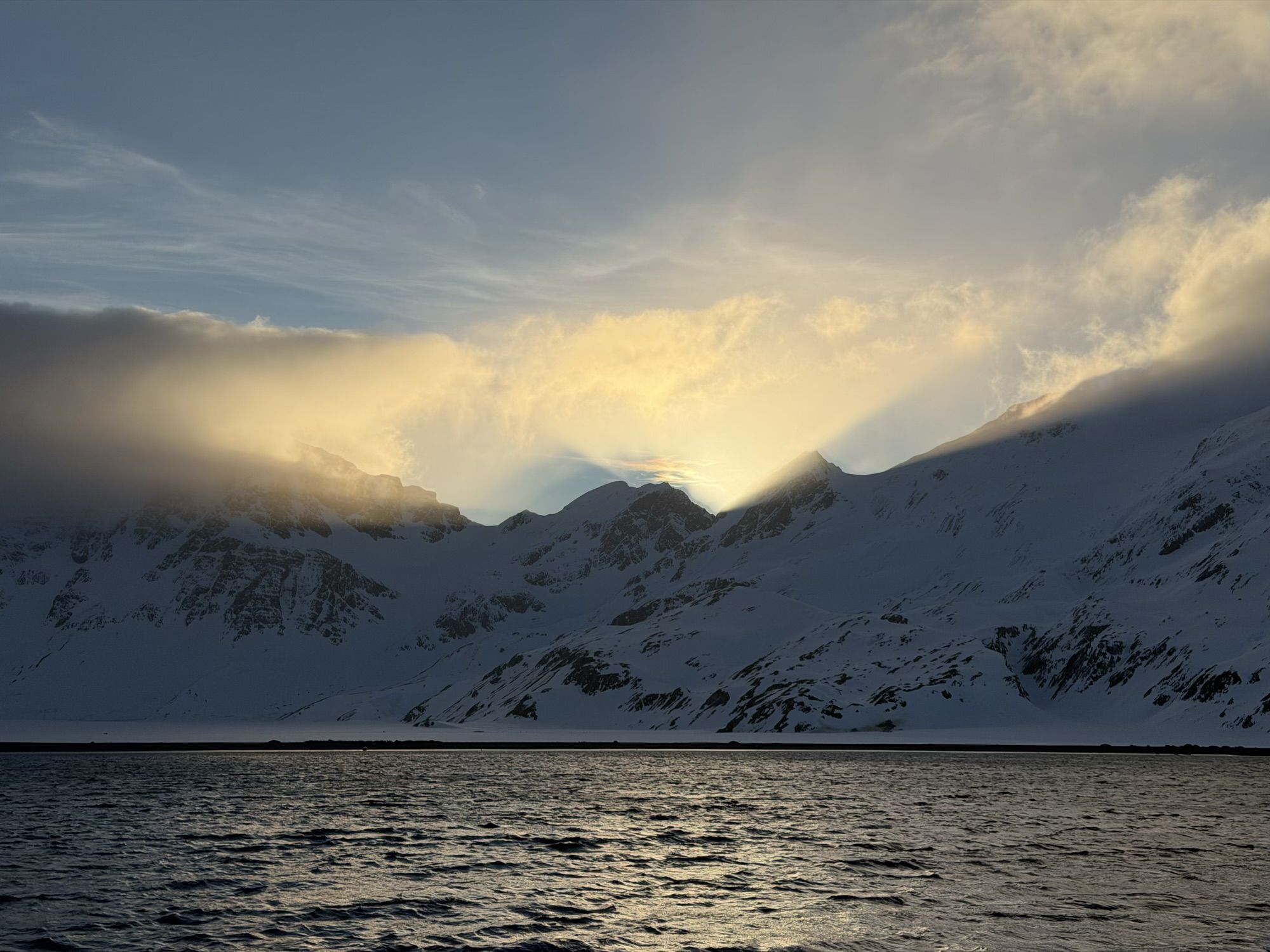
The wind is too strong for a shore excursion or a dinghy ride. In the evening, the sun even shines for a moment before disappearing behind the peaks.
We look forward to the next day and make ourselves comfortable in the belly of the Selma. We rest after the crossing, the exhaustion from which we’re only now beginning to feel and which is slowly subsiding. We’ve arrived—even in our minds, even in our thoughts, which still need to process the fact that we’re actually here now.
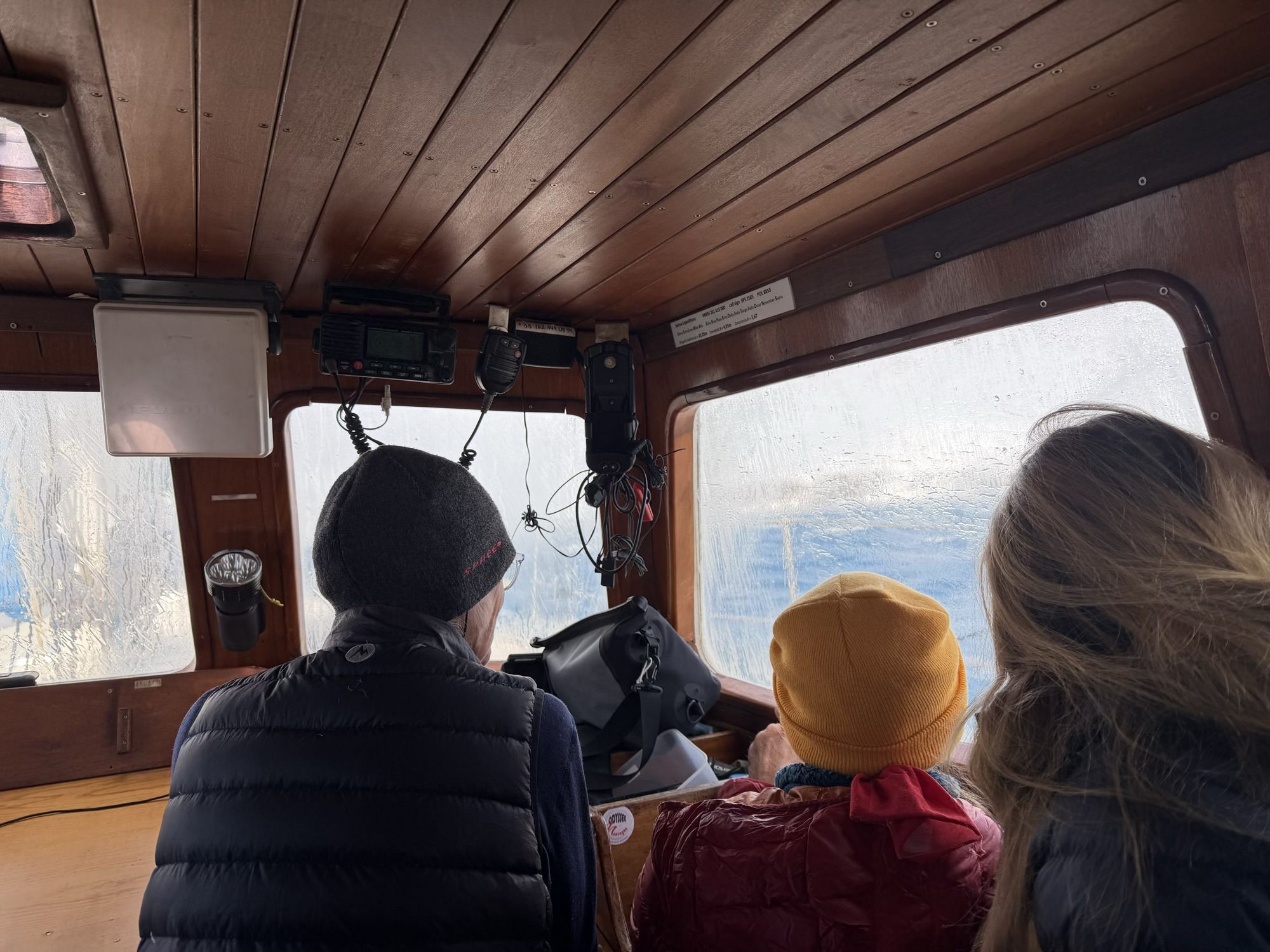
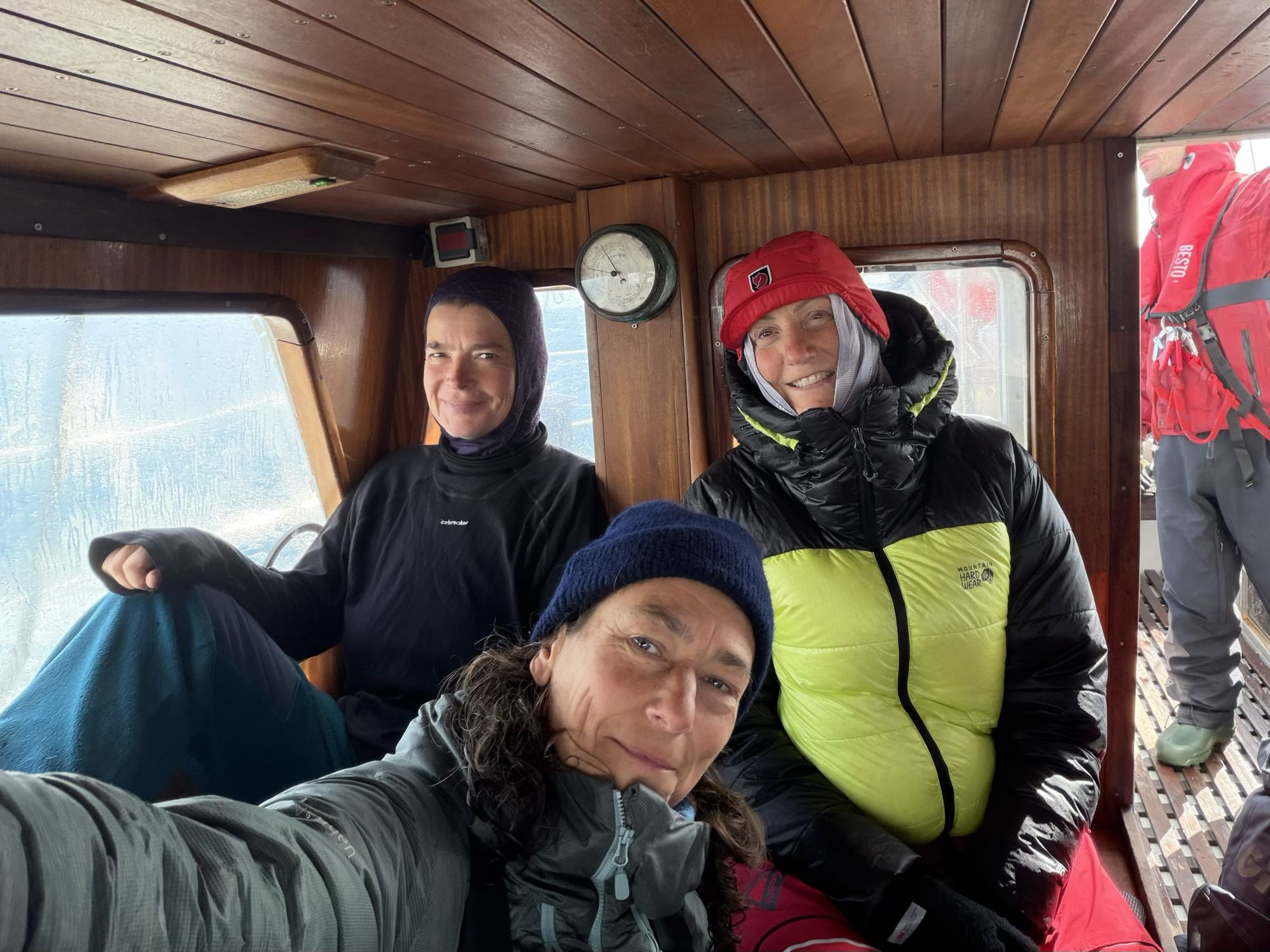
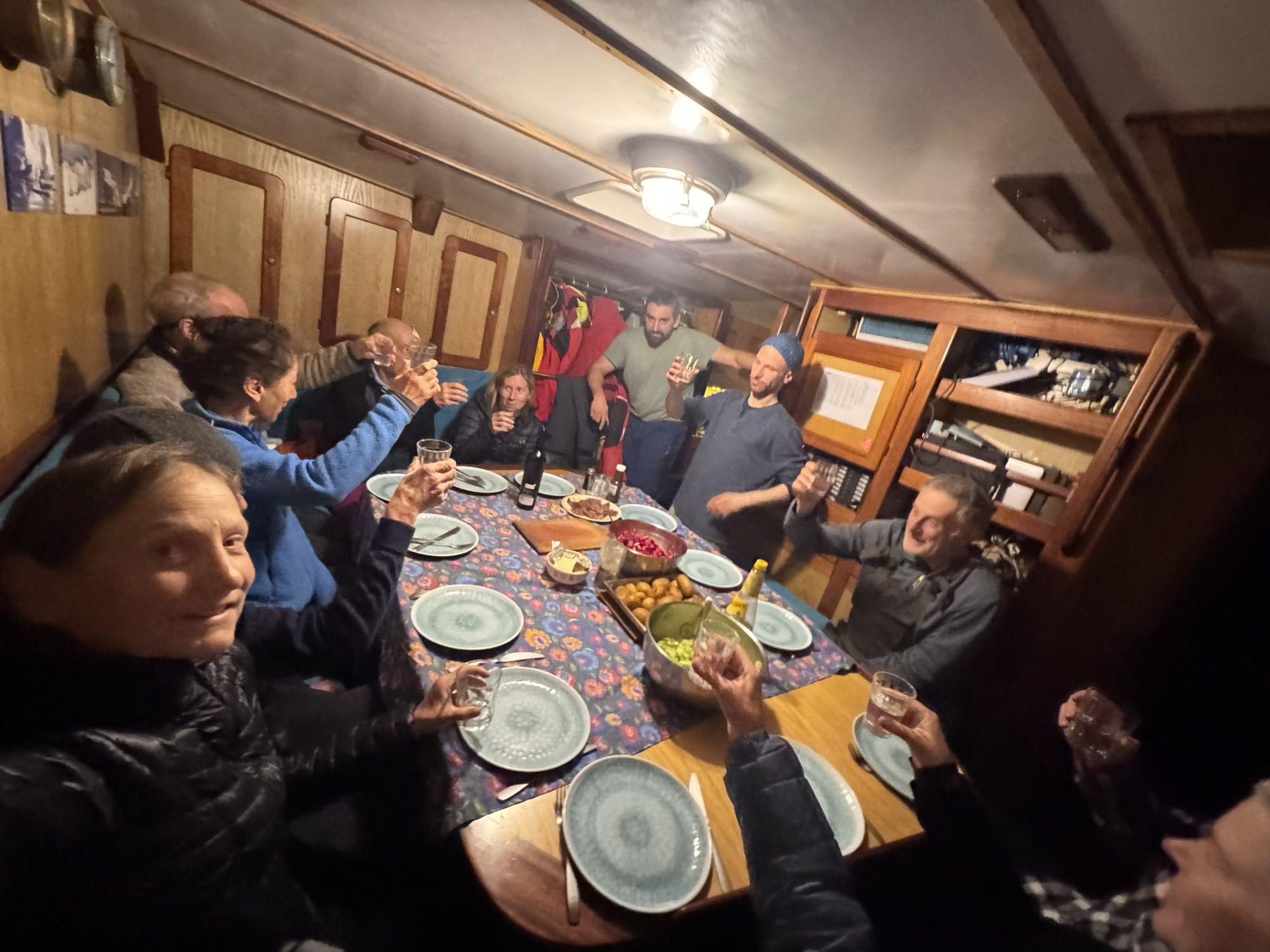
We cook and eat heartily—the first time all twelve of us have been together since we set out, sitting peacefully at a set table, with plates and all the trimmings, even a sip of Falkland Gin to celebrate the occasion and a small glass of wine.
We’re happy and grateful for the privilege of being here.