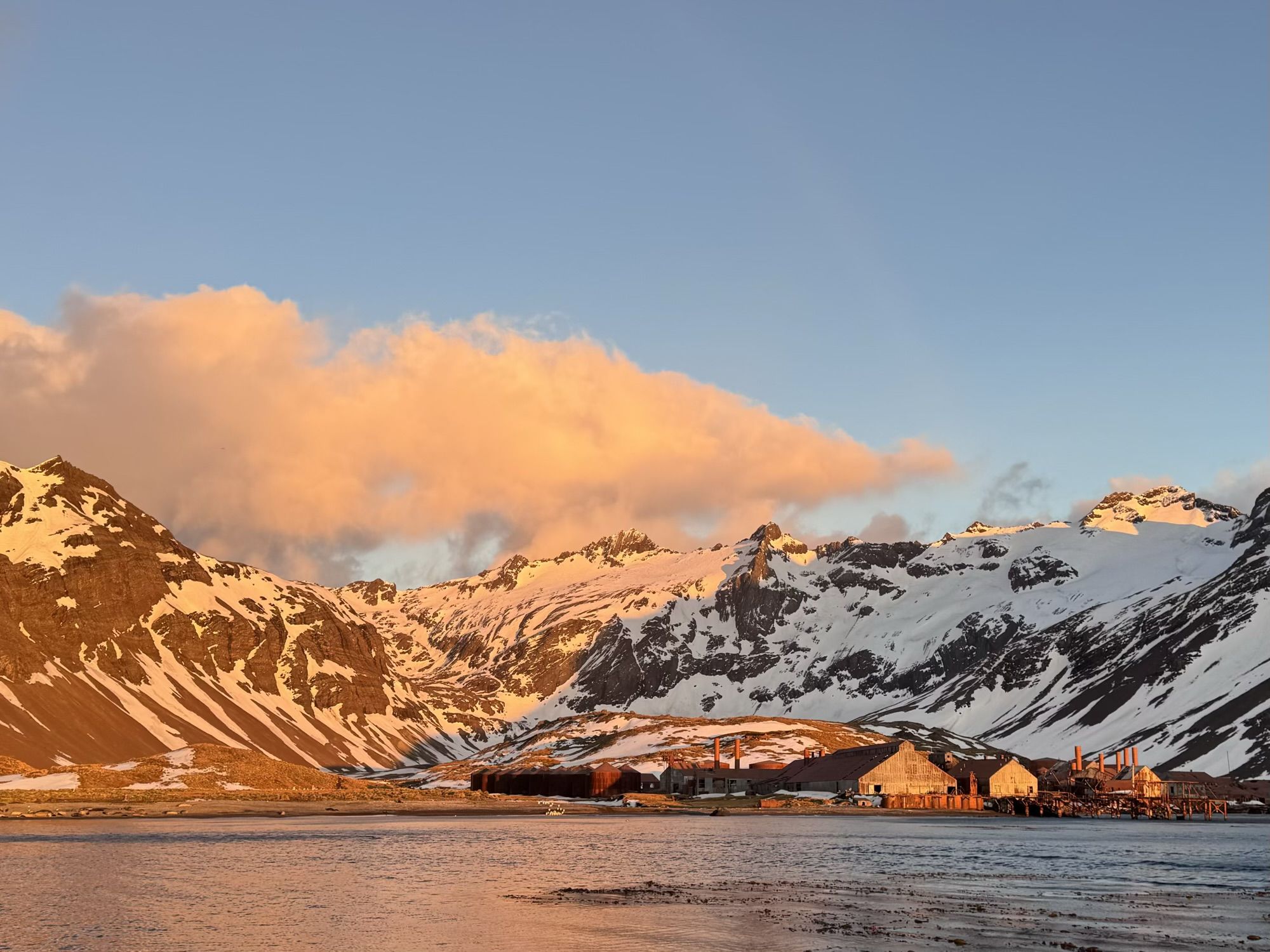
Early in the morning, we set off, leaving Leith Harbor behind us. The ruins of the old whaling station glisten in the morning sun. A glorious day lies ahead of us.
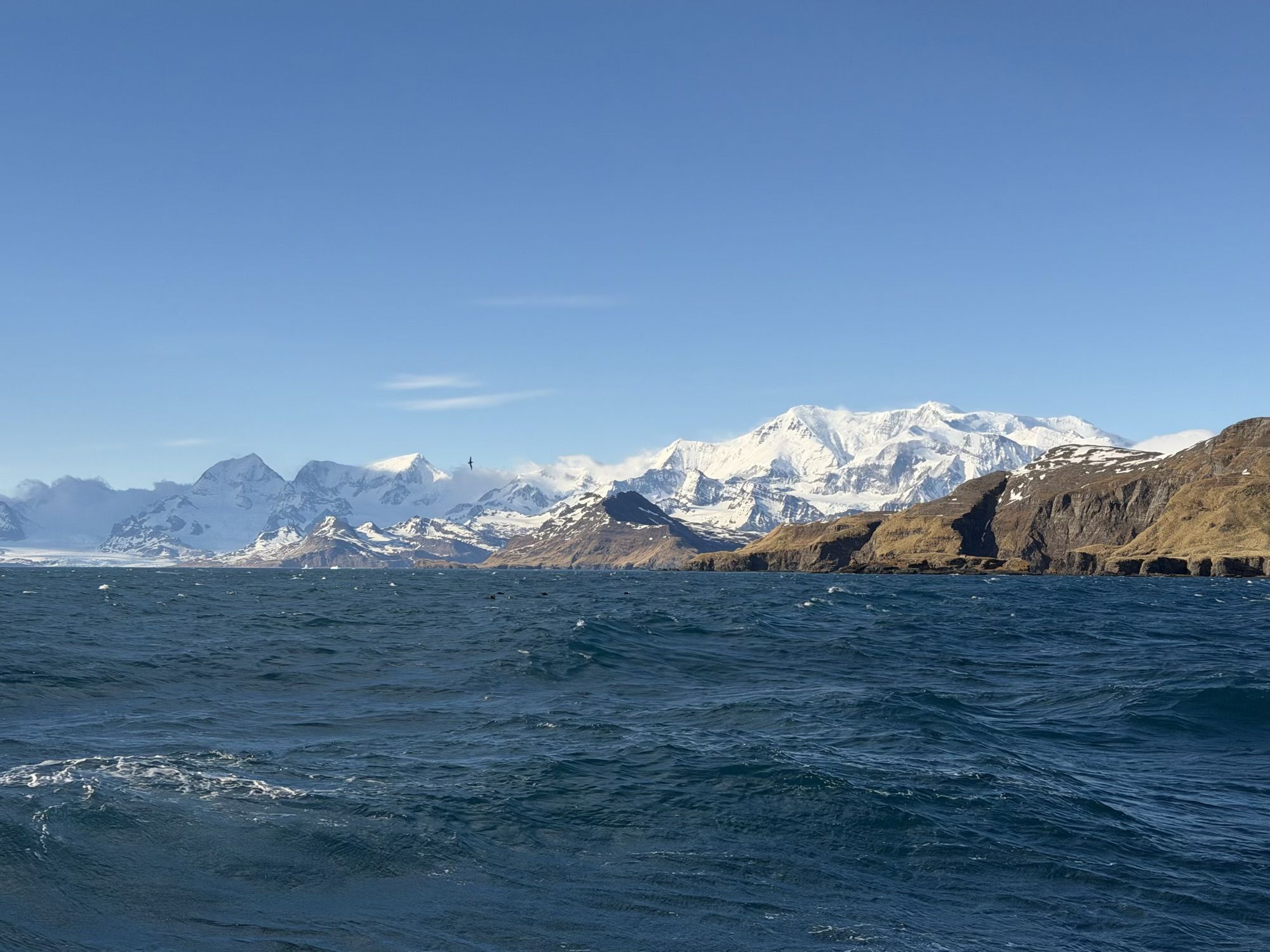
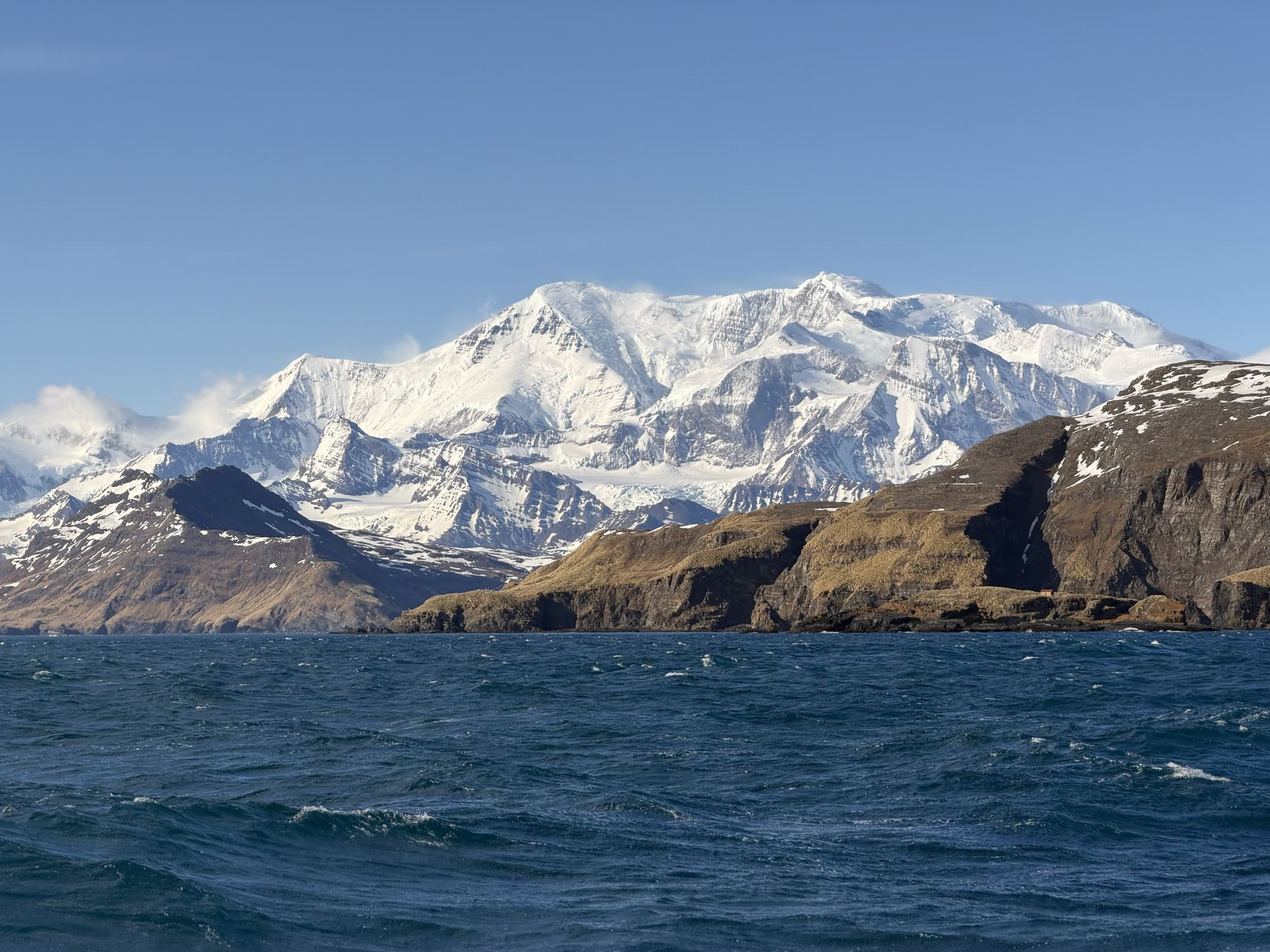
We sail southeast along the coast under our own power, passing the entrance to Cumberland Bay. Beyond it, the high peaks of the Allardyce Range rise to nearly 3,000 meters, snow-capped and largely glaciated.
Four hours later, we drop anchor in Ocean Harbor.
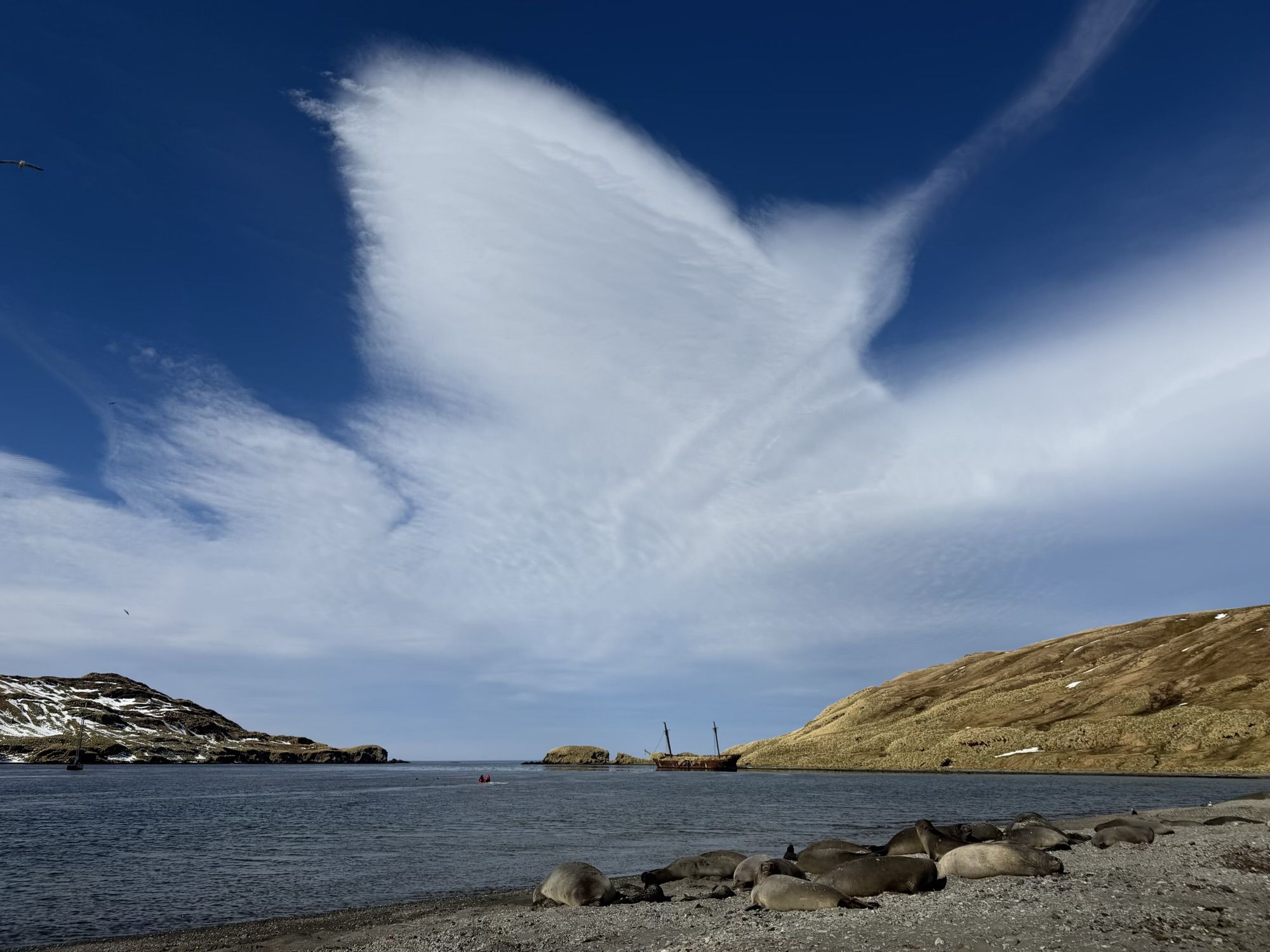
Ocean Harbour
Ocean Harbor is located about halfway between the entrance to Cumberland Bay and St. Andrews Bay. It is one of the best, well-sheltered anchorages for small vessels in South Georgia.
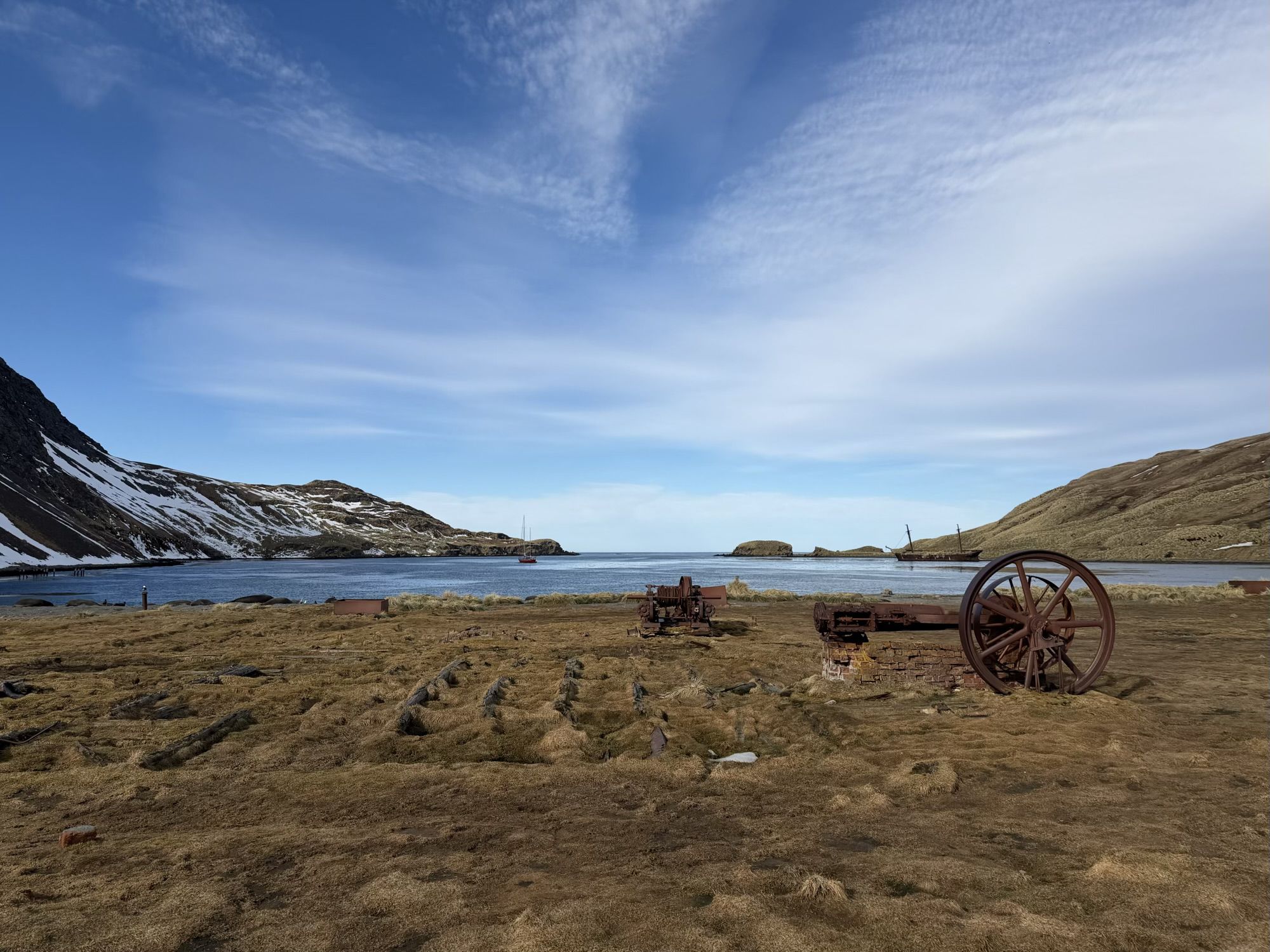
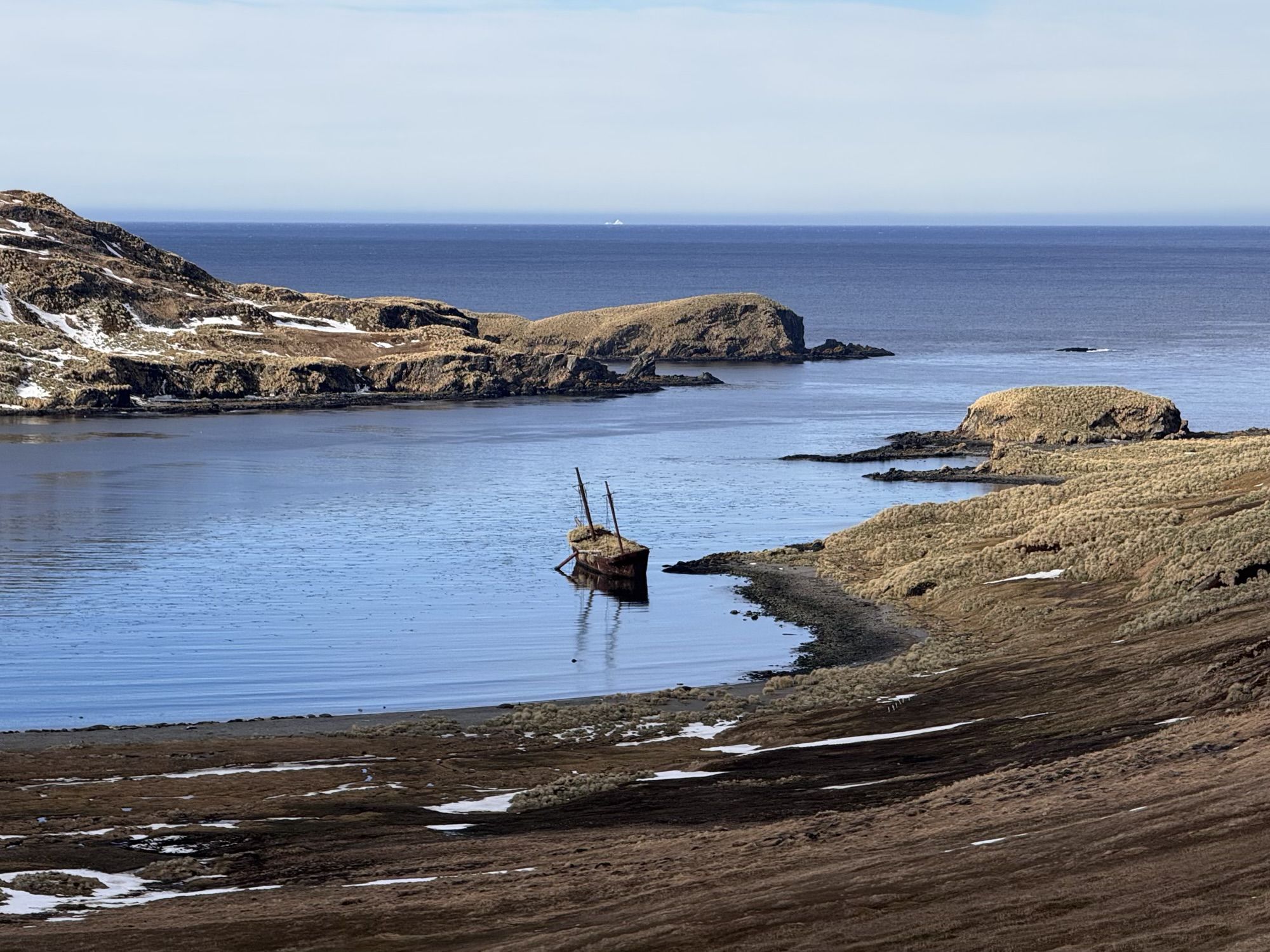
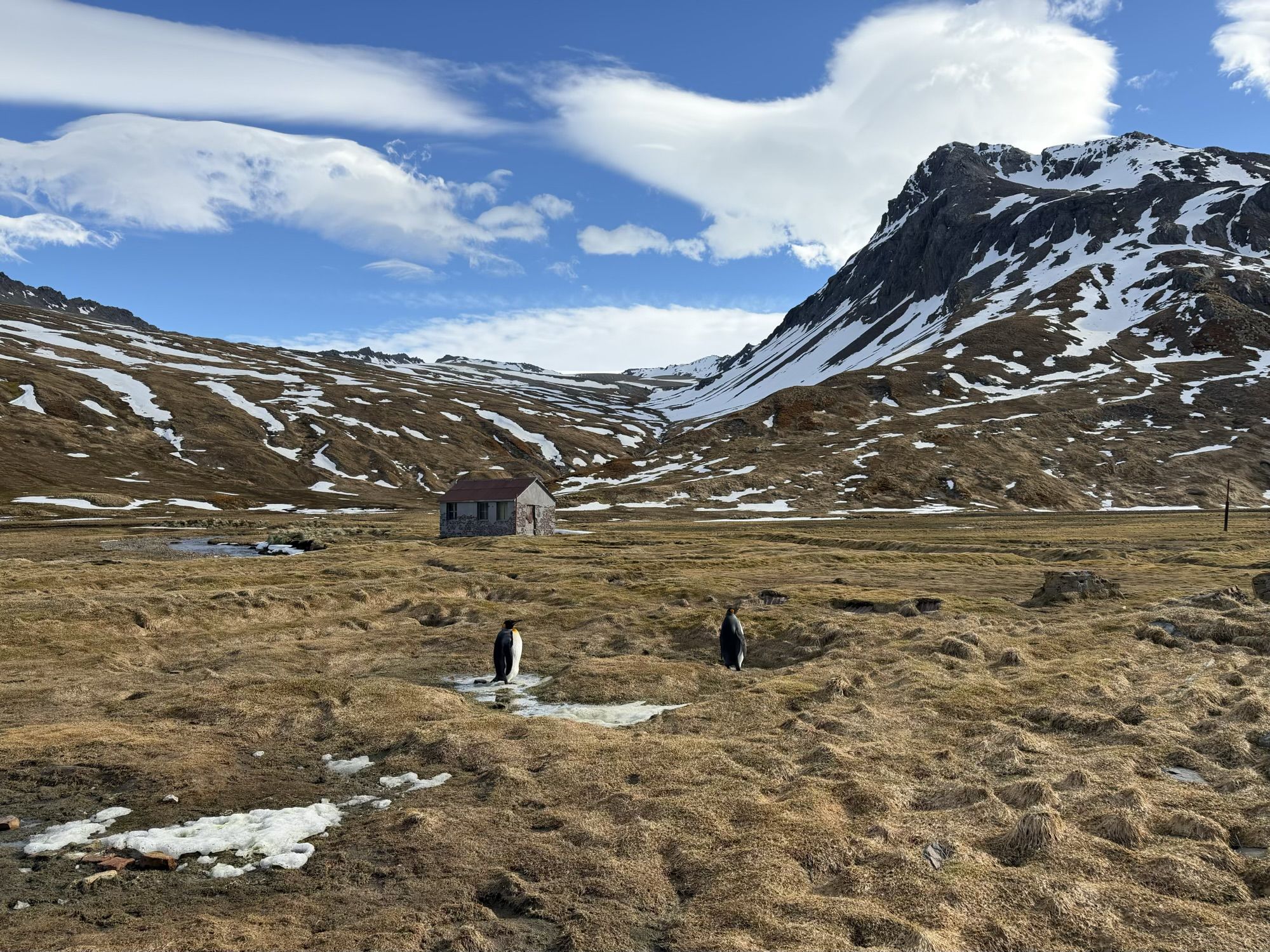
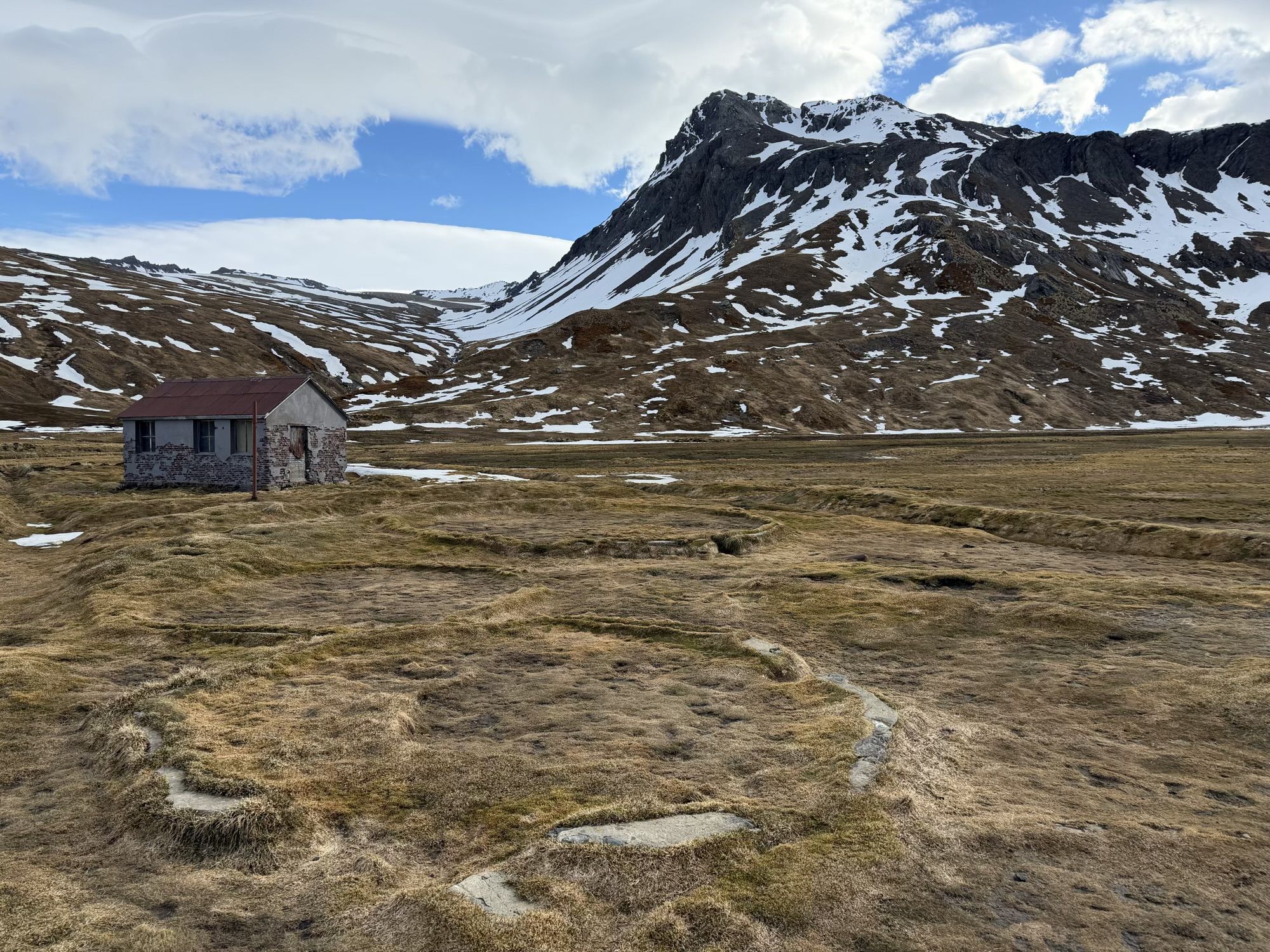
A whaling station operated here from 1909 to 1920, until most of it was relocated to Stromness. A few visible remnants still bear witness to this history, including a shed, the wreck of the “Bayard,” and a handful of graves.
South Georgia’s earliest recorded grave is located here, though its exact location is unknown. Five crosses stand on the southern slope of the bay.
The Bayard, a former three-masted ship with an iron hull, drifted away from its mooring at the coal pier on the north side of the bay during a strong wind in 1911 and ran aground on the opposite shore.
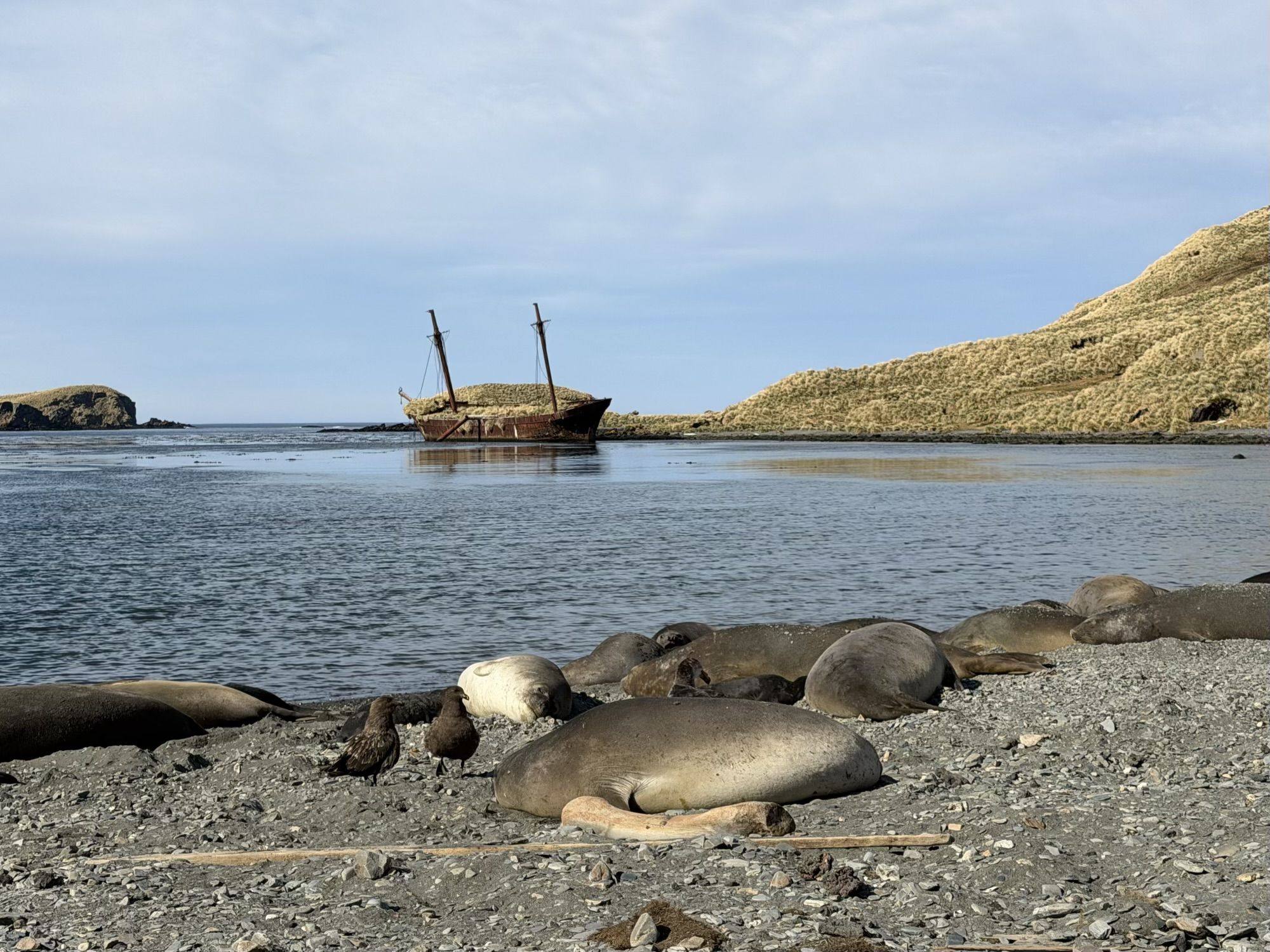
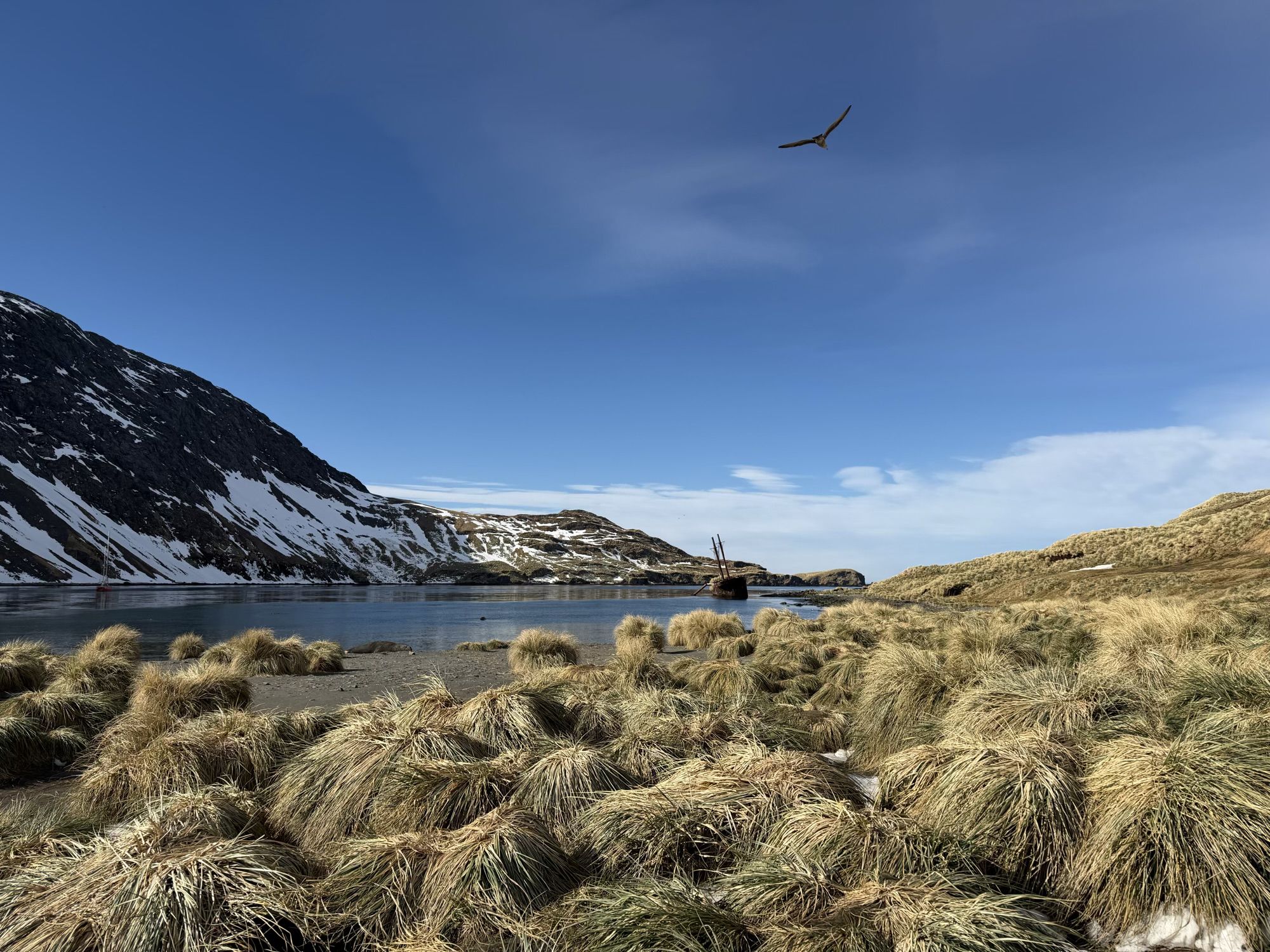
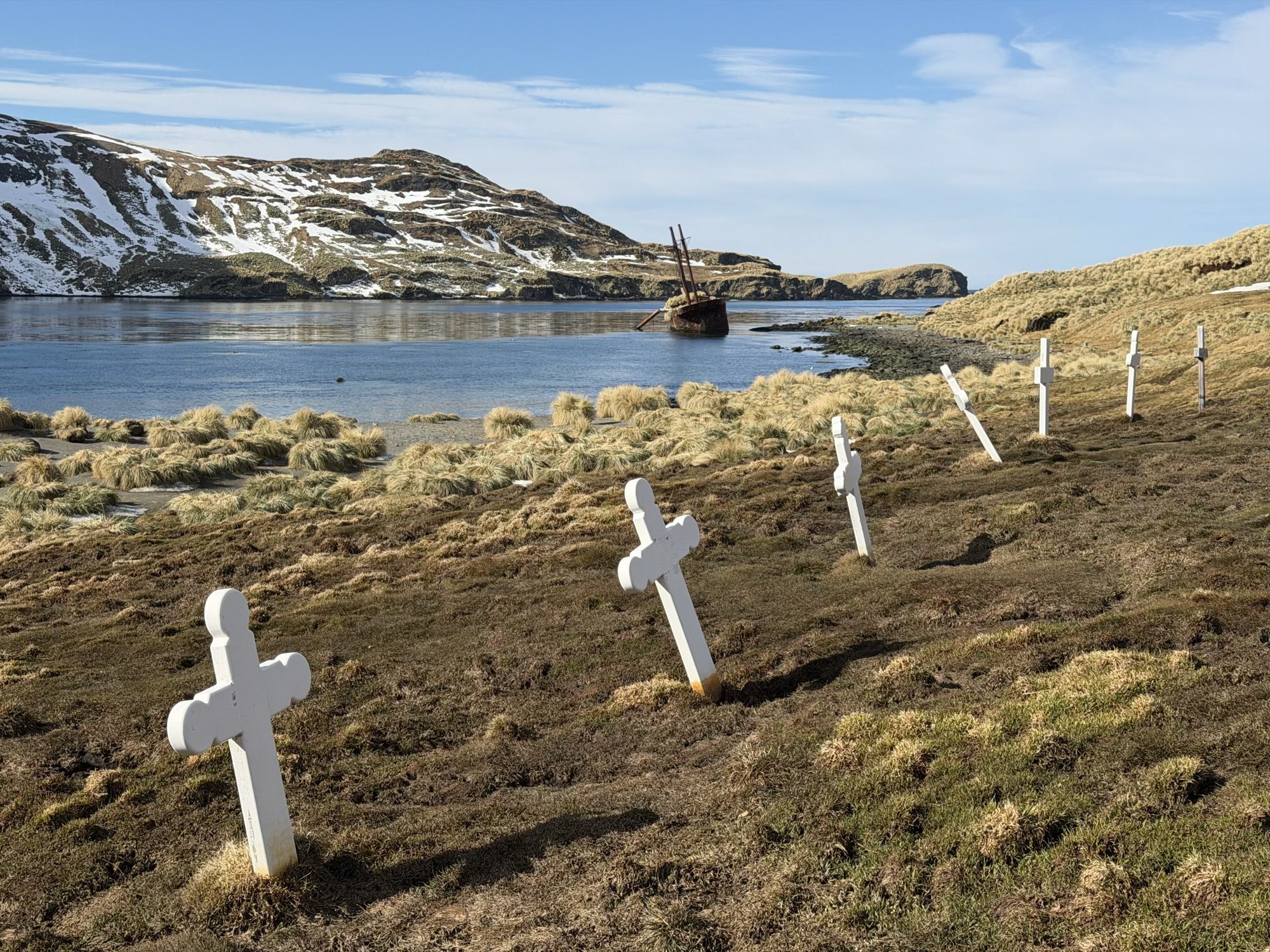
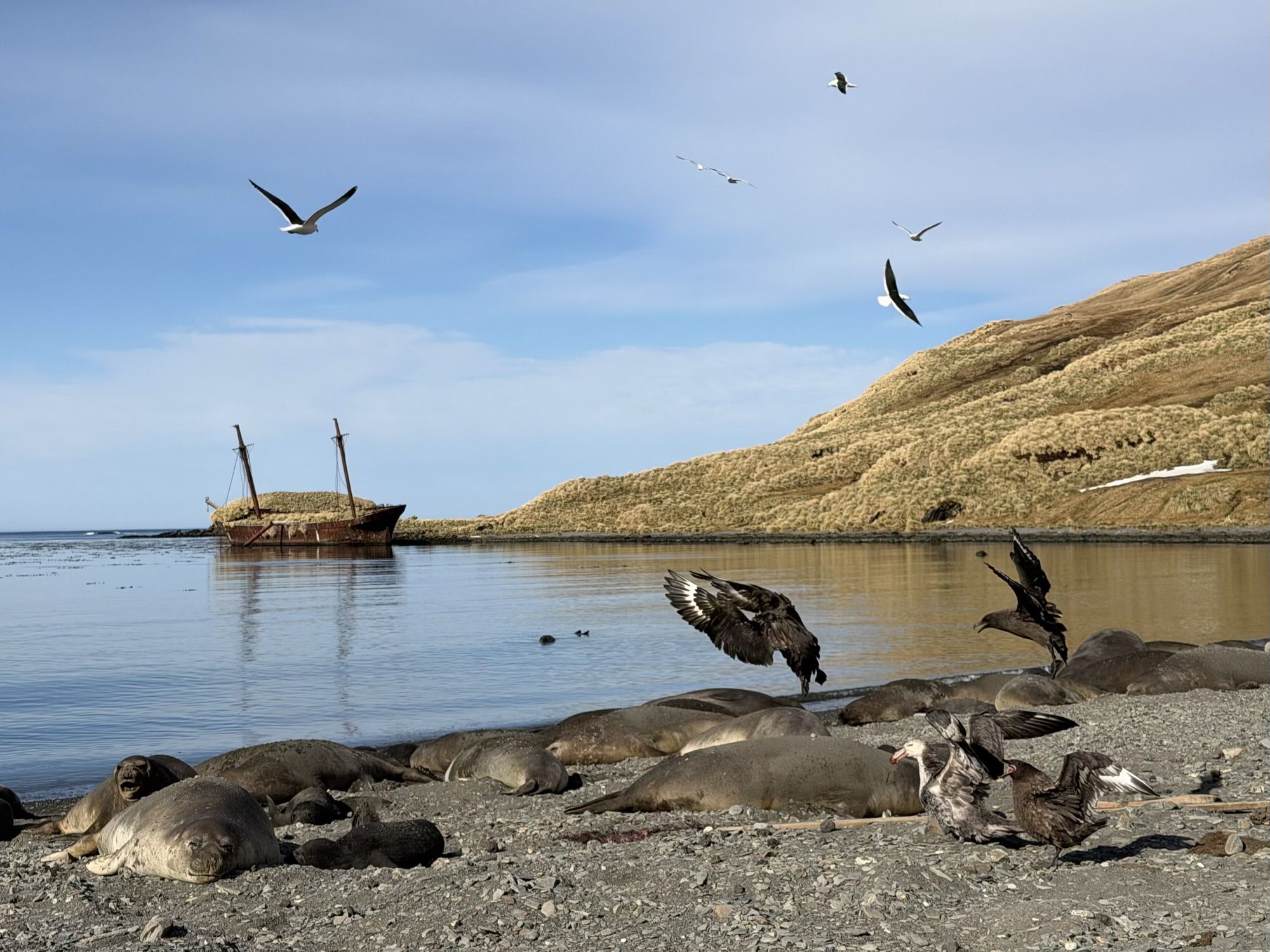
It still lies there today, listing to one side and now overgrown with tussock grass. A colony of imperial shags has made its home inside. Of the Bayard’s original three masts, only two now rise into the blue sky; the middle mast toppled onto the deck a few years ago, worn down by the ravages of time and eaten away by rust.
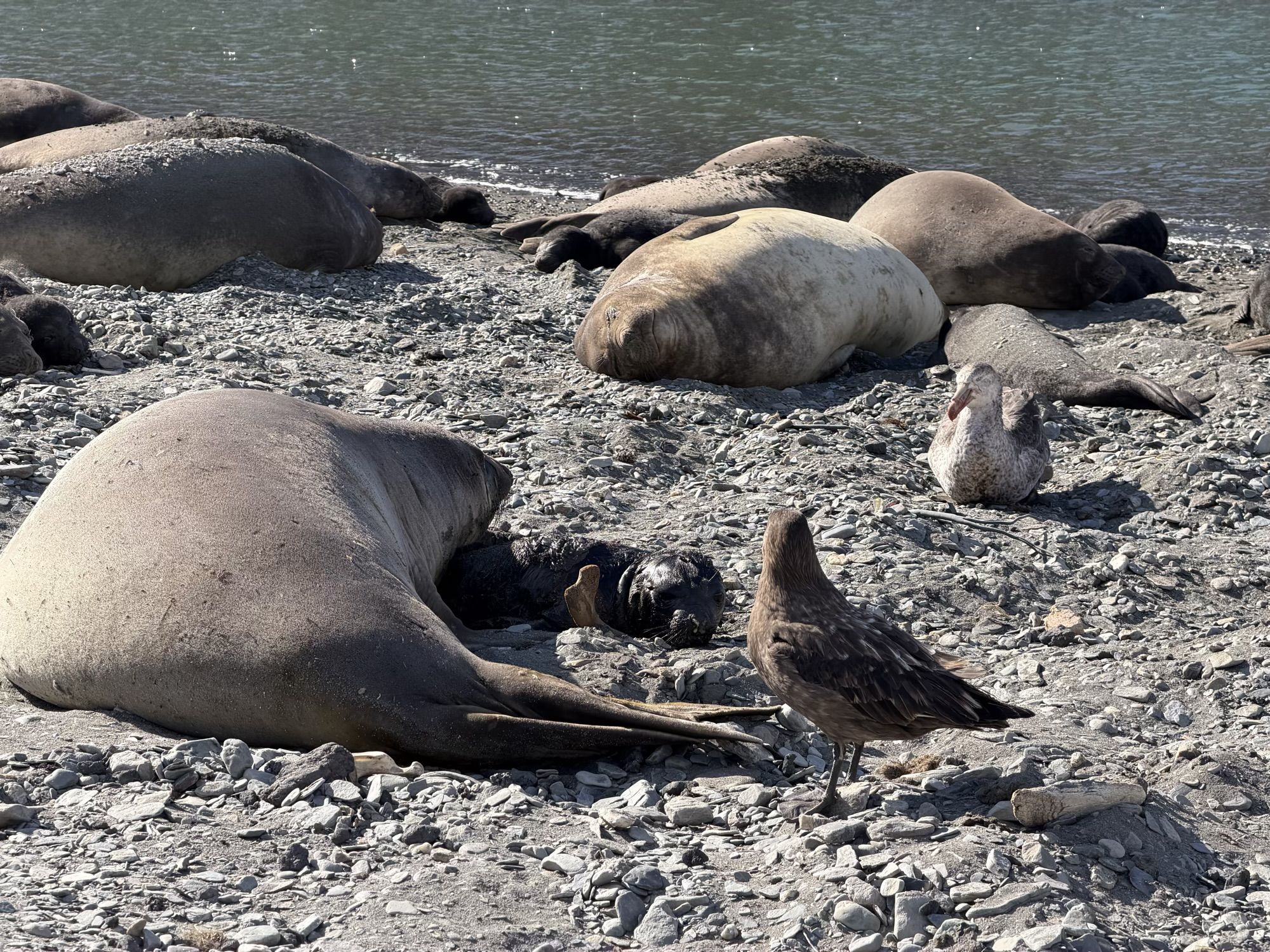
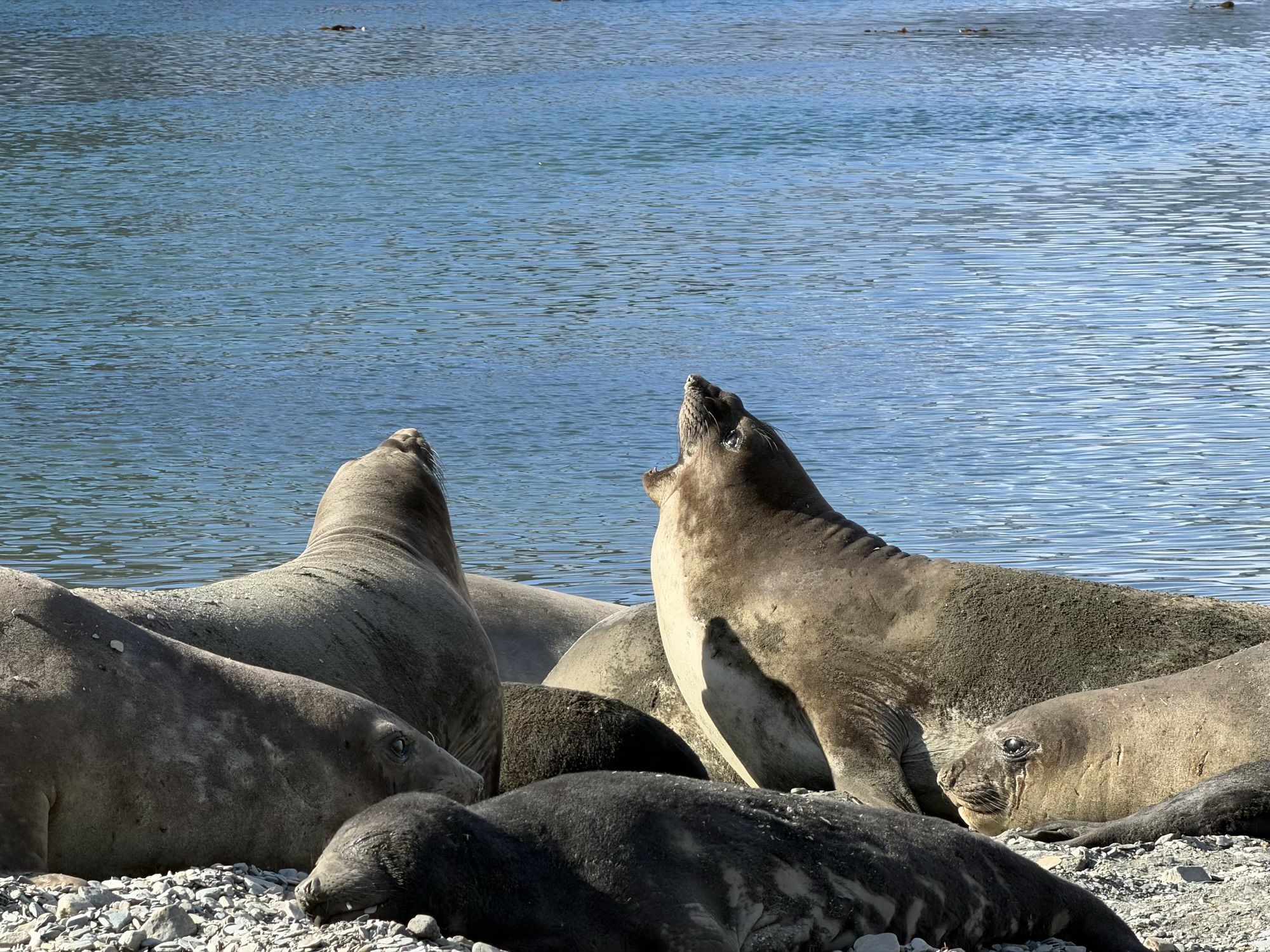
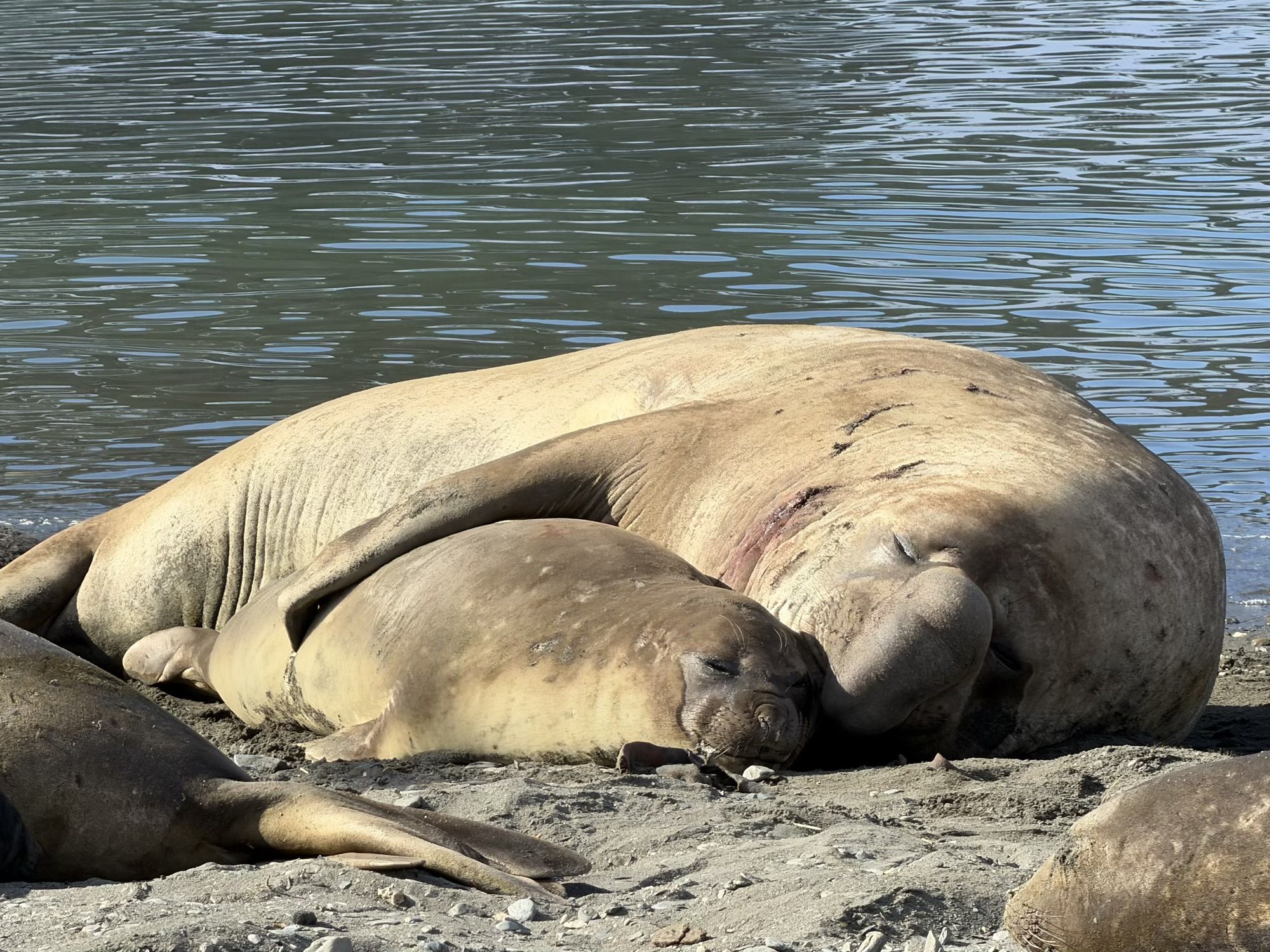
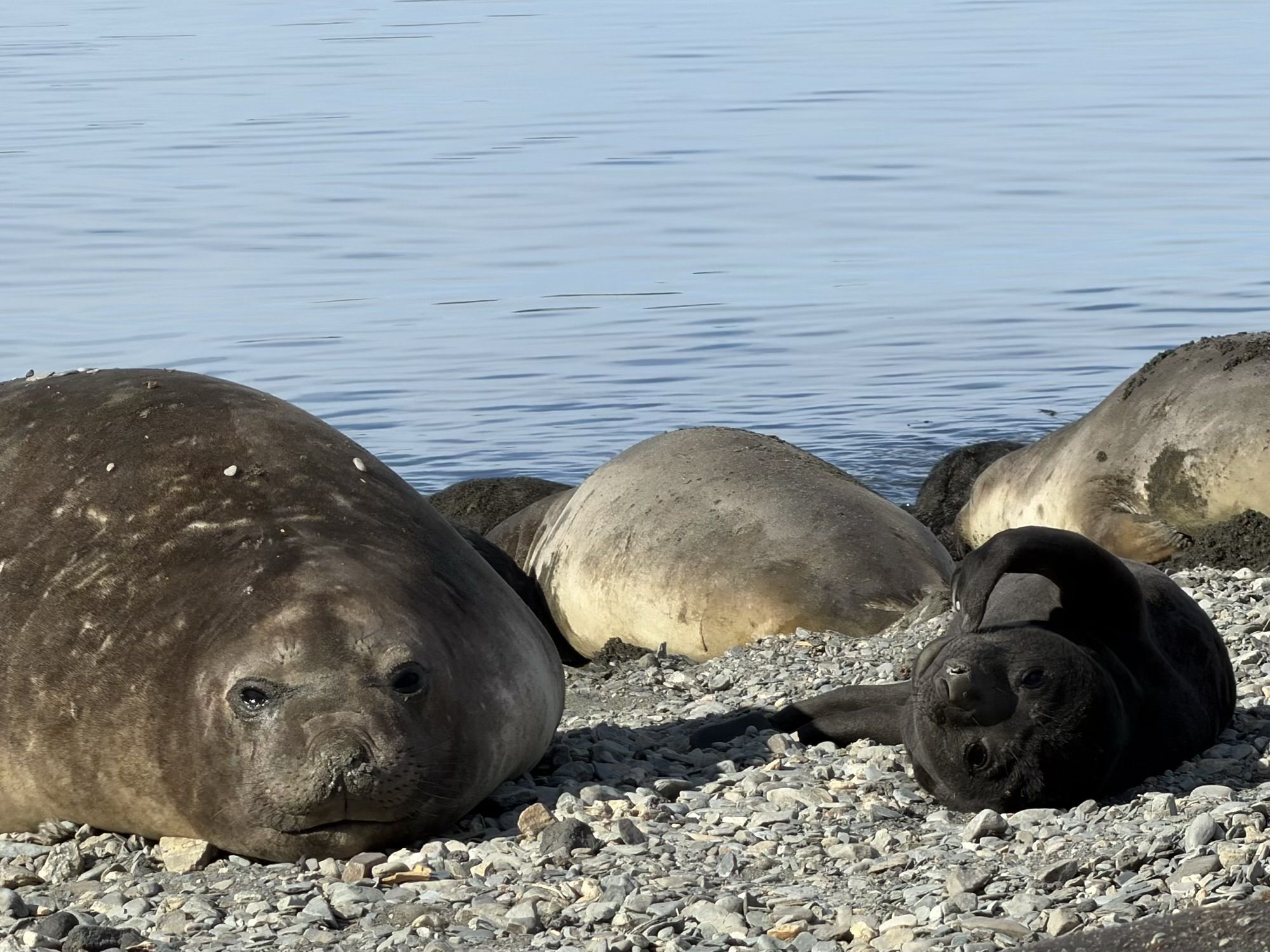
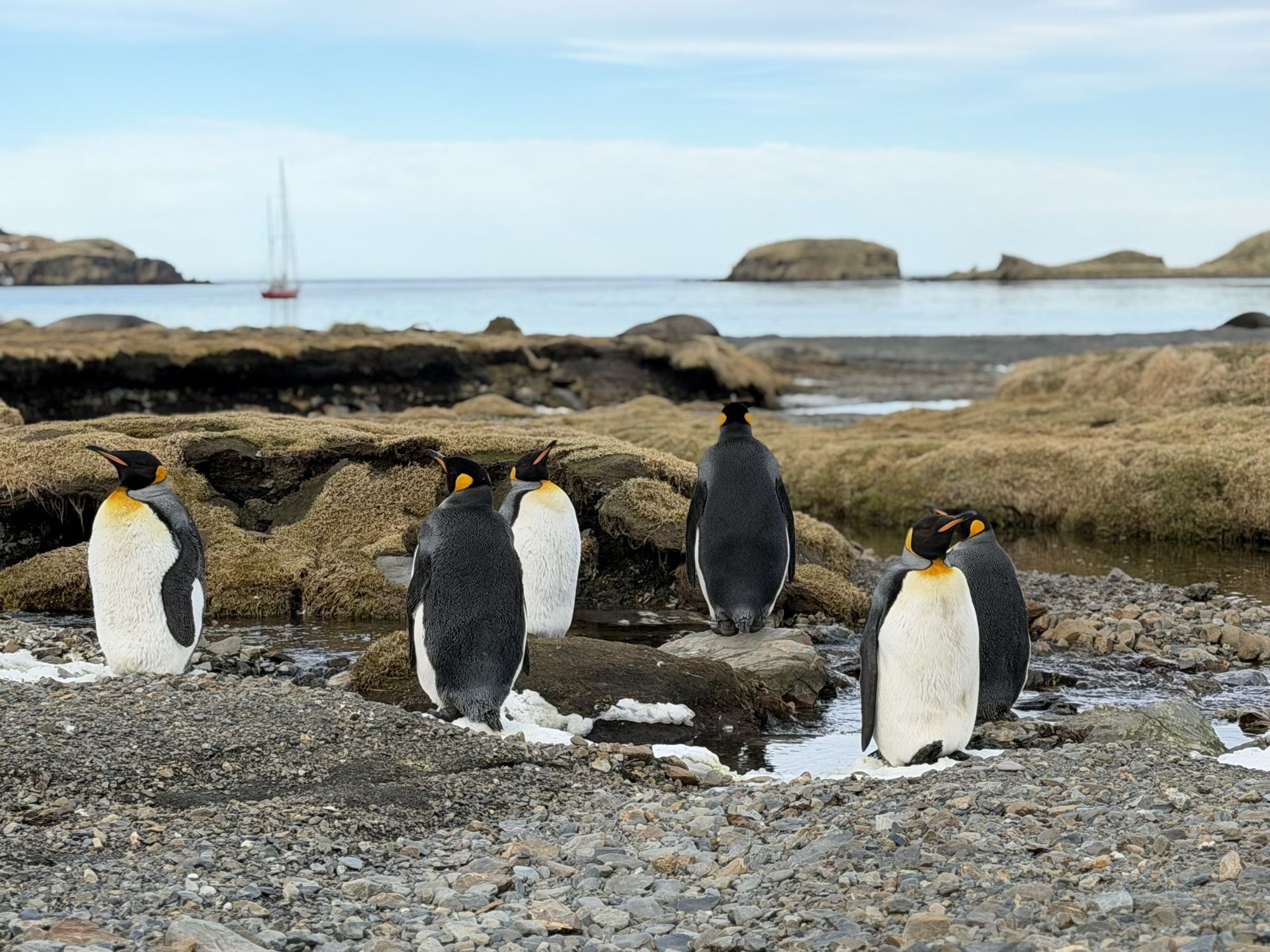
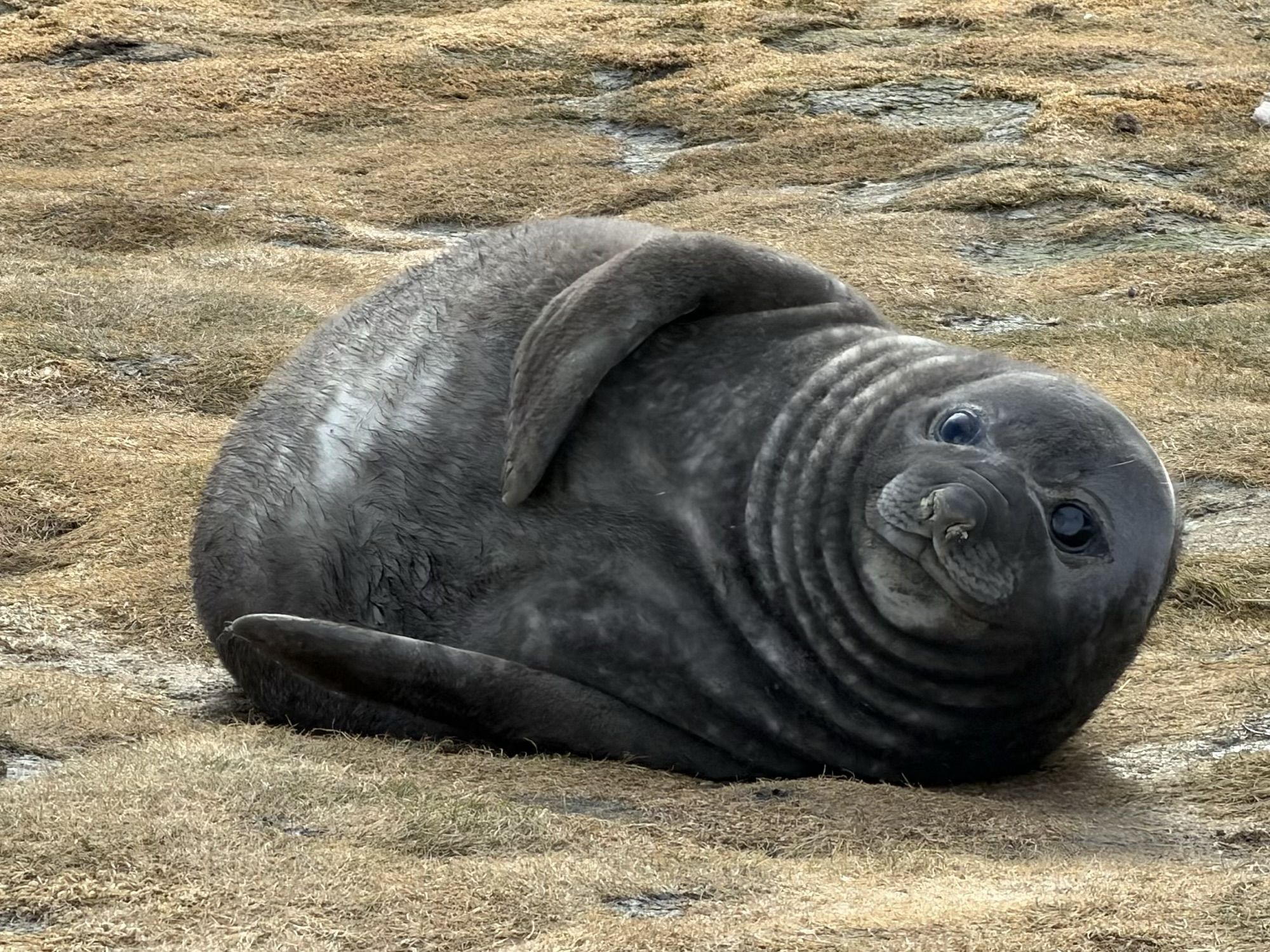
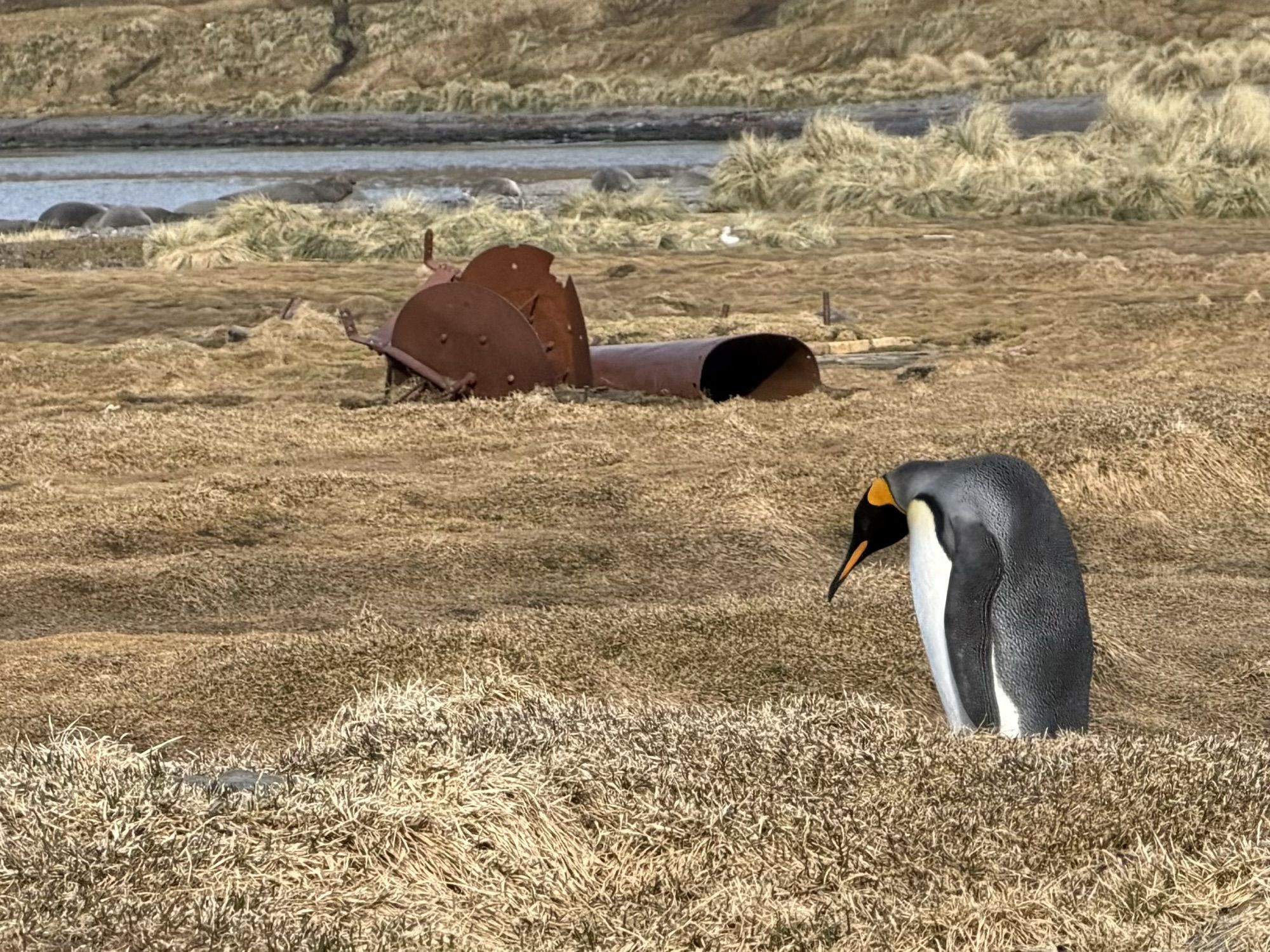
A large colony of elephant seals has taken up residence on the shore. Individual king penguins roam among the wreckage on the grounds.
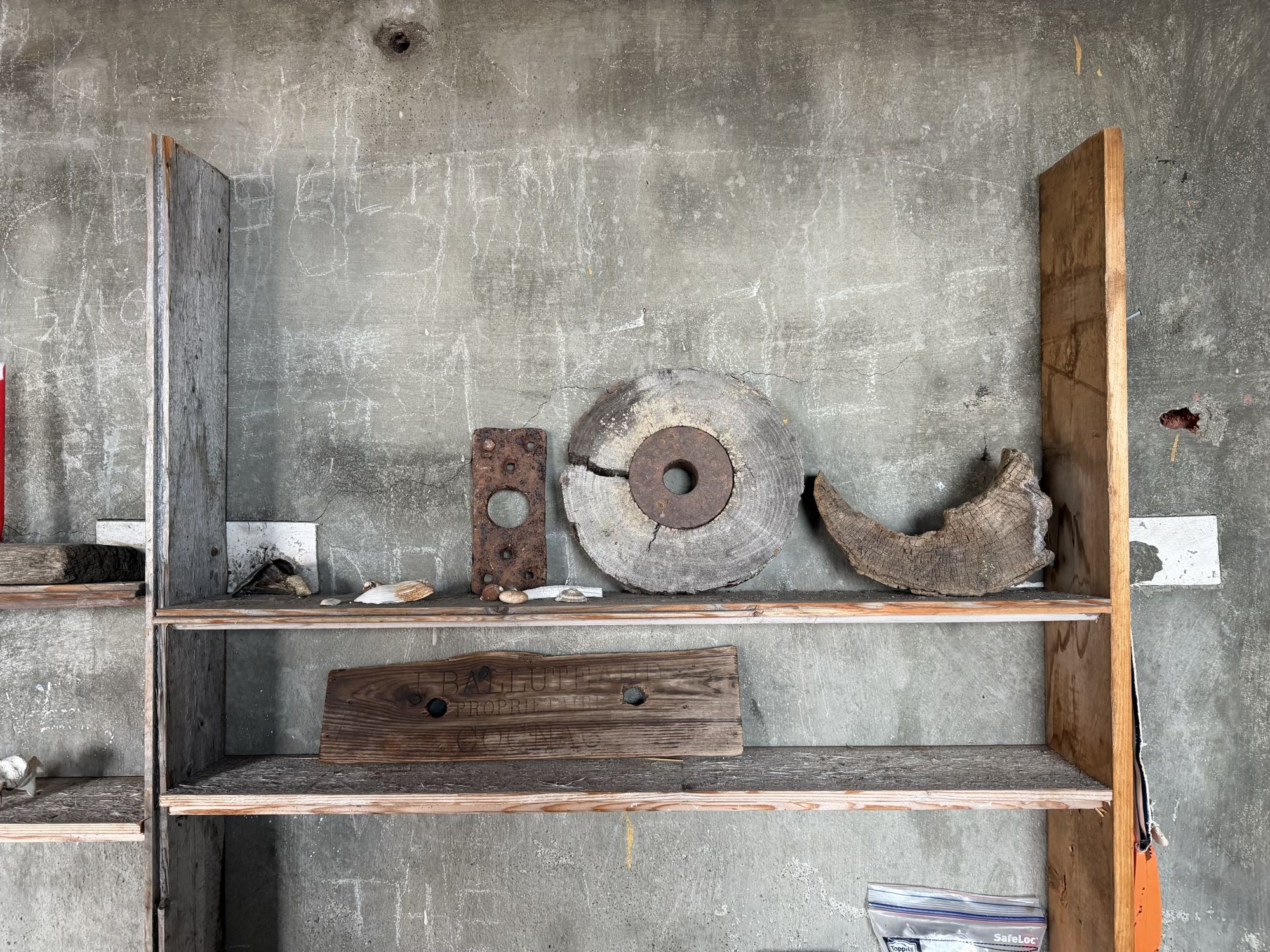
We’re also taking advantage of the beautiful weather to go for a stroll—for once, you’re allowed to explore the grounds here without any trouble. A small cabin houses a few quirky items.
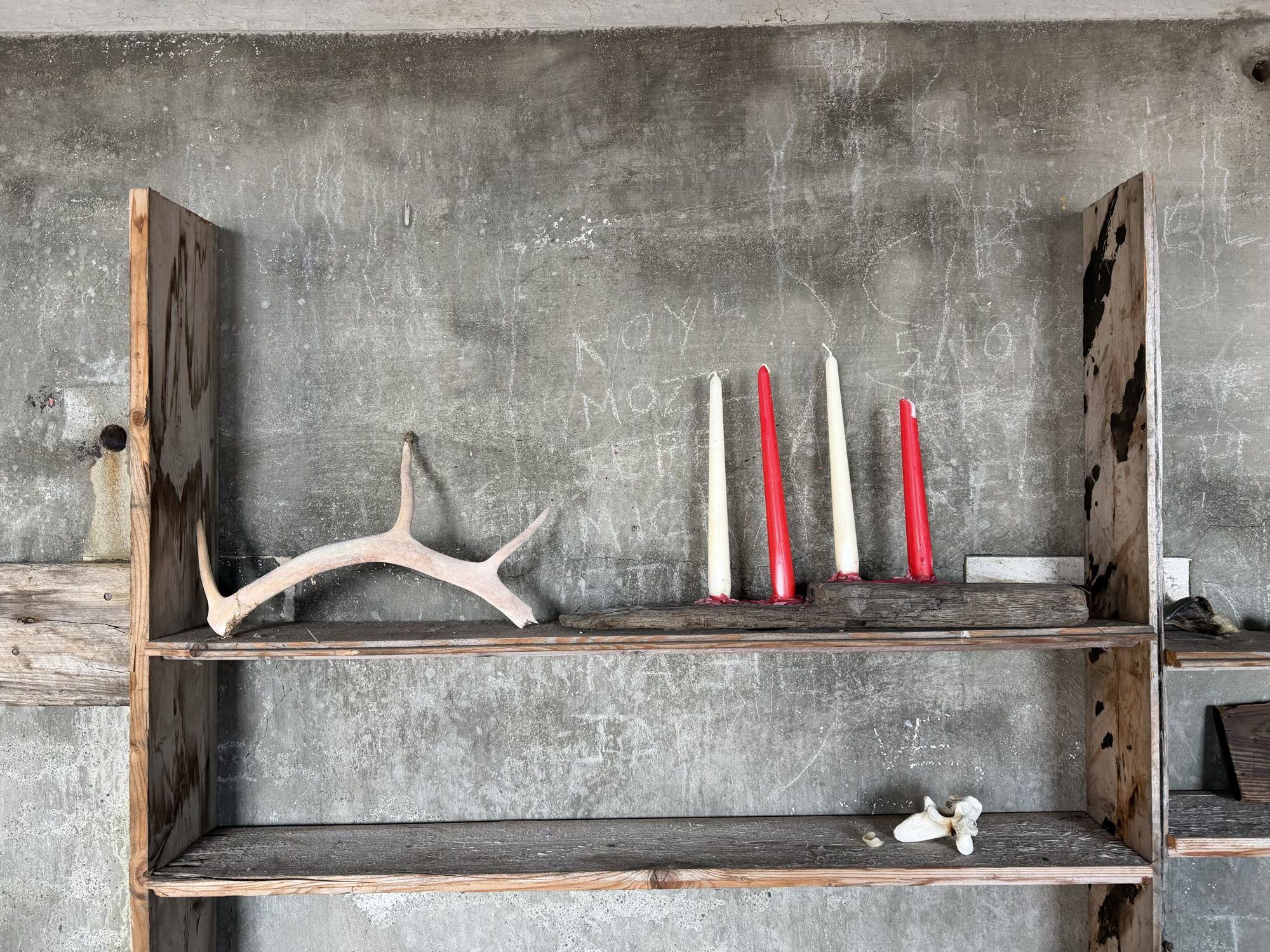
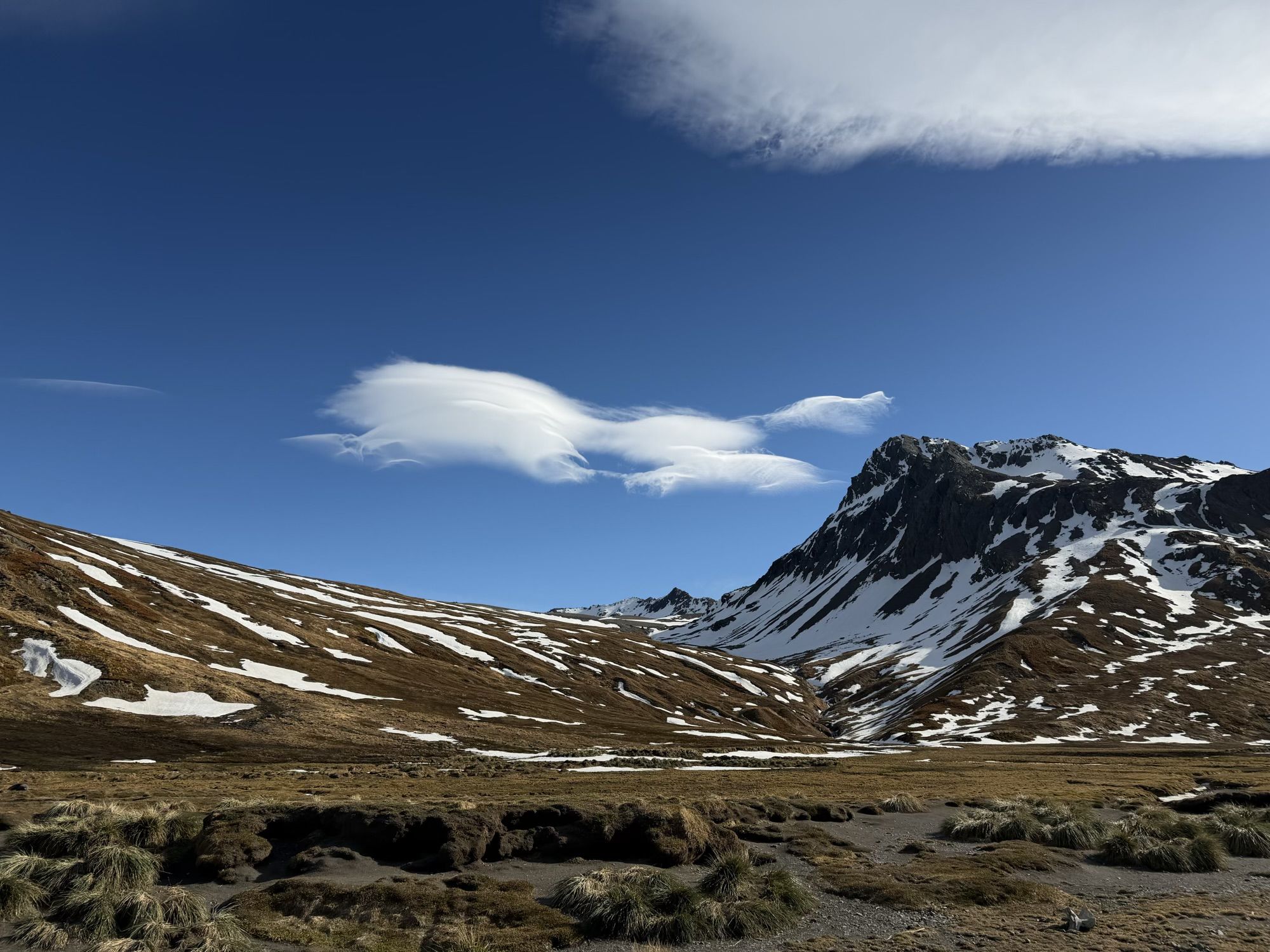
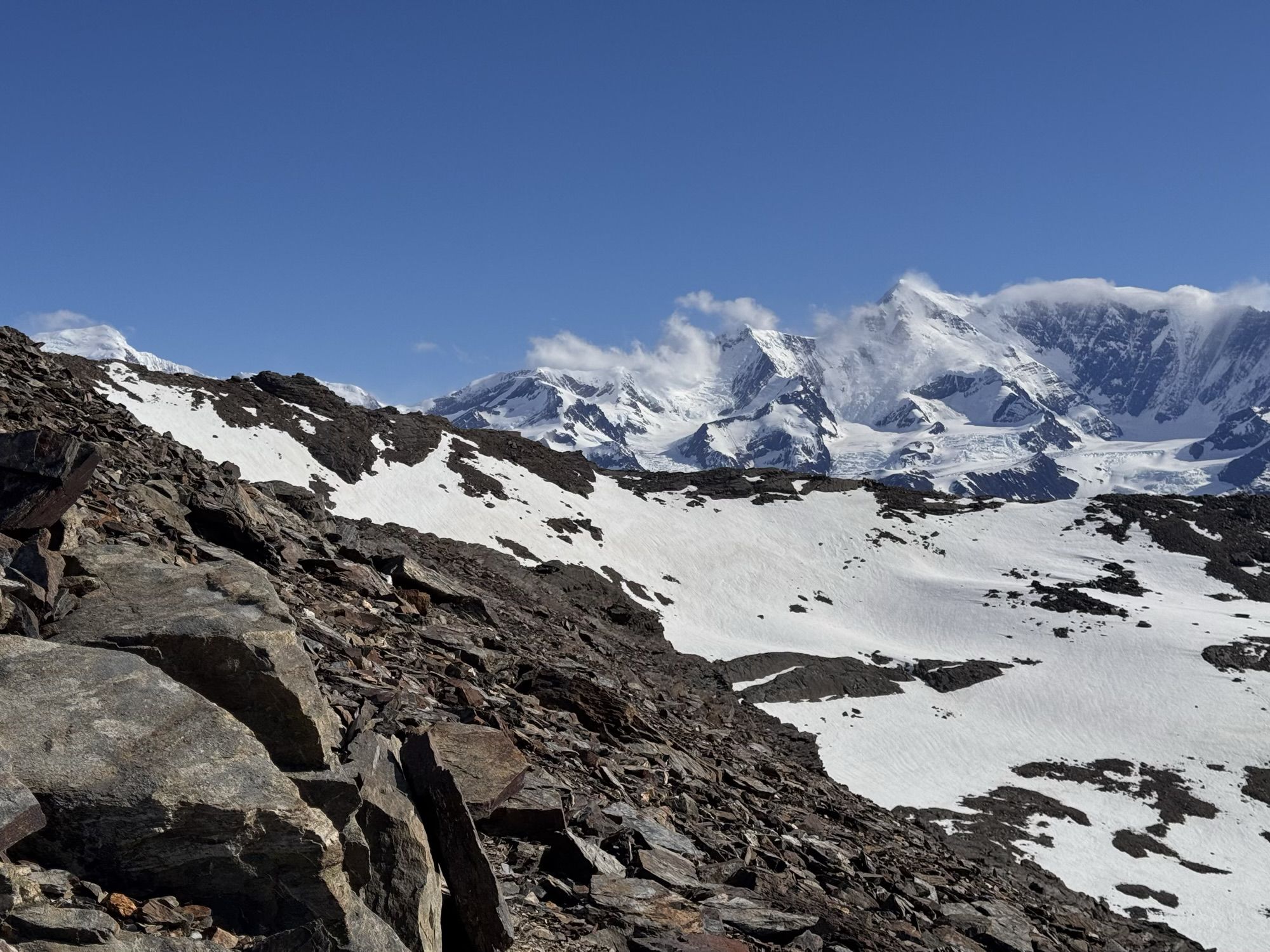
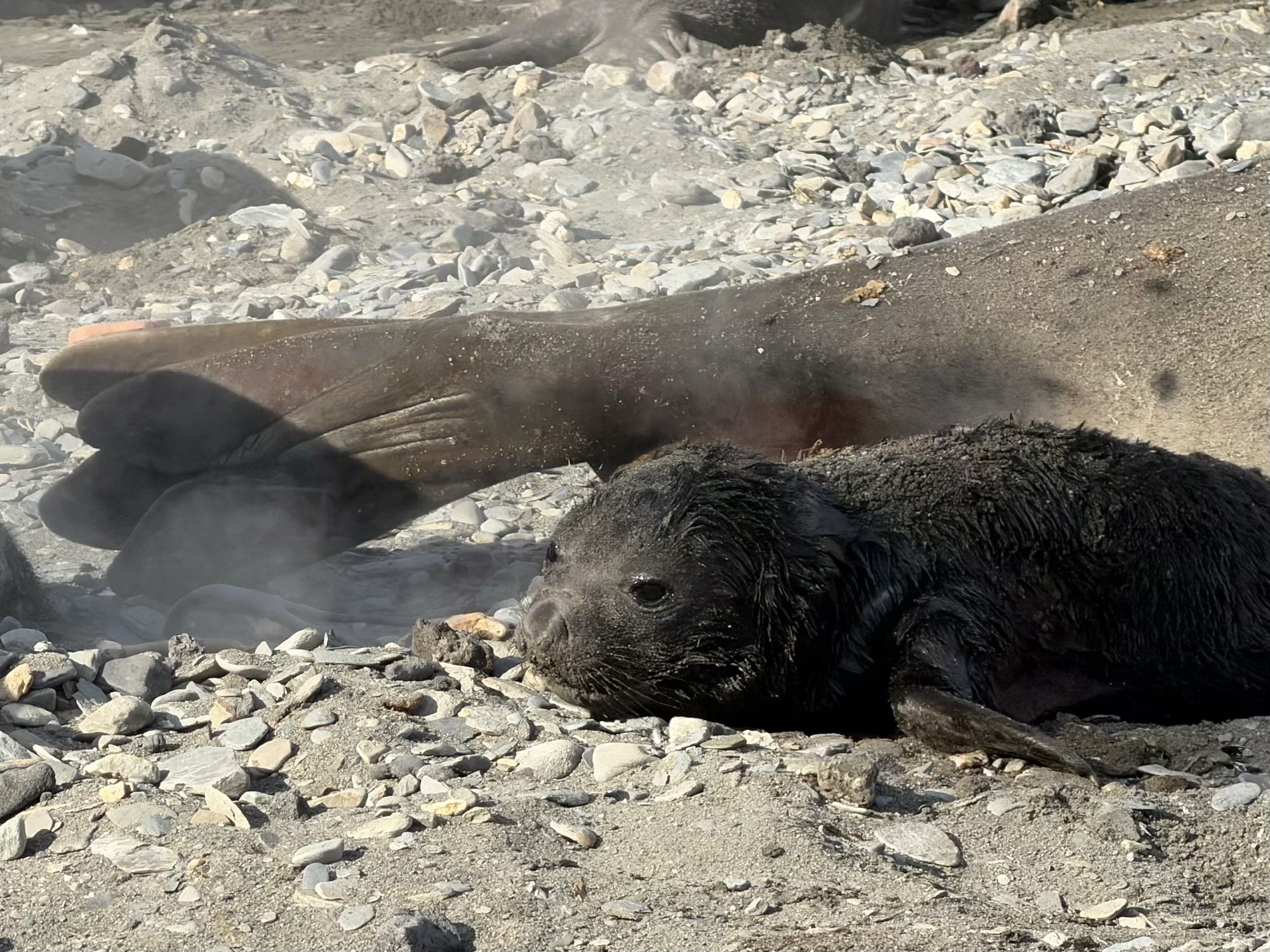
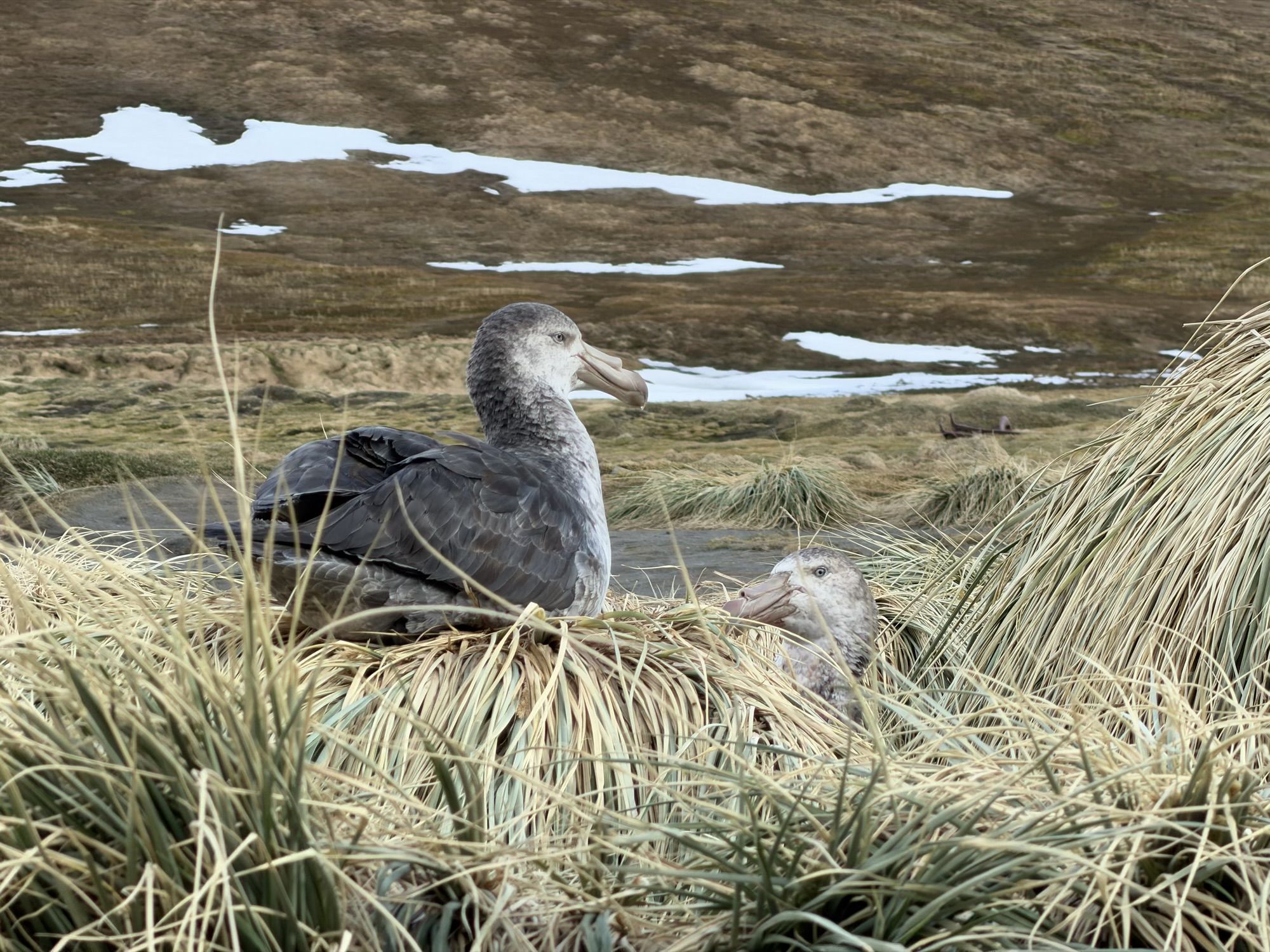
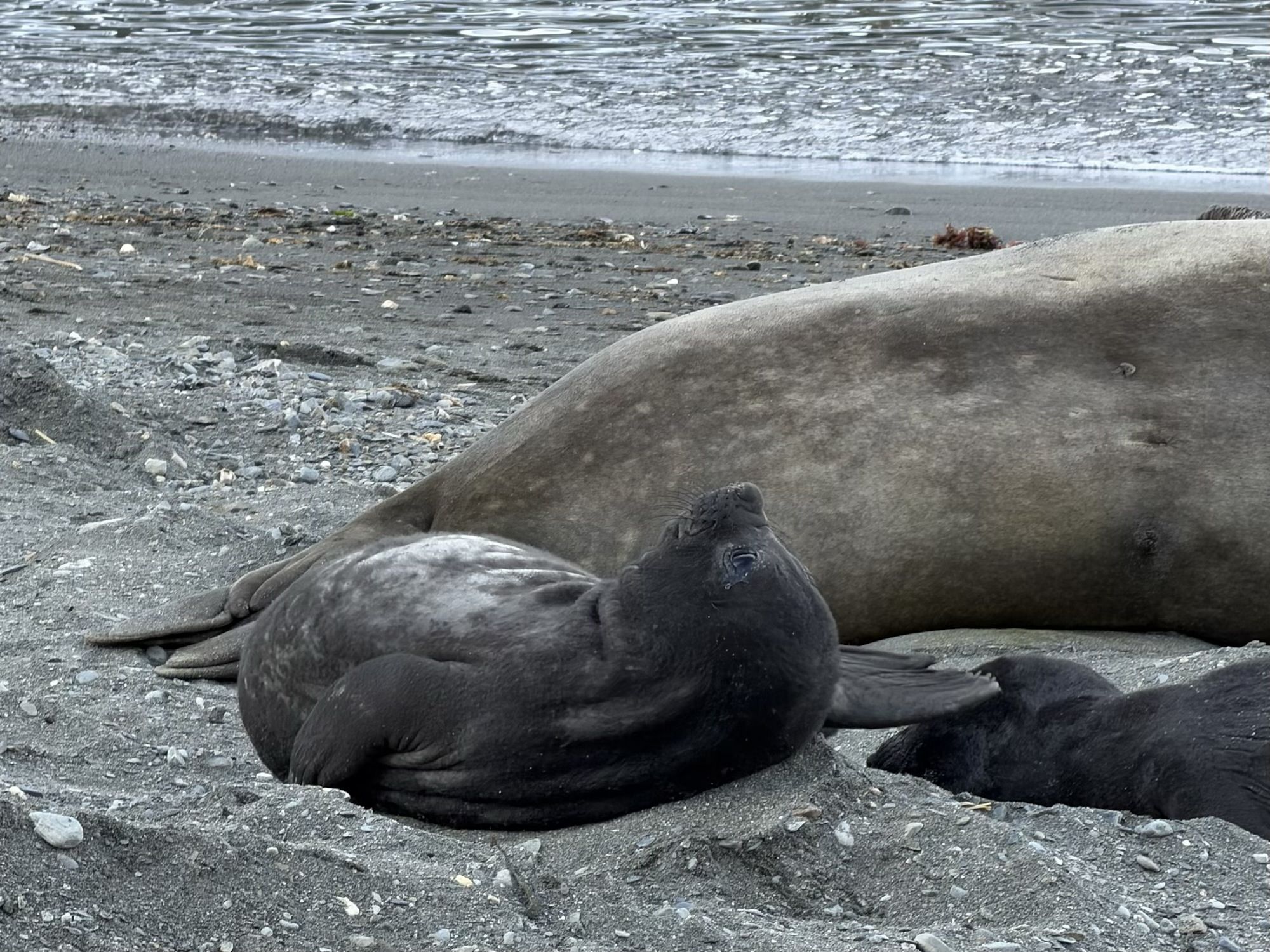
Some of us hike up to a small pass at the end of the bay to catch a glimpse of Cumberland East Bay and Mount Paget. Others take it easier. I, too, simply wander along the bay, enjoying the sun, watching cormorants and nesting giant petrels from a distance, and observing the elephant seals and their young up close as they go about their lively activities. Most of the females have already given birth to a calf. Among them, I also spot a newborn calf, its black fur still completely wet, with its mother calling out in a hoarse bark. The giant petrels and skuas rush over and fight over the afterbirth.
We’re spending the night at anchor here in Ocean Harbor, well sheltered from the strong wind.
Wondrously shaped clouds drift across the brilliant blue sky, and at night, a sparkling starry sky spreads out above the Selma’s mast.