In the footsteps of Shackleton
The 5.5 km long Shackleton Walk traverses the barren fellfield country between Fortuna Bay and Stromness Harbour.
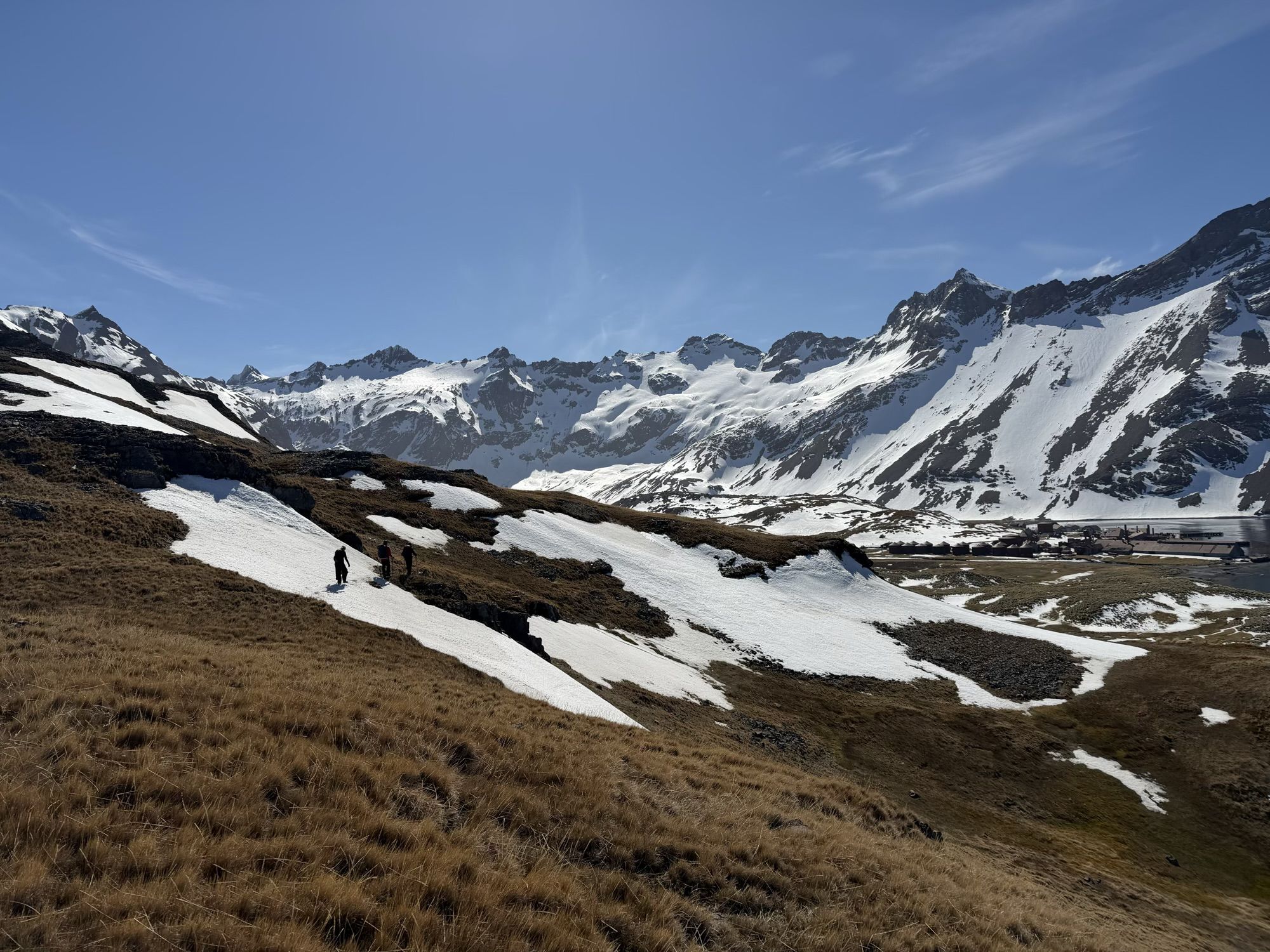
From the beach, a steep uphill climb leads to a 300m high pass and an even steeper descent into Shackleton Valley, finishing at the beach in Stromness Harbour near the whaling station. This is the same route taken by Shackleton, Crean and Worsley on the final leg of their remarkable 36 hour crossing of South Georgia.
And – even if we had to postpone the second expedition with the planned crossing – for sure, we wanted to step into their legendary footsteps at least at this last leg.
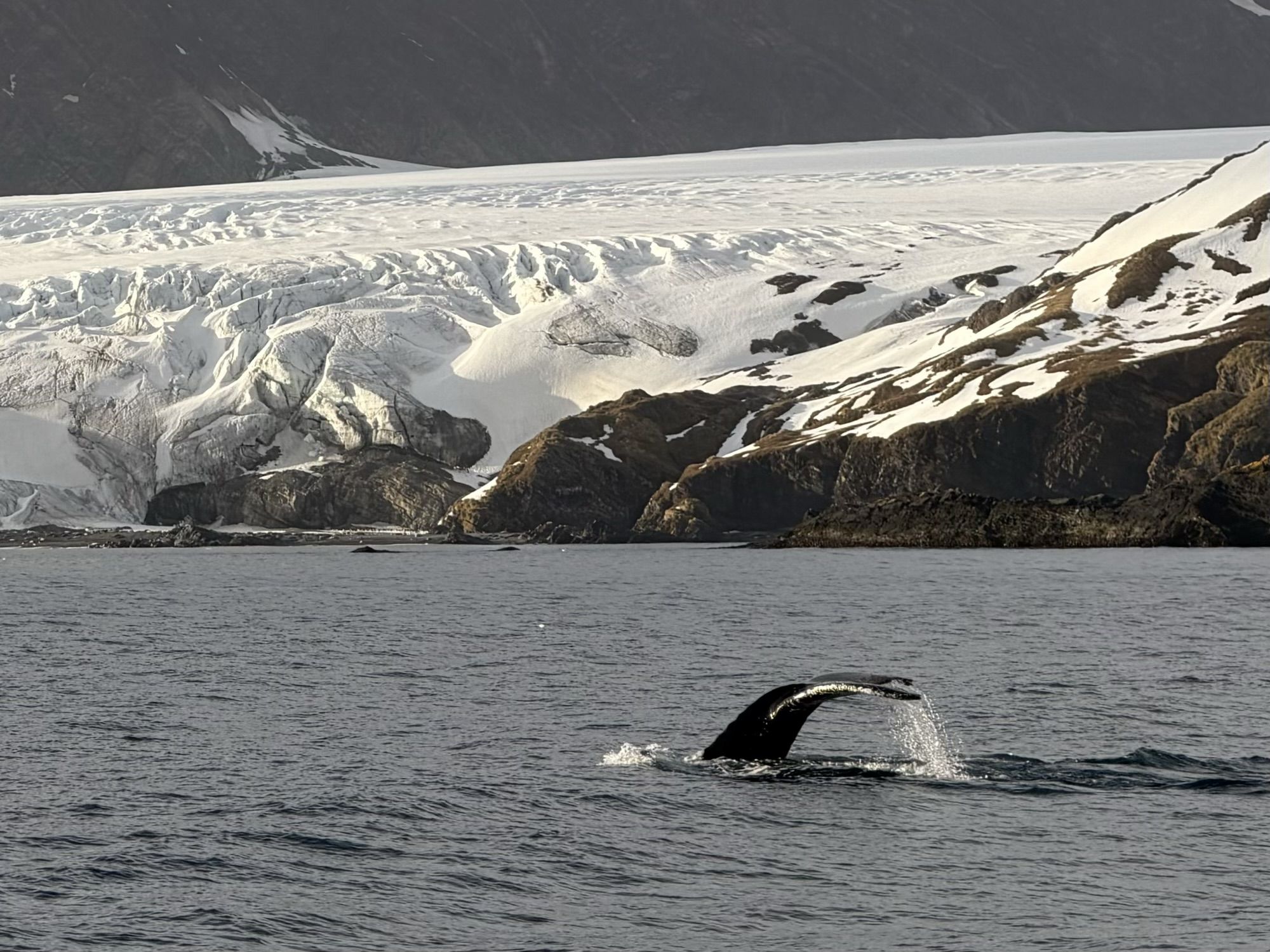
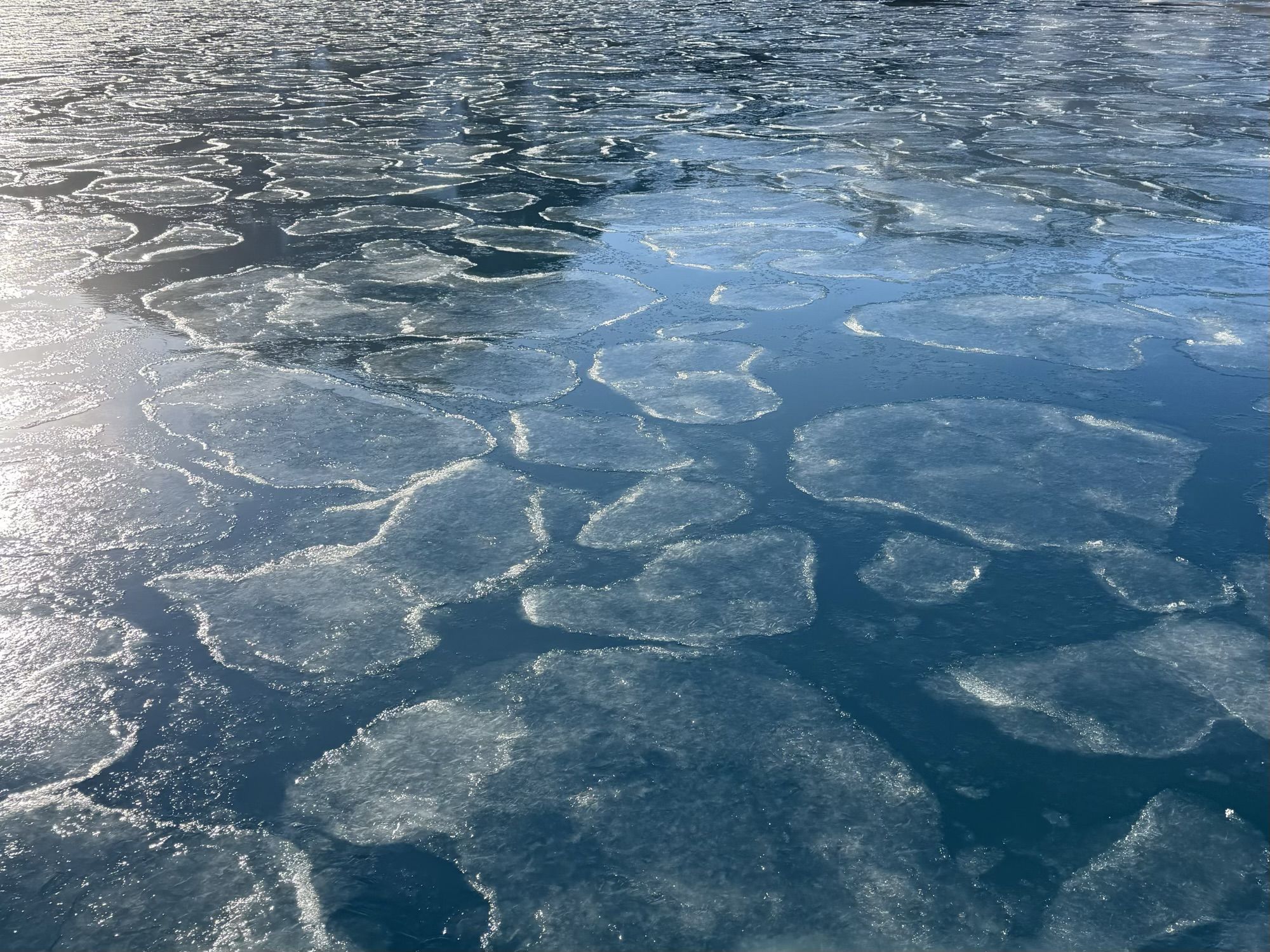
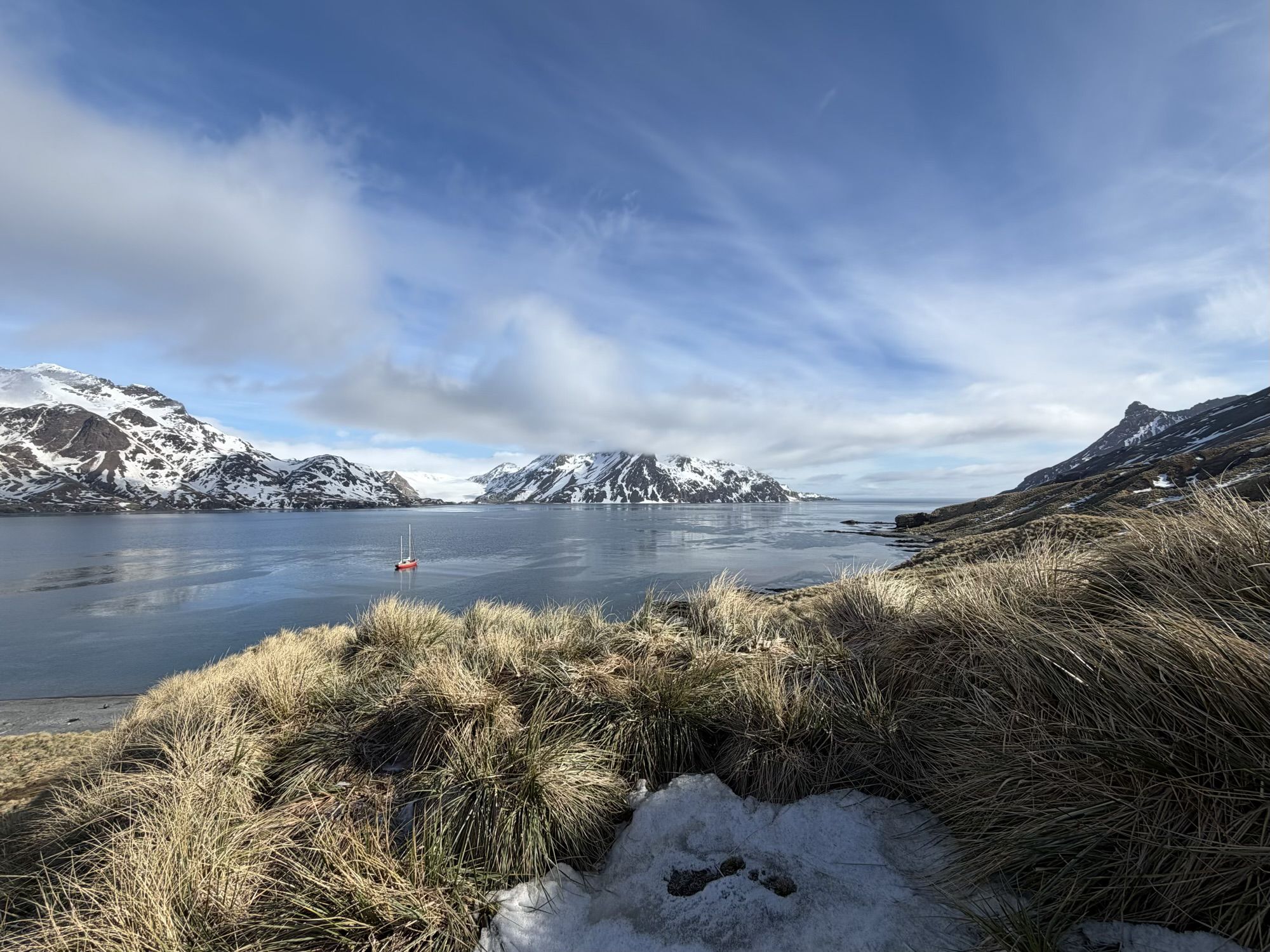
We had still lots of snow during the last days and are not sure, which conditions and terrain we will be expected. But the weather is fine and we start optimistically. It’s a clear and bittercold morning. On our way from Blue Whale Harbour to Fortuna Bay we are accompanied by a humpback whale. The sea in Fortuna Bay is covered by round patches of fresh sea ice – so called pancake ice.
Ascent from Fortuna Bay
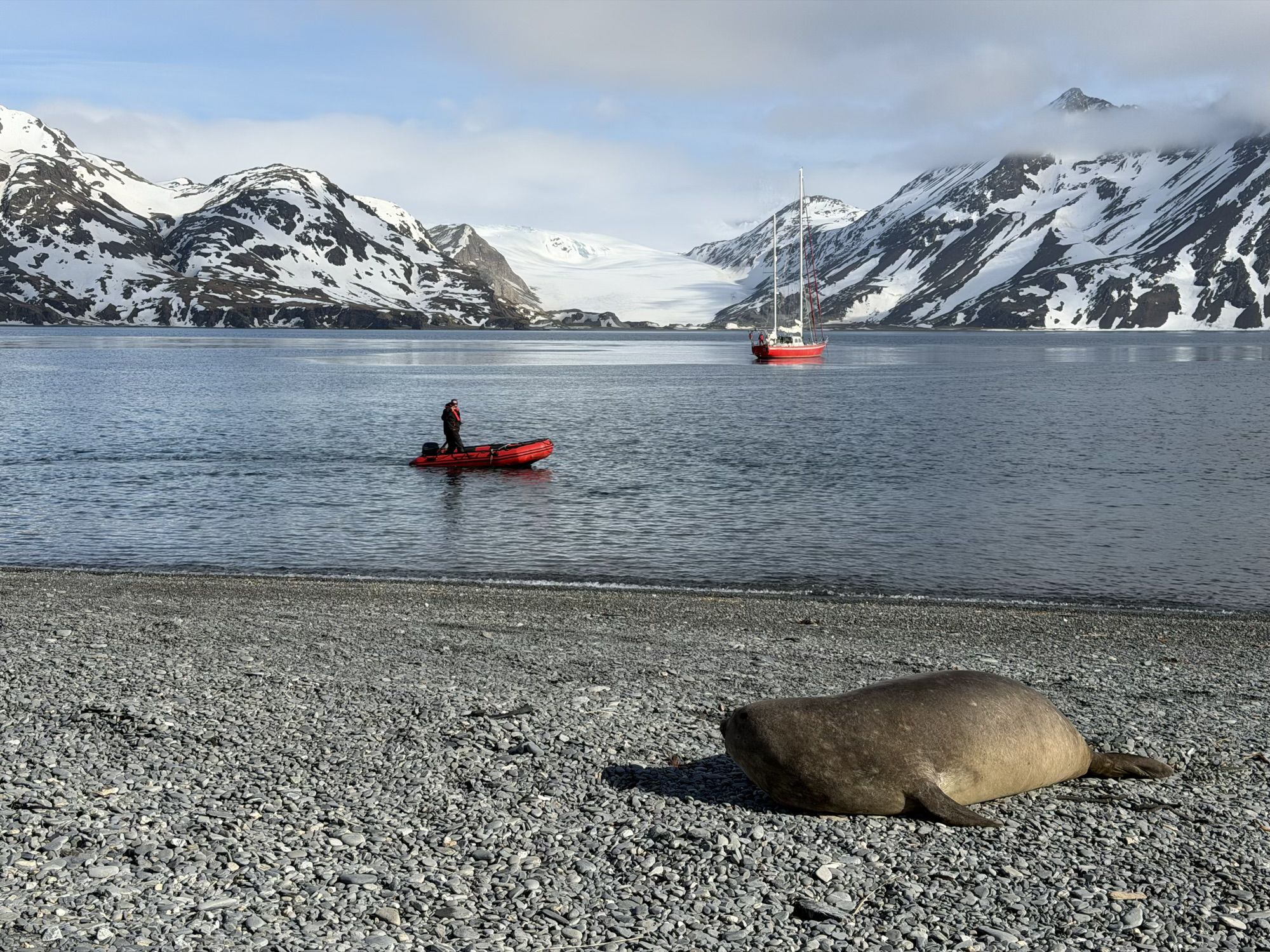
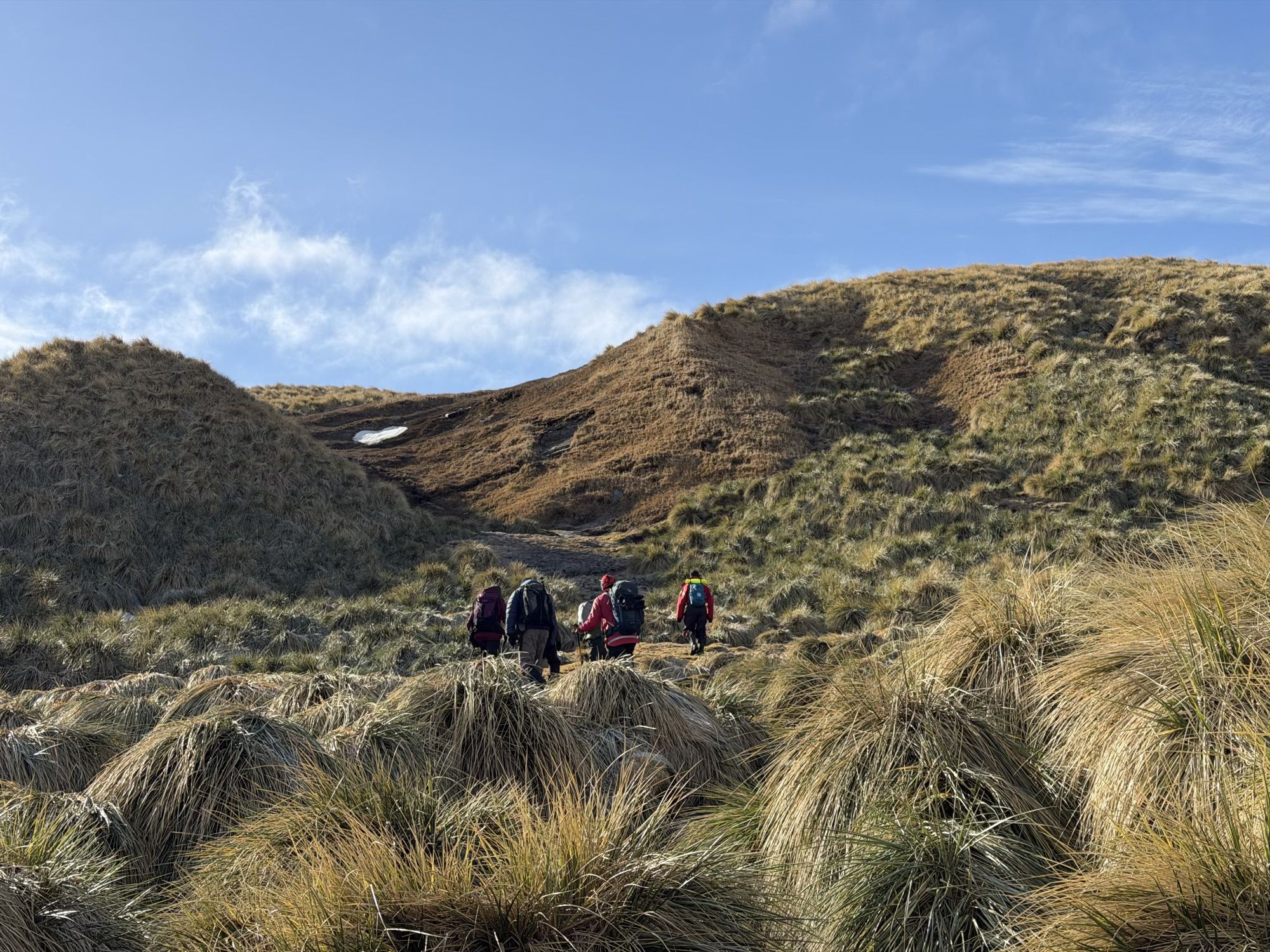
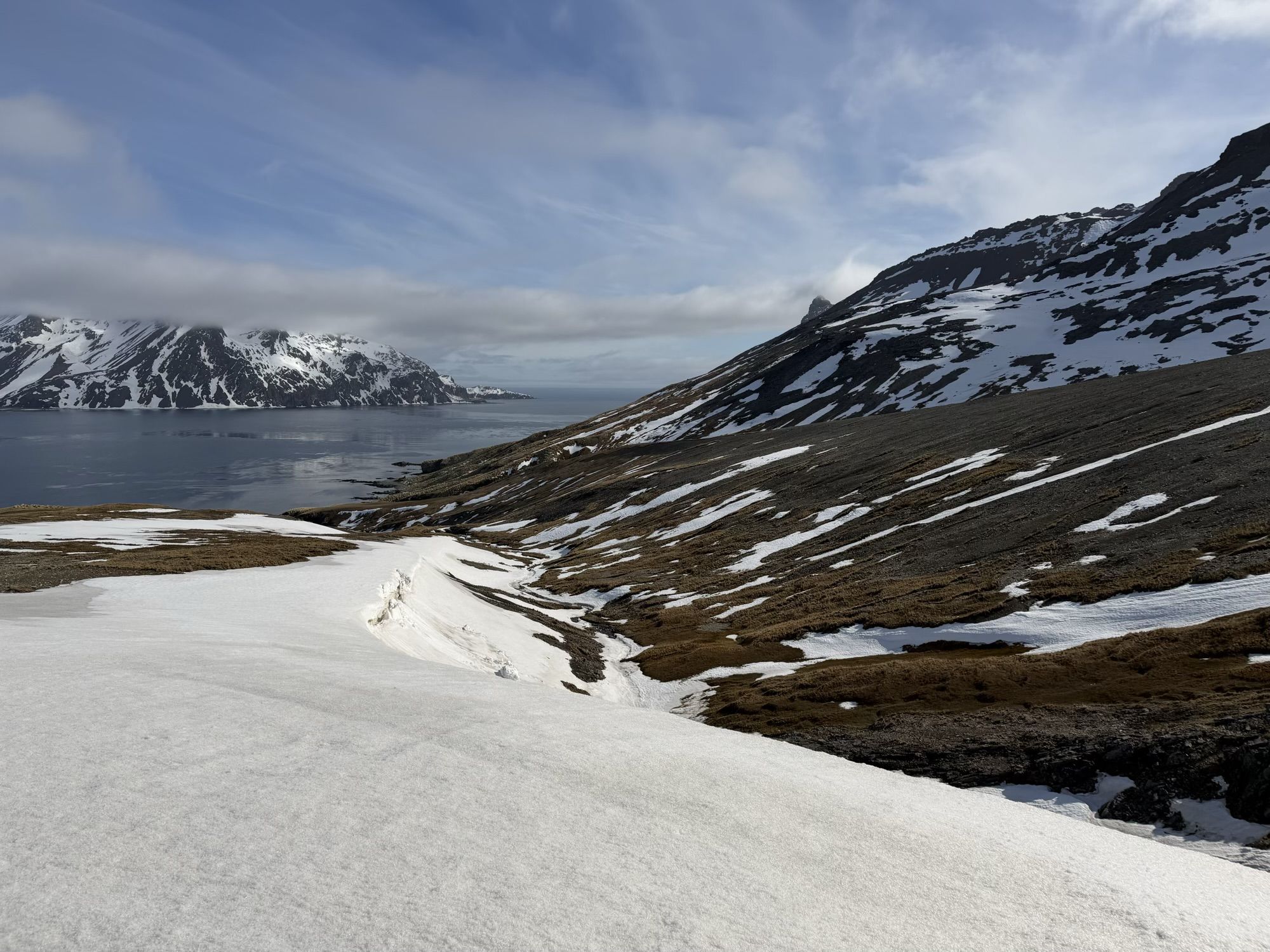
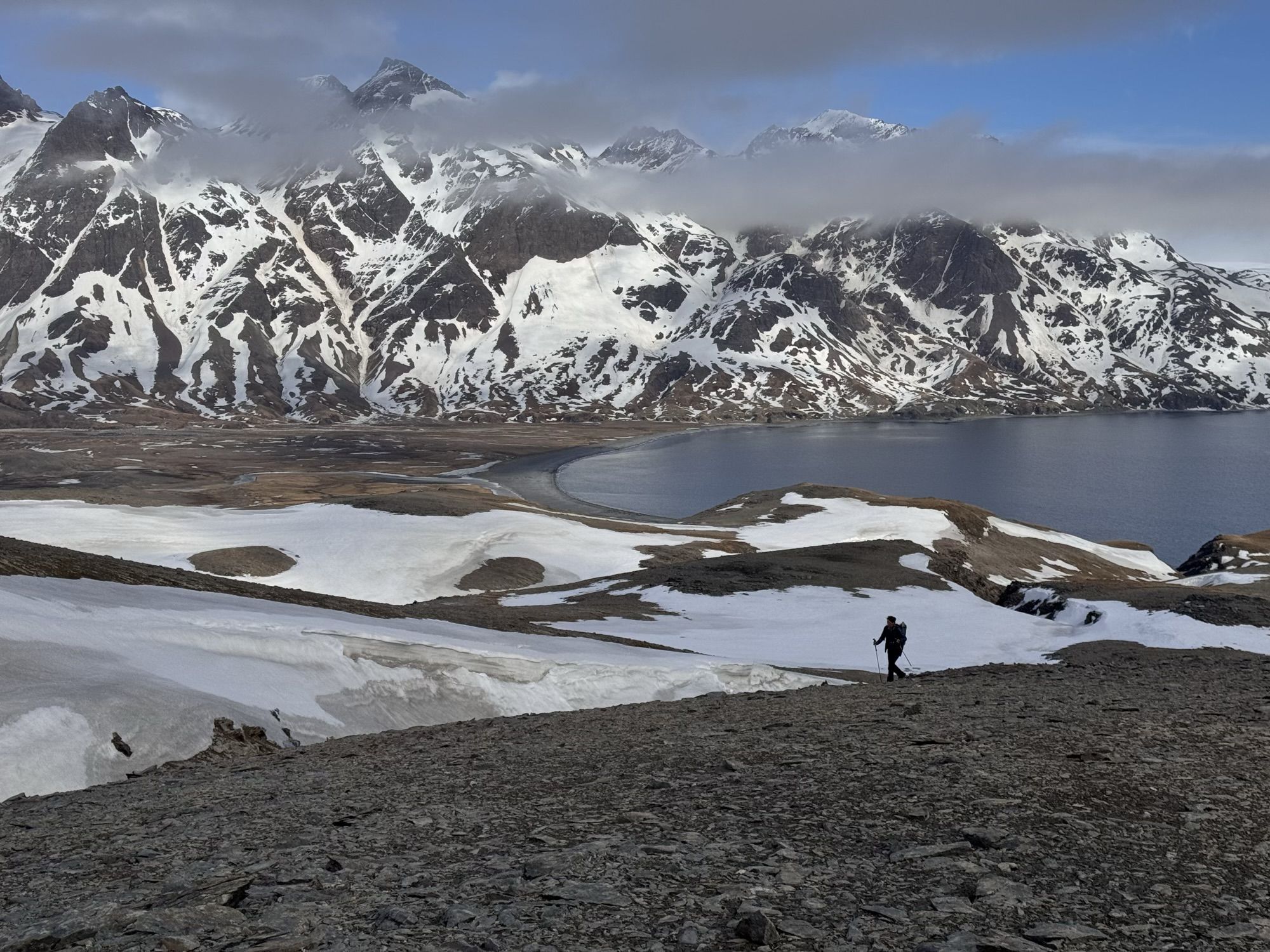
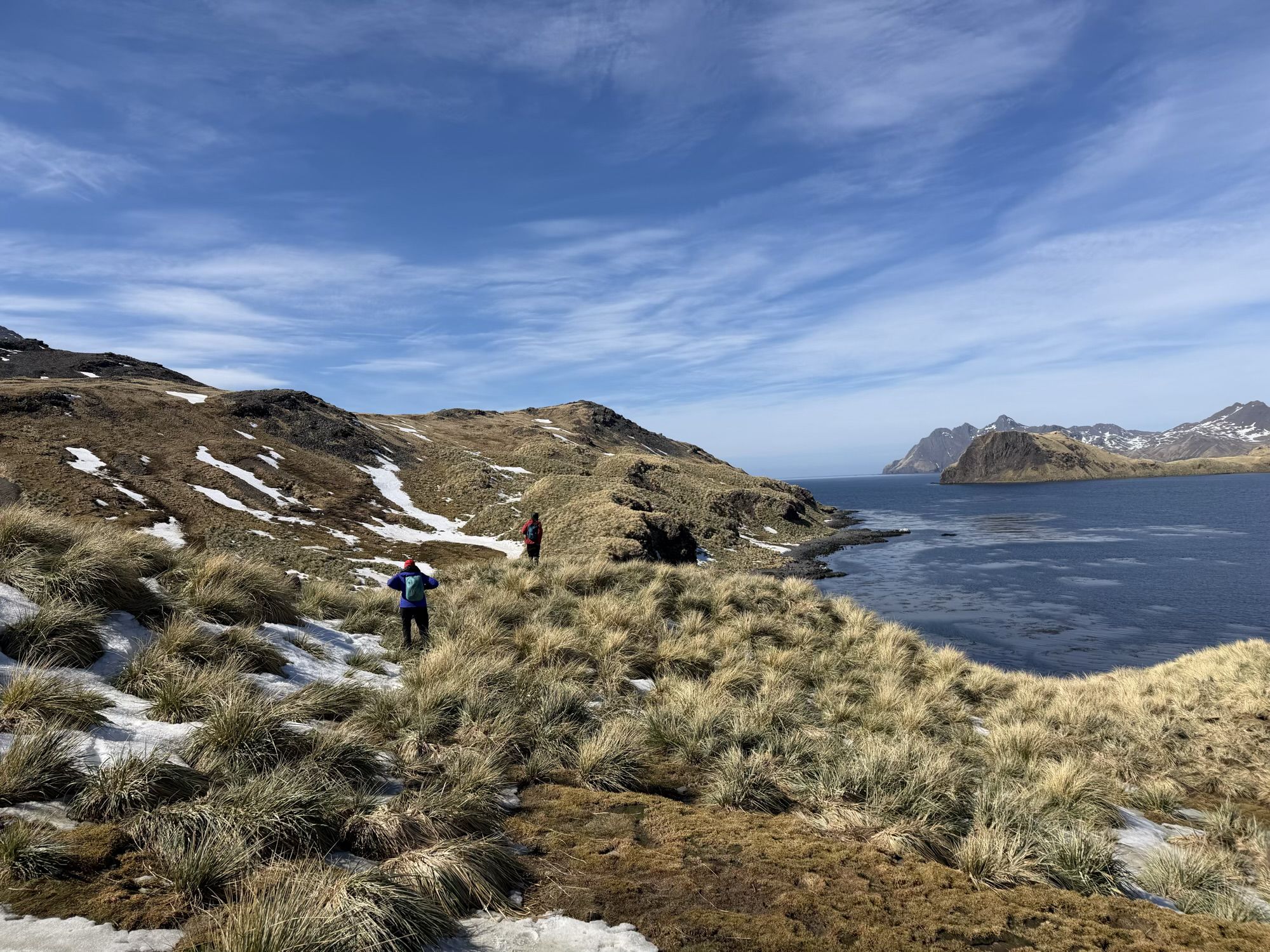
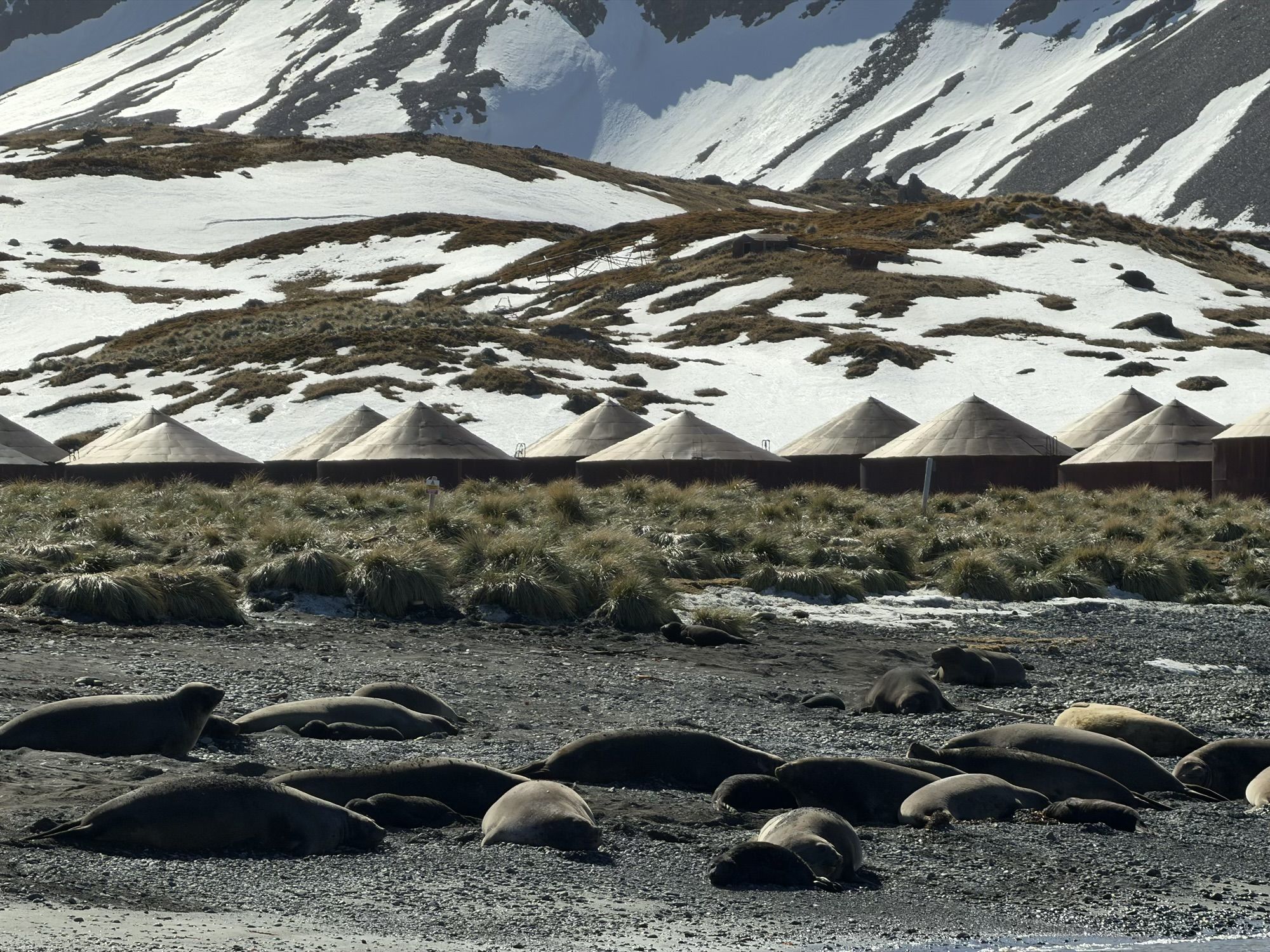
The coastal vegetation at the start consists of a narrow fringe of tussac just above the gravel landing beach in the southeast corner of the bay. We are already awaited by some elephant and fur seals. Further uphill, the tussac merges with Festuca grassland traversed here and there by snow patches and mossy seepage gullies, and finally scree and rock with a scattering of occasional moss patches. We cross several snow fields. Down in the bay, we see Selma leaving towards the open sea, setting course to Stromness.
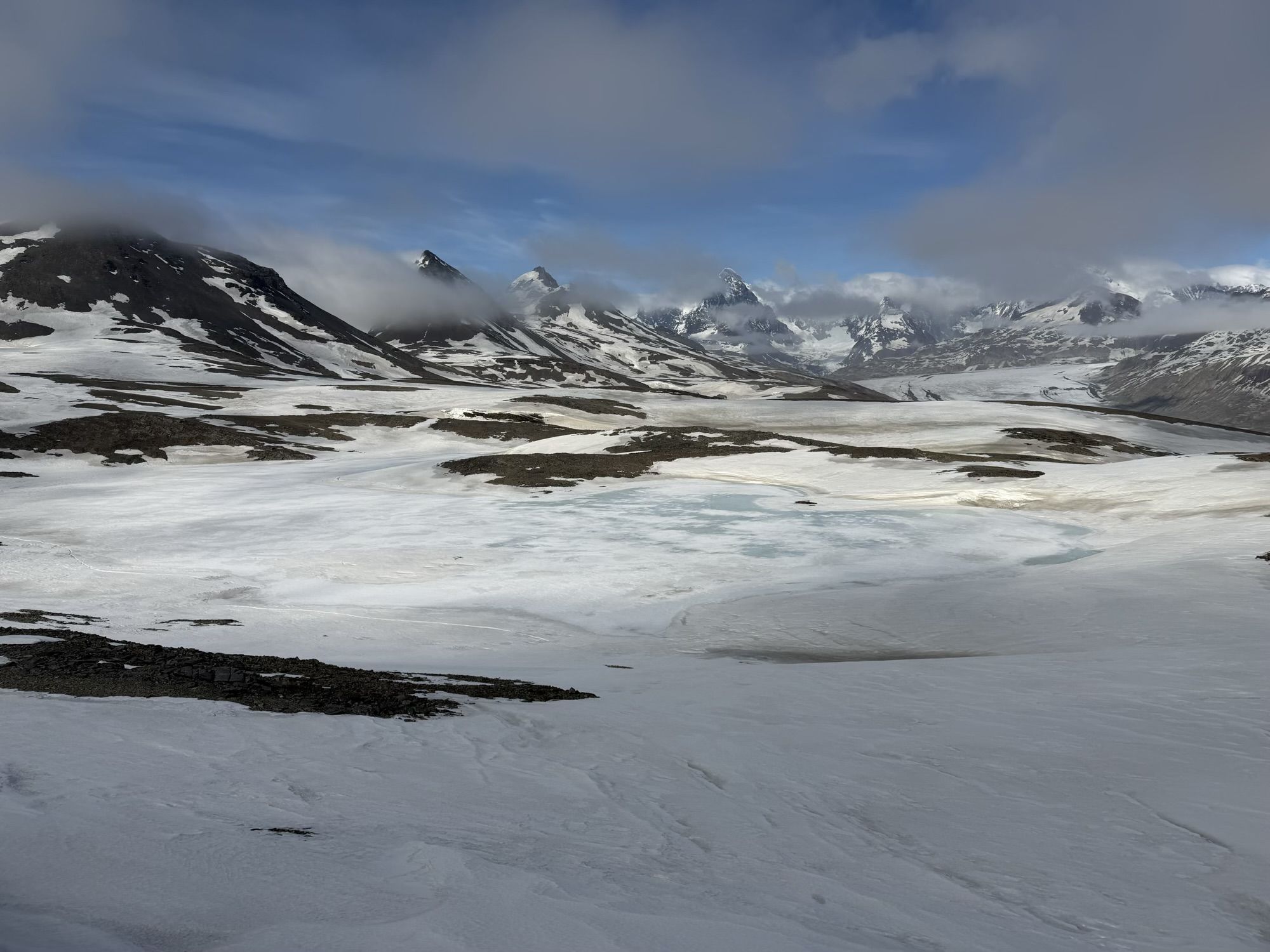
Two prominent scree ridges separated by a stream extend inland and uphill from the beach in a southeasterly direction towards Crean Lake. This conspicuous landmark lying about midway to the saddle, is in that time of the year still covered by a layer of ice.
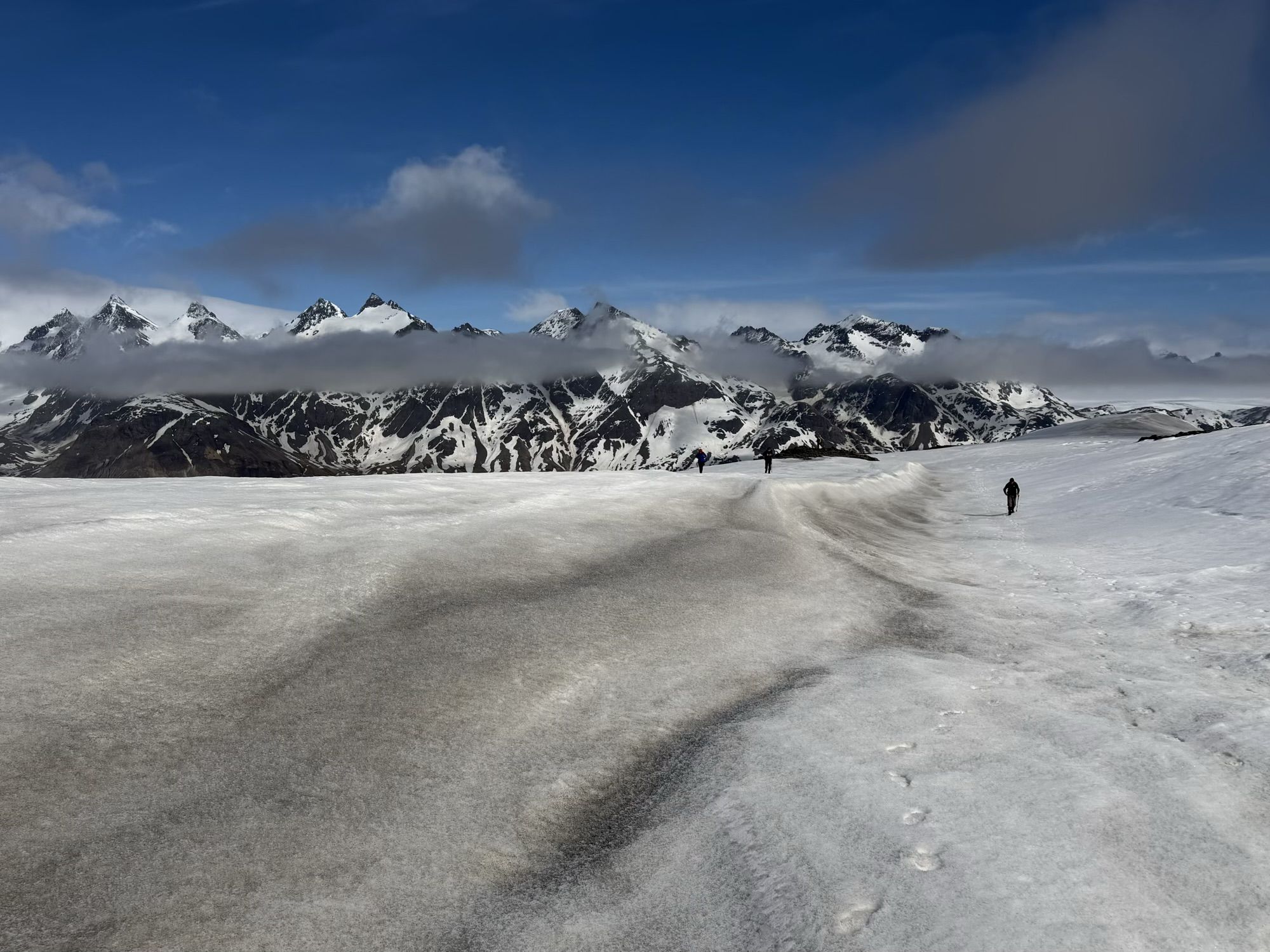
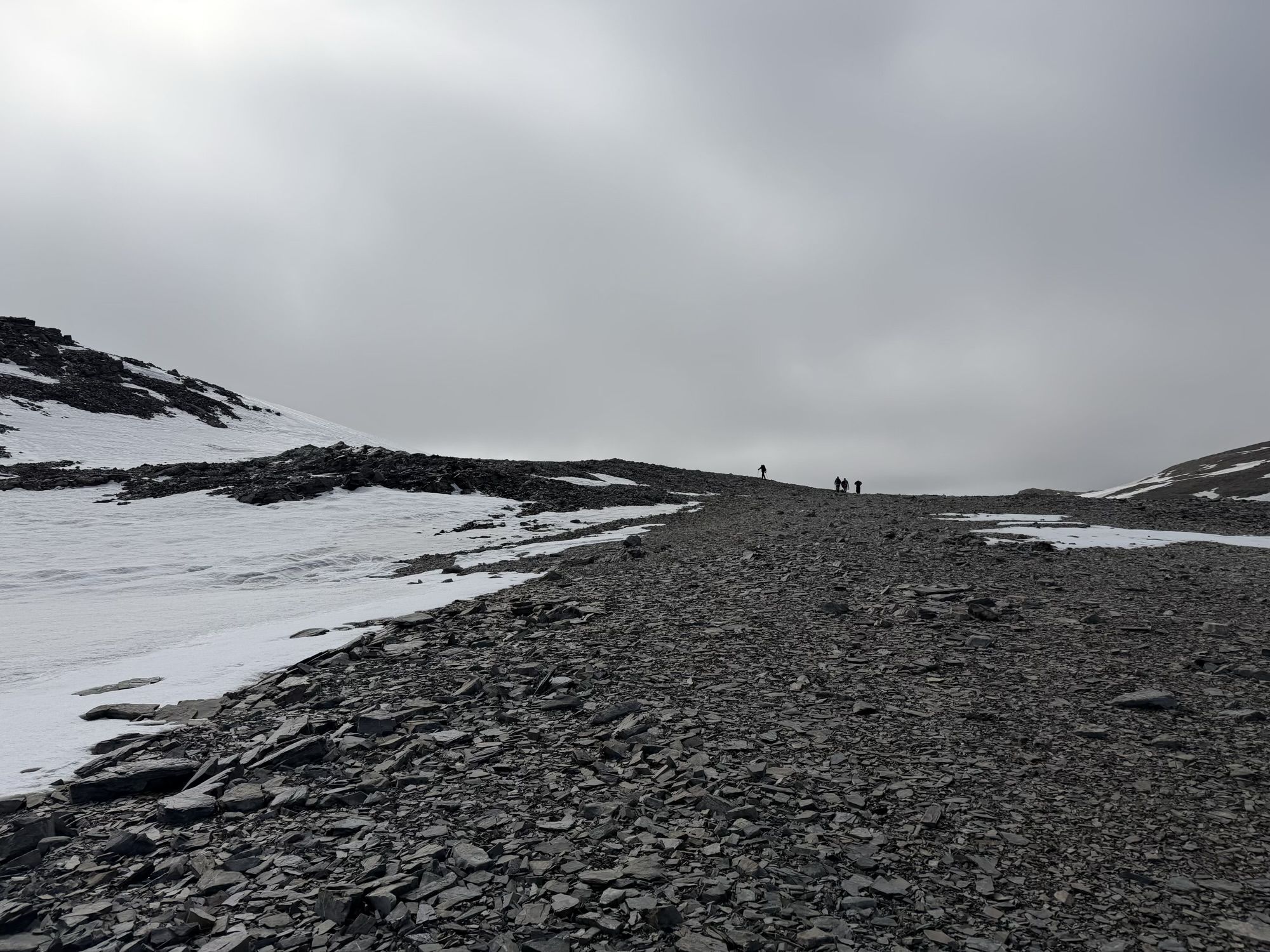
The pass
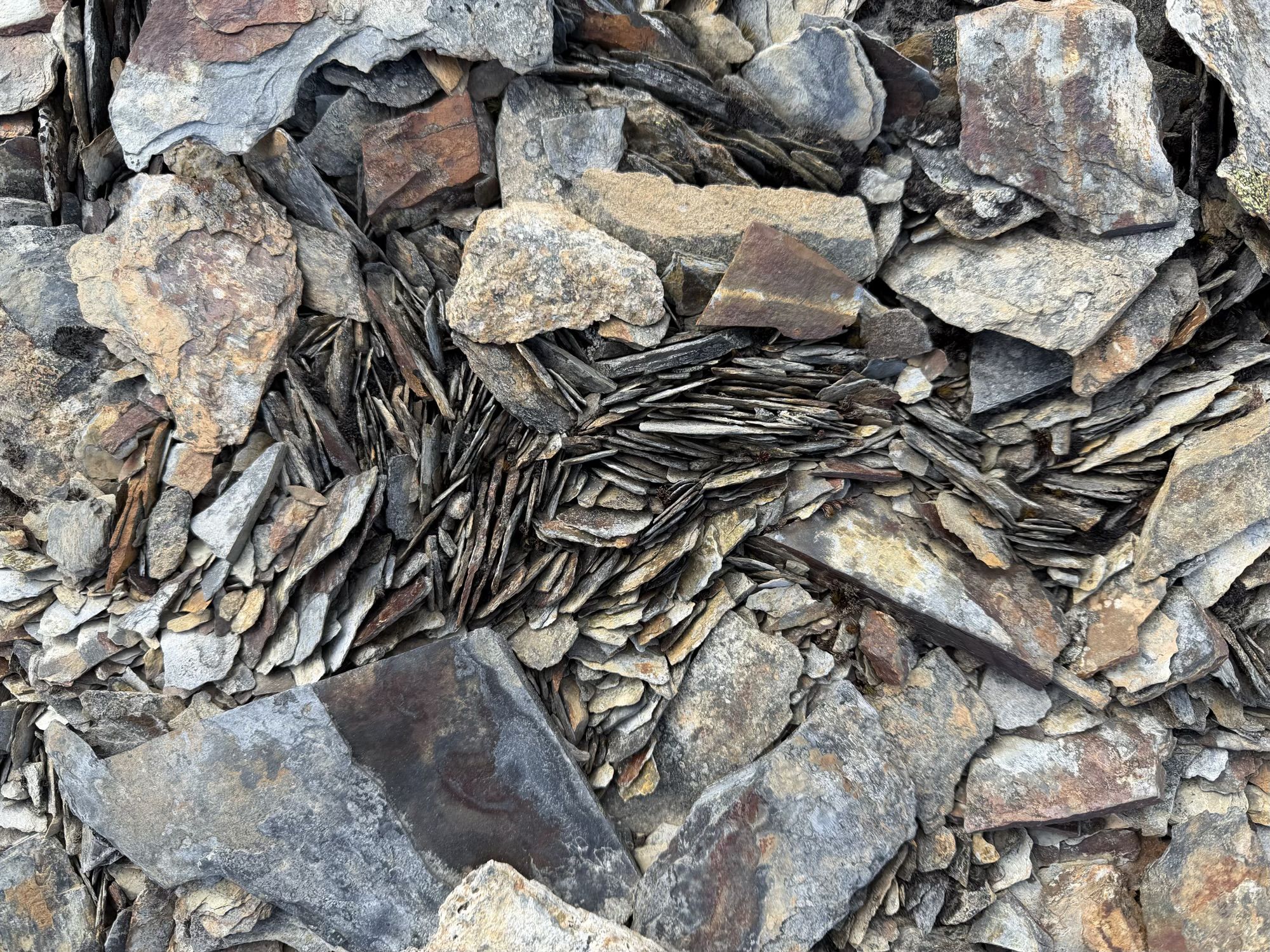
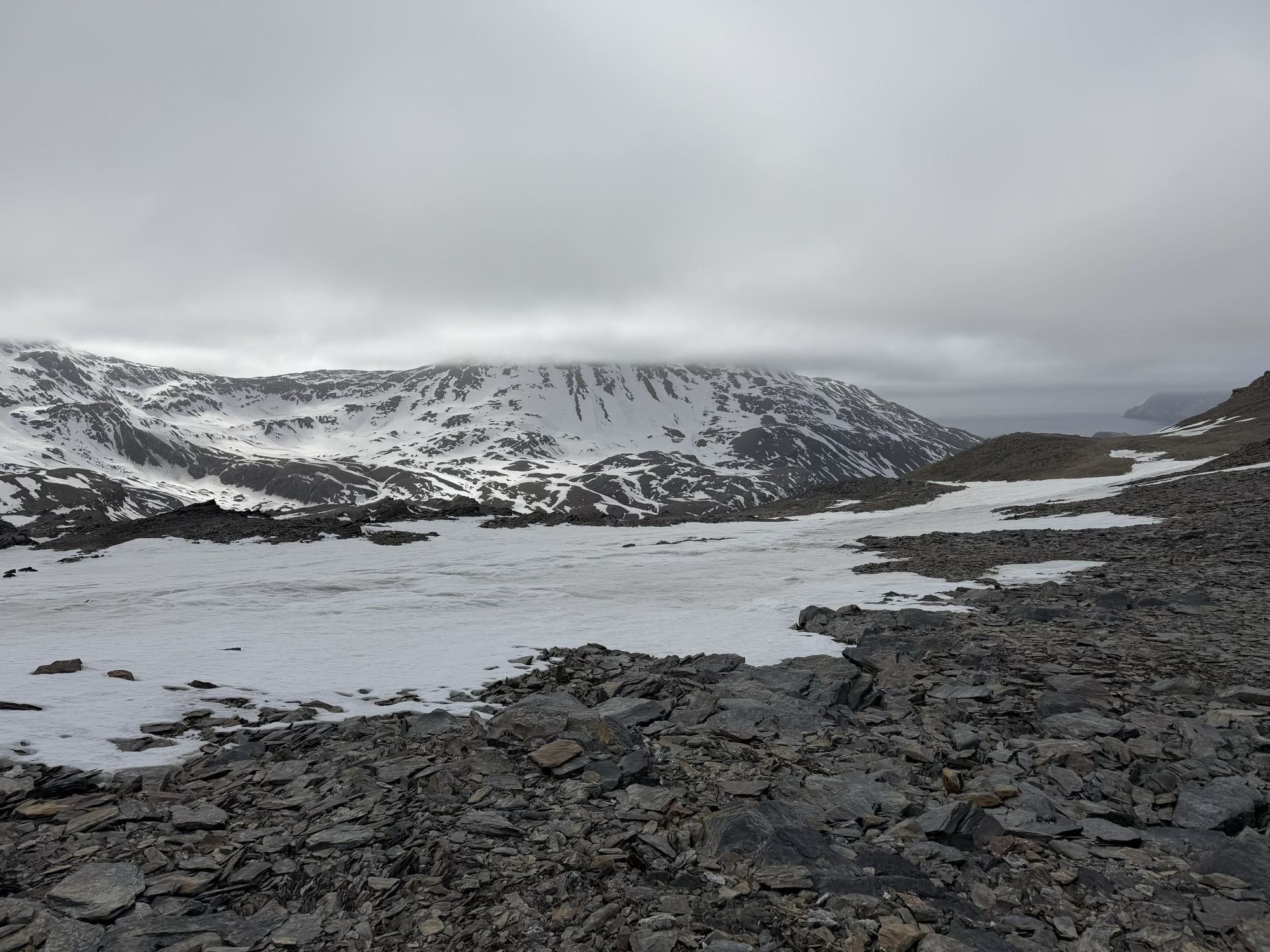
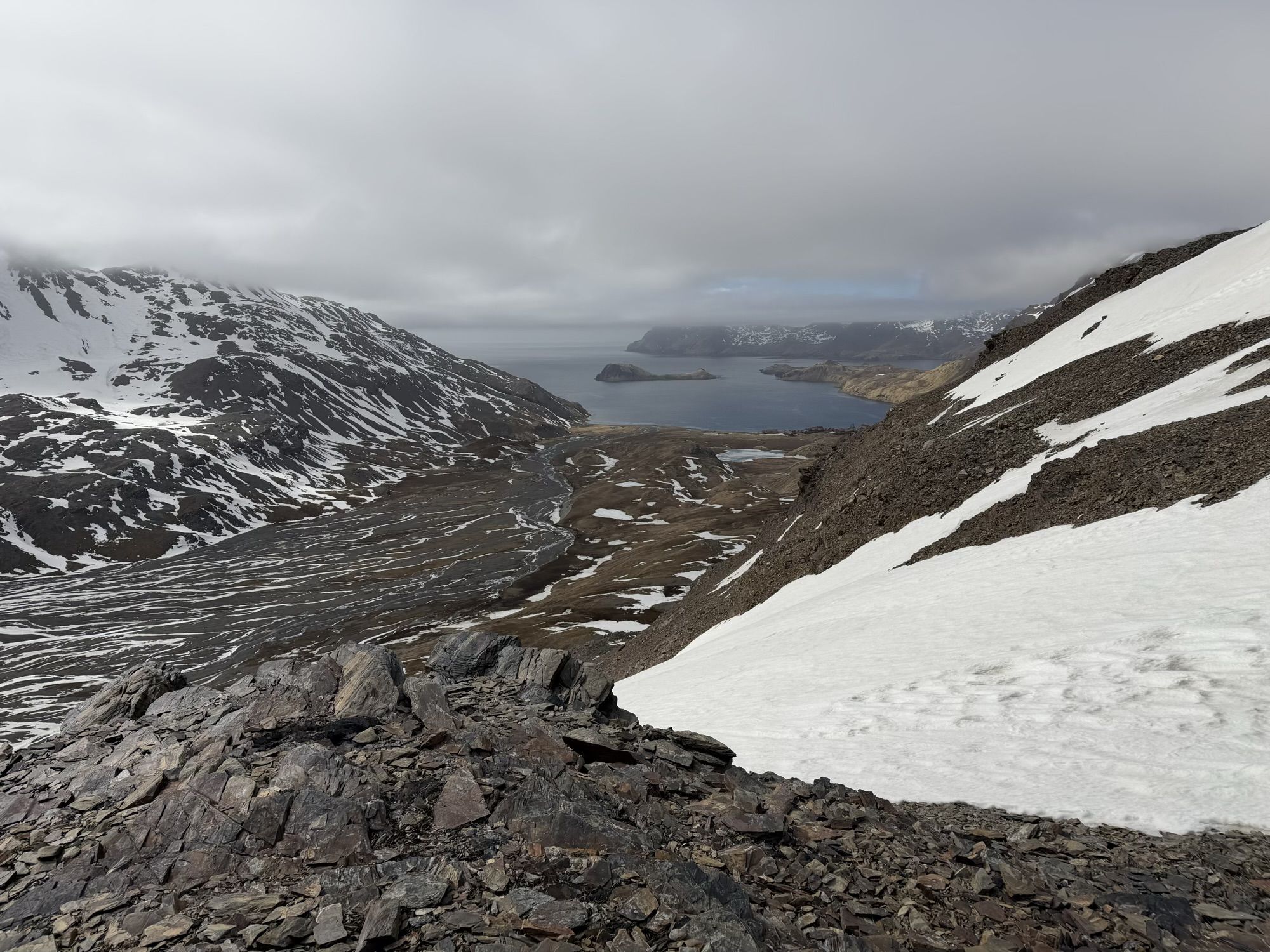
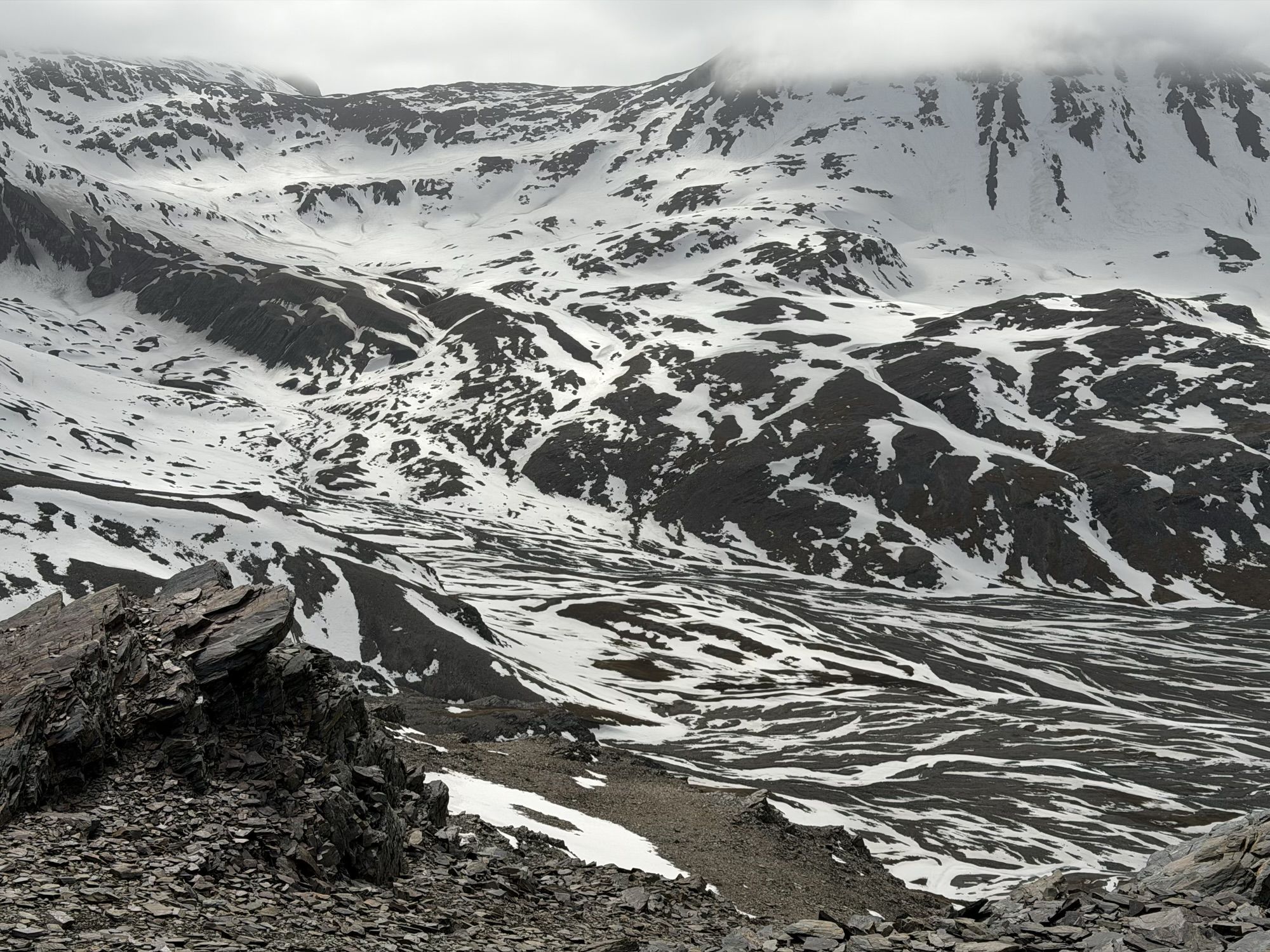
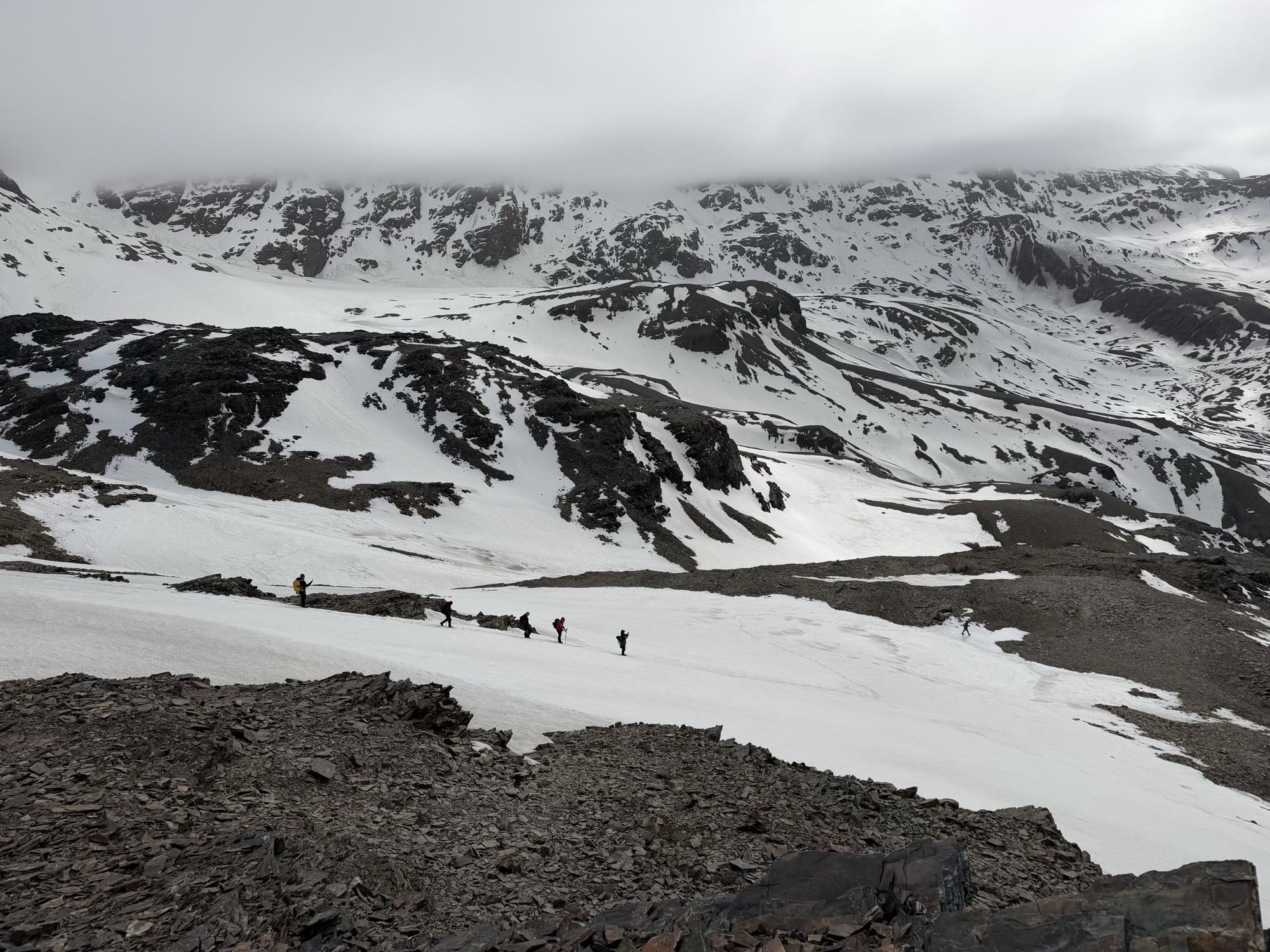
The pass lies at 300m altitude and is the highest point on the walk. Geometric patterns by the annual freeze-thaw cycle, create a barren fellfield habitat which is still partially covered in snow.
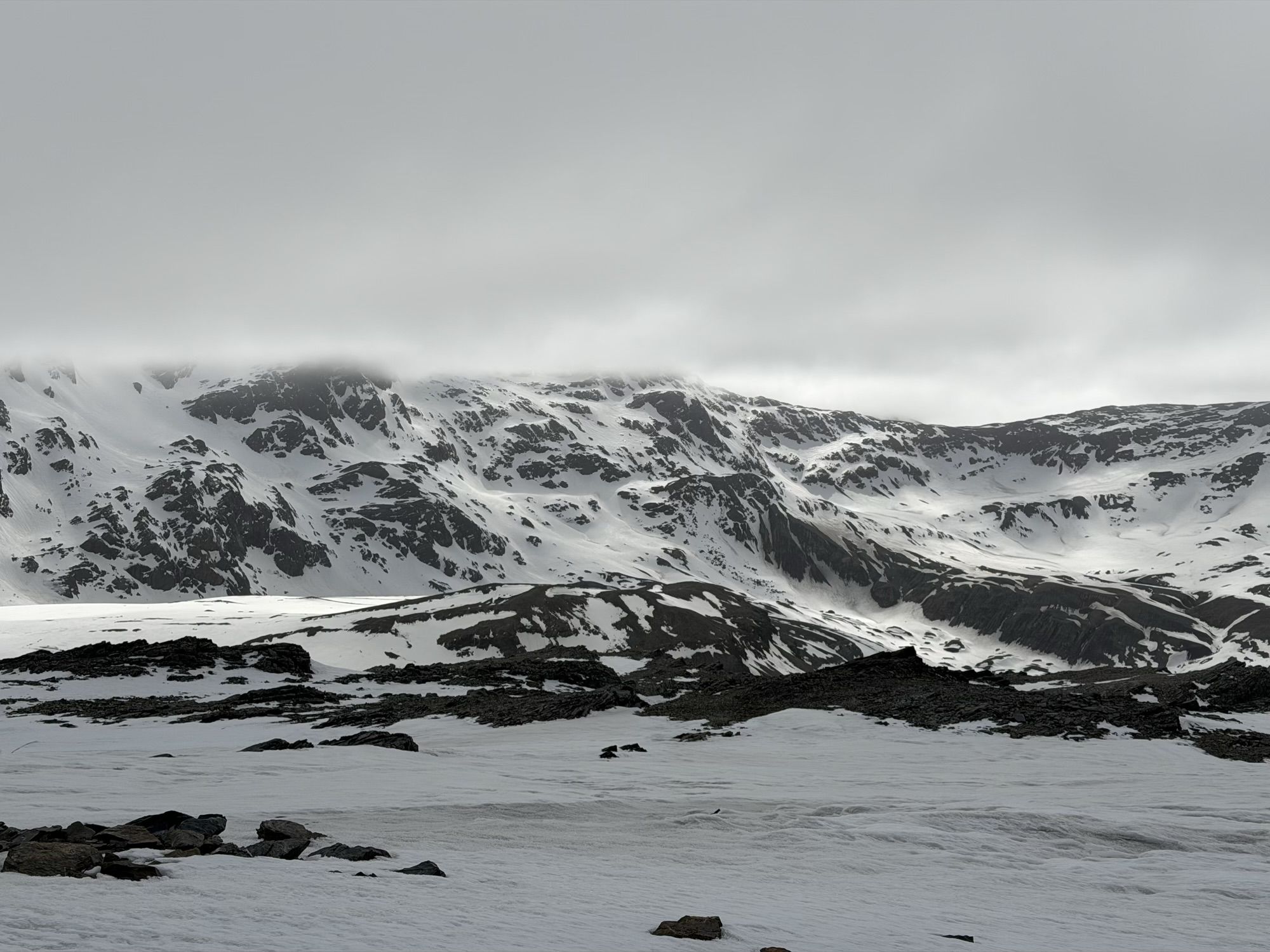
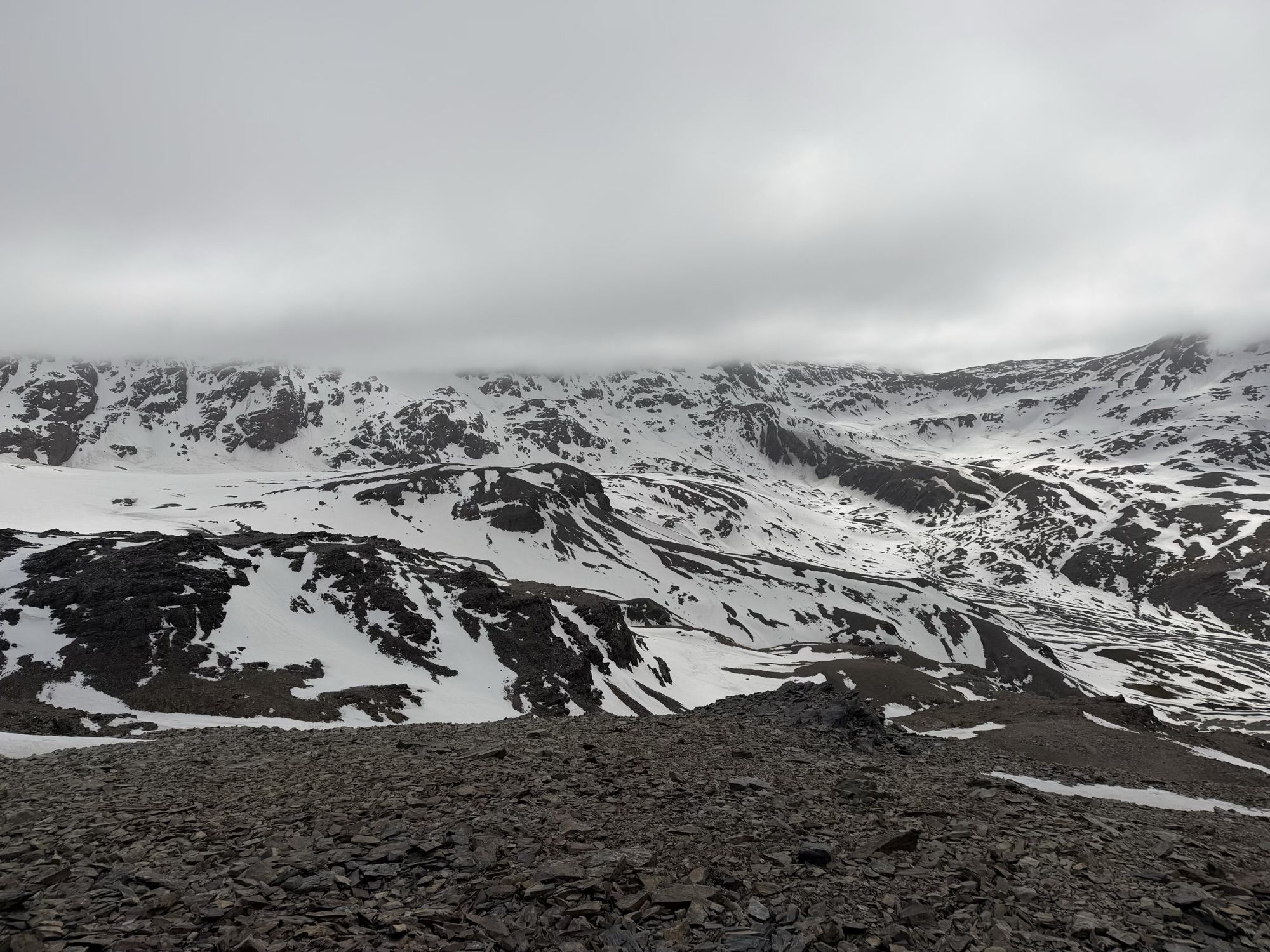
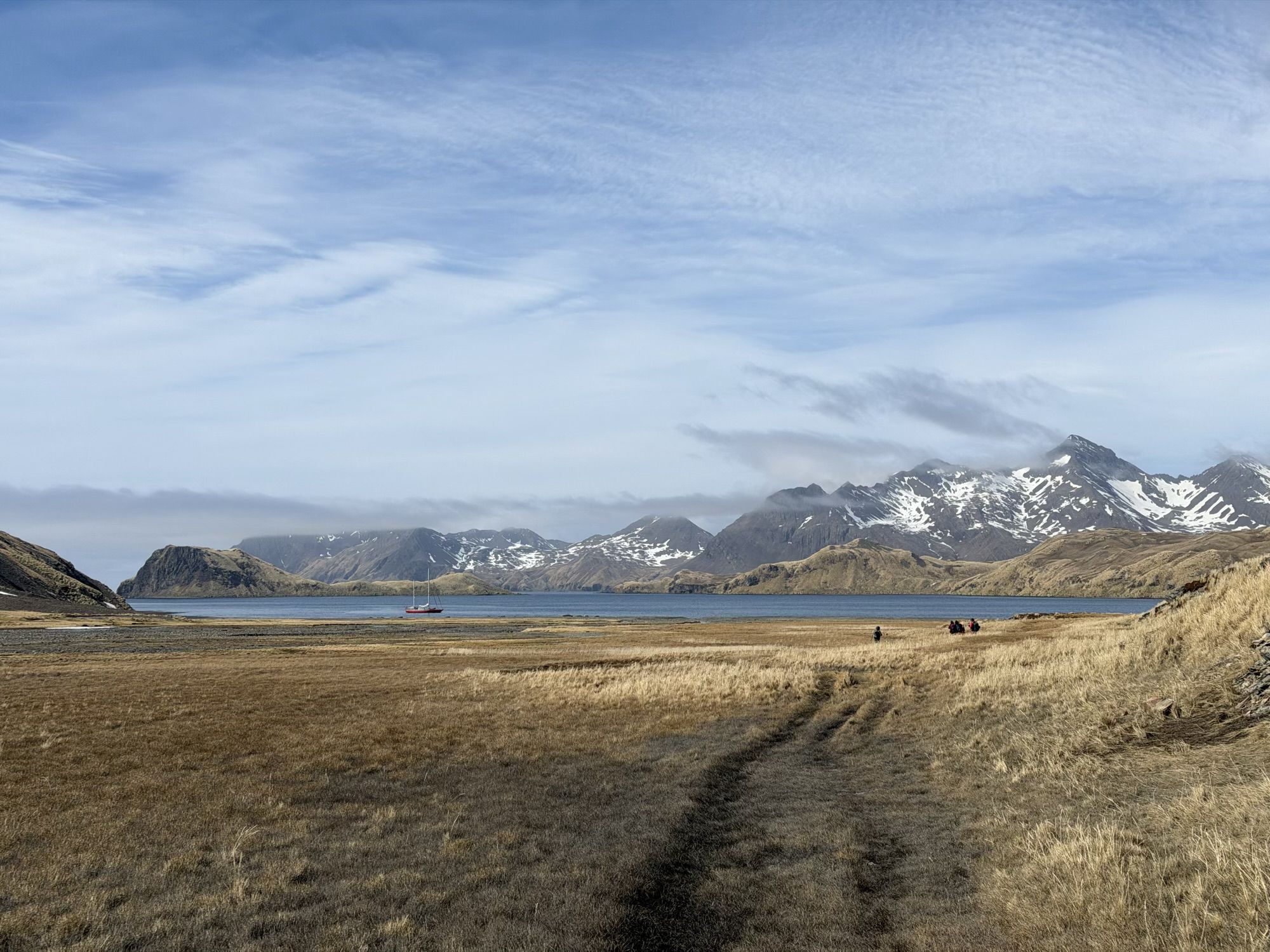
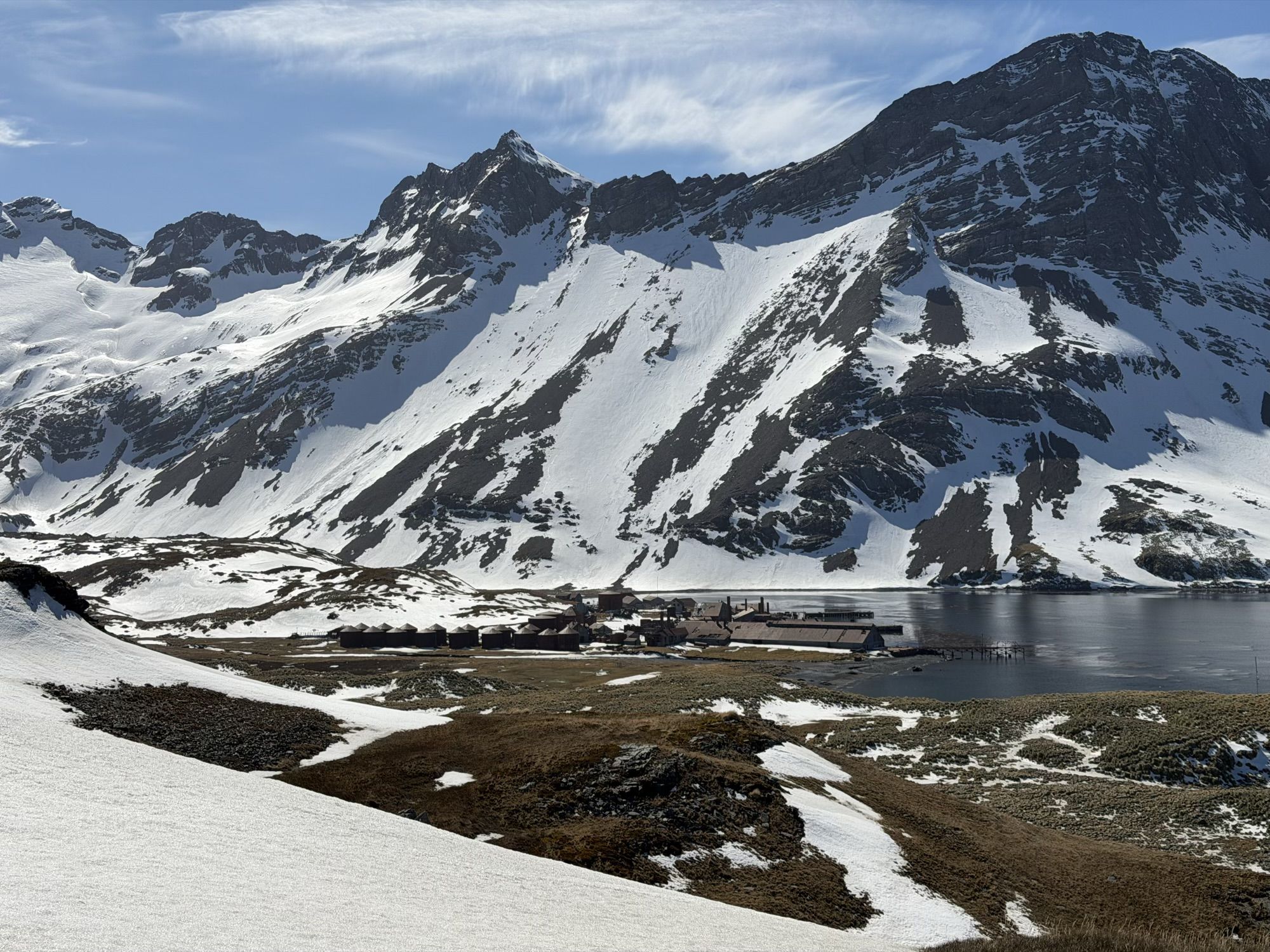
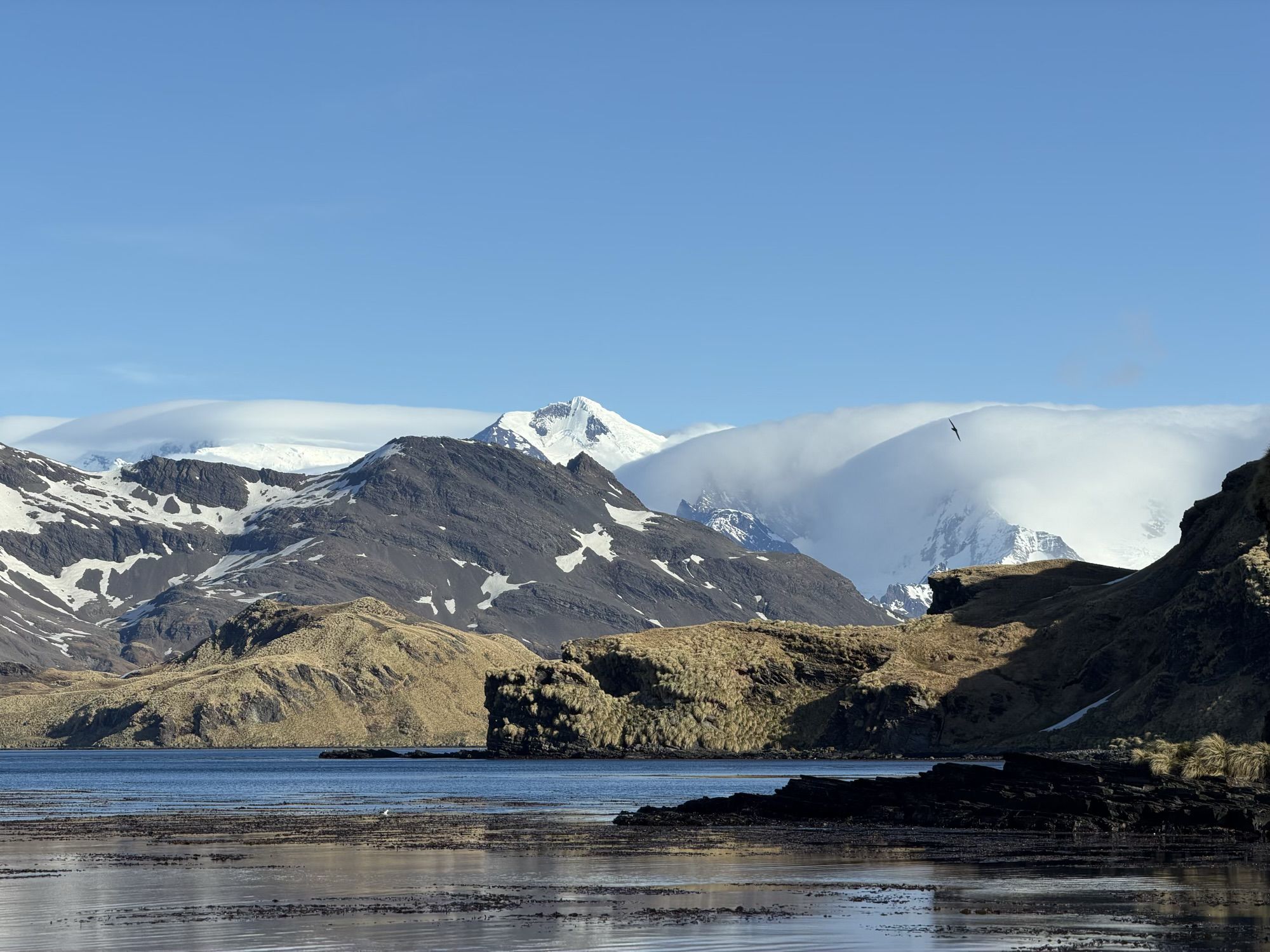
During the hike we are rewarded with spectacular bird’s-eye views of the island’s mountains and glaciers as well as with a fascinating mix of colours and forms: dark brown textured scree slopes contrast with the yellow-green coastal tussac below, the blue sea and crisp white snow and ice fields above; the grey, debris-covered König Glacier colours the silt-laden waters of the bay a milky-blue. The hanging glaciers and ice cornices of the Allardyce Range create an alpine décor of exceptional beauty.
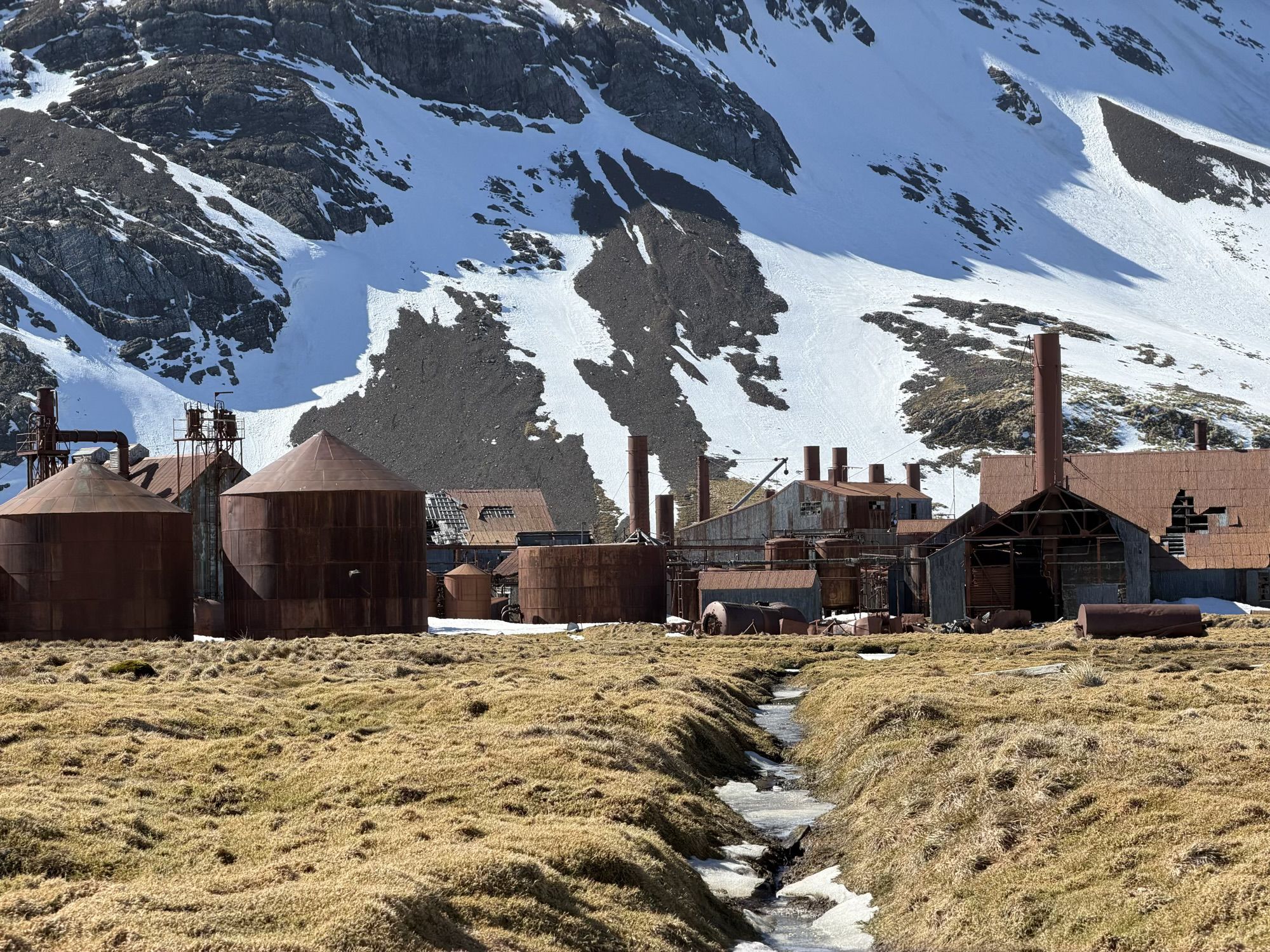
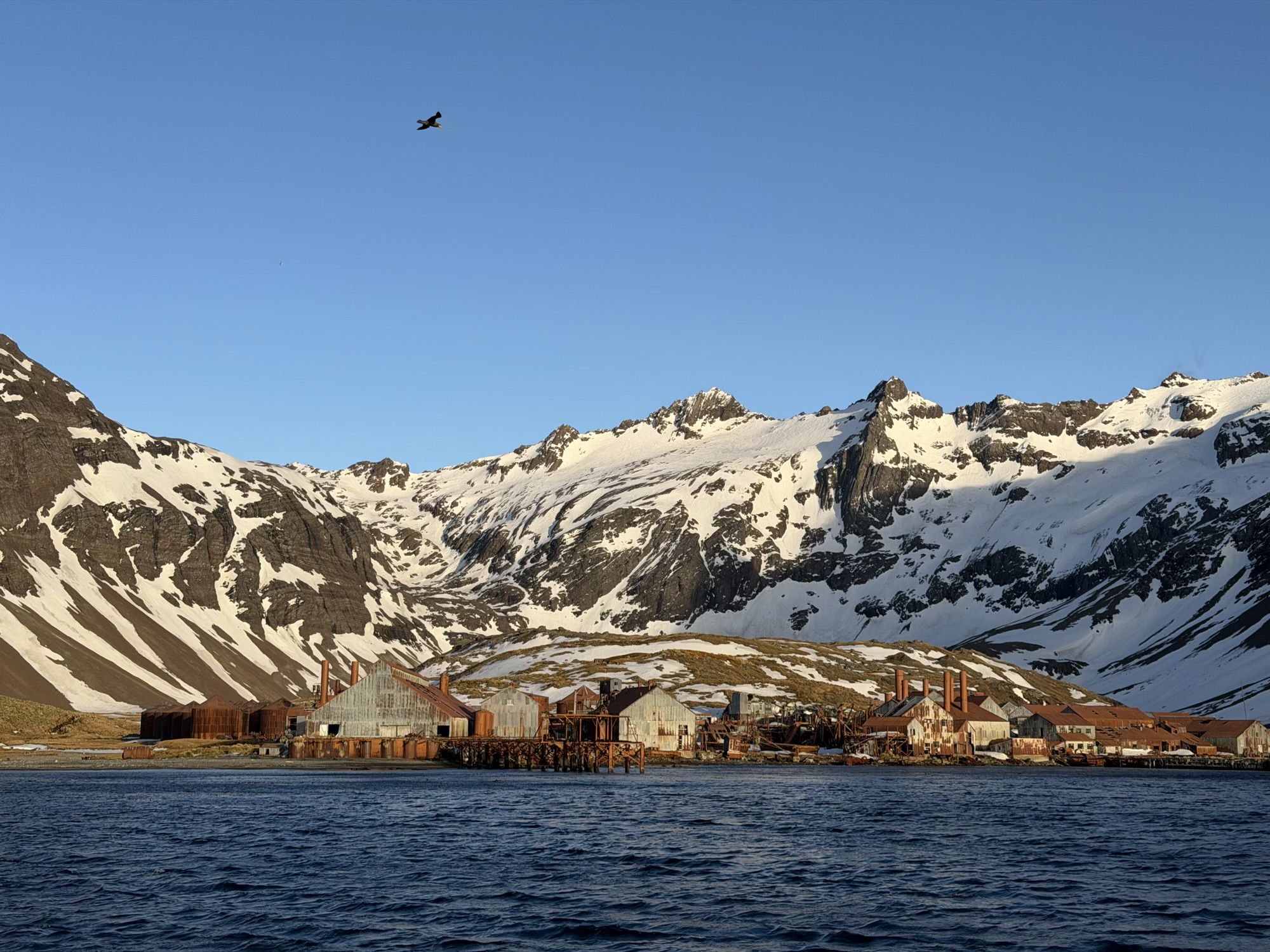
Looking east from the pass, the views are dominated by huge zig-zag folds that trace a giant’s scrawl across the face of the coastal cliffs of Busen Point. The whaling station of Stromness at the far end.
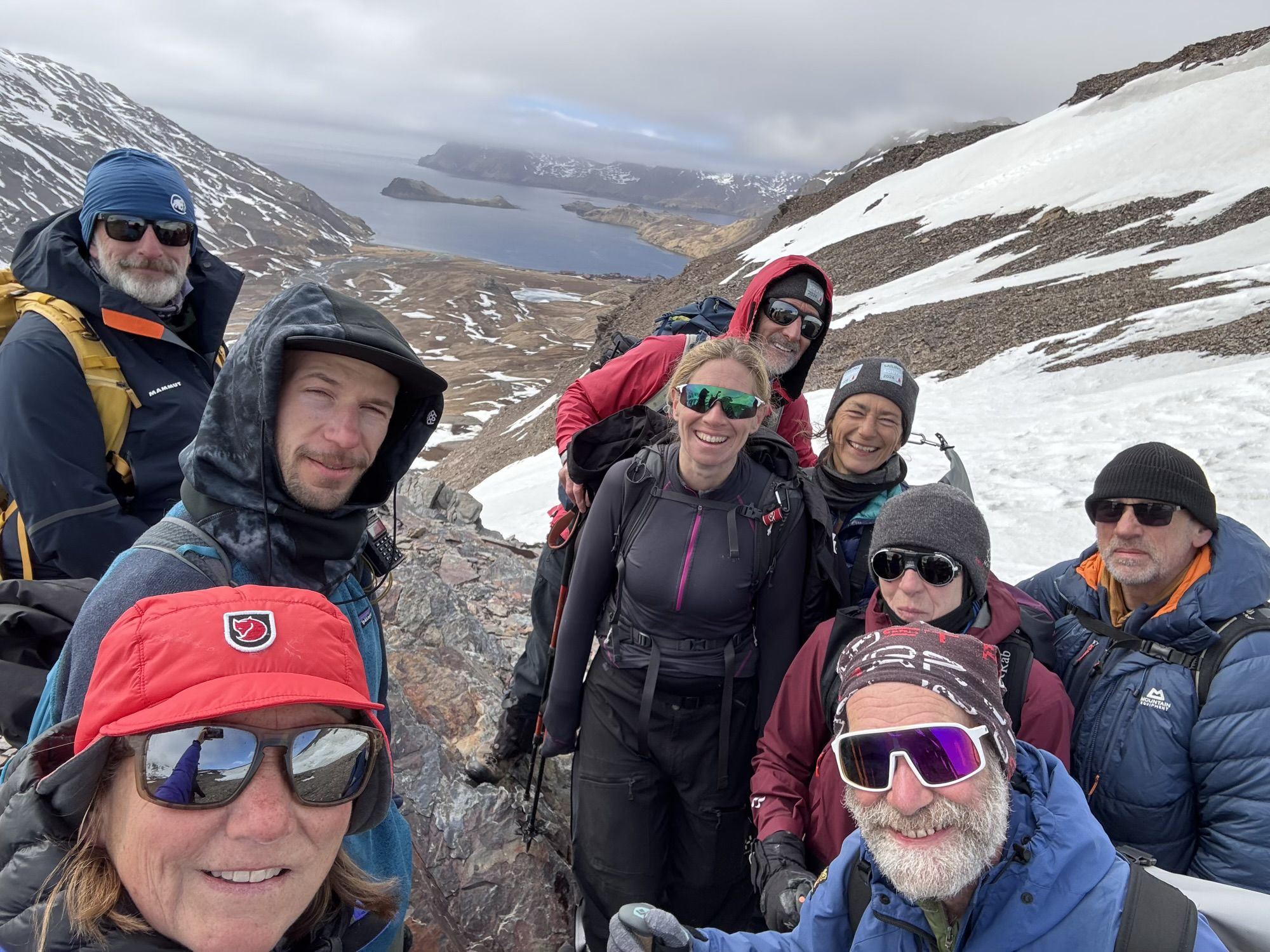
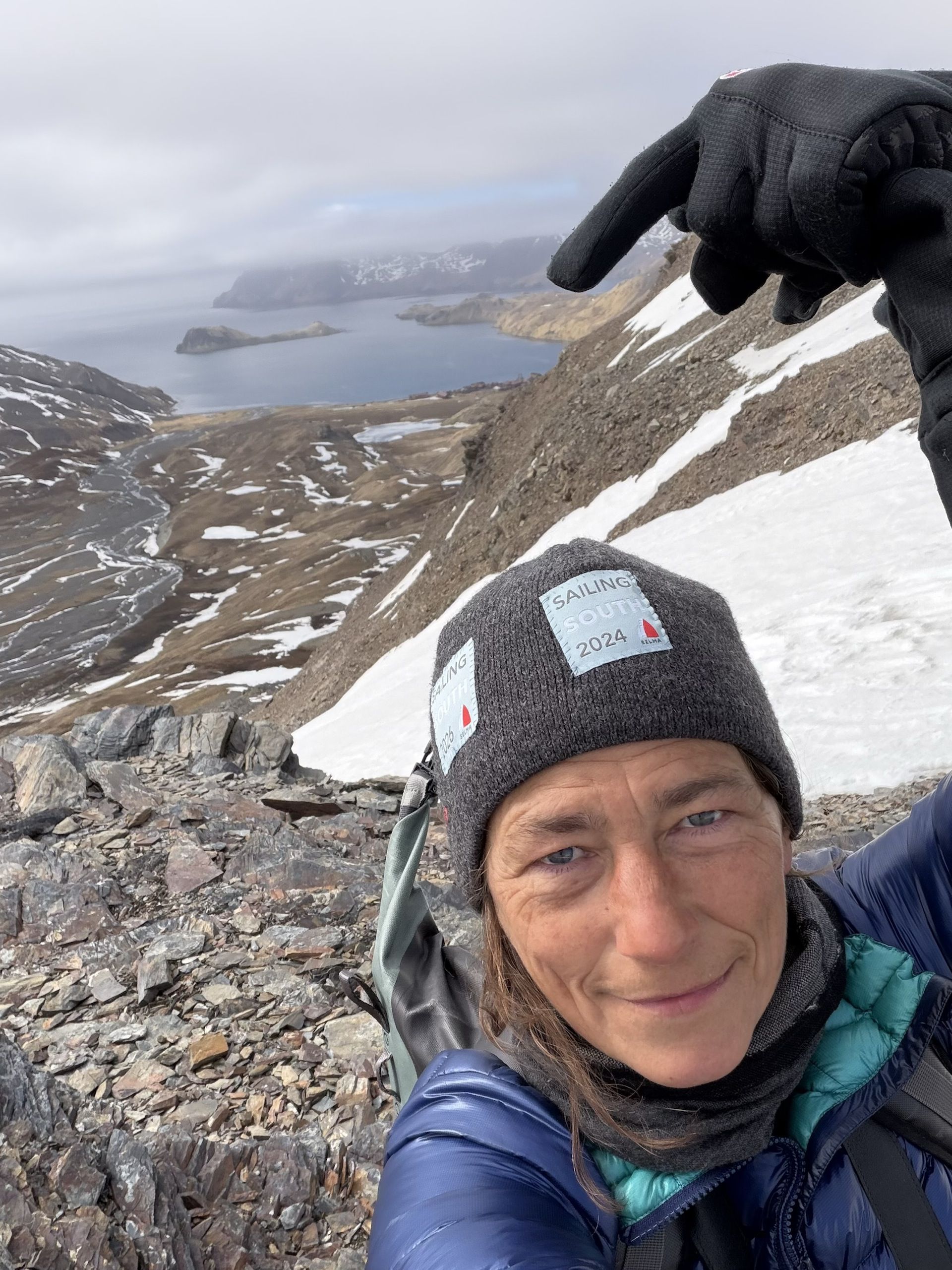
Standing there and thinking back on Shackleton and his men standing at the same place 110 years before, was an exceptionally emotional moment. What thoughts they must have had in mind and what they might have felt, reaching this place, having this view, seeing and hearing the whaling station down in the bay, knowing, that they are rescued, that they had made it after two years.
Shackleton Valley – Stromness
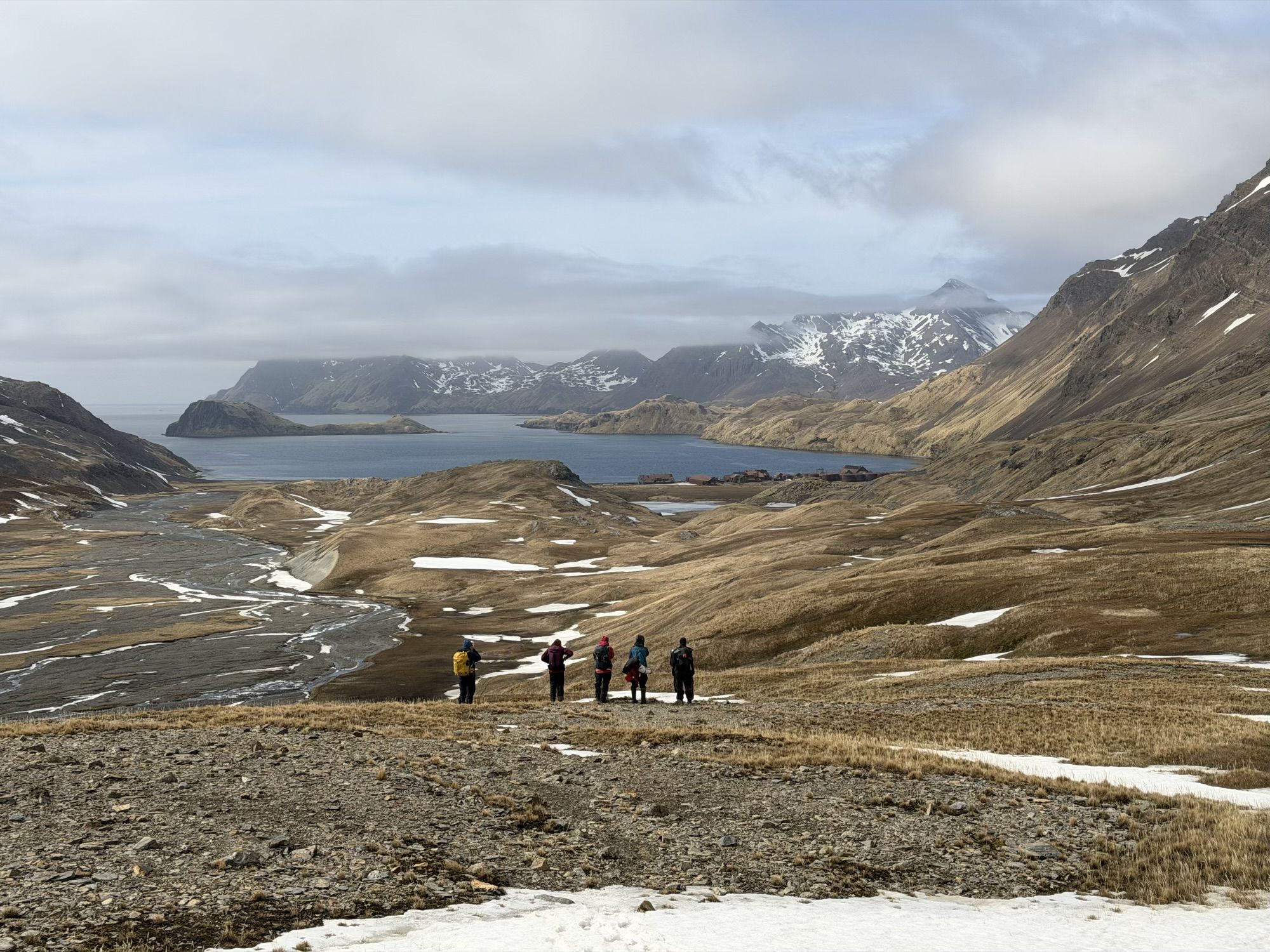
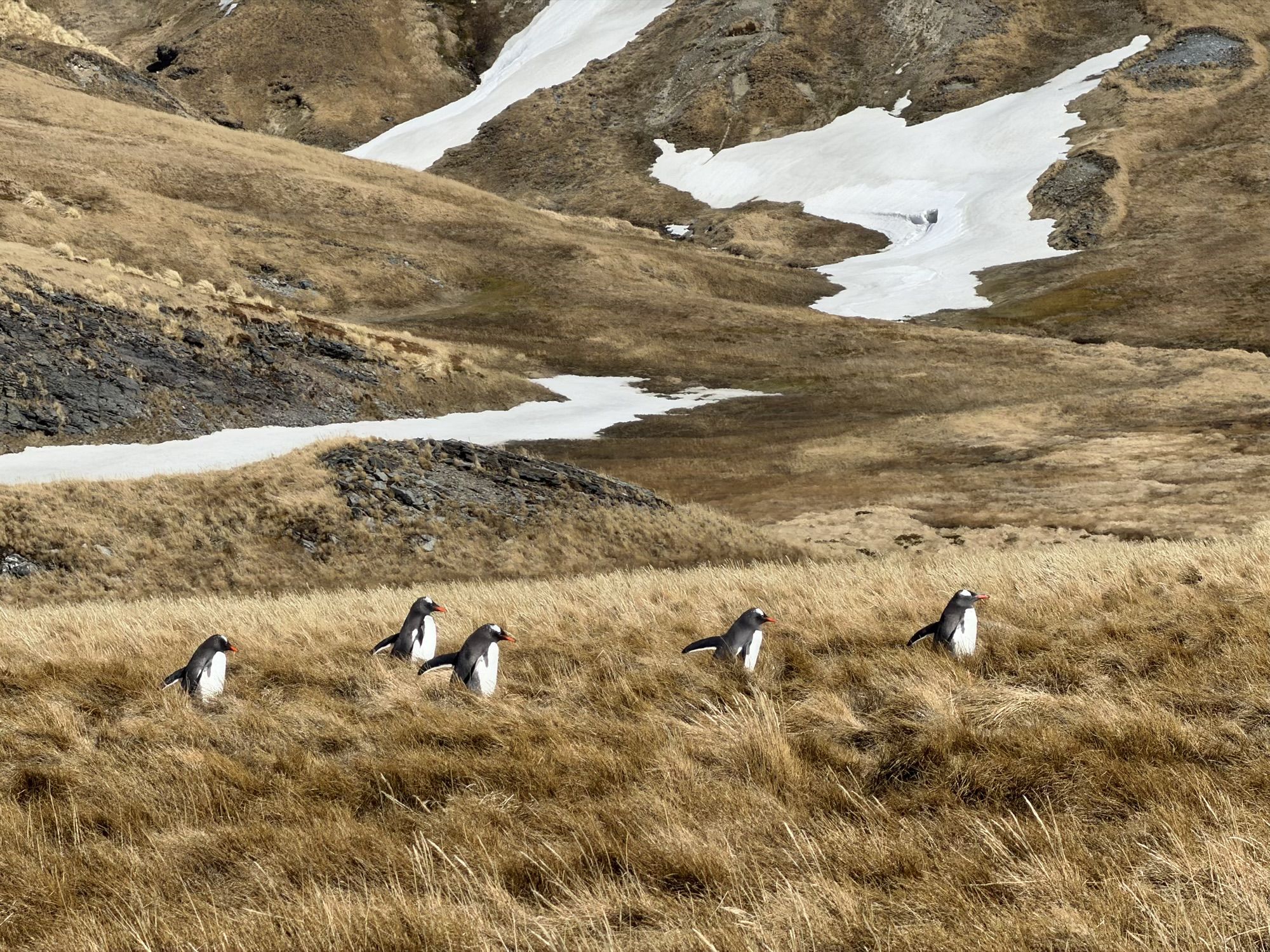
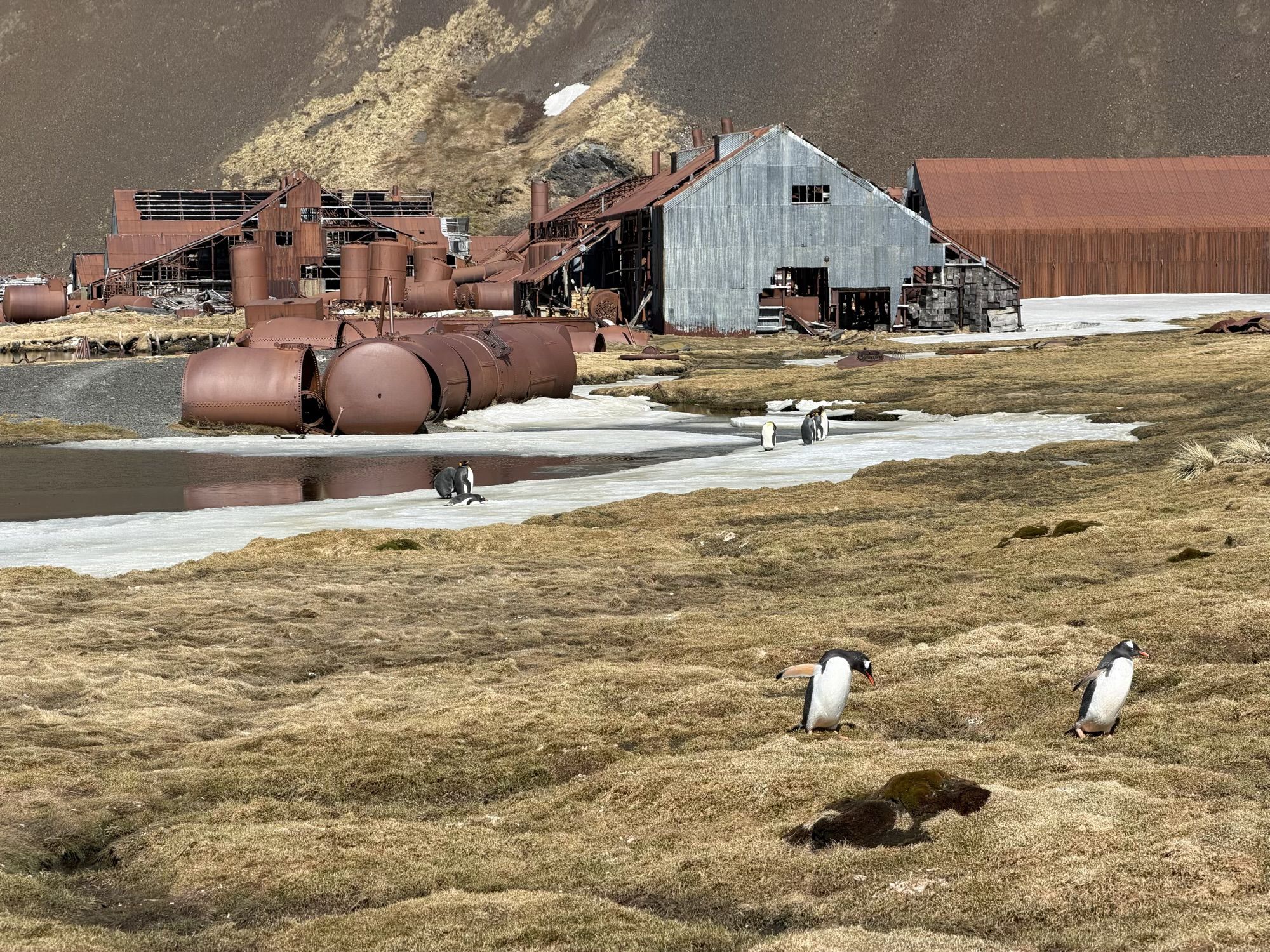
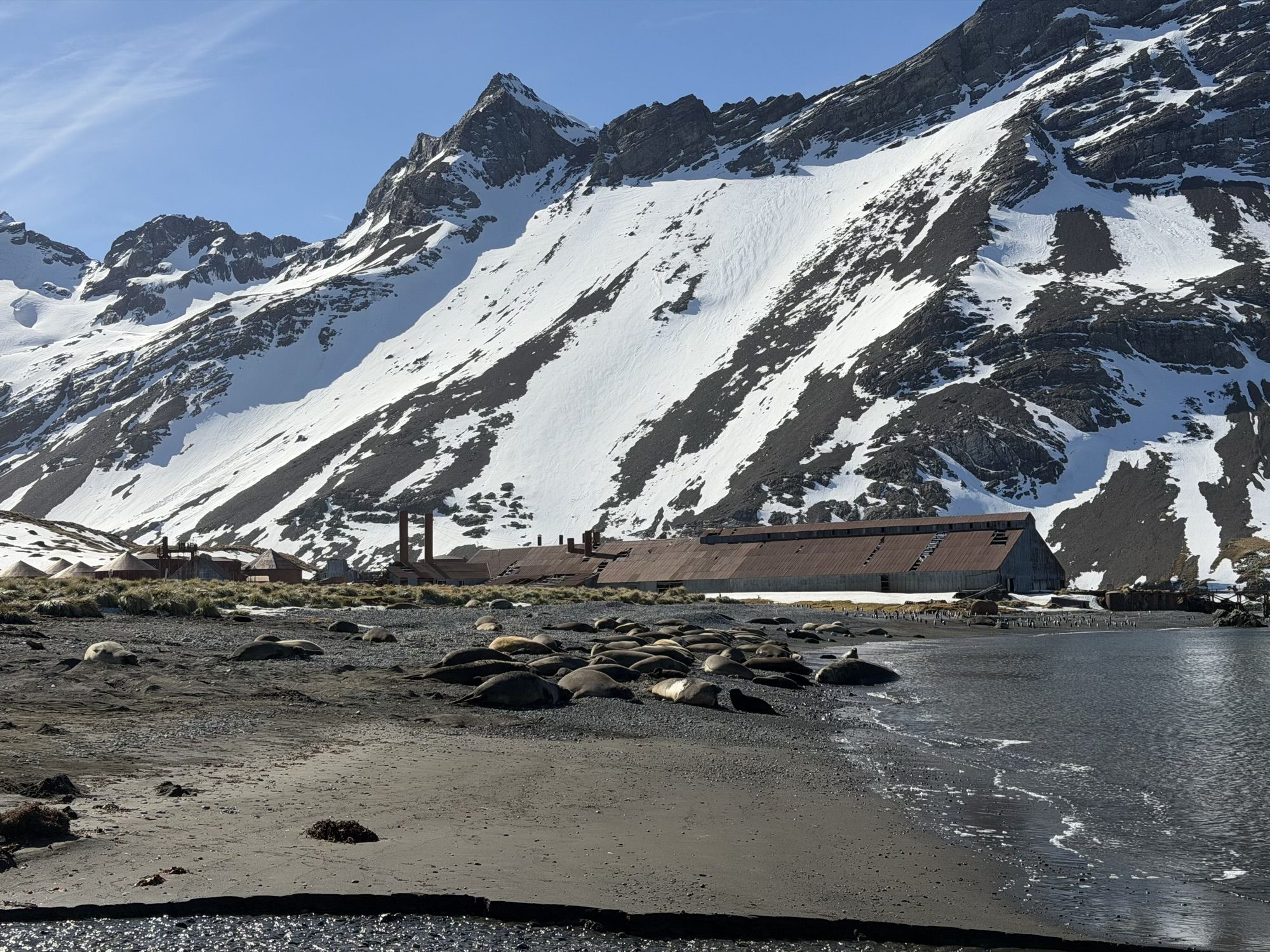
Scree, fellfield and rock outcrops extend all the way down from the pass into Shackleton Valley to meet the Festuca grassland. Meltwater streams flow seaward into Stromness Harbour via several gullies and gorges, cascading over rock outcrops as waterfalls. On the final section in Shackleton Valley a colony of gentoo penguins occupies the hillocky area on the south side of the river and welcomes us at the beach area at Stromness.
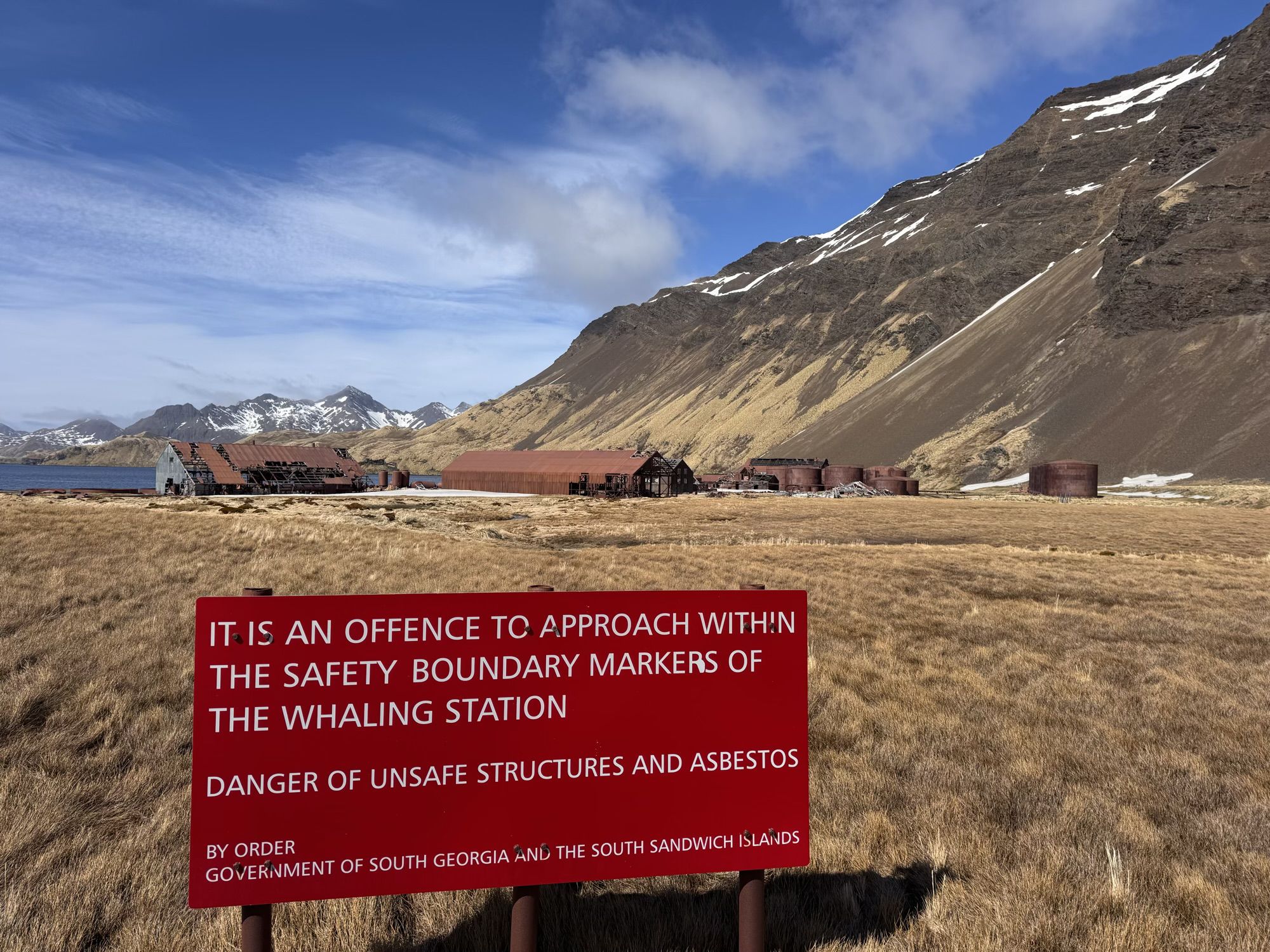
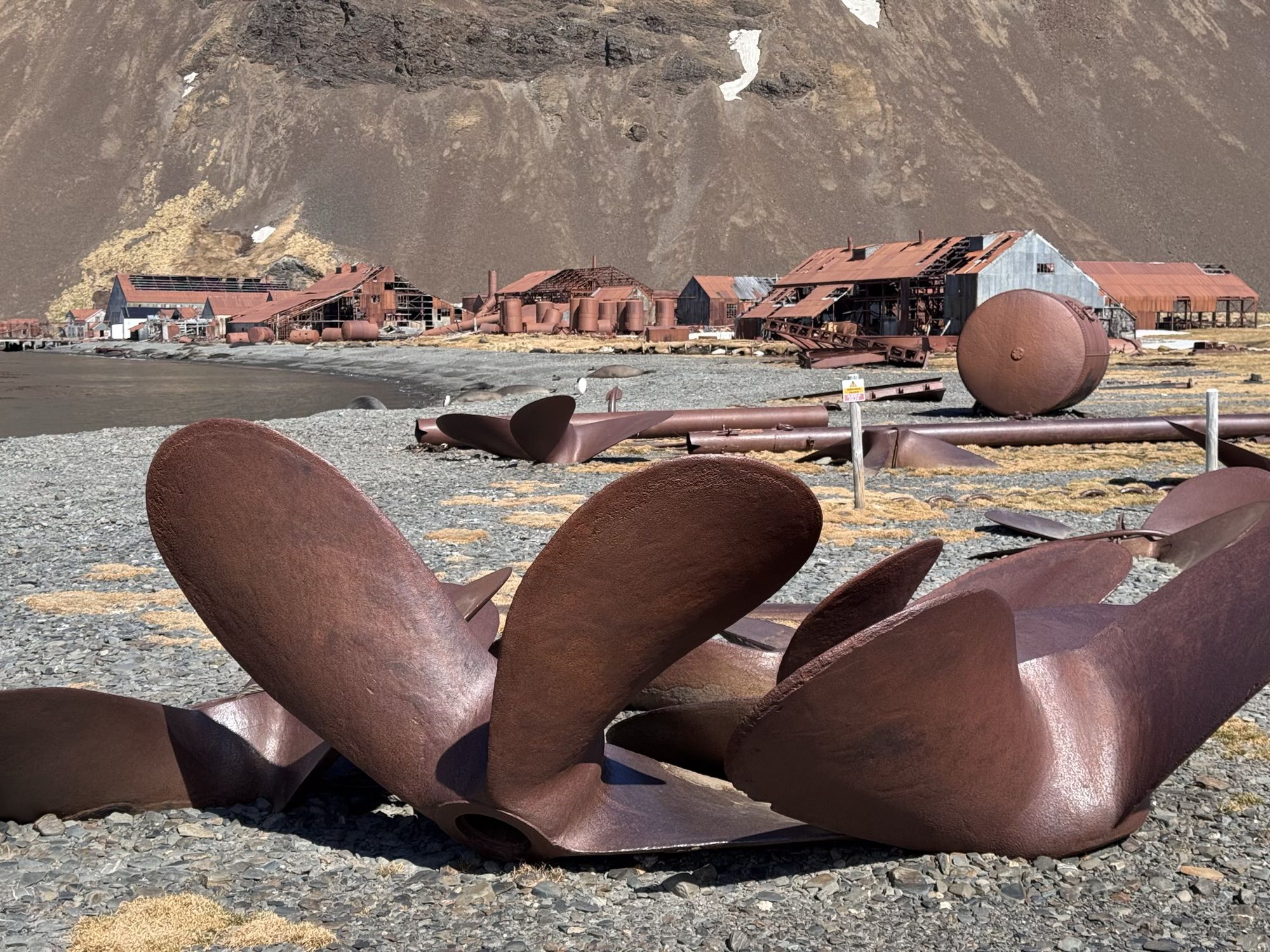
Leith Harbour
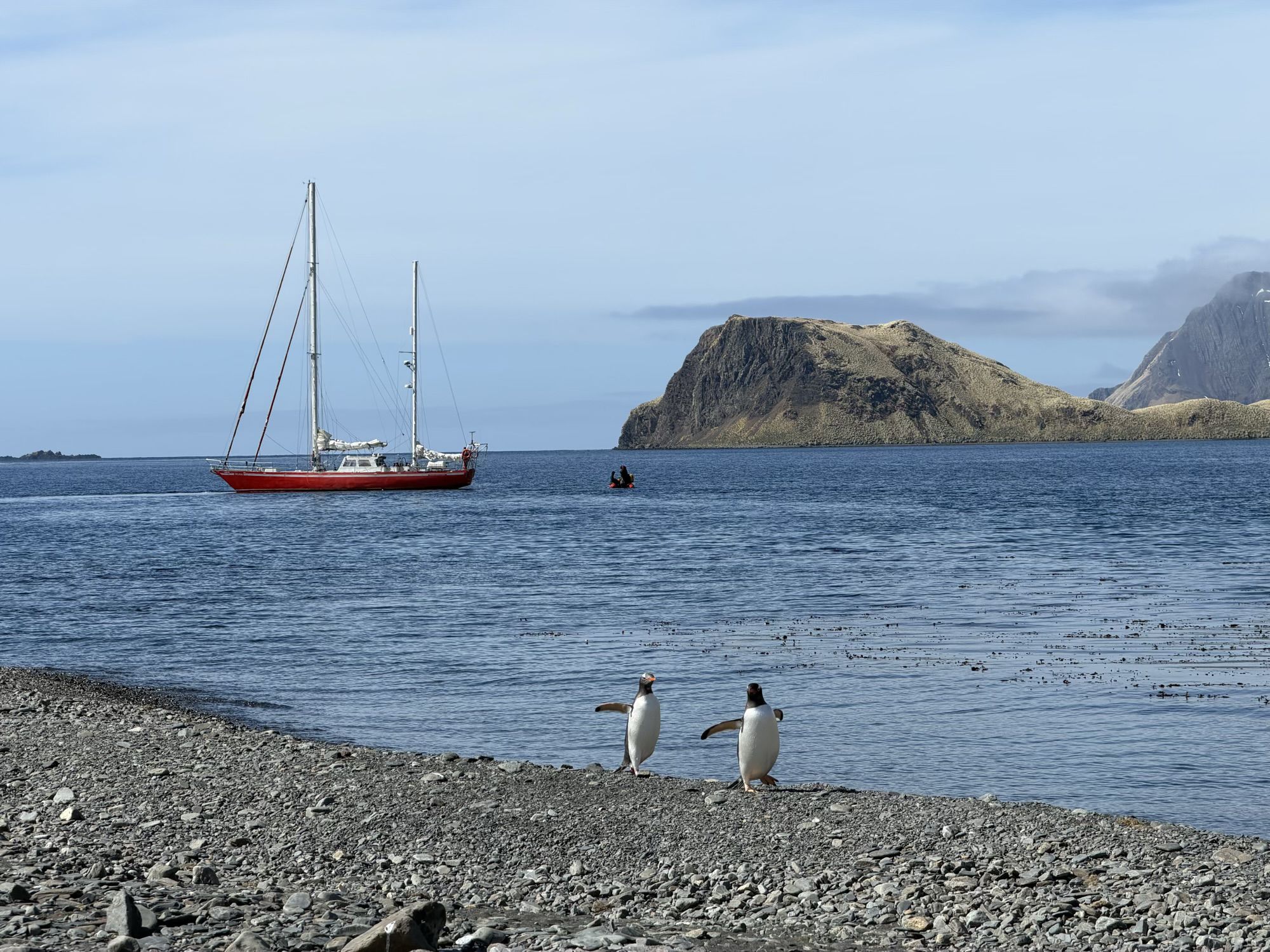
Later that day we walked further west along the coast and over a hilly range to Leith Harbour in the next bay. Another former whaling station. Meanwhile also the Selma has arrived there for picking us up after this perfect hiking day. We stay on anchor in Leith Harbour for the night.
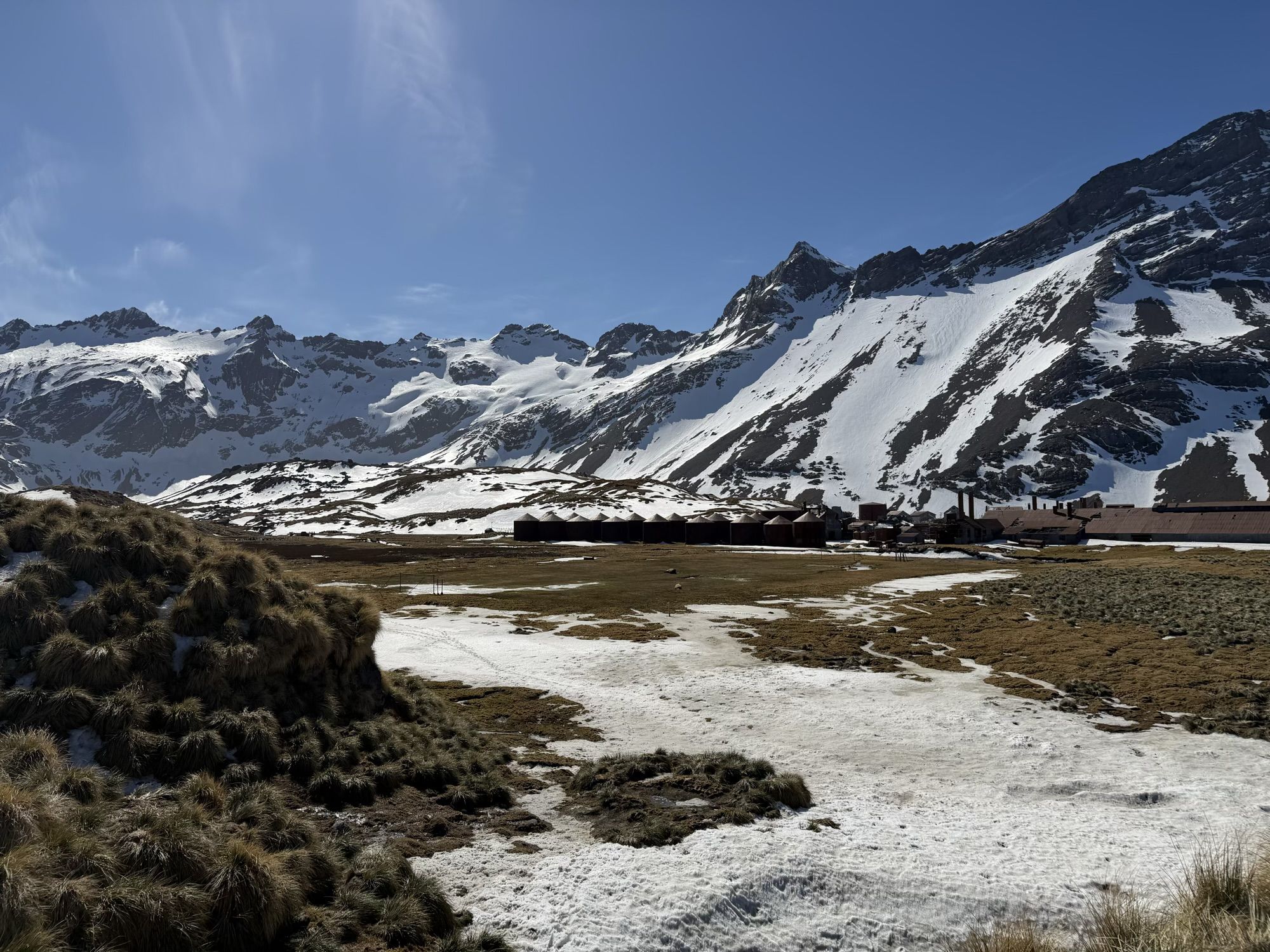
Warmly dressed, well fed and watered, we nowadays present a huge contrast to the three scarecrow figures who struggled up the slope on the morning of 20th May 1916. Earlier that day, Shackleton, Crean and Worsley arrived at a col on Breakwind Ridge on the western shore of Fortuna Bay, having set off from King Haakon Bay some 26 hours previously.
The Original Story
From their vantage point, some 600 m above the sea, the familiar, zig-zag folds in the cliffs of Busen Point were visible through the Stromness pass into the bay beyond. Final confirmation of their position came an hour later, when the blast of a steam whistle echoed over the mountains, the daily signal for whalers to turn-to for their day’s work in the whaling station. Taking the most direct route to the beach below, Shackleton was lowered on a rope to hack steps in the ice-slope using an adze as an ice axe.
It must have been such a relief to be at sea level again, to walk the beach from Whistle Cove to the far eastern shore with only a few seals and melt water streams to negotiate instead of crevasses and ice-covered cliff faces. The last uphill climb to the pass above Stromness was not without its adventures however, when the unsuspecting Crean broke through a layer of snow and ice to plunge waist-deep into the icy waters of Crean Lake.
By early afternoon they were at the pass, and in Worley’s words looked „down on to Stromness Bay, with two whalers steaming across it, looking like tiny insects on the water“. Shackleton recalled that „Minute figures walked to and fro caught our gaze, and then we saw the sheds and factory of Stromness whaling station. Once more we paused and shook one another warmly by the hand.“
One final hurdle lay before them however. In their exhausted state, the steep descent to the valley below presented a dilemma. Worley would have opted for the steep scree gully, but Shackleton, not wanting to risk a downhill slide on ice and snow, chose to follow a nearby watercourse. And so they tramped downhill, knee-deep in icy water until brought to a halt by a 15 m waterfall encased in vertical cliff. Using the rope again to lower themselves, they finally reached the valley floor and wearily marched the final 2 km to the station.
Ragged, filthy and evil-smelling they finally arrived on the doorstep of the manager’s villa, making their first contact with the rest of the world in over 17 months.